Author

admin

Browsing

Corporations are continuing to spend on business travel, but are being strategic about how they allocate those dollars amid ongoing trade uncertainties, according to new reports from the travel and expense platform Navan and the Global Business Travel Association.

Corporate travel spending activity increased 15% year over year in the second quarter of 2025, according to a business travel index published Tuesday from Navan.

Navan’s index, backed by Nasdaq, is derived from millions of corporate business transactions on its platform. It examines the amount spent and number of transactions relating to airline travel, hotel reservations and expense transactions from corporate cards.

Amy Butte, Navan’s CFO, said during an interview that from talking with other chief financial officers over the past few months, she never got the sense that corporate leaders would stop spending on business travel altogether. Instead, they are in “wait and see” mode.

“If you’re making choices about where you’re being cautious, we’re not seeing people be cautious in the area of relationship building, either with their customers or with their teammates. We’re still seeing the spend allocated towards travel as a key component of any business strategy,” Butte said.

But while global business travel is expected to reach a new high of $1.57 trillion in 2025, according to a Monday report by the Global Business Travel Association, that total represents 6.6% year-over-year growth, which is less than the 10.4% increase that was previously predicted. GBTA cited trade tensions, policy uncertainty and economic pressures as the reasons for the more moderate growth.

A string of sentiment polls by GBTA also shows that corporate travel optimism for the rest of 2025 appears muted. The percentage of respondents who said they were optimistic about the overall outlook for the business travel industry in 2025 dropped sharply from 67% in November 2024 to 31% in April and declined slightly again this month to 28%.

The findings from both reports, grouped together with commentary from airline CEOs last week, show C-suite leaders are still largely left in wait-and-see mode amid President Donald Trump’s fluid tariff policies, but companies appear now to have a better read on how they will manage the uncertainty.

“Historically, corporate travel has been the first thing, one of the easiest things, to minimize if you’re a company,” Delta Air Lines CEO Ed Bastian said during the company’s earnings call this month, adding that corporate travel on the airline has been flat on a year-over-year basis.

But Butte said that Navan has not seen a drop-off in business travel. Instead, businesses are shifting how they are spending.

For example, Butte said businesses are continuing to commit to individual, face-to-face meetings, rather than spending on large group outings. The Navan index shows that spending on personal meals, meaning one-on-one meetings held over a meal, was up 9.8% from last year, while spending on team events and meals was the only category in the report that declined.

Navan did see some compression earlier in the year in the share of higher-priced airline tickets purchased that were first class or business class, Butte said, but she added that the platform has since seen an acceleration as uncertainty has lessened.

Airfare prices have also declined so far this year, which means business and consumers alike are spending less on plane tickets. Airfare fell 3.5% in June from a year earlier while inflation overall rose, according to the Bureau of Labor Statistics.

GBTA CEO Suzanne Neufang said during an interview that CFOs have not cut travel spending off entirely, but are looking for efficient ways to get employees on the road. This may look like booking multicity trips, scheduling multiple meetings per trip or booking fewer trips per month, she said.

Neufang said the business travel industry has been focused over the past five years on making sure every trip has a purpose and delivers a return on investment.

“Gone are the days when there’s really frivolous business traveling,” Neufang said.

The new findings on business travel spending also come as airlines are reporting their quarterly earnings.

When Delta reported earnings on July 10, Bastian said he expects both consumer and corporate confidence to improve in the second half of the year, creating an environment for travel demand to accelerate.

Delta and other airlines saw travel demand come in weaker than expected at the beginning of the year, especially from price-sensitive customers traveling domestically. Bastian said back in April that Trump’s trade policies were hurting bookings.

Bastian took a more positive tone this month, telling CNBC that corporate travel has stabilized as businesses have more clarity and confidence than they did earlier this year. But he said corporate travel is in line with last year, not the 5% to 10% growth Delta expected at the start of the year.

Meanwhile, Delta President Glen Hauenstein said on an earnings call this month that corporate travel trends are “choppy” and overall corporate volumes are expected to be “flattish” over last year.

United Airlines reported earnings last week. CEO Scott Kirby said during the company’s call with analysts that so far this month, the airline has seen a double-digit acceleration in business demand as uncertainty has declined.

Andrew Nocella, United’s executive vice president and chief commercial officer, added that the business traffic growth is “across the board” and not restricted to any singular hub or vertical, which he said reflects lessening macroeconomic uncertainty.

Southwest Airlines, Alaska Airlines and American Airlines are scheduled to report their quarterly results this week.

This post appeared first on NBC NEWS

There’s a new player making waves in an industry dominated by big banks.

Imprint, the 5-year-old credit card startup, beat out banks in a competitive bidding process for a new co-branded card from online shopping platform Rakuten, CNBC has learned.

The deal is the most recent sign that Imprint is gaining traction in the co-branded credit card industry.

The New York-based startup also just raised $70 million in additional capital, boosting its valuation by 50% to $900 million less than a year from its previous round, according to Imprint CEO Daragh Murphy.

Credit card partnerships with retailers, airlines and hotels are some of the most hotly contested deals in finance. Brands often go through extensive bidding processes to select a card company, while the companies compete for the right to issue cards to millions of loyal customers. The industry’s largest players include JPMorgan Chase, Capital One, Citigroup and Synchrony.

“We’re talking to Fortune 500 companies about being their partner and them choosing us over Synchrony, over Barclays, over U.S. Bank,” Murphy said in an interview. “We have to kind of walk and talk like we’re a big, important company, even though we still have a startup ethos.”

That’s why the company recently raised capital, bringing its total to $330 million, most of which is held on the firm’s balance sheet, according to Murphy. Those funds help show potential partners that Imprint has staying power, he said.

Imprint also has about $1.5 billion in credit lines from banks including Citigroup, Truist and Mizuho, which it uses to extend loans to card customers, Murphy said. The startup is behind the cards from brands including Eddie Bauer, Brooks Brothers and Turkish Airlines.

To offer its credit cards, Imprint usually partners with one of two small banks, First Electronic Bank or First Bank and Trust. Imprint handles the customer experience, including the technology and credit decisions, while using the credit card rails of regulated banks.

In the case of the Rakuten card, Imprint is relying on the American Express network, which allows users to get Amex purchase protections and other perks. It is using First Electronic Bank to help issue the cards.

“Though we’re not a regulated bank, we’re effectively building a bank,” Murphy said. “We have to do all the same things as a bank. We’re a capital markets company; we’re a compliance company; we’re a risk and credit and fraud company; we’re a technology company.”

To gain a toehold in the market for co-branded cards, which can be used anywhere credit cards are accepted, Imprint decided it would focus on a seamless digital experience for customers, Murphy said. That requires technology integration that is difficult for established players who rely on third-party companies including Fiserv to complete transactions, he said.

“The banks are in trouble because they don’t own the technology that the credit card runs on,” Murphy said. “Every credit card in your wallet, whether it’s Chase … or from Citi or Synchrony, they rely on two or three different third parties to power the technology.”

Imprint also decided to set itself apart by making it easy for customers to pay off their loans, Murphy said. Card companies including Bread Financial and Synchrony make a far larger percentage of revenue from late fees than Imprint does, he said.

“You shouldn’t have all these regressive late fees, and you shouldn’t make it hard to pay,” Murphy said. “The easier we make it to pay, the more likely you are to use the card, and the more likely you are to use the card, the better it is for everybody.”

Finally, Murphy said the company’s low customer acquisition costs allow it to fund more rewards for card users.

The new Rakuten card, for instance, offers users an extra 4% in cash back in addition to what customers earn through shopping on the online portal, capped at $7,000 in spending per year.

Users also earn 10% in cash back while dining at Rakuten’s partner restaurants, and 2% cash back on groceries and non-partner restaurants.

The previous Rakuten credit card was issued by Synchrony and discontinued in 2022.

This post appeared first on NBC NEWS

Joe Cavatoni, senior market strategist, Americas, at the World Gold Council, explains that market risk and uncertainty are driving gold, with H1 2025 seeing multiple record highs.

‘Think strategically when you think about gold, and keep that allocation in mind,’ he said.

He also shares thoughts on the importance of central bank allocations and the potential impact of tariffs and US economic conditions on gold during the second half of 2025.

Securities Disclosure: I, Georgia Williams, hold no direct investment interest in any company mentioned in this article.

This post appeared first on investingnews.com

Here’s a quick recap of the crypto landscape for Wednesday (July 23) as of 9:00 p.m. UTC.

Get the latest insights on Bitcoin, Ethereum and altcoins, along with a round-up of key cryptocurrency market news.

Bitcoin and Ethereum price update

Bitcoin (BTC) was priced at US$118,148, down by 0.7 percent over the last 24 hours. Its highest valuation on Wednesday was US$118,462, while its lowest valuation was US$117,583.

Bitcoin price performance, July 23, 2025.

Chart via TradingView.

Bitcoin traded lower over the past 24 hours, hovering between $117,000 and $120,000 amid several market pressures.

A major whale moved over US$1.2 billion in dormant BTC, sparking speculation of potential selling.

After a rotation into altcoins, investors took profits following recent highs, while outflows from spot exchange-traded funds (ETFs) signaled weaker institutional demand.

Ethereum (ETH) was priced at US$3,592.65, down by 1.9 percent over the past 24 hours. Its lowest valuation as of Wednesday was US$3,568.86, and its highest was US$3,657.02.

Altcoin price update

  • Solana (SOL) was priced at US$188.86, down by 5.5 percent over 24 hours. Its lowest valuation on Wednesday was US$186.95, and its highest was US$192.58.
  • XRP was trading for US$3.25, down 8.9 percent in the past 24 hours. Its lowest valuation of the day was US$3.18, and its highest valuation was US$3.36.
  • Sui (SUI) is trading at US$3.70, down 5.5 percent over the past 24 hours. Its lowest valuation of the day was US$3.67, and its highest was US$3.84.
  • Cardano (ADA) was trading at US$0.8152, down by 6.9 percent over 24 hours. Its lowest valuation on Wednesday was US$0.8058, and its highest was US$0.8370.

Today’s crypto news to know

PNC Bank and Coinbase partner to advance digital asset solutions

PNC Bank and Coinbase Global (NASDAQ:COIN) have announced a strategic partnership to broaden access to digital asset solutions for PNC’s clients and institutional investors.

The collaboration will leverage Coinbase’s crypto-as-a-service platform, enabling PNC to offer secure and scalable cryptocurrency access. PNC clients will be able to buy, hold and sell cryptocurrencies directly through PNC’s platform.

PNC will also provide essential banking services to Coinbase, signifying a mutual commitment to strengthening the digital financial system. Both companies emphasize that this partnership will meet the increasing demand for secure and streamlined digital asset access.

Goldman Sachs and BNY to launch tokenized money market funds

Goldman Sachs (NYSE:GS) and BNY (NYSE:BK) are preparing to offer institutional investors access to tokenized money market funds, aiming to enhance capital markets with real-time settlement, 24/7 access and increased efficiencies.

BNY clients will soon be able to invest in money market funds with ownership recorded on Goldman Sachs’ private blockchain, as per a Wednesday news release.

“As the financial system transitions toward a more digital, real-time architecture, BNY is committed to enabling scalable and secure solutions that shape the future of finance,” said Laide Majiyagbe, global head of liquidity, financing and collateral at BNY, adding that mirrored tokenization of money market funds is the first step.

This initiative involves major players such as BlackRock (NYSE:BLK), Fidelity Investments, Federated Hermes and the asset management divisions of Goldman and BNY.

Tokenized money market funds offer a contrast to interest-bearing stablecoins, which are specifically prohibited under the GENIUS Act, which was signed into law last week. They provide yield, which makes them a low-volatility tool for hedge funds, pensions and corporations.

SEC halts Bitwise crypto index ETF conversion for review

On Tuesday (July 22), the US Securities and Exchange Commission’s (SEC) Division of Trading and Markets approved the Bitwise 10 Crypto Index to convert to an ETF, only to immediately pause it for review.

In a letter issued later that day, SEC Assistant Secretary Sherry Haywood said that the order will remain “stayed until the Commission orders otherwise.” Bloomberg ETF analyst Eric Balchunas has suggested that the SEC might be delaying its approval until it establishes a listing standard for crypto ETFs.

Bitwise had applied for this conversion in November for its fund, which offers exposure to a range of cryptocurrencies.

Nate Geraci, president of NovaDius Wealth Management, described the situation as “bizarre,” drawing parallels to the Grayscale Digital Large Cap ETF conversion, which experienced a similar approval and subsequent pause on July 1.

Bitcoin millionaires surge by 16,000 in 2025, according to report

Nearly 16,000 new Bitcoin wallets have crossed the million-dollar threshold since Donald Trump assumed the presidency in January 2025, according to a Finbold report. The number of Bitcoin millionaires is up from 132,842 in November 2024 to 192,205 as of July 20, marking a 45 percent increase in just eight months.

Large holders with over US$10 million in BTC also saw gains exceeding 16 percent in the same period.

The surge has been linked to renewed investor optimism following Trump’s re-election, along with clear signals of regulatory support and clarity for digital assets.

A significant boost came this week when the US House passed the Genius Act. The legislation, expected to streamline compliance for institutions, is widely seen as the most comprehensive federal crypto framework to date.

The rapidly changing policy environment has encouraged capital inflows and bolstered confidence in US-based crypto markets, with the resulting daily average tallying to 88 new Bitcoin millionaires in 2025 alone.

South Korea warns fund managers to reduce exposure to crypto stocks

South Korea’s Financial Supervisory Service (FSS) has issued informal warnings to asset managers over their exposure to crypto-related stocks and ETFs. According to the Korea Herald, firms with significant holdings in US-listed crypto companies such as Coinbase and Strategy (NASDAQ:MSTR) were reportedly told to scale back.

The directive follows the FSS’s longstanding 2017 stance prohibiting direct investment in virtual assets by financial institutions, despite recent global shifts in crypto regulation. While the agency has been reviewing possible easing of crypto rules, officials reportedly said that licensed entities must continue observing current guidelines.

The FSS has not yet issued a formal statement regarding the report.

PayPal unveils cross-border wallet platform

PayPal (NASDAQ:PYPL) has launched PayPal World, a cross-border payments network that integrates several of the world’s largest digital wallets, aiming to simplify international commerce for billions.

The platform’s initial partners include India’s UPI (via NPCI International), China’s Weixin Pay (via Tenpay Global) and PayPal’s own services including Venmo.

A memorandum of understanding has also been signed with Mercado Pago in Latin America.

According to PayPal CEO Alex Chriss, the initiative allows users to pay with their native wallets regardless of location. Chriss called it a potential “game changer” for frictionless payments in travel and e-commerce.

“The challenge of moving money across borders is incredibly complex, and yet this platform will make it so simple for nearly two billion consumers and businesses,’ Chriss said a recent press release.

Securities Disclosure: I, Giann Liguid, hold no direct investment interest in any company mentioned in this article.

Securities Disclosure: I, Meagen Seatter, hold no direct investment interest in any company mentioned in this article.

This post appeared first on investingnews.com

Oil prices fell sharply during the second quarter, after reaching year-to-date highs early in the year.

Between January and the end of June, Brent shed 18.26 percent from US$81.69 to US$66.77. West Texas Intermediate made a similar decline falling 16.94 percent from US$78.86 to US$65.50, over the same time period.

The contraction was largely attributed to OPEC+ easing production cuts and increasing output.

Global supply was further bolstered by China’s strong import volumes and rising domestic output, giving refiners room to delay purchases and adding to a mild US inventory build, both of which added downward pressure.

Conversely, seasonal demand from the US summer driving season and solid Q2 GDP growth in China offered some support.

Despite that backdrop, the five top-performing oil and gas stocks on the TSX and TSXV have seen share price growth over Q2 2025. All year-to-date performance and share price data was obtained on July 16, 2025, using TradingView’s stock screener, and oil and gas companies with market caps above C$10 million at that time were considered.

1. Falcon Oil & Gas (TSXV:FO)

Year-to-date gain: 43.75 percent
Market cap: C$127.55 million
Share price: C$0.115

Headquartered in Dublin, Ireland, Falcon Oil & Gas is an international oil and gas company incorporated in BC, Canada. The company specializes in the exploration and development of unconventional oil and gas assets, with interests in assets in Australia, South Africa and Hungary.

On January 24, Falcon issued its first corporate update of 2025, announcing the launch of a well stimulation campaign for two wells for the Shenandoah South pilot project in the Beetaloo Sub-Basin, located in Australia’s Northern Territory.

The company has a 22.5 interest in the Beetaloo joint venture, with Tamboran Resources (NYSE:TBN,ASX:TBN) owning the remaining 77.5 percent.

Falcon’s share price spiked several times in June, reaching a year-to-date high of C$0.14 on June 17, which it maintained through late June. The stock movement coincided with Beetaloo updates, including “stellar” flow test results on June 17.

“The IP30 flow rate results announced today of 7.2 million cubic feet per day (MMcf/d), are truly stellar and marks another major data point in the Beetaloo Sub-basin again demonstrating that it compares to the best shale wells in the United States,” CEO Philip O’Quigley wrote in the press release.

2. Imperial Oil (TSX:IMO)

Year-to-date gain: 25.67 percent
Market cap: C$57.37 billion
Share price: C$112.70

Calgary-based Imperial Oil is a prominent Canadian energy company involved in the exploration, production, refining and marketing of petroleum products. With a history spanning over 140 years, Imperial operates diverse assets across Canada, including oil sands, conventional crude oil and natural gas assets.

On January 31, Imperial released its Q4 2024 results, reporting an estimated net income of C$1.23 billion in Q4 2024, slightly down from C$1.24 billion in Q3. The decline was attributed to lower price realizations, partly offset by higher production and improved refinery utilization in the Downstream segment.

On May 2, the company announced a Q2 2025 dividend of C$0.72 payable on July 1.

Imperial shares reached a year-to-date high of C$113.05 on July 13. The rally occurred after Scotiabank raised its share price target for Imperial from C$100 to C$110 on July 11, citing stronger refining margins and earnings outlook.

3. MEG Energy (TSX:MEG)

Year-to-date gain: 10.07 percent
Market cap: C$6.7 billion
Share price: C$26.35

MEG is an energy company solely focused on in-situ thermal oil production in the southern Athabasca oil region of Alberta, Canada. Utilizing innovative enhanced oil recovery projects, including steam-assisted gravity drainage extraction methods, the company aims to increase oil recovery responsibly while reducing carbon emissions.

In mid-May, Strathcona Resources (TSX:SCR) made an unsolicited C$4.1 billion offer for MEG, a move company executives quickly denounced.

In a subsequent press release on June 16, MEG called the offer “inadequate, opportunistic, and NOT in the best interests of MEG or its shareholders.”

Chairman of the Board James McFarland stated in the release, ‘A combination with Strathcona would expose shareholders to inferior assets and significant capital markets risks, including a C$6 billion overhang resulting from Waterous Energy Fund’s 51 percent ownership in the combined company.”

MEG has launched a strategic review and welcomed alternative bids from other companies.

Shares of MEG rose to a year-to-date high of C$26.14 on June 20, on the heels of the statement and alongside news that operations at the company’s Christina Lake operations in Alberta would resume at full capacity following wildfire interruptions.

4. Headwater Exploration (TSX:HWX)

Year-to-date gain: 3.75 percent
Market cap: C$1.65 billion
Share price: C$6.92

Headwater Exploration is a Canadian oil and gas company focused on developing high-quality assets in Alberta’s Clearwater play and low-decline natural gas in New Brunswick’s McCully Field.

In March, Headwater reported strong 2024 results, with annual production up 13 percent year-over-year to 20,310 barrels of oil equivalent per day (boe/d) and net income rising 20 percent to C$188 million.

Headwater released its Q1 2025 results and a company update in May, highlighting the receipt of TSX approval for a normal course issuer bid, allowing it to repurchase up to 10 percent of its public float over the next year.

Additionally the company reported record production of 22,066 boe/d during Q1 and adjusted funds flow of C$92.4 million. Net income for the period came in at C$50 million. The company declared a quarterly dividend of C$0.11 per share during Q1 and ended the quarter with no debt and C$63.6 million in adjusted working capital.

Company shares spiked to a year-to-date high of C$7.43 on January 9, and reached a Q2 high of C$7.22 on June 19, which coincided with a broader surge in the oil market.

5. Athabasca Oil (TSX:ATH)

Year-to-date gain: 3.72 percent
Market cap: C$2.84 billion
Share price: C$5.57

Athabasca Oil is focused on developing thermal and light oil assets within Alberta’s Western Canadian Sedimentary Basin. The company has established a substantial land base with high-quality resources. Its light oil operations are managed through its private subsidiary, Duvernay Energy, in which the company holds a 70 percent equity interest.

On March 5, Athabasca Oil released its 2024 year end results, highlighting strong production and significant cash flow increases. The company averaged 36,815 boe/d during 2024, marking a 7 percent year-over-year increase.

Its Q1 2025 results released on May 7 reported further production growth, with average petroleum and natural gas production of 37,714 boe/d and average thermal oil output of 34,742 barrels per day.

Athabasca Oil generated C$130 million in adjusted funds flow and C$71 million in free cash flow. The company returns capital to shareholders through annual share buybacks, and at the time of the release, it had completed C$94 million in buybacks since the start of 2025.

Broad market positivity in mid-June pushed shares of Athabasca Oil to a year-to-date high of C$6.16 on June 20.

Securities Disclosure: I, Georgia Williams, hold no direct investment interest in any company mentioned in this article.

This post appeared first on investingnews.com


Walker Lane Resources Ltd. (TSX – V: WLR) (F r ankfurt:6YL ) (‘WLR’ o r t h e ‘ Comp a ny’) is pleased to announce, further to its news releases of June 10, 2025, that it has received TSX Venture Exchange approval to close the non-brokered private placement (the ‘ Private Placement ‘). On July 23, 2025, the Company issued 2,508,335 non-flow through Units (each a ‘ NFT Unit ‘) at a price of $0.12 per NFT Unit, for gross proceeds of $301,000, and 607,143 flow-through Units (each a ‘ FT Unit ‘) at a price of $0.14 per FT Unit, for gross proceeds of $85,000, for aggregate gross proceeds of $386,000. Each NFT Unit is composed of one common share and one common share purchase warrant (each whole warrant, a ‘ NFT Warrant ‘). Each FT Unit is composed of one common share and one common share purchase warrant (each whole warrant, a ‘ FT Warrant ‘), each NFT Warrant and each FT Warrant are exercisable for two (2) years at $0.16 per common share.


An insider of the Company subscribed for an aggregate of 1,178,571 Units, composed of 750,000 NFT Units and 428,571 FT Units. Such participation was considered to be a ‘related party transaction’ as this term is defined in Multilateral Instrument 61-101 – Protection of Minority Securityholders in Special Transactions (‘ MI 61-101 ‘). The Company relied on the exemption from valuation requirement and minority approval pursuant to subsection 5.5(a) and 5.7(a) of MI 61-101, respectively, for the insider participation in the Offering, as the securities do not represent more than 25% of the Company’s market capitalization, as determined in accordance with MI 61-101.


The Company intends to use the proceeds from the sale of FT Units to incur ‘Canadian exploration expenses’ and ‘flow through mining expenditures’ as these terms are defined in the Income Tax Act (Canada) and, in particular, the Company’s exploration program at its Amy and Silver Hart Properties in the Rancheria Silver District, (Yukon/British Columbia), and potentially limited activities at Logjam (Yukon). Such proceeds will be renounced to the subscribers with an effective date not later than December 31, 2025, in the aggregate amount of not less than the total amount of gross proceeds raised from the issue of FT Units. The Company intends to use the net proceeds from the sale of NFT units for its properties in Nevada including Tule Canyon, Cambridge and Silver Mountain and for general working capital. The FT and NFT Units issued under the financing are subject to a four-month hold.


   A     bout Walker Lane Resources Ltd.   


 Walker Lane Resources Ltd. is a growth-stage exploration company focused on the exploration of high-grade gold, silver and polymetallic deposits in the Walker Lane Gold Trend District in Nevada and the Rancheria Silver District in Yukon/B.C. and other property assets in Yukon. The Company intends to initiate exploration programs to advance the drill-ready Tule Canyon (Walker Lane, Nevada) and Amy (Rancheria Silver, B.C.) projects to resource definition stage through proposed drilling campaigns that the Company desires to undertake in the near future.


The company intends to conduct early stage exploration efforts on its Cambridge and Silver Mountain Properties in the Walker Lane Area, Nevada, evaluate its Silver Hart/Blue Heaven property for medium term development, and advancing exploration on its Logjam property in Yukon.


On behalf of the Board:
   ‘Kevin Brewer’    
Kevin Brewer, President, CEO and Director
Walker Lane Resources Ltd.

For Further Information and Investor Inquiries:  


Kevin Brewer, P. Geo., MBA, B.Sc. (Hons), Dip. Mine Eng.
President, CEO and Director
Tel: (709) 327 8013
  kbrewer80@hotmail.com   
 
Telephone (604) 602-0001   
  www.walkerlaneresources.com  
 
Suite 1600-409 Granville St.,
Vancouver, BC, V6C 1T2


   Ne     i     t     h     er     t     h     e     TS     X     Ven     t     ure     Exc     h     a     n     ge     n     o     r     its     Reg     u     l     a     ti     o     n     S     ervices     Prov     i     der     (as     t     h     at     term     is     de     fi     ned     in     t     h     e p     o     li     c     ies     of     the     T     SX     Vent     u     re     Excha     n     ge)     accepts     re     s     ponsi     b     ility     f     or     t     he     ade     q     u     acy     or     accuracy     of     this     release.   


  Cautionary and Forward-Looking Statements  


This press release and related figures, contain certain forward-looking information and forward-looking statements as defined in applicable securities laws (collectively referred to as forward-looking statements). These statements relate to future events or our future performance. All statements other than statements of historical fact are forward-looking statements. The use of any of the words ‘anticipate’, ‘plans’, ‘continue’, ‘estimate’, ‘expect’, ‘may’, ‘will’, ‘project’, ‘predict’, ‘potential’, ‘should’, ‘believe’ ‘targeted’, ‘can’, ‘anticipates’, ‘intends’, ‘likely’, ‘should’, ‘could’ or grammatical variations thereof and similar expressions is intended to identify forward-looking statements. These statements involve known and unknown risks, uncertainties and other factors that may cause actual results or events to differ materially from those anticipated in such forward-looking statements. These statements speak only as of the date of this presentation. These forward-looking statements include, but are not limited to, statements concerning: our strategy and priorities including certain statements included in this presentation are forward-looking statements within the meaning of Canadian securities laws, including statements regarding the Tule Canyon, Cambridge, Silver Mountain, and Shamrock Properties in Nevada (USA), and its Silverknife and Amy properties in British Columbia, the Silver Hart, Blue Heaven and Logjam properties in Yukon all of which now comprise the mineral property assets of WLR. WLR has assumed other assets of CMC Metals Ltd. including common share holdings of North Bay Resources Inc. and all conditions and agreements pertaining to the sale of the Bishop mill gold processing facility and remains subject to the condition of the option of the Silverknife Property with Coeur Silvertip Holdings Ltd. These forward-looking statements reflect the Company’s current beliefs and are based on information currently available to the Company and assumptions the Company believes are reasonable. The Company has made various assumptions, including, among others, that: the historical information related to the Company’s properties is reliable; the Company’s operations are not disrupted or delayed by unusual geological or technical problems; the Company has the ability to explore the Company’s properties; the Company will be able to raise any necessary additional capital on reasonable terms to execute its business plan; the Company’s current corporate activities will proceed as expected; general business and economic conditions will not change in a material adverse manner; and budgeted costs and expenditures are and will continue to be accurate. Actual results and developments may differ materially from results and developments discussed in the forward looking statements as they are subject to a number of significant risks and uncertainties, including: public health threats; fluctuations in metals prices, price of consumed commodities and currency markets; future profitability of mining operations; access to personnel; results of exploration and development activities, accuracy of technical information; risks related to ownership of properties; risks related to mining operations; risks related to mineral resource figures being estimates based on interpretations and assumptions which may result in less mineral production under actual conditions than is currently anticipated; the interpretation of drilling results and other geological data; receipt, maintenance and security of permits and mineral property titles; environmental and other regulatory risks; changes in operating expenses; changes in general market and industry conditions; changes in legal or regulatory requirements; other risk factors set out in this presentation; and other risk factors set out in the Company’s public disclosure documents. Although the Company has attempted to identify significant risks and uncertainties that could cause actual results to differ materially, there may be other risks that cause results not to be as anticipated, estimated or intended. Certain of these risks and uncertainties are beyond the Company’s control. Consequently, all of the forward-looking statements are qualified by these cautionary statements, and there can be no assurances that the actual results or developments will be realized or, even if substantially realized, that they will have the expected consequences or benefits to, or effect on, the Company. The information contained in this presentation is derived from management of the Company and otherwise from publicly available information and does not purport to contain all of the information that an investor may desire to have in evaluating the Company. The information has not been independently verified, may prove to be imprecise, and is subject to material updating, revision and further amendment. While management is not aware of any misstatements regarding any industry data presented herein, no representation or warranty, express or implied, is made or given by or on behalf of the Company as to the accuracy, completeness or fairness of the information or opinions contained in this presentation and no responsibility or liability is accepted by any person for such information or opinions. The forward-looking statements and information in this presentation speak only as of the date of this presentation and the Company assumes no obligation to update or revise such information to reflect new events or circumstances, except as may be required by applicable law. Although the Company believes that the expectations reflected in the forward-looking statements and information are reasonable, there can be no assurance that such expectations will prove to be correct. Because of the risks, uncertainties and assumptions contained herein, prospective investors should not read forward-looking information as guarantees of future performance or results and should not place undue reliance on forward looking information. Nothing in this presentation is, or should be relied upon as, a promise or representation as to the future. To the extent any forward-looking statement in this presentation constitutes ‘future-oriented financial information’ or ‘financial outlooks’ within the meaning of applicable Canadian securities laws, such information is being provided to demonstrate the anticipated market penetration and the reader is cautioned that this information may not be appropriate for any other purpose and the reader should not place undue reliance on such future-oriented financial information and financial outlooks. Future-oriented financial information and financial outlooks, as with forward-looking statements generally, are, without limitation, based on the assumptions and subject to the risks set out above. The Company’s actual financial position and results of operations may differ materially from management’s current expectations and, as a result, the Company’s revenue and expenses. The Company’s financial projections were not prepared with a view toward compliance with published guidelines of International Financial Reporting Standards and have not been examined, reviewed or compiled by the Company’s accountants or auditors. The Company’s financial projections represent management’s estimates as of the dates indicated thereon.


News Provided by GlobeNewswire via QuoteMedia

This post appeared first on investingnews.com

The White House on Wednesday (July 23) released a sweeping national strategy for artificial intelligence (AI), outlining over 90 federal actions designed to strengthen America’s position as the global leader in AI development.

The document fulfills a mandate laid out in President Donald Trump’s January 23 executive order, which called for the removal of what the administration described as “barriers to American leadership” in the field.

Titled “Winning the AI Race: America’s AI Action Plan,” the plan sets priorities across three core pillars: accelerating innovation, building domestic infrastructure and leading on global AI diplomacy and security.

The White House said parts of the strategy will be enacted via executive orders in the coming weeks.

Trump and senior officials are set to promote the initiative at an event on Thursday (July 2) night that will be hosted by the Hill and Valley Forum, a group of influential tech donors and investors.

“President Trump has prioritized AI as a cornerstone of American innovation,” said Michael Kratsios, director of the White House Office of Science and Technology Policy.

“This plan galvanizes federal efforts to turbocharge our innovation capacity, build cutting-edge infrastructure, and lead globally, ensuring that American workers and families thrive in the AI era.”

The new initiative marks a clear departure from previous federal policy, explicitly revoking the Biden-era Executive Order 14110, “Safe, Secure, and Trustworthy Development and Use of Artificial Intelligence,” which had emphasized caution, regulation and ethical oversight. In contrast, the Trump administration’s AI directive aims to remove what it describes as “onerous” federal restrictions and foster what it calls innovation free from “ideological bias.”

The goal, according to Trump administration officials, is to secure the global proliferation of US-made AI technologies and prevent the dominance of foreign alternatives. Domestically, the plan pledges to fast track the permitting process for building new data centers and semiconductor fabs, and to launch national workforce initiatives targeting technical trades essential to AI infrastructure, such as electricians and HVAC technicians.

David Sacks, White House special advisor for AI and crypto, framed the plan in strategic and geopolitical terms.

“Artificial intelligence is a revolutionary technology with the potential to transform the global economy and alter the balance of power in the world,” Sacks said, adding that in order to win the AI race, the US must center its innovation domestically and “avoid Orwellian uses of AI.”

In May, the Trump administration reached agreements with the United Arab Emirates to grant the country access to advanced AI chips — part of a broader US$200 billion cooperation deal announced alongside plans for a 5 gigawatt AI campus in the United Arab Emirates. .

As of now, the White House has not provided a timeline for the full rollout of the 90 outlined actions, but officials said implementation would begin “in the coming weeks.”

Securities Disclosure: I, Giann Liguid, hold no direct investment interest in any company mentioned in this article.

This post appeared first on investingnews.com

The stock market feels like it’s holding its breath ahead of Big Tech earnings. The first two days of the trading week were mostly quiet, but Tuesday gave us a few nuggets worth chewing on.

The S&P 500 ($SPX) squeaked out another record close, up by a modest +0.06%. It’s barely a blip, but it keeps the uptrend intact.

Tech momentum slowed down a tad, but we didn’t see a wave of selling. It was more like a little profit-taking after a strong run. No reason to hit the panic button just yet.


StockCharts Tip: Head to the Market Summary page and take a glance at the Market Factors panel. On Tuesday, Large-Cap Growth and Large-Cap Momentum were the only factors in the red (see image below).


FIGURE 1. MARKET FACTORS PANEL IN THE MARKET SUMMARY PAGE. Here you see the one-day performance metrics of the factors. You can change the timeframe using the dropdown menu at the top of the page. Image source: StockCharts.com. For educational purposes.

In the US Sectors panel in the Market Summary page, Technology was the lone S&P 500 sector that finished lower. Tuesday’s action can be seen in the StockCharts MarketCarpet of the S&P 500, based on a one-day performance.

FIGURE 2. MARKETCARPET FOR THE S&P 500. The Technology sector took a bit of a hit on Tuesday, but other sectors saw gains. Image source: StockCharts.com. For educational purposes.

The big names — NVIDIA (NVDA), Microsoft Corp. (MSFT), Amazon.com (AMZN), Meta Platforms (META), and Broadcom (AVGO) — were all in the laggard camp. This pause in tech stocks comes right before a wave of Big Tech earnings.

Some of the big tech companies reporting earnings this week are Alphabet, Inc. (GOOGL), Tesla, Inc. (TSLA), and International Business Machines (IBM). All three report on Wednesday after the close. If GOOGL and TSLA come in hot with solid numbers and upbeat guidance, the S&P 500 and Nasdaq Composite ($COMPQ) could catch a tailwind. (Fun fact: both stocks closed higher on Tuesday.)

Despite Tuesday’s tech wobble, major support levels are holding. The Nasdaq Composite remains comfortably above its 20-day exponential moving average (EMA), and breadth is improving (see chart below).

FIGURE 3. DAILY CHART OF THE NASDAQ COMPOSITE. The index is above its 20-day exponential moving average, and market breadth is improving. Chart source: StockCharts.com. For educational purposes.

Small Caps Still in the Game

We’re also seeing small-cap stocks rising. When small-caps participate in the market’s upside move, it’s an indication of a healthy stock market. Healthcare stocks represent a significant portion of the small-cap indexes, which explains why Health Care was the top-performing sector on Tuesday. 

Another area that stole the spotlight was homebuilders. The SPDR S&P Homebuilders ETF (XHB) broke above its 200-day simple moving average (SMA), a positive sign for the struggling industry group (see chart below). Its Relative Strength Index (RSI) indicates that momentum is relatively strong.

FIGURE 4. SPDR S&P HOMEBUILDERS ETF (XHB). The ETF broke above its 200-day simple moving average, and momentum is relatively strong. XHB has underperformed SPY over the last year. Chart source: StockCharts.com. For educational purposes.

Over the last year, XHB has lagged the SPDR S&P 500 ETF (SPY) by roughly 18%. Strong earnings from DR Horton, Inc. (DHI) and PulteGroup, Inc. (PHM), however, have given the group a welcome boost, even with a soft housing backdrop. We’ll get the June Existing Home Sales data on Wednesday. A stronger-than-expected report could add fuel to XHB’s rally.


StockCharts Tip: The XHB chart above is part of the  Market Summary ChartPack, which is free for StockCharts subscribers. Install it, and you’ll have a ready-to-use list of charts for days like this.


Also worth a peek is the U.S. Dow Jones Home Construction Index ($DJUSHB), which topped the Dow Industries list (check the US Industries panel in Market Summary and hit the Dow Industries tab).

Gold and Silver Nudge Higher

While tech cooled and home builders heated up, precious metals prices climbed higher. Gold ($GOLD) rose 0.92% and silver ($SILVER) gained 0.94%. Gold sits just under its all-time high, and silver is back to levels we haven’t seen since 2011.

The Big Picture: Still a Healthy Market Environment

None of Tuesday’s actions suggests a crack in the market’s growth story. We are in the thick of earnings season, and that always brings uncertainty and volatility. Expectations are high for Big Tech, especially in light of a weaker dollar. Stay patient, watch the price action, and let the charts guide your next move.


Disclaimer: This blog is for educational purposes only and should not be construed as financial advice. The ideas and strategies should never be used without first assessing your own personal and financial situation, or without consulting a financial professional.

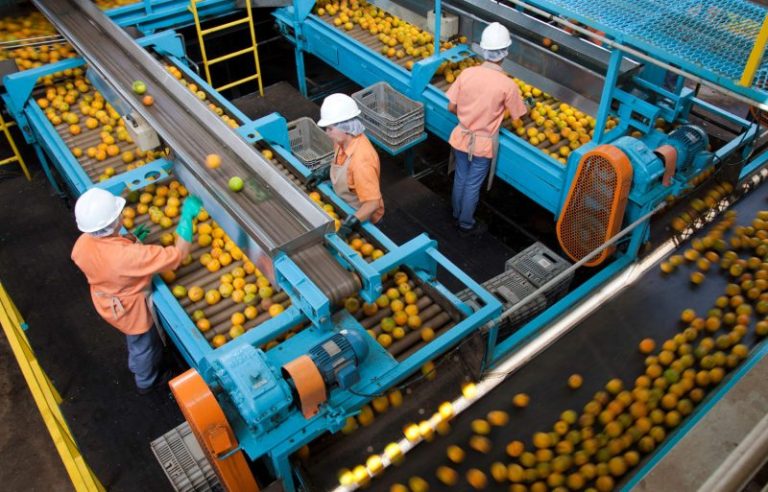
Orange juice prices could rise by 20% to 25%, according to Johanna Foods, a small U.S. business suing the White House over tariffs threatened against Brazil.

President Donald Trump said in a July 9 letter to President Luiz Inacio Lula da Silva that he would apply a 50% tariff to all imports from Brazil starting Aug. 1.

Trump said the high tariff rate was necessary because of ‘the way Brazil has treated former President Bolsonaro.’

Prosecutors in Brazil have alleged that Bolsonaro was part of a scheme that included a plan to assassinate the country’s current president, who defeated him in the last election, and Supreme Federal Court Justice Alexandre de Moraes. Bolsonaro has denied any wrongdoing.

Trump also said Brazil was censoring U.S.-based social media platforms and was running “unsustainable Trade Deficits” with the United States.

However, the United States has a goods trade surplus with Brazil — more than $7 billion last year, according to data from the Office of the U.S. Trade Representative.

Johanna Foods, which says it supplies nearly 75% of all private label “not from concentrate” orange juice to customers in the U.S., says those arguments do not constitute an economic emergency and therefore the president does not have the power to levy this tariff.

“The Brazil Letter does not refer to any legal or statutory authority under which the Brazil Tariff can be imposed by the President,” the company’s attorney Marc Kaplin writes in a filing.

“The Brazil Letter does not constitute a proper executive action, is not an Executive Order, does not reference or incorporate any Executive Orders or modify or amend any existing Executive Order,” the attorney continued.

The company said some of its customers include Walmart, Aldi, Wegman’s, Safeway and Albertsons.

Johanna Foods CEO Robert Facchina said the duty would result in an estimated $68 million hit, exceeding any single year of profits since the company was created in 1995.

“The Brazil Tariff will result in a significant, and perhaps prohibitive, price increase in a staple American breakfast food,” the lawsuit reads.

“The not from concentrate orange juice ingredients imported from Brazil are not reasonably available from any supplier in the United States in sufficient quantity or quality to meet the Plaintiffs’ production needs.”

Orange juice prices have already been rising across the country. Over the last year, the average price of a 16-ounce container rose 23 cents, or more than 5%, to $4.49, according to the Bureau of Labor Statistics.

Orange juice futures, the global benchmark that tracks the commodity, have also jumped recently. During the last month, they are up nearly 40%, with most of that increase coming on the heels of Trump’s threat.

Brazil’s Supreme Court ruled last month that social media companies can be held accountable for the content posted on their platforms. Elon Musk’s social media site, X, was also briefly banned last year in Brazil after Musk refused to comply with a court request to ban some accounts.

Facchina says layoffs of union manufacturing employees, administrative staff and a reduced production capacity at the company’s Flemington, New Jersey, and Spokane, Washington, facilities are near-certain should these tariffs go into effect. Johanna Foods employs almost 700 people across Washington state and New Jersey.

Brazil was the 18th-largest source of U.S. goods imports last year, with more than $42 billion worth of imports entering the country, according to U.S. International Trade Commission data.

In its legal filing, the company asks the Court of International Trade to declare that the International Emergency Economic Powers Act does not grant Trump the statutory authority to impose the tariffs against Brazil, and that the president has not identified a national emergency or “unusual and extraordinary threat” as required by the IEEPA law to impose the tariffs.

In response to the lawsuit, a White House spokesperson said the administration is ‘legally and fairly using tariff powers that have been granted to the executive branch by the Constitution and Congress to level the playing field for American workers and safeguard our national security.”

This post appeared first on NBC NEWS


(TheNewswire)


  NOT   INTENDED   FOR   DISTRIBUTION   TO   UNITED   STATES   NEWS   WIRE   SERVICES   OR   FOR DISSEMINATION IN THE UNITED STATES  


VANCOUVER, BC TheNewswire – July 22, 2025 Heritage Mining Ltd. (CSE: HML FRA: Y66) (‘ Heritage ‘ or the ‘ Company ‘) is pleased to announce a non-brokered offering of up to 18,187,725 units (the ‘ LIFE Offering ‘) for gross proceeds of up to C$636,570 with a lead order from a strategic investor of ~C$450,000. The Company is also pleased to announce it has entered into an asset purchase agreement with Advanced Gold Exploration Inc. to acquire a 75% interest in the Melba Mine (a former past producer from early-mid 1900’s) which, subject to the satisfaction of conditions precedent and due diligence, will facilitate the Company’s entrance into the Kirkland Lake Gold District. The Company also provides an exploration update on its Drayton-Black Lake and Contact Bay projects.


  July 2025 Corporate Update Highlights  


  •  

    LIFE Offering announced with a lead order from a strategic investor totaling ~C$450,000.


  •   

  July 2025 Exploration Update Highlights  


  •  

    Drilling at Drayton-Black Lake (‘ DBL ‘) – Zone 3 Extension confirms gold mineralization in a broad quartz vein structure as initially reported in Heritage’s press release dated May 15, 2025.


    •  

      DBL – Zone 3 Extension drilling intersected multiple zones of locally anomalous gold mineralization in drill hole HML25-011 associated with a 46m wide quartz zone, including 0.95 g/t Au over 1m from 237.00m; and


    •  

    •  

        Zone 3 Extension drill hole HML25-012 tested a different magnetic lineament at the periphery at the Lake of the Bays Batholith and the contact zone of this batholithic body.  Two n arrow zones of up to 0.43 g/t Au over 1m were intersected.


    •  

  •  

  •  

    Drilling at Contact Bay is completed. A total of 10 holes for 2,726m were drilled with assays pending.


    •  

      Drill holes locally intersected narrow quartz sulfide veins and visible gold was observed on one drill hole RGN25-004 (Figure 4).


    •  

  •  

  ‘We are pleased to welcome a new strategic shareholder, who aligns with Heritage’s view that systematic active exploration across all properties is the key driver. We look forward to generating value to all stakeholders.  


  The proposed Melba Mine acquisition (pending due diligence) offers the Company exposure to the well-known mining camp (Kirkland Lake and Timmins). We look forward to applying our active systemic exploration approach to this area in short order post-acquisition.  


  Although assays remain pending from Zone 3 Extension at DBL and Contact Bay we appreciate the technical success and confirmation of anomalous gold in a new area never before prospected in the Sioux Lookout Area. This is the broadest quartz vein ever intersected within the Sioux Lookout District and warrants further drilling and evaluation along strike.’   Commented Peter Schloo, President CEO, and Director of Heritage


  2025 Corporate Update  


The Company has concurrently filed an offering document in respect of the LIFE Offering (the ‘ Offering Document ‘) on its profile on SEDAR+. The following is a brief summary of the terms of the LIFE Offering but investors should review the Offering Document in detail prior to making an investment decision:


  Offering:  


A non- brokered ‘best-efforts basis’ private placement financing of up to 18,187,725 units (the ‘ LIFE   Offering ‘) for gross proceeds of up to $635,570 for units of the Company (each, a ‘ Unit ‘) at a price of $0.035 per Unit, with each Unit being comprised of one (1) common share of the Company (each a ‘ Common Share ‘) and one (1) common share purchase warrant   (a ‘ Warrant ‘) granting the holder the right to purchase one (1) additional Common Share of the Company (a ‘ Warrant   Share ‘) at a price of $0.05 at any time on or before 36 months from the Closing Date (as defined herein), which securities shall be offered pursuant to the listed issuer financing exemption under Part 5A of National Instrument 45-106 – Prospectus Exemptions (‘ NI 45-106 ‘).


  Offering Price:  


The Offered Securities shall be offered at the price of $0.035 per Unit.


  Offering Amount:  


The maximum offering amount under the LIFE Offering shall be for aggregate proceeds of $636,570, assuming full subscription pursuant to the LIFE Offering and the full exercise of the Broker’s Units (as defined below). There is no minimum offering amount pursuant to the LIFE Offering .  


The maximum number of securities issuable under the LIFE Offering consists of an aggregate of up to 18,187,725 Units for gross proceeds of up to $636,570.


  Closing   Date: The closing of the LIFE Offering (the ‘ Closing   Date ‘) is expected to take place on or about July 31, 2025.


  Fees and Commissions  


Cash fee and broker warrants, as detailed below.


  Cash Fee: The Company will pay cash fees equal to 7.0% of gross proceeds raised in respect of the Offering.


  Broker Units:   The Company will issue broker units (each a ‘ Broker Unit ‘) equal to 7% of the Units sold under the Offering at an exercise price equal to $0.035 per Broker Unit, with each Broker Unit consisting of one (1) Common Share and one (1) Broker Warrant, with each Broker Warrant granting the holder the right to purchase one (1) additional Common Share of the Company (each, a ‘ Warrant   Share ‘).  


  Melba Asset Purchase Agreement Summary:  


   Purchase Price  


  1.  

      Heritage shall issue the Vendor Common Shares having a deemed value of C$350,000   Consideration   Shares   ‘)   at   a price per Consideration Share equal to the closing price of the Common Shares in the capital of Heritage on the trading day preceding the Closing Date and subject to the following release schedule (which the Vendor hereby agrees will be reflected in restrictive legends applied to the certificates representing the Consideration Shares):  


  2.  

  (a)   25% of the Consideration Shares released on Closing Date;  


  (b)   25% of the Consideration Shares released on the date that is 90 days after the Closing Date;  


  (c)   25% of the Consideration Shares released on the date that is 180 days after the Closing Date; and  


  (d)   25% of the Consideration Shares released on the date that is 270 days after the Closing Date.


  Closing of the acquisition is subject to customary conditions precedent for a transaction of this nature, including the approval of the Canadian Securities Exchange.  


  Melba Mine Property Description  


The Melba Mine is located in Northwestern, Ontario, Canada Southwest of Matheson Ontario (Figure One) approximately seven kilometres west off the King’s Highway 11, on the section of highway travelling from Kirkland Lake to Cochrane. The Melba Mine is located on the west central part of Ontario close to the Ontario and Quebec border. It’s fortunate the location of the Melba Property lies within the central hub of over 100 years of mining activities, including active mining operations within the Abitibi Greenstone Belt.  


The claim package includes single cell mining claims spanning 1,522.70 hectares and one mining lease.


  Property Geology  


  The governing element of structure appears to be a contact between dioritic greenstone to the south and argillaceous greywacke to the north. The contact trends north 50-60 degrees west and dips northward. Whether the greywacke is part of a synclinal trough of sediments that are younger than the greenstone or whether it is part of a sedimentary band belonging to the greenstone series is an unknown factor at present. The greywacke is cut by dikes of porphyry that run parallel to the contact. The main gold bearing vein, usually described as the ‘Blue Vein’, also runs parallel to the contact but lies within the sediments. It strikes north 55 degrees west   and dips northward 55 degrees. It is accompanied by shearing and alteration, also by a pattern of cross fracturing that has produced faulting in the main vein and has led to the development of irregular veins in the adjacent rocks. The main vein is displaced 60 feet (18.2 metres) northward near the shaft and other displacements have been found underground. The picture resembles that of the sedimentary belt in the Beatty-Munro area. Numerous feldspar porphyry, diorite and basic syenite dikes were intersected by the drilling. Overall, a significant amount of the drill core showed alteration, some highly, while carbonate stringers were numerous and visible gold was noted in drill core.  


Click Image To View Full Size


Figure 1: Property Map – Melba Mine   


  2025 Exploration Update  


Assays were delayed due to operational issues at the lab and core shack facilities; corrective measures have been implemented, and normal operations are expected to resume shortly.


  Discussion of Results  


DBL – Zone 3 Extension


  The 2025 drill program at Zone 3 Extension targeted granite-hosted mineralised quartz-vein structures that were first observed in the HML Zone 3 drilling program of August 2024 (Figure 3).  The recently completed program comprised 4 holes for a total 1105.5m targeting a northeast-southwest trending magnetic lineament.  Drilling is considered a technical success with two ( HML25-011 and 013 )   of the four holes intersecting a well-developed quartz vein structure, including drill hole HML25-013 that intersected a 74m wide vein structure (true width unknown).  Assays received for HML25-010, 011 and 012, with assays pending for HML25-013 & 014.


Assays for HML25-010 & 011 confirm locally elevated gold values in the vein structure, with the best intersection of 0.95g/t gold over 1 meter in drill hole HML25-011 (Figure 2). Although gold mineralization is low grade, significant exploration potential remains along strike of this well-defined linear mag feature, and   further drilling is proposed to test this ‘mega-quartz vein structure’.  


  HML25-011 Highlights:  


  •  

    0.07 g/t Au over 5.5m from 212.50m to 217.00m


    •  

      Including 0.27g/t Au from 213.47m


    •  

  •  

  •  

    0.95 g/t Au over 1m from 237.00m (within Quartz Vein Zone)


  •  

    
Click Image To View Full Size


Figure 2: HML25-011 Box 56 – Yellow Box indicates from 237.00m to 238.00m


Click Image To View Full Size


  Figure 3: Showing the completed and proposed holes testing the northeast-southwest trending magnetic lineament  


  Contact Bay Rognon Mine Area  


  The 2025 drill program at Contact Bay is completed, targeting a mineralised quartz-vein structure that was historically mined in the early 1900’s.  The recently completed program comprised 10 holes for a total 2726.0m. The geology comprises metavolcanic rocks cut by granitoid batholiths and gabbroic sills and stocks.  The metavolcanic rocks are locally cut by cm-scale quartz-sulphide veins and drill hole RGN25-004 intersected visible gold in a quartz-pyrite vein (Figure 4).  Assays are pending for all holes.


Click Image To View Full Size


  Figure 4: Showing the magnetic map for the Contact Bay Rognon Mine area and an image of the visible gold intersected in RGN25-004.


  Conclusion  


Although some assays remain pending, the Company believes additional drilling is warranted to test along this major quartz vein structure along strike.   The Company has proposed an additional 10 holes to test along a 2km strike length of the magnetic lineament (Figure 3).


  Qualified Person  


  Stephen Hughes P. Geo, Strategic Advisor for the Company, serves as a qualified person as defined by National Instrument 43-101 – Standards of Disclosure for Mineral Projects and has reviewed the scientific and technical information in this news release, approving the disclosure herein.  


  Technical Program  


  Heritage Mining adheres to a strict QA/QC protocol for handling, sampling, sample transportation and analyses.  Chain-of-custody protocols are designed to ensure security of samples until their delivery at the laboratory.  


  Sampling, Sub-sampling, and Laboratory Analysis for Heritage Mining Drayton Black Lake Project All drilling at the Drayton Black Lake project recovers NQ core. Drill core is systematically split in half using a diamond saw. A qualified geologist examines the drill core, marking intervals for sampling and indicating the cutting line. Sample lengths are typically 1.0 metre, adjusted to a minimum length of 0.5 metre as necessary to respect lithological and/or mineralogical contacts and to isolate narrow veins or structures that may contain higher-grade mineralization.  


  Technicians saw the core along the cutting lines determined by the geologist. One half of the core is retained as a witness sample, while the other half is submitted for analysis. Individual sample bags are securely sealed   and placed into sealed bags, which are then clearly marked with their contents.  


  Heritage Mining submits samples for gold determination by PhotonAssay to ALS Canada Ltd. (‘   ALS   ‘). ALS operates under a commercial contract with Heritage Mining.  


  Drill core samples are shipped to ALS for sample preparation at their facilities in Thunderbay Ontario. ALS is an ISO/IEC 17025:2017 accredited laboratory for the PhotonAssay method in addition to a variety of diverse metal determination methods.  


  Analytical Procedures  


  The ALS procedure for PhotonAssay involves lab applying preparation codes LOG-21 (sample logging via barcode), CRU-31 (fine crushing so that 70% passes through a 2mm screen) and SPL-32a (rotary splitting of a representative ~500g subsample)  followed by analytical code Au-PA01 which is a non-destructive gold analysis method using high-energy X-rays with a gold detection range from 0.03 ppm to 350ppm.  


  After gold assays are returned, Heritage then may choose to perform multi-element assays on selected samples based on the gold results. In these cases, sample preparation codes FND-05 (locate and use remaining crushed material from Au-PA01) and PUL-32m (pulverization so that >85% passes 75 µm screen) are then applied followed by analytical code ME-MS61 (multi-element ICP-MS analysis for base metals, pathfinder elements, lithophile elements and rare earth elements).  


  ________________________________________  


  Quality Assurance/Quality Control (QA/QC)  


  The drill program design, QA/QC, and interpretation of results are performed by qualified persons employing a rigorous QA/QC program consistent with industry best practices. Standards and blanks account for a minimum of 10% of the samples, in addition to the laboratories’ internal quality assurance programs.  


  Quality Control data are meticulously evaluated upon receipt from the laboratories for any failures. Appropriate corrective action is taken if assay results for standards and blanks fall outside allowed tolerances. All results disclosed by Heritage Mining have successfully passed the Company’s stringent quality control protocols.  


  The Company does not recognize any factors of drilling, sampling, or recovery that could materially affect the accuracy or reliability of the assay data disclosed. The assay data disclosed in this press release have been verified by the Company’s Qualified Person against the original assay certificates.  


  Heritage Mining notes that it has not completed any economic evaluations of its Drayton-Black Lake Project, and the project does not currently have any resources or reserves.  


  ABOUT   HERITAGE   MINING   LTD.  


The Company is a Canadian mineral exploration company advancing its two high grade gold-silver-copper projects in Northwestern Ontario. The Drayton-Black Lake and the Contact Bay projects are located near Sioux Lookout in the underexplored Eagle-Wabigoon-Manitou Greenstone Belt . Both projects benefit from a wealth of historic data, excellent site access and logistical support from the local community.


For further information, please contact:  


  Heritage   Mining   Ltd.  


Peter Schloo, CPA, CA, CFA


President, CEO and Director


Phone: (905) 505-0918


Email:   peter@heritagemining.ca   


  FORWARD-LOOKING   STATEMENTS  


This news release contains certain statements that constitute forward looking information within the meaning of applicable securities laws. These statements relate to future events of the Company. Any statements that express or involve discussions with respect to predictions, expectations, beliefs, plans, projections, objectives, assumptions or future events or performance (often, but not always, using words or phrases such as ‘seek’, ‘anticipate’, ‘plan’, ‘continue’, ‘estimate’, ‘expect’, ‘forecast’, ‘may’, ‘will’, ‘project’, ‘predict’, ‘potential’, ‘targeting’, ‘intend’, ‘could’, ‘might’, ‘should’, ‘believe’, ‘outlook’ and similar expressions are not statements of historical fact and may be forward looking information. All statements, other than statements of historical fact, included herein are forward-looking statements.


Forward looking information involves known and unknown risks, uncertainties and other factors which may cause the actual results, performance, or achievements of the Company to be materially different from any future results, performance or achievements expressed or implied by the forward-looking information. Such risks include, among others, the inherent risk of the mining industry; adverse economic and market developments; the risk that the Company will not be successful in completing additional acquisitions; risks relating to the estimation of mineral resources; the possibility that the Company’s estimated burn rate may be higher than anticipated; risks of unexpected cost increases; risks of labour shortages; risks relating to exploration and development activities; risks relating to future prices of mineral resources; risks related to work site accidents, risks related to geological uncertainties and variations; risks related to government and community support of the Company’s projects; risks related to global pandemics and other risks related to the mining industry. The Company believes that the expectations reflected in such forward-looking information are reasonable, but no assurance can be given that these expectations will prove to be correct and such forward‐looking information should not be unduly relied upon. These statements speak only as of the date of this news release. The Company does not intend, and does not assume any obligation, to update any forward‐looking information except as required by law.  


This document does not constitute an offer to sell, or a solicitation of an offer to buy, securities of the Company in Canada, the United States, or any other jurisdiction. Any such offer to sell or solicitation of an offer to buy the securities described herein will be made only pursuant to subscription documentation between the Company and prospective purchasers. Any such offering will be made in reliance upon exemptions from the prospectus and registration requirements under applicable securities laws, pursuant to a subscription agreement to be entered into by the Company and prospective investors.


Copyright (c) 2025 TheNewswire – All rights reserved.



News Provided by TheNewsWire via QuoteMedia

This post appeared first on investingnews.com