Author

admin

Browsing

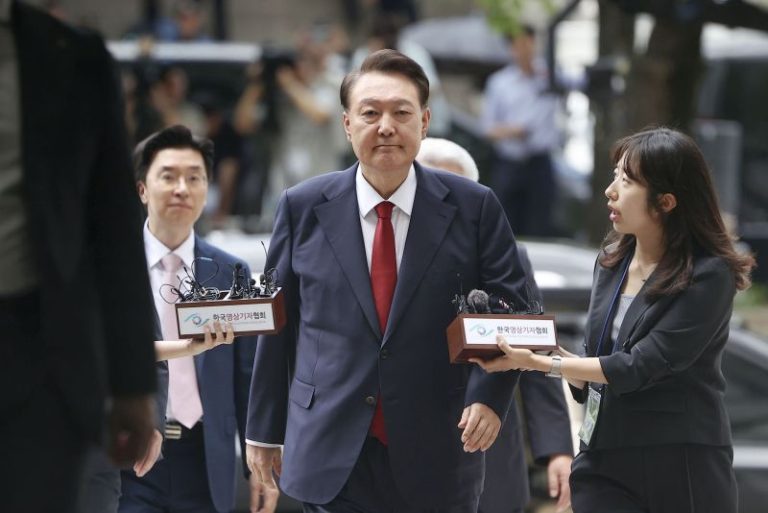
Former South Korean President Yoon Suk Yeol is back in custody over an independent investigation into his declaration of martial law last year.

According to the independent counsel leading the probe, the Seoul Central District Court approved a warrant for Yoon’s re-arrest early Thursday morning, because of concerns over the destruction of evidence.

Yoon’s shocking December declaration plunged South Korea into a constitutional crisis and was widely condemned as striking at the heart of the nation’s democracy. He reversed course within six hours, after lawmakers forced their way into parliament and voted unanimously to block it.

Yoon was detained in January on charges of leading an insurrection, becoming the first president in South Korean history to be arrested while in office. He was released in March after the Seoul court canceled his arrest warrant for technical reasons.

In April, the Constitutional Court unanimously ruled to remove Yoon from office, calling his actions a “grave betrayal of the people’s trust.”

He has since faced multiple criminal investigations. According to the independent counsel, Yoon is now facing charges including abuse of power and obstruction of official duties.

In a leaked warrant request, the counsel alleged that Yoon declared martial law in an attempt to overcome political gridlock caused by the opposition party’s majority in the National Assembly and its impeachment of several senior officials.

He is accused of deploying troops to block lawmakers from entering the national assembly building to overturn the decree and of giving orders to “break down the doors” of parliament and “drag people out, even if it takes firing guns.” Yoon’s lawyers deny he ordered the use of firearms.

The counsel also alleges that Yoon instructed his commander to prioritize the arrest of key political figures, including the then opposition leader Lee Jae-myung, who is now the country’s president. He is further accused of ordering the presidential security service to obscure communication records from secure phones used afte the martial law was lifted.

In addition, Yoon is accused of obstructing warrant executions by the Corruption Investigation Office (CIO) in December and January by mobilizing the presidential security detail and authorizing the use of force.

Yoon’s lawyers said the warrant request was “rushed and unjustified” and called the investigation “flawed and politically motivated.” They said the independent counsel’s questions during Yoon’s investigation were only at a basic level regarding the allegations, and that the warrant request did not include any treason charges.

They added that most individuals involved have already been detained and are standing trial, so all relevant evidence has been secured and there is no risk of evidence being destroyed.

Independent counsel teams were established to investigate Yoon following his removal from office, and the election of Lee in a snap presidential election in June.

This post appeared first on cnn.com

Russia launched a large-scale aerial assault on Ukraine’s capital Kyiv in the early hours of Thursday, marking a second consecutive night of ferocious attacks on the country, as Russia ramps up its bombardment more than three years into the war.

At least two people were killed and more than a dozen were wounded in Thursday’s attacks, which involved multiple drones and cruise missiles, according to Kyiv authorities.

The offensive comes one night after Russia conducted its largest drone assault since the start of its full-scale invasion, launching 728 drones and 13 missiles in strikes that killed at least one person, according to Ukrainian officials.

The damage on Thursday morning appeared to be substantial. Residential buildings, cars, warehouse facilities, offices and other buildings were on fire across the city, Tymur Tkachenko, head of Kyiv’s military administration, said.

Tkachenko urged residents to stay in shelters and avoid windows and balconies, as Ukraine’s air defense systems worked to repel the attack.

“Property can be restored, but human life cannot,” Tkachenko said.

Russia has significantly scaled up its air attacks on Ukraine in recent weeks, launching near-nightly assaults involving hundreds of drones and missiles.

Work towards a peace deal has simultaneously slowed down, triggering frustration in the White House, where US President Trump on Tuesday took aim at Russia’s leader Vladimir Putin.

“We get a lot of bullsh*t thrown at us by Putin, if you want to know the truth,” Trump said in a Cabinet meeting. “He’s very nice all of the time, but it turns out to be meaningless.”

Russia’s sustained assault in recent days has injected new urgency into questions surrounding Washington’s commitment to defending Ukraine, as the Trump administration pledged to send additional defensive weaponry to Kyiv in an apparent policy reversion.

Moscow downplayed Trump’s harsh words in a press briefing Wednesday. A Kremlin spokesperson said it is reacting “calmly” to Trump’s criticism of Putin. “Trump in general tends to use a fairly tough style and expressions,” Dmitry Peskov said, adding Moscow hopes to continue dialogue with Washington.

US Secretary of State Marco Rubio is expected to meet his Russian counterpart Sergey Lavrov on the sidelines of the ASEAN summit in Malaysia on Thursday.

Following Wednesday’s record drone attack, Ukraine’s President Volodymyr Zelensky said there had been “so many attempts to achieve peace and cease fire, but Russia rejects everything.”

International law violations

Thursday’s attack on Kyiv follows a landmark ruling by Europe’s top human rights court Wednesday, which found that Russia committed major international law violations in Ukraine.

The European Court of Human Rights (ECHR) ruled on four cases concerning Russian military operations in Ukraine since 2022, as well as the conflict in eastern Ukraine which began in 2014 and includes the downing of Malaysia Airlines flight MH17.

It found that Russia had committed a pattern of human rights violations in Ukraine since the start of its full-scale invasion in February 2022.

The ECHR also ruled Russia was responsible for the downing of flight MH17 in 2014. Moscow has repeatedly denied responsibility for MH17’s destruction, which killed 298 people.

This post appeared first on cnn.com

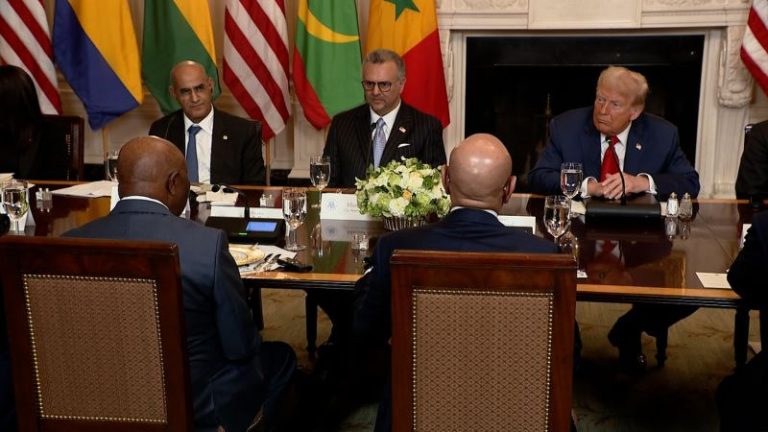
US President Donald Trump praised Liberian President Joseph Boakai for his strong grasp of the English language on Wednesday. But the African leader was educated in Liberia, where English is the official language.

As he hosted five African leaders at the White House, Trump asked Boakai: “Such good English, it’s beautiful. Where did you learn to speak so beautifully?”

Boakai informed Trump of his place of education, prompting Trump to express his curiosity. “That’s very interesting,” he said, “I have people at this table who can’t speak nearly as well.”

Liberia was founded in 1822 by the American Colonization Society whose goal was to resettle freed slaves in Africa. The country declared independence from the American Colonization Society in 1847, and a variety of languages are spoken in the country today, with English being the official language.

Several Liberians voiced their offense over Trump’s comment to Boakai, given the US president’s past remarks on African countries and the colonial legacy left by the US organization in Liberia.

“For him to ask that question, I don’t see it as a compliment. I feel that the US president and people in the west still see Africans as people in villages who are not educated.”

Veronica Mente, a South African politician, questioned on X: “what stops [Boakai] from standing up and leav[ing]?”

The White House Press Office defended Trump’s statement on Wednesday.

White House deputy press secretary Anna Kelly said that Trump’s comment was a “heartfelt compliment” and that “reporters should recognize that President Trump has already done more to restore global stability and uplift countries in Africa and around the world than Joe Biden did in four years.”

“What President Trump heard distinctly was the American influence on our English in Liberia, and the Liberian president is not offended by that,” Nyanti said.

“We know that English has different accents and forms, and so him picking up the distinct intonation that has its roots in American English for us was just recognizing a familiar English version,” she continued.

Trump has previously applauded the English language abilities of other leaders during diplomatic meetings. During a press conference with German Chancellor Friedrich Merz, Trump complimented his “good English” and asked if it was as good as his German.

Merz laughed and noted that he tries to “understand almost everything” and said he makes an effort “to speak as good as I can.”

The US president has centered the English language as part of this “America First” platform. During a 2015 presidential debate, Trump asserted that the US is “a country where we speak English.” In March, he signed an executive order making English the official language of the US.

Trump has previously landed in hot water for things he has said about the African nations. In 2018, the president referred to migrants from African countries and other nations as coming from “shithole countries.”

In May, he lectured South African President Cyril Ramaphosa on false claims that White South African farmers are the victims of a genocide.

Trump struck a different tone on Wednesday as he met with the leaders of Gabon, Guinea-Bissau, Liberia, Mauritania, and Senegal, praising their countries as “all very vibrant places with very valuable land, great minerals, great oil deposits, and wonderful people.”

In turn, he was met with approval from the African leaders, who heaped praise on the president as they urged him to invest in their countries and develop their plentiful natural resources.

Boakai even remarked that Liberia “(believes) in the policy of making America great again.”

This post appeared first on cnn.com

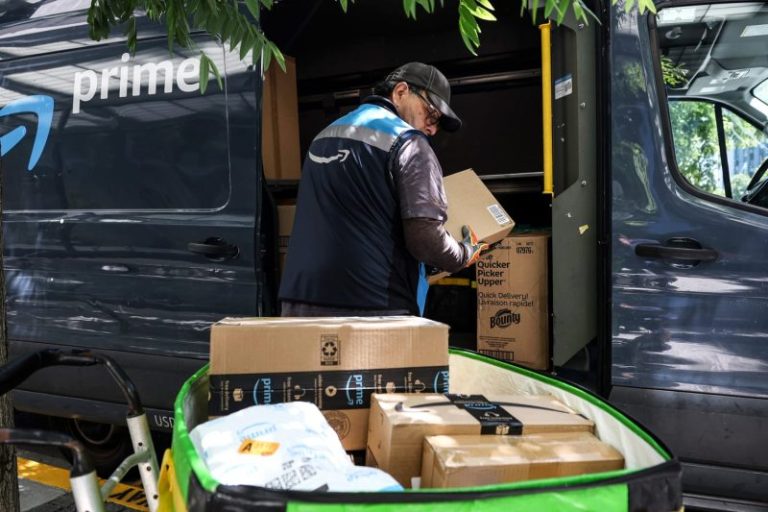
Amazon is extending its annual Prime Day sales and offering new membership perks to Gen Z shoppers amid tariff-related price worries and possibly some consumer boredom with an event marking its 11th year.

For the first time, Seattle-based Amazon is holding the now-misnamed Prime Day over four days. The e-commerce giant’s promised blitz of summer deals for Prime members started at 3:01 a.m. Eastern time on Tuesday and ends early Friday.

Amazon launched Prime Day in 2015 and expanded it to two days in 2019. The company said this year’s longer version would have deals dropping as often as every 5 minutes during certain periods.

Prime members ages 18-24, who pay $7.49 per month instead of the $14.99 that older customers not eligible for discounted rates pay for free shipping and other benefits, will receive 5% cash back on their purchases for a limited time.

Amazon executives declined to comment on the potential impact of tariffs on Prime Day deals. The event is taking place two and a half months after an online news report sparked speculation that Amazon planned to display added tariff costs next to product prices on its website.

White House Press Secretary Karoline Leavitt denounced the purported change as a “hostile and political act” before Amazon clarified the idea had been floated for its low-cost Haul storefront but never approved.

Amazon’s past success with using Prime Day to drive sales and attract new members spurred other major retail chains to schedule competing sales in July. Best Buy, Target and Walmart are repeating the practice this year.

Like Amazon, Walmart is adding two more days to its promotional period, which starts Tuesday and runs through July 13. The nation’s largest retailer is making its summer deals available in stores as well as online for the first time.

Here’s what to expect:

Amazon expanded Prime Day this year because shoppers “wanted more time to shop and save,” Amazon Prime Vice President Jamil Ghani recently told The Associated Press.

Analysts are unsure the extra days will translate into more purchases given that renewed inflation worries and potential price increases from tariffs may make consumers less willing to spend. Amazon doesn’t disclose Prime Day sales figures but said last year that the event achieved record global sales.

Adobe Digital Insights predicts that the sales event will drive $23.8 billion in overall online spending from July 8 to July 11, 28.4% more than the similar period last year. In 2024 and 2023, online sales increased 11% and 6.1% during the comparable four days of July.

Vivek Pandya, lead analyst at Adobe Digital Insights, noted that Amazon’s move to stretch the sales event to four days is a big opportunity to “really amplify and accelerate the spending velocity.”

Caila Schwartz, director of consumer insights and strategy at software company Salesforce, noted that July sales in general have lost some momentum in recent years. Amazon is not a Salesforce Commerce Cloud customer, so the business software company doesn’t have access to the online giant’s e-commerce sales and so is not privy to Prime Day figures.

“What we saw last year was that (shoppers) bought and then they were done, ” Schwartz said. “We know that the consumer is still really cautious. So it’s likely we could see a similar pattern where they come out early, they’re ready to buy and then they take a step back.”

Amazon executives reported in May that the company and many of its third-party sellers tried to beat big import tax bills by stocking up on foreign goods before President Donald Trump’s tariffs took effect. And because of that move, a fair number of third-party sellers hadn’t changed their pricing at that time, Amazon said.

Adobe Digital Insights’ Pandya expects discounts to remain on par with last year and for other U.S. retail companies to mark 10% to 24% off the manufacturers’ suggested retail price between Tuesday and Friday.

Salesforce’s Schwartz said she’s noticed retailers becoming more precise with their discounts, such as offering promotion codes that apply to selected products instead of their entire websites.

Amazon Prime and other July sales have historically helped jump-start back-to-school spending and encouraged advance planners to buy other seasonal merchandise earlier. Analysts said they expected U.S. consumers to make purchases this week out of fear that tariffs will make items more expensive later.

Brett Rose, CEO of United National Consumer Supplies, a wholesale distributor of overstocked goods like toys and beauty products, thinks shoppers will go for items like beauty essentials.

“They’re going to buy more everyday items,” he said.

As in past years, Amazon offered early deals leading up to Prime Day. For the big event, Amazon said it would have special discounts on Alexa-enabled products like Echo, Fire TV and Fire tablets.

Walmart said its July sale would include a 32-inch Samsung smart monitor priced at $199 instead of $299.99; and $50 off a 50-Inch Vizio Smart TV with a standard retail price of $298.00. Target said it was maintaining its 2024 prices on key back-to-school items, including a $5 backpack and a selection of 20 school supplies totaling less than $20.

Independent businesses that sell goods through Amazon account for more than 60% of the company’s retail sales. Some third-party sellers are expected to sit out Prime Day and not offer discounts to preserve their profit margins during the ongoing tariff uncertainty, analysts said.

Rose, of United National Consumer Supplies, said he spoke with third-party sellers who said they would rather take a sales hit this week than use up a lot of their pre-tariffs inventory now and risk seeing their profit margins suffer later.

However, some independent businesses that market their products on Amazon are looking to Prime Day to make a dent in the inventory they built up earlier in the year to avoid tariffs.

Home fragrance company Outdoor Fellow, which makes about 30% of its sales through Amazon’s marketplace, gets most of its candle lids, labels, jars, reed diffusers and other items from China, founder Patrick Jones said. Fearing high costs from tariffs, Jones stocked up at the beginning of the year, roughly doubling his inventory.

For Prime Day, he plans to offer bigger discounts, such as 32% off the price of a candle normally priced at $34, Jones said.

“All the product that we have on Amazon right now is still from the inventory that we got before the tariffs went into effect,” he said. “So we’re still able to offer the discount that we’re planning on doing.”

Jones said he was waiting to find out if the order he placed in June will incur large customs duties when the goods arrive from China in a few weeks.

This post appeared first on NBC NEWS

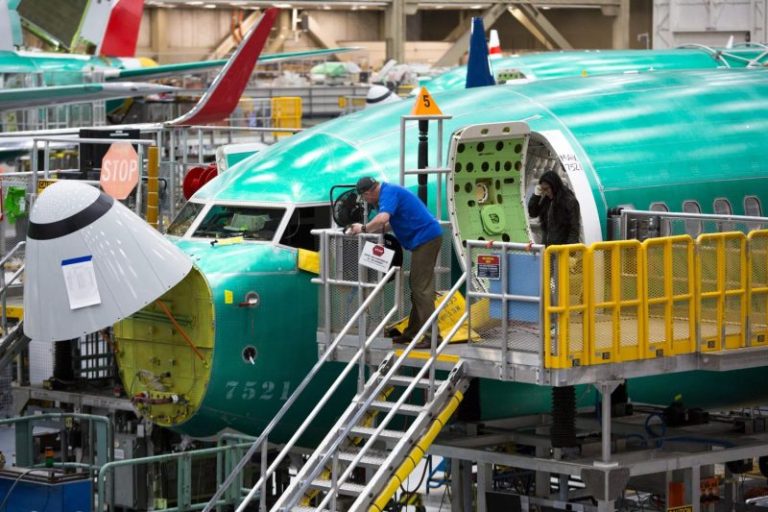
Boeing delivered 60 airplanes last month, the most since December 2023, as the plane maker seeks to raise production of its bestselling 737 Max jets after a series of manufacturing and safety problems.

The tally was the highest since before a door plug from one of its new 737 Max 9 planes blew out midair in January 2024, sparking a new crisis for the company and slowing production and deliveries of aircraft. Of the monthly total, 42 were 737 Maxes, going to customers including Southwest Airlines, Alaska Airlines and United Airlines.

CEO Kelly Ortberg, who took the top job at Boeing last August, has said the company has made progress in improving production rates and quality on its factory lines.

For the three months ended June 30, Boeing handed over 150 airplanes, its best second quarter since 2018, before two crashes of Max planes five months apart grounded the jets and sparked a multiyear crisis at the top U.S. exporter. That was also the last year Boeing posted an annual profit. Its problems also gave rival Airbus a bigger lead over Boeing.

Boeing this spring had been producing about 38 Max aircraft a month and will need Federal Aviation Administration approval to go above that limit, which the agency set after the door plug accident. Ortberg said at a Bernstein investor conference in late May that he’s confident that the company could increase production to 42 of the jets a month.

The company booked 116 gross orders in June, or 70 net orders when including cancellations and accounting adjustments. Boeing often removes or adds orders to its backlog for a variety of reasons including customers’ financial health.

Boeing’s backlog stood at 5,953 as of June 30.

The manufacturer is set to report second-quarter financial results on July 29, when investors will be focused on Ortberg’s plan to increase production and aircraft deliveries.

This post appeared first on NBC NEWS

Australian universities may lose funding if they’re not judged to be doing enough to address anti-Jewish hate crimes, according to new measures proposed by the country’s first antisemitism envoy.

Jillian Segal was appointed to the role a year ago in response to a surge in reports of attacks against Jewish sites and property in Australia, following Israel’s invasion of Gaza, and was tasked with combating antisemitism in the country.

Standing alongside Prime Minister Anthony Albanese Thursday, Segal released a report nine months in the making proposing strong measures, including the university funding threats and the screening of visa applicants for extremist views.

“The plan is not about special treatment for one community; it is about restoring equal treatment,” Segal said. “It’s about ensuring that every Australian, regardless of their background or belief, can live, work, learn and prosper in this country.”

Like in the United States, Australian campuses were once the hub of pro-Palestinian protests led by students who pitched tents demanding action to stop Israel’s assault on Gaza.

The campus protests dwindled after restrictions were tightened and some protesters were threatened with expulsion, a move condemned by the activists as an infringement on free speech.

Segal’s report said antisemitism had become “ingrained and normalised” within academia and university courses, as well as on campuses, and recommended universities be made subject to annual report cards assessing their effectiveness in combating antisemitism.

Universities Australia chief executive Luke Sheehy said the organization had been working “constructively” with the special envoy and its members would “consider the recommendations.”

“Academic freedom and freedom of expression are core to the university mission, but they must be exercised with responsibility and never as a cover for hate or harassment,” he said in a statement.

Surge in antisemitism

Antisemitic attacks in Australia surged 300% in the year following Israel’s invasion of Gaza in October 2023.

In the past week alone, the door of a synagogue was set on fire in Melbourne, forcing 20 occupants to flee by a rear exit, as nearby protesters shouting “Death to the IDF” – using the initials of the Israeli military – stormed an Israeli-owned restaurant.

A man is facing arson charges over the synagogue attack, and three people were charged Tuesday with assault, affray, riotous behavior and criminal damage over the restaurant raid.

The Executive Council of Australian Jewry, which Segal once led and is the umbrella organization for hundreds of Jewish community groups, said the report’s release “could not be more timely given the recent appalling events in Melbourne.”

However, the Jewish Council of Australia, which opposes Israel’s war in Gaza, voiced concerns about Segal’s plan, saying it carried the overtones of US President Donald Trump’s attempts to use funding as a means of control over institutions.

In a statement, the council criticized the plan’s “emphasis on surveillance, censorship, and punitive control over the funding of cultural and educational institutions,” adding that they were “measures straight out of Trump’s authoritarian playbook.”

Max Kaiser, the group’s executive officer, said: “Any response that treats antisemitism as exceptional, while ignoring Islamophobia, anti-Palestinian racism, and other forms of hate, is doomed to fail.”

Education, immigration and the arts

The envoy’s 20-page plan includes sweeping recommendations covering schools, immigration, media, policing and public awareness campaigns.

Segal wants Holocaust and antisemitism education baked into the national curriculum “as a major case study of where unchecked antisemitism can lead,” according to the report.

Arts organizations could be subject to the same restrictions as universities, with threats to pull public funding if they’re found to have engaged in, or facilitated, antisemitism.

“While freedom of expression, particularly artistic expression, is vital to cultural richness and should be protected, funding provided by Australian taxpayers should not be used to promote division or spread false/ distorted narratives,” the report said.

Under the recommendations, tougher immigration screening would weed out people with antisemitic views, and the Migration Act would enable authorities to cancel visas for antisemitic conduct.

Media would be monitored to “encourage accurate, fair and responsible reporting” and to “avoid accepting false or distorted narratives,” the report added.

During Thursday’s press conference, Albanese pointed to an interview on the country’s national broadcaster with a protester, saying the interviewee tried to justify the Melbourne restaurant attack.

“There is no justification for that whatsoever,” he said. “The idea that somehow the cause of justice for Palestinians is advanced by behavior like that is not only delusional, it is destructive, and it is not consistent with how you are able to put forward your views respectfully in a democracy,” he said.

Asked if the country had become less tolerant of different views and had, perhaps, lost the ability to have a debate, Albanese pointed to social media.

“I think there is an impact of social media, where algorithms work to reinforce people’s views,” he said. “They reinforce views, and they push people towards extremes, whether it be extreme left, extreme right. Australians want a country that is in the center.”

His comments came as Grok, X’s AI chatbot, was called out for spreading antisemitic tropes that the company said it was “actively working to remove.”

Albanese said, regarding antisemitic views, “social media has a social responsibility, and they need to be held to account.”

Asked whether anti-Israel protests were fueling the antisemitic attacks, the prime minister said people should be able to express their views without resorting to hate.

“In Israel itself, as a democracy, there is protest against actions of the government, and in a democracy, you should be able to express your view here in Australia about events overseas,” he said. “Where the line has been crossed is in blaming and identifying people because they happen to be Jewish.”

This post appeared first on cnn.com

Silver is a notoriously volatile metal capable of wide price swings in either direction. However, the metal is also seen by many as a safe-haven investment and a hedge against inflation.

While investing in silver bullion is one popular method for gaining exposure, silver-mining companies offer another route.

Silver-mining companies with strong balance sheets and experienced management teams are able to capitalize on high silver prices and weather the storm of low silver prices. Some of the most profitable silver-mining companies are even able to offer investors dividends, which may be appealing for those who are in it for the long haul.

Dividends are especially attractive in the often-unstable mining sector because they give investors a degree of security — if a company pays a dividend, it generally feels that it has the cash to do so and believes it will have the ongoing profits it needs to keep those payments coming.

There are several dividend-paying silver stocks for investors to choose from. The companies below are ordered by dividend yield, and all data is current as of June 19, 2025.

1. Fresnillo (LSE:FRES,OTC Pink:FNLPF)

LSE market cap: GBP 10.66 billion
Dividend yield: 1.71 percent

Major miner Fresnillo bills itself as the world’s leading primary silver producer and a significant gold producer. Its precious metals operations are all located in Mexico, including the Fresnillo mine, which is the largest primary silver mine in the world. It also holds a portfolio of exploration prospects in the country and silver streaming contracts.

Fresnillo’s attributable output from its mines for the full 2024 year came to 56.3 million ounces of silver and 610,646 ounces of gold. The company’s reported mine production for the the first quarter of 2025 comes to 12.4 million ounces of silver and 156,100 ounces of gold.

Dividends from the company are paid in pounds sterling unless shareholders elect to be paid in US dollars. This silver stock pays two dividends per year, with the dividend split unevenly between the two; one third is paid in the interim dividend and two-thirds in the final dividend. Its dividend policy takes business profitability and underlying earnings growth into account, as well as capital requirements and cash flow.

Most recently, Fresnillo paid its 2024 final dividend of 19.6521 pence, or US$0.261, on May 30, 2025. Additionally, due to its 2024 financial performance, including revenue growth of 26.9 percent, the company paid a special one-off dividend of 31.4736 pence, or US$0.418 per share, the same day. This made 2024 Fresnillo’s highest recorded dividend payout year yet.

2. Pan American Silver (TSX:PAAS,NYSE:PAAS)

TSX market cap: C$14.39 billion
NYSE market cap: US$10.55 billion
Dividend yield: 1.41 percent

Founded by Ross Beaty in 1994, Pan American Silver currently operates four primary silver mines, which are located in Mexico, Peru, Bolivia and Argentina. It also has a portfolio of gold mines produce silver as a by-product.

The company’s 2024 silver production came in at 21.1 million ounces alongside 892,000 ounces of gold. For Q1 this year, output reached a total of 5 million ounces of silver and 182,200 ounces of gold.

In May, Pan American announced a definitive agreement to acquire silver producer MAG Silver (TSX:MAG,NYSEAMERICAN:MAG), which owns a 44 percent interest in the large-scale, high-grade Juanicipio mine, operated by Fresnillo.

The highest dividend Pan American has ever paid is US$0.125 per share, and it was able to pay a dividend of that amount a noteworthy nine times in a row between March 18, 2013, and March 13, 2015. The silver stock paid its most recent quarterly dividend on June 2, 2025, at US$0.10 per share.

3. Wheaton Precious Metals (TSX:WPM,NYSE:WPM)

TSX market cap: C$56.63 billion
NYSE market cap: US$41.58 billion
Dividend yield: 0.71 percent

Wheaton Precious Metals is a well-known name in the silver space largely because of its business model — it is the world’s biggest precious metals streaming company.

Streaming companies operate differently from miners, making upfront payments to a variety of metals companies in order to gain the right to purchase all or a portion of their metal production at a low, fixed cost.

The company currently has streaming agreements in place for 18 operating mines and 28 development-stage projects. It is interested in companies operating in politically stable jurisdictions, and states that its value should rise with the price of silver and gold. As a result, Wheaton sees itself offering investors multiple benefits while reducing many of the downside risks that traditional miners face.

Wheaton pays a quarterly dividend. So far in 2025, it has already made two dividend payments of US$0.165 per share, with the latest payment on June 10, 2025.

4. Silvercorp Metals (TSX:SVM)

TSX market cap: C$1.29 billion
NYSE market cap: US$950.85 million
Dividend yield: 0.59 percent

Silvercorp Metals operates the Gaocheng and Ying silver-mining operations in China, and is also focused on acquiring and growing underdeveloped projects with high upside.

Its silver production for its 2025 fiscal year ended March 31 came in at approximately 6.95 million ounces, and the company also produced 7,495 ounces of gold. The company’s 2026 production guidance is set at 7.38 million to 7.6 million ounces of silver and 9,100 to 10,400 ounces of gold.

Silvercorp offers shareholders a semiannual dividend, which it states is “based on a number of factors including commodity prices, market conditions, financial results, cash flows from operations, expected cash requirements and other relevant factors.” Its most recent dividend was paid on June 26, 2025, at a rate of US$0.0125 per share.

5. Hecla Mining Company (NYSE:HL)

NYSE market cap: US$3.76 billion
Dividend yield: 0.59 percent

Last on this list of silver stocks that pay dividends is Hecla Mining Company, which wholly owns and operates four mines and has a large exploration portfolio. The oldest precious metals miner in North America, Hecla is also the largest primary silver producer in the US and Canada and the third largest in the world.

In the US, Hecla operates the Greens Creek and Lucky Friday silver mines, located in Alaska and Idaho respectively. As for Canada, Hecla has the Keno Hill silver mine in the Yukon’s Keno Hill silver district, which is home to some of the world’s highest silver grades, as well as the Casa Berardi gold-silver mine in Québec.

Hecla reported 2024 production of 16.2 million ounces of silver, the second highest in the company’s history, and 142,000 ounces of gold. As for Q1 2025, the company produced 4.1 million ounces of silver and 34,242 ounces of gold.

Hecla pays an annual minimum common stock dividend, distributing it on a quarterly basis. Its dividends previously included a silver-linked component, but the company removed this in February 2025 in part to refocus the capital on growth opportunities.

Currently, the company’s annual minimum common stock dividend is set at US$0.015 per share, divided into quarterly payments of US$0.00375. Its most recent payment was on June 10, 2025.

Hecla also pays a quarterly US$0.875 per share dividend for its Series B cumulative convertible preferred stock, which it states is typically paid on January 1, April 1, July 1 and October 1.

FAQs for silver dividend stocks

What are dividend stocks?

Dividend stocks regularly pay a sum of money to a class of shareholders out of the company’s earnings. To qualify for a dividend payout, an investor must have owned the stock on the ex-dividend date.

Dividends are often issued as cash payments sent to a shareholder’s brokerage account, but can also be issued as stock or discounts on share purchases.

How to invest in dividend stocks?

You can invest in dividend-paying stocks through a stock broker or stock platform, and a stock broker can offer advice on how to take advantage of companies offering dividend programs. Some dividend stocks may also offer a dividend reinvestment program, allowing shareholders to automatically buy new shares with their dividends, either commission-free or at a reduced cost.

How much do dividend stocks pay?

A company’s board of directors is responsible for setting a dividend policy and will determine the size of the dividend payout based on the firm’s long-term revenue outlook.

The size of an individual shareholder’s dividend payout depends on the number of shares owned in that company. For example, if an investor owned 1,000 shares of Wheaton Precious Metals, which is currently paying a dividend of US$0.165 per share, they would get US$165 every quarter, totaling US$660 annually.

What silver ETFs pay dividends?

There are no physical backed Silver ETFs with dividends. However, ETFs that track dividend-paying silver stocks such as those listed above may offer the potential for dividend income. A few examples of are Global X Silver Miners ETF (ARCA:SIL), and iShares MSCI Global Silver and Metals Miners ETF (BATS:SLVP).

Securities Disclosure: I, Melissa Pistilli, hold no direct investment interest in any company mentioned in this article.

This post appeared first on investingnews.com

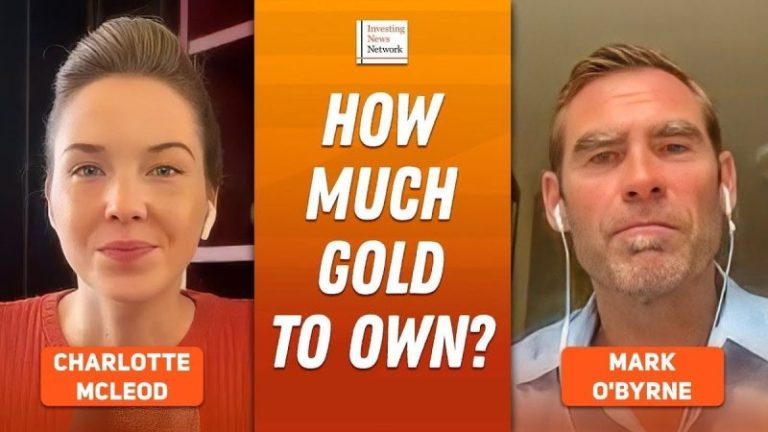
Mark O’Byrne, managing director at Tara Coins, shares his outlook for gold and silver.

He sees much higher prices long term and expects gold to rise to at least US$10,000 per ounce; for silver, O’Byrne believes US$100 to US$150 per ounce is a ‘conservative’ target.

Securities Disclosure: I, Charlotte McLeod, hold no direct investment interest in any company mentioned in this article.

This post appeared first on investingnews.com