
Author

admin

Browsing

As Israeli Prime Minister Benjamin Netanyahu prepares for his third visit to the White House this year, his host has made his expectations clear. US President Donald Trump, who has spoken often about his desire to secure a ceasefire in Gaza, said on Tuesday: “We’re looking for it to happen next week.”

Though the two leaders will celebrate the US and Israeli strikes in Iran, Gaza is very much on their agenda. “We want to get the hostages back,” Trump said.

Netanyahu, who is set to meet the US president on Monday, faces a critical decision at the crossroads of two very different conflicts: one precise and short, the other brutal and protracted. The long-time Israeli leader held two high-level meetings on Gaza already this week and is expected to hold another on Thursday, according to an Israeli official.

But the government has yet to decide on how to proceed in Gaza, a source familiar with the discussions said. That choice boils down to whether to pursue a ceasefire agreement or to intensify a military bombardment of the enclave that has already killed more than 56,000 Palestinians, as Israel tries to increase pressure on Hamas.

Earlier this week, the Israeli military recommended pursuing a diplomatic path in the strip after more than 20 months of fighting and the elimination of much of Hamas’ senior leadership.

“It’s harder now to achieve tactical goals,” the official said. The military could keep pursuing the destruction of Hamas’ military and governance capabilities, they added, but a political agreement could also be effective.

The far-right members of Netanyahu’s government are demanding an intensification of Israel’s campaign.

“No agreements. No partners. No mediators. Only a clear outcome: the destruction of Hamas and the return of the hostages from a position of strength,” said Finance Minister Bezalel Smotrich, head of the Religious Zionism party, on Monday.

But after almost two years of war, others have made clear that the release of the remaining 50 hostages in Gaza is the priority.

“In my opinion, everything must be done to release the hostages. And we are over 600 days late. Everything must be done to bring everyone back – the living and the fallen. Not out of weakness – out of strength,” Minister of Welfare Ya’akov Margi said on Israel’s religious Kol B’ramah radio. Pressed on whether that includes an end to the war, Margi said, “I think we should enter negotiations, and everything should be on the table.”

The Israel Defense Forces (IDF) already controls some 60% of Gaza’s besieged territory, forcing more than two million Palestinians – many of whom have been displaced several times – into shrinking areas near the coast. But negotiations have been stalled for weeks, unable to bridge a key gap. Hamas demands a permanent end to the conflict as part of any ceasefire agreement, while Israel has refused to commit to end the war.

“The IDF has reached the limit of what you can achieve with power,” said Israel Ziv, a retired major general who once led the military’s operations department. “Netanyahu has reached a crossroads, and he must make a choice,” he added.

One path is to leverage the achievements against Iran, Hezbollah and Hamas and push for a regional agreement that could include upgrading relations with Syria and Lebanon, Ziv said. Such an option would end the war in Gaza and secure the release of the hostages, but it risks collapsing Netanyahu’s government if the far-right parties quit the coalition.

“The second path is continuing the war – and even if it’s not officially declared, it would mean the conquest of Gaza,” said Ziv.

Over the weekend, Netanyahu said “many opportunities have opened up” following Israel’s military operations in Iran, including the possibility of bringing home everyone still held captive by Hamas. “Firstly, to rescue the hostages,” he said. “Of course, we will also need to solve the Gaza issue, defeat Hamas, but I believe we will accomplish both missions.”

The comments marked a potentially significant shift in how Netanyahu has laid out Israel’s goals in Gaza. For the vast majority of the war, he has prioritized the defeat of Hamas. In May, he said that was the “supreme objective,” not the return of the hostages.

But after the campaign against Iran, Netanyahu has signaled a newfound flexibility on negotiations, one that may quickly be put to the test at the White House as he meets an American president pushing for a deal.

This post appeared first on cnn.com

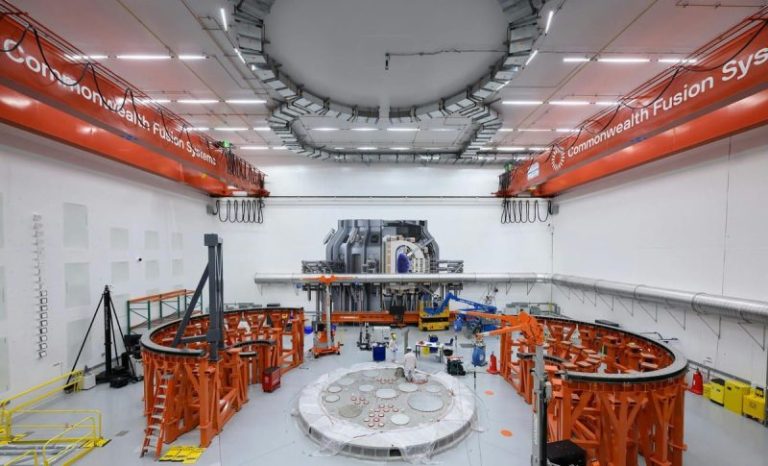
Google on Monday announced a partnership with Commonwealth Fusion Systems, or CFS, a private company spun off from the Massachusetts Institute of Technology, which marks the tech giants first commercial commitment to fusion.

The company unveiled plans to buy 200 megawatts of clean fusion power from what CFS describes as the world’s first grid-scale fusion power plant, known as ARC, based in Chesterfield County, Virginia.

ARC is expected to come online and generate 400 megawatts of clean, zero-carbon power in the early 2030s, which is enough energy to power large industrial sites or roughly 150,000 homes, according to CFS. The agreement also gives Google the option to purchase power from additional ARC plants.

Google, which has invested in CFS since 2021, said it also increased its stake in the Devens, Massachusetts-based company.

Google and CFS did not disclose the financial terms.

“We’re excited to make this longer-term bet on a technology with transformative potential to meet the world’s energy demand, and support CFS in their effort to reach their scientific and engineering milestones needed to get there,” Michael Terrell, head of advanced energy at Google, said in a statement.

Fusion is a process that takes light atomic nuclei and heats them to over 100 million degrees Celsius. At these temperatures, the fuel becomes a plasma, which eventually causes the nuclei to fuse and release significant amounts of energy. The energy is then captured to create carbon-free electricity.

CFS is one of many firms racing to achieve commercial-scale fusion energy and Google has invested in others. Earlier this month, Google announced continued funding for TAE Technologies, a California-based fusion energy company.

This post appeared first on NBC NEWS

The Dalai Lama has announced that he will have a successor after his death, continuing a centuries-old tradition that has become a flashpoint in the struggle with China’s Communist Party over Tibet’s future.

Tibetan Buddhism’s spiritual leader made the declaration on Wednesday in a video message to religious elders gathering in Dharamshala, India, where the Nobel Peace laureate has lived since fleeing Tibet after a failed uprising against Chinese communist rule in 1959.

“I am affirming that the institution of the Dalai Lama will continue,” the Dalai Lama said in the pre-recorded video, citing requests he received over the years from Tibetans and Tibetan Buddhists urging him to do so.

“The Gaden Phodrang Trust has sole authority to recognize the future reincarnation; no one else has any such authority to interfere in this matter,” he added, using the formal name for the office of the Dalai Lama.

The office should carry out the procedures of search and recognition of the future dalai lama “in accordance with past tradition,” he said, without revealing further details on the process.

The Dalai Lama has previously stated that when he is about 90 years old, he will consult the high lamas of Tibetan Buddhism and the Tibetan public to re-evaluate whether the institution of the dalai lama should continue.

Wednesday’s announcement – delivered days before his 90th birthday this Sunday – sets the stage for a high-stakes battle over his succession, between Tibetan leaders in exile and China’s atheist Communist Party, which insists it alone holds the authority to approve the next dalai lama.

In a memoir published in March, the Dalai Lama states that his successor will be born in the “free world” outside China, urging his followers to reject any candidate selected by Beijing.

That could lead to the emergence of two rival dalai lamas: one chosen by his predecessor, the other by the Chinese Communist Party, experts say.

“Both the Tibetan exile community and the Chinese government want to influence the future of Tibet, and they see the next Dalai Lama as the key to do so,” said Ruth Gamble, an expert in Tibetan history at La Trobe University in Melbourne, Australia.

Samdhong Rinpoche, a senior official at the Dalai Lama’s office, told reporters on Wednesday that any further information about the procedures or methods of the Dalai Lama’s reincarnation would not be revealed to the public until the succession takes place.

Struggle over succession

Over a lifetime in exile, the 14th Dalai Lama, Tenzin Gyatso, has become synonymous with Tibet and its quest for genuine autonomy under Beijing’s tightening grip on the Himalayan region.

From his adopted hometown of Dharamshala, where he established a government-in-exile, the spiritual leader has unified Tibetans at home and in exile and elevated their plight onto the global stage.

That has made the Dalai Lama a persistent thorn in the side of Beijing, which denounces him as a dangerous “separatist” and a “wolf in monk’s robes.”

Since the 1970s, the Dalai Lama has maintained that he no longer seeks full independence for Tibet, but “meaningful” autonomy that would allow Tibetans to preserve their distinct culture, religion and identity. His commitment to the nonviolent “middle way” approach has earned him international support and the Nobel Peace Prize in 1989.

The Dalai Lama has long been wary of Beijing’s attempt to meddle with the reincarnation system of Tibetan Buddhism.

Tibetan Buddhists believe in the circle of rebirth, and that when an enlightened spiritual master like the Dalai Lama dies, he will be able to choose the place and time of his rebirth through the force of compassion and prayer.

But the religious tradition has increasingly become a battleground for the control of Tibetan hearts and minds, especially since the contested reincarnation of the Panchen Lama, the second-highest figure in the religion.

In 1995, years after the death of the 10th Panchen Lama, Beijing installed its own panchen lama in defiance of the Dalai Lama, whose pick for the role – a six-year-old boy – has since vanished from public view.

Under Tibetan tradition, the dalai lamas and the panchen lamas have long played key roles in recognizing each other’s reincarnations. Experts believe Beijing will seek to interfere in the current Dalai Lama’s succession in a similar way.

“There’s a whole series of high-level reincarnated lamas cultivated by the Chinese government to work with it inside Tibet. (Beijing) will call on all of those to help establish the Dalai Lama that they pick inside Tibet,” Gamble said. “There’s been a long-term plan to work toward this.”

Beijing has repeatedly said that the reincarnation of all Living Buddhas – or high-ranking lamas in Tibetan Buddhism – must comply with Chinese laws and regulations, with search and identification conducted in China and approved by the central government.

A “resolution of gratitude” statement released by Tibetan Buddhist religious leaders gathering in Dharamshala on Wednesday said they “strongly condemn the People’s Republic of China’s usage of reincarnation subject for their political gain” and “will never accept it.”

For his part, the current Dalai Lama has made clear that any candidate appointed by Beijing will hold no legitimacy in the eyes of Tibetans or followers of Tibetan Buddhism.

“It is totally inappropriate for Chinese Communists, who explicitly reject religion, including the idea of past and future lives, to meddle in the system of reincarnation of lamas, let alone that of the Dalai Lama,” he writes in his latest memoir, “Voice for the Voiceless.”

This post appeared first on cnn.com

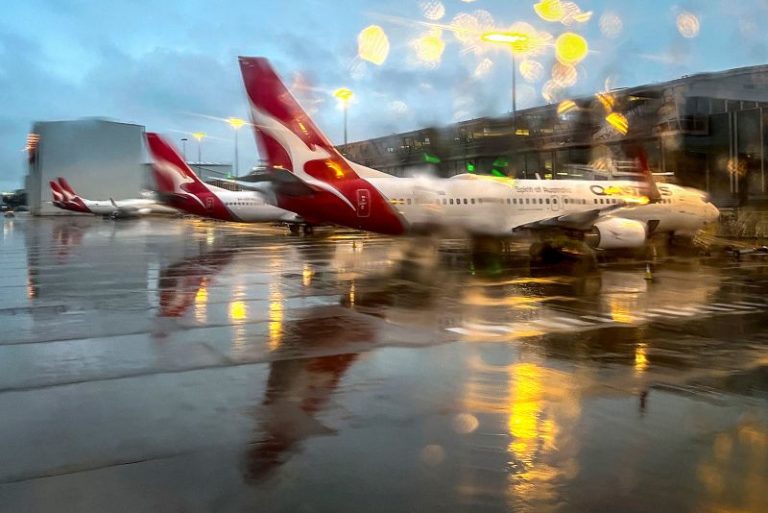
Australian airline Qantas says a data hack on Monday exposed the personal information of six million customers and it expects the amount stolen to be “significant.”

The hack penetrated a third-party customer service platform used by a Qantas contact center, the airline said in a statement on Wednesday. Six million customers have service records on the platform – with data including some of their names, email addresses, phone numbers, birth dates and frequent flyer numbers.

However, the platform does not contain any customer credit card details, financial information or passport details, Qantas said.

After Qantas detected “unusual activity” on the platform, it took action and “contained” the system, it said. The statement said all Qantas systems are now secure, and there is no impact to the company’s operations or safety.

It’s not clear exactly how much data was stolen, “though we expect it to be significant,” the airline said. It is now working to support affected customers, and is cooperating with the Australian Cyber Security Centre, Australian Federal Police and independent cybersecurity experts on the investigation.

“We sincerely apologize to our customers and we recognize the uncertainty this will cause. Our customers trust us with their personal information and we take that responsibility seriously,” said Qantas CEO Vanessa Hudson in the statement.

“We are contacting our customers today and our focus is on providing them with the necessary support.”

Qantas’ share price was down 3.5% in morning trading, against a 0.4% gain in the broader market, according to Reuters.

Australia has seen a series of major cyberattacks and company hacks in recent years. In 2019, a cyberattack targeted Australia’s ruling and opposition parties less than three months before a national election. Two years later, broadcaster Nine News suffered a cyberattack that forced a number of live shows off air – calling it the largest cyberattack on a media company in Australia’s history.

Most recently in 2022, cybercriminals in Russia conducted a ransomware attack on Medibank, one of Australia’s largest private health insurers. Sensitive personal data, including health claims information, was stolen from 9.7 million customers – some of which was then released onto the dark web.

Last year, Australia publicly named and imposed sanctions on a Russian national for his alleged role in the attack. He was an alleged member of the Russian ransomware gang REvil, which had previously launched large attacks on targets in the United States and elsewhere, before Russian authorities cracked down in 2022 and detained multiple people.

This post appeared first on cnn.com

Love your Costco dupes? Lululemon is coming after them.

Lululemon has filed a lawsuit against Costco, accusing the big box store of selling knockoffs of the athleisure brand’s apparel for a fraction of the price.

According to the complaint filed Friday in the Central District of California, Costco allegedly ‘unlawfully traded’ on Lululemon’s ‘reputation, goodwill and sweat equity’ by selling unauthorized and unlicensed knockoffs and dupes, infringing on the company’s popular patents.

The complaint lists several Costco items that appear to rip off Lululemon’s designs and patents: Costco’s ‘Danskin Half-Zip Pullover’ that retails for just $8. The lawsuit claims it’s a dupe for Lululemon’s SCUBA pullover that sells for $118. Costco’s ‘Jockey Ladies Yoga Jacket’ and ‘Spyder Women’s Yoga Jacket,’ which sell for $22, appear to be a dupe of Lululemon’s DEFINE jacket with a price tag of $128. The ‘Kirkland 5 Pocket Performance Pant,’ sold online for $10, is a dupe for Lululemon’s $128 ABC Pant, the complaint contended.

The lawsuit alleged trade dress infringement, unfair competition under the Lanham Act, patent infringement, and violation of the California Unfair Business Practices Act.

Lululemon seeks to recover monetary damages from lost profits, claiming it suffered ‘significant harm’ to its brands and reputation.

Dupes have surged in popularity, fueled by social media and young people seeking trendy, high-quality clothing without breaking the bank. The suit noted that hashtags like ‘LululemonDupes’ have trended on social media platforms like TikTok, with influencers promoting ‘these copycat products.’

Lululemon, based in Vancouver, acknowledged some companies have replicated its proprietary apparel designs and sold them as ‘dupes.’ The company said it has sent cease and desist letters to such companies, including Costco.

Specifically, the suit claimed Costco sells dupes of Lululemon’s popular SCUBA, DEFINE, and ABC lines, ‘which have earned substantial fame and considerable goodwill among the public.’

Costco allegedly profited off confusion and allowed customers to believe the products are authentic, the lawsuit claimed.

The suit said Costco is known to use manufacturers of popular branded products for its own Kirkland label products.

‘This source ambiguity preconditions at least some consumers into believing that private label, Kirkland-branded dupes are in fact manufactured by the authentic suppliers of the ‘original’ products. Defendant does not dispel this ambiguity,’ the complaint said.

In November, Lululemon wrote to Costco about the infringement, and Costco subsequently removed at least some of the products that infringed Lululemon’s SCUBA mark, but later began selling the Hi-Tec Men’s Scuba full zip, the complaint said.

The suit seeks a jury trial and for the court to order Costco to pay Lululemon damages in the form of lost profits, an order to permanently restrain Costco from making or selling more dupes, and an order to remove any ads or posts displaying the infringing products.

Costco did not immediately respond to NBC News’ request for comment on Tuesday.

Lululemon said in a statement that ‘as an innovation-led company that invests significantly in the research, development, and design of our products, we take the responsibility of protecting and enforcing our intellectual property rights very seriously and pursue the appropriate legal action when necessary.’

This post appeared first on NBC NEWS

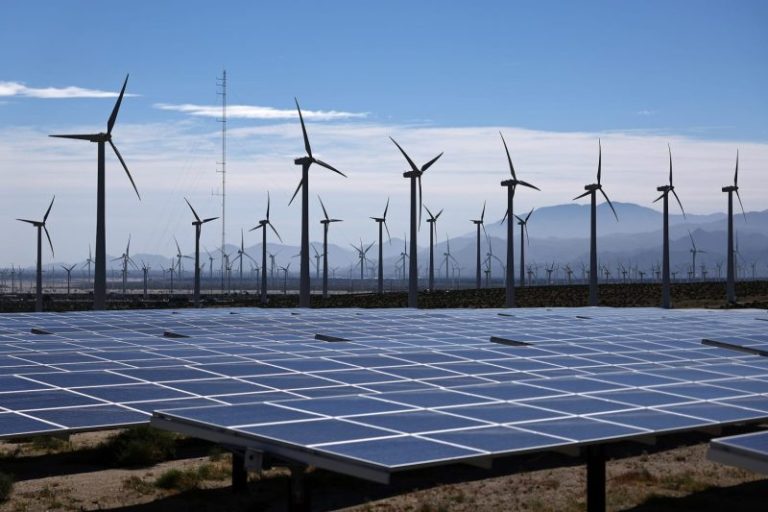
Clean energy stocks fell Monday as President Donald Trump’s spending legislation now includes a tax on wind and solar projects using Chinese components and abruptly phases out key credits.

Shares of NextEra Energy, the largest renewable developer in the U.S., fell 4%. Solar stocks Array Technologies, Enphase and Nextracker were down between 1% and 9%.

The Senate is voting Monday on amendments to the legislation. The current draft ends the two most important tax credits for solar and wind projects placed in service after 2027.

“The latest Senate draft bill will destroy millions of jobs in America and cause immense strategic harm to our country,” Tesla CEO Elon Musk posted on X over the weekend. “Utterly insane and destructive. It gives handouts to industries of the past while severely damaging industries of the future.”

Previous versions of the bill were more flexible, allowing projects that began construction before 2027 to qualify for the investment and electricity production tax credits, according to Monday note from Goldman Sachs.

The change “compresses project timelines and adds significant execution risk,” Bank of America analyst Dimple Gosal told clients in a note Monday. “Developers with large ’25 pipelines, may struggle to meet the new deadlines — potentially delaying or downsizing planned investments.”

The Senate legislation also slaps a tax on solar and wind projects that enter service after 2027 if they use components made in China.

“The latest draft in the Senate has become more restrictive for most renewable players, moving toward a worst case outcome for solar and wind, with a few improvements for subsectors on the margin,” Morgan Stanley analyst Andrew Percoco told clients in a Sunday note.

To be sure, the rooftop solar industry is viewed by Wall Street as a relative winner from the bill, with Sunrun shares up more than 13% and SolarEdge trading more than 6% higher on Monday. The legislation seems to allow tax credits for leased rooftop systems to remain in place through the end of 2027, which was not the case in previous versions, according to Goldman Sachs.

And First Solar is up more than 9% as the legislation seems to allow the manufacturer to claim credits for both components and final products, according to Bank of America.

This post appeared first on NBC NEWS

Melbourne, Australia (ABN Newswire) – Lithium Universe Limited (ASX:LU7) (FRA:KU00) (OTCMKTS:LUVSF) is pleased to announce that further to its announcement dated 18 June 2025 (Announcement), it has now completed legal due diligence to its absolute satisfaction. As such, the Company is now progressing towards completion of the Acquisition (defined below).

ACQUISITION DETAILS

As detailed in the Announcement, the Company has entered into a binding agreement to acquire the global rights to commercially exploit a patented photovoltaic (PV) solar panel recycling technology known as Microwave Joule Heating Technology. The rights will be secured via an exclusive licensing agreement with Macquarie University (MQU), held through an Australian-incorporated holding company, New Age Minerals Pty Ltd (NAM). The transaction will be effected by the Company acquiring 100% of the issued share capital of NAM (Acquisition).

As disclosed in the Announcement, completion of the Acquisition was conditional on the Company completing legal due diligence. This has now been completed to the satisfaction of the Company.

Completion was also conditional on the Company, NAM and MQU entering into a variation to the licensing agreement to reflect the change in ownership of NAM. The parties have since agreed in writing to waive this condition to allow completion of the Acquisition to proceed, with the variation to be entered into with MQU as soon as practicable following completion.

The Company will now proceed to the acquisition of NAM.

About Lithium Universe Ltd:  

Lithium Universe Ltd (ASX:LU7) (FRA:KU00) (OTCMKTS:LUVSF), headed by industry trail blazer, Iggy Tan, and the Lithium Universe team has a proven track record of fast-tracking lithium projects, demonstrated by the successful development of the Mt Cattlin spodumene project for Galaxy Resources Limited.

Instead of exploring for the sake of exploration, Lithium Universe’s mission is to quickly obtain a resource and construct a spodumene-producing mine in Quebec, Canada. Unlike many other Lithium exploration companies, Lithium Universe possesses the essential expertise and skills to develop and construct profitable projects.

Source:
Lithium Universe Ltd

Contact:
Iggy Tan
Executive Chairman
Lithium Universe Limited
Email: info@lithiumuniverse.com

News Provided by ABN Newswire via QuoteMedia

This post appeared first on investingnews.com

Investor Insight

With a disciplined exploration strategy and a high-grade discovery focus, FinEx Metals is poised to become one of the most compelling new gold exploration companies in Europe. The company is led by a technically experienced and locally embedded team, backed by a tight share structure and strategic investor alignment.

Overview

FinEx Metals (TSXV:FINX) is an exploration-stage company focused on discovering Finland’s next high-grade gold deposit. Backed by NewQuest Capital Group, FinEx is strategically positioned near Europe’s largest gold mine, the Agnico Eagle’s Kittilä Mine, and sits within one of the most prospective but underexplored terrains globally – the Central Lapland Greenstone Belt.

FinEx has defined a 2.7-kilometer-long anomalous gold zone through a combination of trenching, rock sampling, and top-of-bedrock (ToB) drilling. The ToB campaign yielded 29 samples with assays ranging from 0.1 to 4.2 grams per ton (g/t) gold and revealed broad pathfinder anomalies in tellurium, bismuth, silver and arsenic, highlighting a robust geochemical footprint consistent with orogenic gold systems.

Additionally, 263 grab samples were collected from trench exposures, 52 of which returned values above 1 g/t gold, including 19 samples exceeding 10 g/t gold. The highest grade recorded to date is 95.1 g/t gold from a quartz-carbonate vein system, located within a zone extending over 250 meters. Ruoppa is fully permitted and drill-ready, with the maiden core drilling campaign scheduled to begin in August 2025. With an experienced local team, high-grade mineralization and proximity to active operations, FinEx offers a unique opportunity to invest in an early-stage gold explorer positioned for rapid value creation.

Company Highlights

  • High-grade Gold Focus in a Tier-one Address: Flagship Ruoppa project lies within 17 km of Agnico Eagle’s Kittilä Mine, the largest gold-producing mine in Europe.
  • Large, 100 percent Owned Land Package: FinEx controls a 100 percent owned, royalty-free portfolio of projects across the Central and Eastern Lapland greenstone belts.
  • Drill-ready Flagship Asset: The Ruoppa project is fully permitted and will commence its maiden diamond drill program in Q3 2025.
  • Exceptional Gold Grades: Rock grab samples from Ruoppa returned up to 95.1 g/t gold, with 52 samples over 1 g/t gold and 19 samples exceeding 10 g/t gold.
  • Strong Local Technical Team: Deep exploration experience in Finland with former Agnico Eagle, FQM and Anglo-American personnel leading geological efforts.

Flagship Project

Ruoppa Gold Project

The Ruoppa project is FinEx Metals’ flagship exploration asset, situated approximately 17 kilometers from Agnico Eagle’s Kittilä Mine, the largest primary gold producer in Europe. Located within Finland’s Central Lapland Greenstone Belt (CLGB), Ruoppa lies on the same structural and geological trend that hosts other major gold systems like Rupert Resources’ Ikkari discovery. The project is fully permitted and drill-ready, with a maiden diamond drill program scheduled to commence in Q3 2025.

The anomalous gold zone identified at Ruoppa extends over 2.7 kilometers and remains open in all directions. Ten trenches totaling 641 meters have been excavated across the highest-priority geophysical and geochemical anomalies, confirming both the lateral continuity and high-grade potential of the gold-bearing structures. This robust dataset has defined a compelling sulphide-rich gold target at depth, which will be tested during the upcoming diamond drill program.

Notably, the project will see its first-ever diamond drilling in Q3 2025. Ruoppa benefits from excellent access to infrastructure, including all-season roads, grid power and 5G connectivity.

Over the past four years, FinEx has conducted extensive early-stage exploration, including ToB drilling, trenching and rock sampling. A total of 263 rock grab samples have been collected from trench exposures, with 52 samples returning assays greater than 1 g/t gold and 19 samples exceeding 10 g/t gold. The highest recorded sample yielded 95.1 g/t gold, hosted in quartz-carbonate vein systems. ToB drilling, an efficient shallow drilling method ideal for glacially covered terrains, revealed additional gold potential with assays up to 4.2 g/t gold and strong pathfinder element anomalies in tellurium, bismuth, silver and arsenic.

Additional Projects

Luova Gold Project

The Luova project is located within the thickest core portion of the CLGB, less than 10 kilometers from the Kittilä Mine and adjacent to key exploration prospects such as Hanhimaa and Hakokodanmaa. This underexplored project shows all the hallmarks of a classic orogenic gold system, including thick sequences of Fe-tholeiitic basalts, large-scale shear zones acting as fluid conduits, and favorable trap rocks such as graphitic tuffs and banded iron formations.

Historical base-of-till sampling conducted by Outokumpu and Agnico Eagle revealed anomalous gold and copper values, including results up to 0.38 g/t gold and 0.49 percent copper. Despite these encouraging results, the Luova project remains undrilled, representing a significant near-surface gold discovery opportunity. Ionic leach soil samples and detailed magnetic surveys are planned to refine drill targets, with a focus on zones where interpreted thrust faults intersect favorable host rocks.

Kero Gold Project

The Kero project, explored in the early 2000s by the Geological Survey of Finland (GTK), is another advanced gold target in FinEx’s portfolio. GTK completed an extensive dataset that includes 7.7 kilometers of diamond drilling, trenching, bedrock mapping and multiple geophysical surveys (including IP, VLF-R and ground magnetics). Historic drill intercepts at Kero include 1.05 meters at 12.6 g/t gold and 3.3 meters at 2.3 g/t gold, while surface grab samples returned up to 25.6 g/t gold from carbonate-sulphide veins.

The gold mineralization is associated with hydrothermal alteration and complex structural settings, including fold hinges and lithological contacts. A 1.2-kilometer-long gold anomaly has been defined, and the structural complexity – characterized by multiple deformation orientations – indicates strong potential for structurally controlled high-grade zones. Kero is accessible year-round via gravel roads and is a strong candidate for follow-up trenching and re-logging of the historical core.

Tulppio Ni-PGE Project

Located in the Eastern Lapland Granite-Greenstone Belt, the Tulppio project represents FinEx’s entry into critical mineral exploration, specifically targeting nickel sulphides and platinum group elements (PGE). The project is positioned adjacent to the Sokli project, a world-class phosphate, iron and REE deposit operated by Finnish Minerals Group. Tulppio contains a large (5 km x 2 km) ultramafic intrusive complex, with a gravity signature suggesting the body extends to 2 kilometers in depth.

Historic shallow drilling (less than 100 meters depth) has already intercepted 3 meters at 1.12 g/t platinum+palladium and 0.49 percent nickel (including 1.5 meters at 1.54 g/t platinum+palladium), and 24 meters at 0.33 percent nickel with sulfur content up to 4,600 ppm. Ionic leach soil sampling across the project has identified multiple significant nickel-cobalt-copper-palladium-gold anomalies, underscoring the project’s polymetallic potential. According to the Geological Survey of Finland (2010), Tulppio’s PGE and nickel potential should be factored into future development of the Sokli region.

Ukko Gold-Copper Project

The Ukko project targets orogenic and potentially metamorphosed epithermal gold systems in an Archean greenstone setting. The geology comprises komatiites, mafic volcanics, massive sulphide lenses and mica schists – favorable hosts for both gold and base metal mineralization. Historical drilling by Outokumpu in 1985 intersected 2.05 meters at 2.25 g/t gold. Recent soil sampling has revealed a new gold-copper anomaly in the southeastern portion of the property, coinciding with high magnetic and conductive geophysical zones. Further geochemical and IP surveys are planned to constrain the structure and assess the potential for deeper epithermal or orogenic systems.

Management Team

Tero Kosonen – Chairman and CEO

A seasoned venture capitalist and natural resources investor, Tero Kosonen brings more than 30 years of experience in private equity and management. As co-founder of NewQuest Capital, he has led numerous early-stage ventures across energy and mining. He provides strategic leadership and capital markets expertise to FinEx.

Dr. Petri Peltonen – Chief Geologist

A globally respected exploration geologist with over 30 years of experience in gold, nickel and iron ore exploration, Dr. Petri Peltonen is the former exploration manager – Europe for FQM. He is an Associated Professor at the University of Helsinki. Peltonen ensures technical rigour and exploration success at FinEx.

Sandra Wong – CFO

With over 20 years in financial leadership roles across publicly listed companies, Sandra Wong brings deep experience in accounting, compliance and governance – critical for a newly listed entity with aggressive exploration goals.

Eetu Jokela – Project Manager

A local geologist with direct exploration experience with Agnico Eagle, Eetu Jokela is responsible for day-to-day field operations and geological planning, combining practical know-how with deep regional knowledge.

Olli Silvonen – Exploration Geologist

Experienced in regional greenfields exploration, Olli Silvonen supports mapping, sampling and trenching programs with a strong focus on gold and nickel-copper-PGE systems within the CLGB.

Jukka Jokela – Senior Advisor

The former CEO of Anglo American Sakatti Mining, Jukka Jokela offers more than 35 years of exploration and ESG leadership in the Nordic region, adding valuable permitting and stakeholder engagement capacity.

Dr. Pasi Eilu – Senior Advisor

With 40 years in academic and field exploration, Dr. Pasi Eilu is a recognized expert on greenstone-hosted gold and critical minerals in Finland. His work has shaped much of the geological understanding in Lapland.

Phil Smerchanski – Senior Technical Advisor

Phil Smerchanski brings more than two decades of experience in nickel and gold systems. A former senior technical lead at Oxygen Capital and Anglo American, he provides technical guidance across project pipeline development.

This post appeared first on investingnews.com