
Author

admin

Browsing

Further to the ASX announcement on 20 June 2025, Cygnus Metals Limited (‘Cygnus’ or the ‘Company’) advises that it has issued a total of 211,627,907 fully paid ordinary shares (‘Shares’) at A$0.086 each under Tranche 1 of the Placement, raising a total of A$18,200,000 (before costs). The Shares were issued under the Company’s existing capacity under ASX Listing Rules 7.1 (126,702,591) and 7.1A (84,925,316).

A further 1,162,790 Shares are intended to be issued under Tranche 2 of the Placement to Non-Executive Director Raymond Shorrocks, or his nominees, subject to receipt of shareholder approval at a general meeting to be held in August 2025.

In addition, the Company has issued a total of 306,129 Shares to employees on conversion of 350,000 vested Performance Rights issued under the Company’s previous Employee Securities Incentive Plan.

Cygnus issued the Shares without disclosure under section 708A(5) of the Corporations Act 2001 (Cth) (‘Act’). With reference to those Shares issued, in accordance with section 708A(6) of the Act, the Company gives notice under paragraph 708A(5)(e) that:

1. the Company issued the Shares without disclosure under Part 6D.2 of the Act; and
2. as at the date of this notice:
a) the Company has complied with the provisions of Chapter 2M of the Act as they apply to the Company;
b) the Company has complied with sections 674 and 674A of the Act; and
c) other than as set out below, there is no excluded information within the meaning of sections 708A(7) and 708A(8) of the Act which is required to be disclosed under section 708A(6)(e) of the Act.

As previously announced, the Company has ongoing exploration and drill programs at its Chibougamau Copper-Gold Project in Quebec and is awaiting assay results from its current drill program (which remains ongoing). The Company will announce its assay results when it is in a position to complete the collation and interpretation of all data and in accordance with its continuous disclosure obligations, the JORC Code and the ASX Listing Rules.

This announcement has been authorised for release by the Board of Directors of Cygnus.

David Southam
Executive Chair
T: +61 8 6118 1627
E: info@cygnusmetals.com
Ernest Mast
President & Managing Director
T: +1 647 921 0501
E: info@cygnusmetals.com
Media:
Paul Armstrong
Read Corporate
+61 8 9388 1474

About Cygnus Metals

Cygnus Metals Limited (ASX: CY5, TSXV: CYG) is a diversified critical minerals exploration and development company with projects in Quebec, Canada and Western Australia. The Company is dedicated to advancing its Chibougamau Copper-Gold Project in Quebec with an aggressive exploration program to drive resource growth and develop a hub-and-spoke operation model with its centralised processing facility. In addition, Cygnus has quality lithium assets with significant exploration upside in the world-class James Bay district in Quebec, and REE and base metal projects in Western Australia. The Cygnus team has a proven track record of turning exploration success into production enterprises and creating shareholder value.

News Provided by GlobeNewswire via QuoteMedia

This post appeared first on investingnews.com

Westport Fuel Systems Inc. (TSX: WPRT Nasdaq: WPRT) (‘Westport’ or ‘The Company’) announces that the Company will release Q2 2025 financial results on Monday, August 11, 2025, after market close. A conference call and webcast to discuss the financial results and other corporate developments will be held on Tuesday, August 12, 2025.

Time: 10:00 a.m. ET (7:00 a.m. PT)
Call Link: https://register-conf.media-server.com/register/BI842f3b76bd5b44c7aee3e609a6cc77b3  
Webcast: https://investors.westport.com

Participants may register up to 60 minutes before the event by clicking on the call link and completing the online registration form. Upon registration, the user will receive dial-in info and a unique PIN, along with an email confirming the details.

The webcast will be archived on Westport’s website and a replay will be available at https://investors.westport.com

Light-Duty Divestment Transaction Update

Westport today reaffirms its commitment to the pending sale of its Light-Duty Segment to a wholly-owned investment vehicle of Heliaca Investments Coöperatief U.A. (‘Heliaca Investments’), a Netherlands based investment firm supported by Ramphastos Investments Management B.V. a prominent Dutch venture capital and private equity firm (the ‘Transaction’), first announced in March 2025. The closing of the Transaction is now expected to occur in July 2025, slightly later than originally anticipated. The revised timeline reflects an updated regulatory review process. The Company continues to work closely with all parties as the remaining conditions to close are finalized.

About Westport Fuel Systems

At Westport Fuel Systems, we are driving innovation to power a cleaner tomorrow. We are a leading supplier of advanced fuel delivery components and systems for clean, low-carbon fuels such as natural gas, renewable natural gas, propane, and hydrogen to the global transportation industry. Our technology delivers the performance and fuel efficiency required by transportation applications and the environmental benefits that address climate change and urban air quality challenges. Headquartered in Vancouver, Canada, with operations in Europe, Asia, North America, and South America, we serve our customers in approximately 70 countries with leading global transportation brands. At Westport Fuel Systems, we think ahead. For more information, visit www.westport.com .

Investor Inquiries:
Investor Relations
T: +1 604-718-2046
E: invest@westport.com

News Provided by GlobeNewswire via QuoteMedia

This post appeared first on investingnews.com

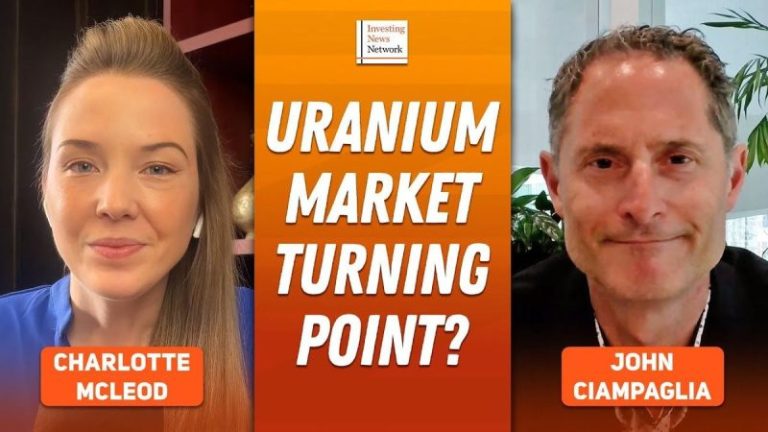
John Ciampaglia, CEO of Sprott Asset Management, discusses uranium supply, demand and pricing, also sharing details on the Sprott Physical Uranium Trust’s (TSX:U.U,OTCQX:SRUUF) recently closed US$200 million bought-deal financing.

‘It’s clearly acted as a very positive catalyst — the spot price has popped, a lot of the equities have popped on this,’ he said about the agreement.

Securities Disclosure: I, Charlotte McLeod, hold no direct investment interest in any company mentioned in this article.

This post appeared first on investingnews.com

Tudor Gold (TSXV:TUD,OTC Pink:TDRRF) has signed a definitive agreement to acquire American Creek Resources (TSXV:AMK,OTCQB:ACKRF) in an all-share transaction, marking a consolidation in BC’s Golden Triangle.

Under the deal, dated Wednesday (June 25), each American Creek shareholder will receive 0.238 shares of Tudor for each share held, effectively giving Tudor an 80 percent ownership stake in the Treaty Creek project — one of Canada’s largest undeveloped gold-copper porphyry systems. American Creek previously held a fully carried 20 percent interest.

‘Our acquisition of American Creek increases our interest to 80 percent in the Treaty Creek Project, which hosts one of the largest gold discoveries in Canada with excellent potential for expansion and additional gold-copper discoveries, at a reasonable per ounce of gold equivalent cost,’ said Joe Ovsenek, Tudor Gold president and CEO, in a press release.

According to Tudor, Treaty Creek is located adjacent to world-class deposits held by Seabridge Gold (TSX:SEA,NYSE:SA) and Newmont (TSX:NGT,NYSE:NEM). Treaty Creek’s flagship Goldstorm deposit is a large-scale system that holds both gold and copper mineralization, and the project has consistently returned high-grade intercepts.

The transaction also includes the settlement of up to US$2.22 million in severance obligations to American Creek insiders — US$1 million in cash and the remainder in Tudor shares at a price of US$0.537 per share.

These shares will be subject to a four month statutory hold period, pending approval from the TSX Venture Exchange.

Golden Triangle deal mirrors global M&A trend

The Tudor-American Creek deal is the latest in a wave of mining sector consolidations driven by a record gold price, rising corporate cash reserves and dwindling new deposit discoveries.

Notable deals in the first half of 2025 include the C$2.6 billion merger of Equinox Gold (TSX:EQX,NYSEAMERICAN:EQX) and Calibre Mining, which was announced in February and closed this month.

In Australia, Northern Star Resources (ASX:NST,OTC Pink:NESRF) closed its AU$5 billion acquisition of De Grey Mining in May. De Grey was the owner of the massive Hemi gold deposit. The same month, Gold Fields (NYSE:GFI,JSE:GFI) made a US$2.4 billion bid for Gold Road Resources (ASX:GOR,OTC Pink:ELKMF).

Ramelius Resources’ (ASX:RMS,OTC Pink:RMLRF) AU$2.4 billion acquisition of Spartan Resources (ASX:SPR,OTC Pink:GYYSF), announced in March, further underscores the appetite for consolidation.

Data from S&P Global Commodity Insights shows last year’s M&A activity laid the groundwork for this trend.

With US$26.54 billion in deal value across 62 qualifying transactions, gold remained the dominant metal of focus, accounting for 43 deals and US$19.31 billion of total deal value. ‘Ever-depleting mining reserves and limited exploration success mean that acquisition is now the key strategy for growth,’ the report notes.

Gold’s record price rise, which took it to the US$3,500 per ounce level in April, has made previously uneconomic deposits viable and pushed miners’ margins to historic highs.

Securities Disclosure: I, Giann Liguid, hold no direct investment interest in any company mentioned in this article.

This post appeared first on investingnews.com

Vietnam will remove the death penalty for eight offenses from next month, including embezzlement and activities aimed at overthrowing the government, parliament said on Wednesday, sparing the life of a tycoon in a $12 billion fraud case.

The National Assembly, the country’s lawmaking body, unanimously ratified the amendment to the Criminal Code earlier on Wednesday to abolish the death penalty for the crimes, it said in a statement.

Other crimes that will no longer lead to the death penalty include vandalizing state property, manufacturing fake medicine, jeopardizing peace, triggering invasive wars, espionage and carrying drugs, the official Vietnam News Agency said.

The maximum sentence for these crimes will now be life imprisonment, the report said.

Those who were sentenced to death for these offenses before July 1 but have not yet been executed will have their sentences commuted to life imprisonment, the report added.

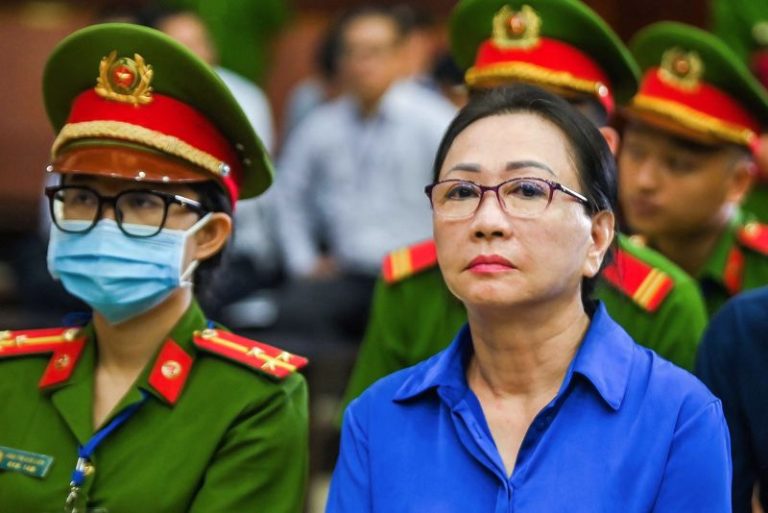
These will include real estate tycoon Truong My Lan, the chairwoman of real estate developer Van Thinh Phat Holdings Group, who was sentenced to death last year on embezzlement charges.

Lan’s lawyers didn’t immediately respond to a Reuters request for comment.

“According to the amendment of the Criminal Code, her sentence will automatically be reduced to life imprisonment,” lawyer Ngo Anh Tuan, who is not part of Lan’s defense team, told Reuters.

Ten offenses will remain subject to capital punishment in Vietnam, including murder, treason, terrorism and the sexual abuse of children, according to the report. Drug trafficking will also remain a capital offense.

Capital punishment data is a state secret in Vietnam and it is not known how many people are currently on death row in the country. Lethal injection is the only method of execution after firing squads were abolished in 2011.

This post appeared first on cnn.com

Think trading against the trend is risky? You may want to reconsider. When a stock or ETF is trending lower, the smart money watches for signs of a reversal; those early signals can get you into a trend before everyone else and lead to favorable risk-to-reward ratios.

In this video, options strategist Tony Zhang breaks down how to spot high-probability counter-trend setups using technical signals and practical examples. You’ll learn how to identify early reversal signals, why counter-trend setups can be lower-risk than you’d think, and how to apply these strategies through examples and live reviews.

Whether you’re new to options trading or leveling up your game, this is your opportunity to explore a low-risk, high-performing strategy.

The video premiered on June 25, 2025.

Dara Ojo was once afraid of spiders, particularly the biting, venomous kind. How times have changed. Not only is the photographer willing to get up very close and personal with arachnids of all stripes, he’s passionately conserving insects through this work.

Ojo, 34, is a master of macrophotography — extreme close-up shots, in this case of wildlife — showing tiny critters in all their odd, beautiful glory.

For the photographer, who describes himself as a conservation storyteller, it is about “shining the light on these tiny little details that people just walk past because they’re small.”

Born in Lagos, Nigeria, and now living in Canada, Ojo’s first encounter with photography was using his father’s Nikon camera as a child. He photographed birds, snakes, frogs and other creatures. Much later, he was teaching English in China when the Covid-19 pandemic struck and began photographing insects as a remedy to the boredom of lockdown.

But there was another purpose too: amid the deluge of photographs of different animals he saw online, Ojo noticed relatively little high-profile work of nature’s smallest creations. He wanted to fill this gap, “and also create some positive publicity for insects.”

Eyes like speakers, posterior like pagodas

Ojo first learned how to shoot macrophotography from YouTube tutorials and took a course called “Bugs 101: Insect-Human Interactions” at the University of Alberta, Canada. In 2020 he created his first macro image, of a dragonfly. Two years later, his photos of a white-striped longhorn beetle taken in China went viral.

The beetle is typically 20-40 mm long, but Ojo’s image of the insect makes it feel human-size, with an intimidating yet intriguing poise. Its eyes look like speakers, and details invisible to the naked eye, like its microscopic facial hairs, are on full display.

His work has circulated the internet, with some Instagram posts hitting almost a million views. It has also caught the attention of the UN Deputy Secretary-General, Amina J. Mohammed who shared some of them on X, to mark the 2025 World Biodiversity Day.

But the recognition brings certain pressures. “Now that eyes are on me, globally, I have to keep the bar higher than the last, each time I shoot. Also, as a black person, I feel like a role model, giving a voice as people of color who are not usually seen in this kind of field. I therefore can’t stay comfortable,” he says.

Some other striking images are of the primrose moth, with distinct vivid pink and yellow coloring; a spiny-backed orb weaver spider with a pagoda-like posterior; a katydid — a type of cricket — with a face akin to a church dome; and a wolf spider eating a frog.

Ojo says, “I’m in awe of them when I am shooting. I see in them how God is a perfect designer, and the need for us to protect them.”

He has photographed more than 40 types of spiders, 50 moths and 30 butterflies species, over 20 dragonflies and at least 70 damselflies. Among all the fauna he’s photographed, the state of bees worries him the most. “Bees are rare and really endangered even though they are essential to our existence because of their pollination.” Ojo says.

Now, his work is being featured in “Insect Apocalypse,” the first episode of the documentary “Bugs that Rule the World,” which is being shown in the US and Canada. The four-part series focuses on the decline of insects and how this is detrimental to the ecosystem and to human existence, and includes photographs Ojo took in Costa Rica.

Ojo is working to release the first coffee table book of his works in 2026, and plans to add three more in the next five years.

Yet photography is not Ojo’s full-time occupation. He works as a data analyst at the University of Alberta, and has an MBA in information technology from Edge Hill University in Ormskirk, United Kingdom.

His tech background, he says, gives him an edge with processing the pictures, which are best taken at night and early morning when insects are asleep or resting, he explains. He captures multiple photographs at different depths of field and combines them using stacking software so the whole insect is in pin-sharp focus. Since the images are shot without alterations, he then digitally edits them, mainly to enhance colors.

Though he occasionally sells prints of his photography, his advocacy for his subjects is his main motive, Ojo says. Insect populations around the world are in peril. Among his once-feared spiders, for example, scores are categorized as critically endangered.

“The primary goal is to use my images to reveal the beauty of insects and other small creatures,” he says. First he draws people in, then shares a conservation message, then, hopefully, people will take action, Ojo explains.

“When people are blown away by the pictures, they are curious and develop empathy to conserve them.”

This post appeared first on cnn.com

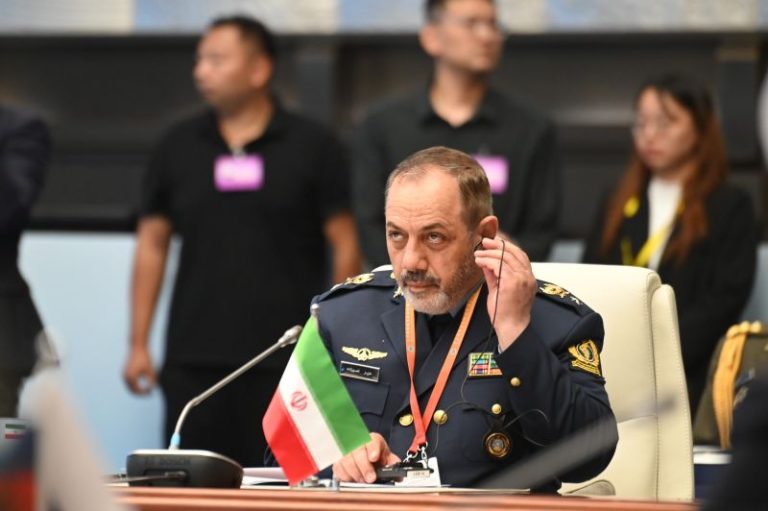
Iran’s defense minister has traveled to diplomatic and economic ally China on his first reported trip abroad since a 12-day clash with Israel that briefly dragged the US into a new regional conflict.

Aziz Nasirzadeh is one of nine defense ministers that Chinese state media say attended a gathering of the Shanghai Cooperation Organization (SCO), a China- and Russia-led regional security grouping that has grown in prominence as Beijing and Moscow look to build alternative international blocs to those backed by the United States.

The two-day gathering began Wednesday in the Chinese coastal city of Qingdao, a day after a ceasefire between Iran and Israel quelled what had been days of aerial assaults between the two, punctuated by a US strike on three Iranian nuclear facilities.

The SCO gathering coincided with a meeting of NATO leaders at The Hague, where US President Donald Trump said the US would meet with Iran “next week” about a potential nuclear agreement.

Beijing’s gathering, part of events for its rotating SCO chairmanship, spotlighted China’s role as a key international player, even as it remained largely on the sidelines of the Israel-Iran conflict – and the importance Tehran places on its relationship with Beijing.

Chinese Defense Minister Dong Jun did not directly address the conflict in remarks to gathering nations Wednesday, as reported by Chinese state media, but aimed to position China as a country with an alternative vision for global security.

“Unilateralism and protectionism are surging, while hegemonic, high-handed, and bullying acts severely undermine the international order, making these practices the biggest sources of chaos and harm,” Dong said, employing language typically used by Beijing to criticize the US.

The Chinese defense chief called for SCO countries – which, in addition to China and Russia, include India, Iran, Pakistan, Kazakhstan, Kyrgyzstan, Tajikistan, Uzbekistan and Belarus – to enhance coordination and “defend international fairness and justice” and “uphold global strategic stability.”

Attending countries “expressed a strong willingness to consolidate and develop military collaboration,” according to China’s official news agency Xinhua.

Iran’s Nasirzadeh “expressed gratitude to China for its understanding and support of Iran’s legitimate stance,” Xinhua also reported.

The minister “hopes that China will continue to uphold justice and play an even greater role in maintaining the current ceasefire and easing regional tensions,” he was quoted as saying.

Chinese officials have condemned Israel’s unprecedented June 13 attack on Iran, which took out top military leaders and sparked the recent conflict, as well as the subsequent US bombing. It’s also backed a ceasefire and criticized Washington’s foray into the conflict as a “heavy blow to the international nuclear non-proliferation regime.”

A key diplomatic and economic backer of Iran, Beijing has moved to further deepen collaboration in recent years, including holding joint naval drills. Chinese officials have long voiced opposition to US sanctions on Iran and criticized the US withdrawal from the 2015 Iran nuclear deal.

In recent days, China has appeared unwilling to become further entangled in the conflict past its diplomatic efforts, analysts say, instead using the situation as another opportunity to paint itself as a responsible global player and the US as a force for instability.

Founded in 2001 by China, Russia, Kazakhstan, Kyrgyzstan, Tajikistan and Uzbekistan to combat terrorism and promote border security, the SCO has grown in recent years in line with Beijing and Moscow’s shared ambition to push back against a US alliance system they see as suppressing them.

While not an alliance, the group says it aims to “make joint efforts to maintain and ensure peace, security and stability in the region.”

The SCO has long been seen as limited, however, by overlapping interests and frictions between members, including Pakistan and India, which earlier this year engaged in a violent conflict, as well as China and India, which have longstanding border tensions.

Indian Defense Minister Rajnath Singh also attended the Qingdao meeting, the first visit from an Indian defense chief to China since a deadly 2020 border clash between the two countries.

This post appeared first on cnn.com

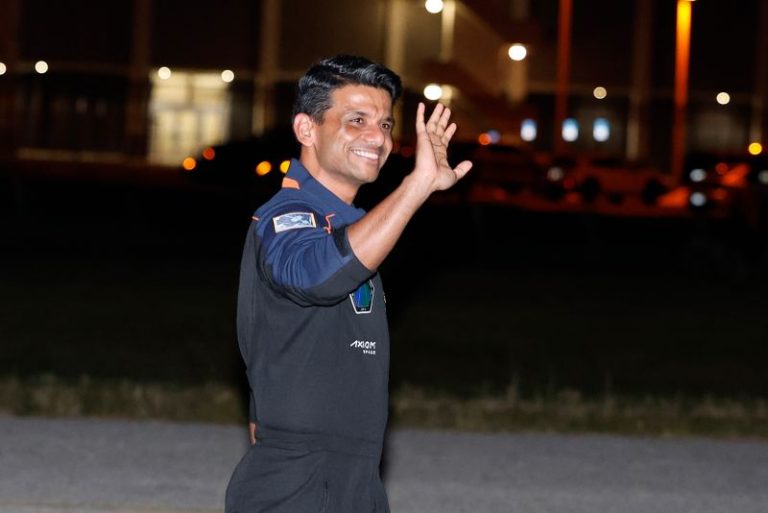
India has celebrated another step on its mission to become a space power, after Shubhanshu Shukla became the first astronaut from the country to blast off to the International Space Station (ISS) Wednesday.

Shukla was aboard the private Axiom Space Mission 4, or Ax-4, which lifted off from NASA’s Kennedy Space Center in Florida in the latest mission organized by the Texas-based startup in partnership with Elon Musk’s rocket venture SpaceX.

It is expected to dock in the space-facing port of the station’s Harmony module at 7 a.m. ET on Thursday.

The private mission includes decorated former NASA astronaut Peggy Whitson, as well as Sławosz Uznański-Wiśniewski of Poland and Tibor Kapu of Hungary – two other spaceflight novices who will become the first from their countries to visit the ISS.

Shukla, who is the mission’s pilot, and the others are expected to spend about two weeks aboard the ISS, helping to carry out roughly 60 experiments before returning home.

NASA and the Indian Space Research Organisation (ISRO) are collaborating on the mission, according to a statement from the US space agency.

India’s Prime Minister Narendra Modi said Shukla “carries with him the wishes, hopes and aspirations of 1.4 billion Indians” in a post on X.

“Wish him and other astronauts all the success!” he wrote.

Shukla is only the second Indian citizen to travel into space after Rakesh Sharma, who flew aboard a Soviet rocket in 1984.

Sharma wished the Ax-4 crew well.

“Wishing you all the very best. To the crew, godspeed,” he said in a video message posted online by the Press Trust of India.

“Spend as much time as possible looking out of the window.”

Shukla’s parents were seen getting emotional as they watched a livestream of the blast-off in the northern city of Lucknow.

“He’s the first person, the first Indian in the ISS. It is really a great moment for us Indians,” student Isma Tarikh told Reuters. “It is an inspiration for me… Even I want to become something great and be a world contributor just like (Shukla).”

Another student, Mohammad Hamughan, called it a “proud moment for Indians.”

He told Reuters: “It inspires me to become a space scientist. I have always loved to read about sci-fi and all of the stuff, but this is inspiring for us as a student.”

Shukla’s flight is seen as a precursor to India’s own Gaganyaan mission, the country’s first human space mission, set to take off in 2027.

Four Indian air force pilots selected for that mission have completed initial training in Russia and are undergoing further training in India, according to a May statement from the Indian government.

India’s space ambitions have accelerated under Modi, who was elected to a third term last June and has tried to assert India’s place on the global stage.

In January, it became only the fourth country to successfully achieve an unmanned docking in space.

In 2023, India joined an elite space club becoming the fourth country to land a spacecraft on the moon. The historic Chandrayaan-3 mission, the first to make a soft landing close to the moon’s unexplored South Pole, has collected samples that are helping scientists understand how the moon was formed and evolved over time.

The country has also set its sights on building its own space station by 2035, which will be called the Bharatiya Antariksha Station, and launching its first orbital mission to Venus in 2028.

This post appeared first on cnn.com