Author

admin

Browsing

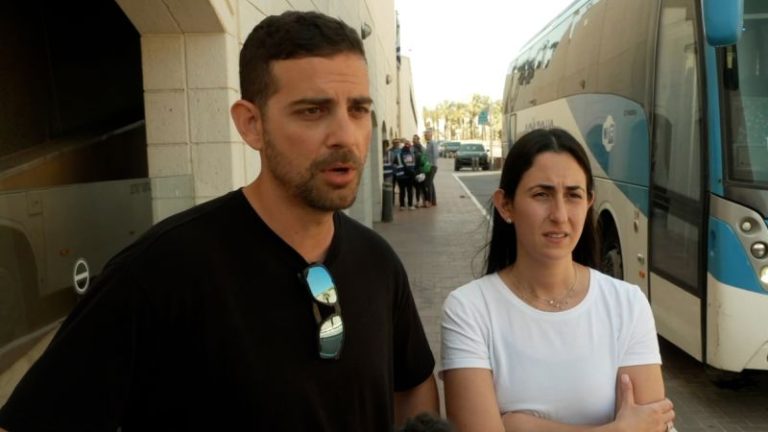
Karen and Omri Mamon, dual American-Israeli citizens, traveled to Israel last month to attend the wedding of Omri’s sister. They didn’t know they would end up spending their holiday moving from one house to another, searching for shelter.

A week after the wedding, Israel launched its surprise attack on Iran, and missiles began flying over the skies, forcing both airspaces to shut down. Most flights out of Tel Aviv’s Ben Gurion Airport were canceled, leaving many stranded and unable to get home.

Mamon said they’ve lived in Israel before and experienced having to shelter, “but this time is different.”

“The bombs are bigger, the noises are extremely high … you hear bombs everywhere,” he added.

Dozens of Americans who have been trying to leave Israel gathered at a hotel in central Israel on Saturday, where US embassy consular staff began processing their departures.

Earlier in the week, US Ambassador to Israel Mike Huckabee announced on social media that the embassy was arranging evacuation flights and ships for American citizens who wished to leave. Huckabee did not say when the evacuation efforts would begin.

According to US State Department spokesperson Tammy Bruce, more than 25,000 people have sought information from the State Department about the “situation in Israel, the West Bank and Iran.” There are about 700,000 Americans living in Israel, according to Huckabee.

The Mamons were on the list to go, but others, like Elana Hayman, are still waiting to be processed.

“It was so intense that I thought it hit our building. It shook us to the core. … I actually hear the sound every night. When I think about it, I can hear it over and over again,” she said.

Her 18-year-old daughter Noa, who has anxiety, said it was a terrifying experience.

“It was really bad. I was really scared. I just wanted to find any way to leave. … It’s a scary time to be here right now,” she said.

As the evacuation process progresses slowly, Hayman — like many others — are still trying to find a way out of Israel. The US embassy said in a security alert last week that the land crossings from Israel to Jordan and Egypt are options but acknowledged that each comes with its own risks. Jordanian airspace has closed sporadically since the conflict began, and the US cannot offer emergency services to American citizens traveling through the Sinai Peninsula to catch international flights out of Sharm el-Sheikh, Egypt.

The Mamons suspect they were processed so quickly because their son has autism.

“The main thing was to bring him back home; he was our priority. … He had a really rough time here with the sirens, noises, the shelters, and lots of people shouting,” Karen Mamon said.

Despite feeling relieved to have been processed, Omri Mamon still says “anything could happen.”

“We’re not celebrating yet,” he said.

This post appeared first on cnn.com

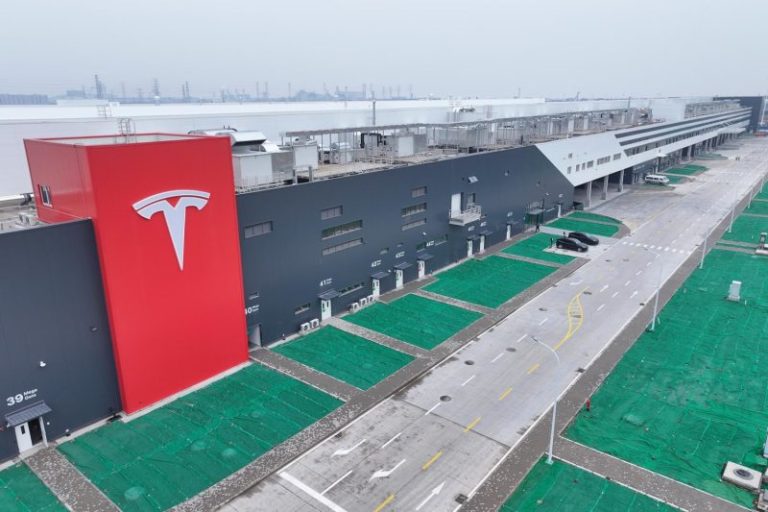
Tesla has inked its first deal to build a grid-scale battery power plant in China amid a strained trading relationship between Beijing and Washington.

The U.S. company posted on the Chinese social media service Weibo that the project would be the largest of its kind in China when completed.

Utility-scale battery energy storage systems help electricity grids keep supply and demand in balance. They are increasingly needed to bridge the supply-demand mismatch caused by intermittent energy sources such as solar and wind.

Chinese media outlet Yicai first reported that the deal, worth 4 billion yuan ($556 million), had been signed by Tesla, the local government of Shanghai and financing firm China Kangfu International Leasing, according to the Reuters news agency.

Tesla said its battery factory in Shanghai had produced more than 100 Megapacks — the battery designed for utility-scale deployment — in the first quarter of this year. One Megapack can provide up to 1 megawatt of power for four hours.

“The grid-side energy storage power station is a ‘smart regulator’ for urban electricity, which can flexibly adjust grid resources,” Tesla said on Weibo, according to a Google translation.

This would “effectively solve the pressure of urban power supply and ensure the safe, stable and efficient electricity demand of the city,” it added. “After completion, this project is expected to become the largest grid-side energy storage project in China.”

According to the company’s website, each Megapack retails for just under $1 million in the U.S. Pricing for China was unavailable.

The deal is significant for Tesla, as China’s CATL and carmaker BYD compete with similar products. The two Chinese companies have made significant inroads in battery development and manufacturing, with the former holding about 40% of the global market share.

CATL was also expected to supply battery cells and packs that are used in Tesla’s Megapacks, according to a Reuters news source.

Tesla’s deal with a Chinese local authority is also significant as it comes after U.S. President Donald Trump slapped tariffs on imports from China, straining the geopolitical relationship between the world’s two largest economies.

Tesla Chief Executive Elon Musk was also a close ally of President Trump during the initial stages of the trade war, further complicating the business outlook for U.S. automakers in China.

The demand for grid-scale battery installation, however, is significant in China. In May last year, Beijing set a new target to add nearly 5 gigawatts of battery-powered electricity supply by the end of 2025, bringing the total capacity to 40 gigawatts.

Tesla has also been exporting its Megapacks to Europe and Asia from its Shanghai plant to meet global demand.

Capacity for global battery energy storage systems rose 42 gigawatts in 2023, nearly doubling the total increase in capacity observed in the previous year, according to the International Energy Agency.

— CNBC’s Arjun Kharpal contributed reporting.

This post appeared first on NBC NEWS

Gold was on the decline this week, closing just below US$3,370 per ounce, after tensions in the Middle East pushed it past the US$3,430 level toward the end of last week.

All eyes were on the US Federal Reserve, which in a widely expected move left interest rates unchanged on Wednesday (June 18) following its two day meeting. The central bank cut rates in December 2024, but has kept them steady for its last four gatherings.

US President Donald Trump wasn’t pleased, calling Powell ‘too late’ in a Thursday (June 19) post on Truth Social. While speculation that Trump will fire Powell has died down, the president did recently say he intends to announce his next pick for the Fed leader position ‘very soon.’

Of course, Fed meetings are never just about rate decisions — experts often look to Powell’s post-meeting commentary to read between the lines of what’s said (and not said).

Tariffs were definitely in focus this time around, with Powell emphasizing that it’s still soon to tell how much of an impact they will have and how the Fed should react.

‘We have to learn more about tariffs. I don’t know what the right way for us to react will be. I think it’s hard to know with any confidence how we should react until we see the size of the effects’ — Jerome Powell, US Federal Reserve

Chris Temple of the National Investor, who offered another perspective on Powell’s comments.

He noted that while Powell didn’t say the Fed is going to abandon its 2 percent inflation target, it may be leaning in that direction. This is what he said:

The consensus still — although it was extremely close — is barely still for two 25 basis point rate cuts in the balance of 2025. Whether we get them or not, who knows, (but) that’s the current snapshot, which may well change. But that’s against a backdrop of admitting for the second SEP, summary of economic projections … in a row that inflation is going to continue to move back higher — that we’ve seen the best numbers for inflation — at the same time that GDP slows a bit.

So okay, you just told us that your favored inflation number, which is a lot of smoke and mirrors to begin with, is going to go back up to north of 3 percent, which is what they said yesterday. And yet you still — the consensus is you’re going to lower interest rates twice in 2025? So he did everything but come right out and admit that the 2 percent inflation target isn’t going to be reached.

Stay tuned to our YouTube channel for the full interview with Temple.

Bullet briefing — Silver hits 13 year high, SPUT raising US$200 million

Is silver’s price rise real?

Gold has stolen the precious metals spotlight in 2025, but this month silver is shining.

The white metal has been on the rise since the beginning of June, and this week it broke the US$37 per ounce mark for the first time in 13 years.

While silver is known to lag behind gold before playing catch up, it’s also known for its volatility. Its move has created excitement, but market participants are also wary of a correction.

When asked what factors are driving silver, Peter Krauth of Silver Stock Investor he said he sees a ‘perfect storm’ emerging. Here’s how he explained it:

You’ve got the macroeconomic picture that is I think certainly bullish for silver, like it is for gold and a lot of the other commodities. But I think at the same time you’ve got the market kind of coming to terms with the fact that silver is in a deficit, (and) it’s unlikely to be able to rectify that deficit for several years — in fact, the Silver Institute thinks we’re going to see record deficits at some point over the next five years.

And silver supply is unable to grow. We saw a peak 10 years ago in mined silver, and overall silver supply is essentially flat.

So flat supply, growing demand — demand that’s nearly 20 percent above supply — and our ability to meet those deficits is shrinking because we’re tapping into these aboveground stockpiles that have shrunk by about 800 million ounces in the last four years, which is the equivalent of an entire year’s mine supply. So it’s the perfect storm, it’s really all coming together. And I think that the market’s realizing that.

But does that necessarily mean silver is ready for a big breakout? Krauth has a target of US$40 by the end of 2025, but said silver could potentially go 10 percent above that.

For his part, Jeffrey Christian of CPM Group attributes the silver price boost to increased demand from investors, especially when it comes to exchange-traded funds and wholesale products.

He’s projecting a bumpier path forward for the metal:

You also have — the last time I looked it was like 490 million ounces of open interest in the July Comex futures contract. And that’s two weeks from first delivery. So most of the people (who) have those shorts – those are hedges of their physical inventories. They keep those hedges in place, but they roll them forward. So they’ll be buying back their Julys and selling September futures to keep that hedge in place with the next active futures contract. That buying back of the Julys could push silver prices higher.

So if you really want to talk granular prices, we wouldn’t be surprised to see the price of silver fall to US$33, US$34 an ounce, and go up to US$40 an ounce and then back to US$33 an ounce over the next four weeks.

Click the links above to watch the interviews with Krauth and Christian.

SPUT raising US$200 million

The uranium spot price made moves this week after the Sprott Physical Uranium Trust (TSX:U.U,OTCQX:SRUUF) announced a US$100 million bought-deal financing on Monday (June 16).

It was bumped up to US$200 million the same day due to strong demand.

Spot uranium has been in a consolidation phase since hitting triple-digit levels in early 2024, creating frustration among those who are waiting for the industry’s strong long-term fundamentals to be better expressed. This week’s move past US$75 per pound has helped reinvigorate investors.

Securities Disclosure: I, Charlotte McLeod, hold no direct investment interest in any company mentioned in this article.

This post appeared first on investingnews.com

This week, Microsoft (NASDAQ:MSFT) and OpenAI’s once tight alliance showed signs of strain, while Meta Platforms (NASDAQ:META) continued to source artificial intelligence (AI) talent from rival companies.

Meanwhile, SoftBank’s (TSE:9434) CEO is considering a new chip and robotics venture in Arizona, and Google (NASDAQ:GOOGL) is looking to bring AI solutions to American cities.

Read on to dive deeper into this week’s top tech stories.

1. OpenAI and Microsoft partnership faces tension

Microsoft and OpenAI’s once-close partnership is reportedly entering a tense period of renegotiation as OpenAI restructures into a public-benefit company and seeks more autonomy.

According to sources for The Information, recent negotiations have centered on reducing Microsoft’s long-term revenue share in exchange for a 33 percent stake in the newly formed entity. Additionally, OpenAI would like to limit Microsoft’s access to future models such as Windsurf, which OpenAI acquired in May.

The company has competitive concerns with Microsoft’s GitHub Copilot, according to the people.

Tensions have risen enough that some OpenAI executives are even weighing antitrust action against Microsoft, according to sources for the Wall Street Journal. In a joint statement, both companies maintained they want to continue working together; however, the Financial Times reported on Wednesday (June 18) that if they can’t reach an agreement, Microsoft is prepared to walk away and rely on its existing contract with the startup, which extends until 2030.

2. SoftBank floats trillion-dollar robotics hub in Arizona

SoftBank is reportedly interested in a trillion-dollar infrastructure project and has reached out to Taiwan Semiconductor Manufacturing Company (NYSE:TSM) as a potential collaborative partner.

Sources for Bloomberg revealed on Friday (June 20) that SoftBank founder Masayoshi Son has approached the Taiwanese chipmaker to play a “prominent role” in a manufacturing park in Arizona codenamed “Project Crystal Land,” which may serve as a major production facility for AI-powered industrial robots.

The sources said SoftBank has also approached Samsung Electronics (KRX:005930) and other companies with the idea. SoftBank officials have reportedly engaged in discussions with federal and state government officials, including US Secretary of Commerce Howard Lutnick, to explore potential tax incentives for companies onshoring high-tech manufacturing.

In other semiconductor news, Texas Instruments (NASDAQ:TXN) said on Wednesday that it will spend more than US$60 billion building seven new semiconductor facilities across the US. Meanwhile, Amazon (NASDAQ:AMZN) announced over the weekend that it will invest AU$20 billion to expand data center infrastructure in Australia by 2029.

3. Intel reportedly planning sizeable layoffs

Intel (NASDAQ:INTC) is reportedly set to implement substantial layoffs, impacting 15 to 20 percent of its factory workforce, according to an internal memo distributed on Saturday (June 14) and obtained by the Oregonian.

This move comes amidst continuing efforts to overhaul a company lagging behind its peers.

For some time, Intel’s offerings have struggled to compete effectively against those of key rivals in the highly competitive market of AI products and chip divisions. In a concerted effort to address this gap and reinvigorate its innovation pipeline, Intel has also been actively recruiting top-tier engineering talent.

On Wednesday, Intel expanded its sales and engineering leadership team to include experienced professionals from Cadence Design Systems (NASDAQ:CDNS), Apple (NASDAQ:AAPL) and Google.

These strategic hires are intended to inject fresh perspectives and expertise into crucial engineering departments, directly contributing to the company’s ambitious plans to develop more competitive and advanced AI solutions.

4. Google partners with Conference of Mayors for city AI strategies

On Friday, Google announced that it has partnered with the US Conference of Mayors to help speed the adoption of city-wide AI strategies. With the announcement, the company released a playbook titled A Roadmap for America’s Mayor that provides a framework for city leaders to develop and host an “AI Adoption Workshop,’ which would be structured to help cities identify and explore how AI can support specific needs, drawing on experiences from other communities.

The roadmap suggests cities conduct a general survey to tailor workshop content by gathering information on current AI usage, as well as concerns and ideas for AI applications. Various approaches are suggested for drafting the strategy document, including a dedicated working group, an appointed lead drafter, a hybrid model or engaging external expertise, with a recommended deadline of four to six weeks post-workshop for the first draft.

5. Meta hires top AI talent

Sources for the Information indicated on Wednesday that Meta CEO Mark Zuckerberg is bringing Daniel Gross, CEO of Ilya Sutskever’s startup Safe Superintelligence, and former GitHub CEO Nat Friedman onboard.

According to the report, Gross and Friedman will both join Meta, with Gross leaving his startup to focus on AI products at Meta and Friedman taking on a broader role. Both are expected to work directly with Zuckerberg and Scale AI CEO Alexandr Wang, who signed a US$14.3 billion deal to join Meta last week.

In exchange, Meta will get a stake in NFDG, the venture capital firm co-owned by Gross and Friedman that has backed companies such as Coinbase Global (NASDAQ:COIN), Figma, CoreWeave (NASDAQ:CRWV), Perplexity and Character.ai.

On the most recent episode of his brother’s “Uncapped” podcast, OpenAI CEO Sam Altman said that Meta has also offered signing bonuses as high as US$100 million and large compensation packages to OpenAI employees.

Securities Disclosure: I, Meagen Seatter, hold no direct investment interest in any company mentioned in this article.

This post appeared first on investingnews.com

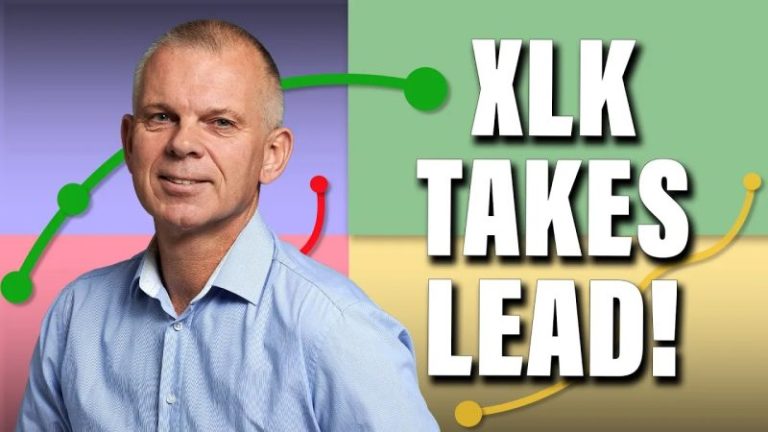
This week, Julius breaks down the current sector rotation using his signature Relative Rotation Graphs, with XLK vaulting into the leading quadrant while utilities and staples fade. He spotlights strength in the technology sector, led by semiconductors and electronic groups that are outpacing the S&P 500. Microchip heavyweights AMD, NVDA, and AVGO are displaying bullish RRG tails, reinforcing the trend. Communication Services and Energy are gaining momentum as well, rounding out a playbook that rewards disciplined trend-following amid risk from geopolitical headlines.

This video was originally published on June 20, 2025. Click on the icon above to view on our dedicated page for Julius.

Past videos from Julius can be found here.

#StayAlert, -Julius

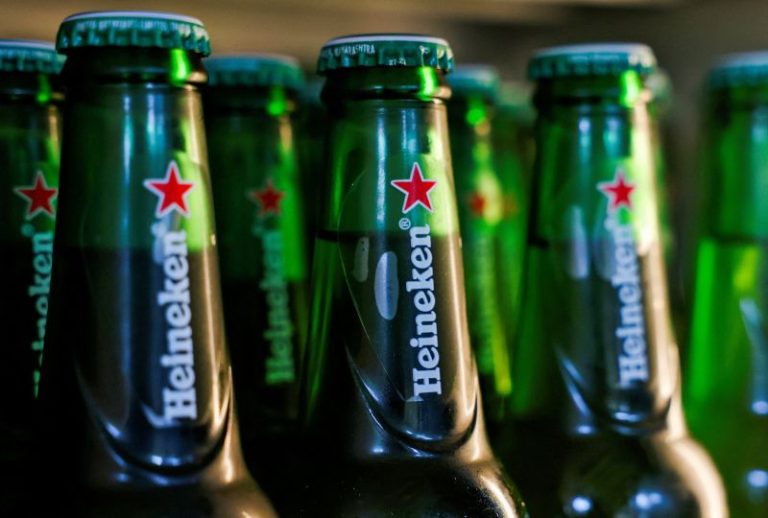
Heineken has lost operational control and withdrawn its staff from its facilities in conflict-affected areas of eastern Democratic Republic of Congo, the Dutch brewer said on Friday.

The beverages giant said in March that its operations in three eastern cities would remain suspended until it was safe to reopen, after some of its breweries were hit and its depots raided during fighting between the army and rebels.

But on Friday, the beer maker said the situation had deteriorated further, and that armed personnel had taken control of its facilities in Bukavu and Goma – eastern Congo’s two biggest cities, now under rebel control – and nearby areas.

“The conditions required to operate responsibly and safely are no longer present and as of 12th June 2025, we have lost operational control,” it said in a statement.

Heineken’s Congo unit, Bralima, still operates in other parts of the country not affected by the conflict, the company said, adding that it would continue assessing the evolving situation.

The group owns four breweries in Congo, producing Heineken beer as well as other popular brands like Primus. The Bukavu facilities employed around 1,000 people both directly and indirectly, it had said previously.

“Our top priority is the safety and wellbeing of our employees,” its Friday statement said. “We have withdrawn all remaining staff from these sites and we have continued to support them financially.”

Nearly 14% of Heineken’s total revenues come from its businesses in the Middle East and Africa, where Congo, with its population of over 100 million, is a large market.

Its operations in the cities of Goma, Bukavu and Uvira had together previously accounted for roughly a third of Heineken’s business in Congo.

Fighting in eastern Congo escalated this year as the M23 rebel group staged a rapid advance that raised fears of a wider conflict.

Congo says Rwanda is supporting M23 by sending troops and arms. Rwanda has long denied helping M23.

The two countries and the United States said on Wednesday that their technical teams initialed a draft peace agreement that is expected to be signed next week.

This post appeared first on cnn.com

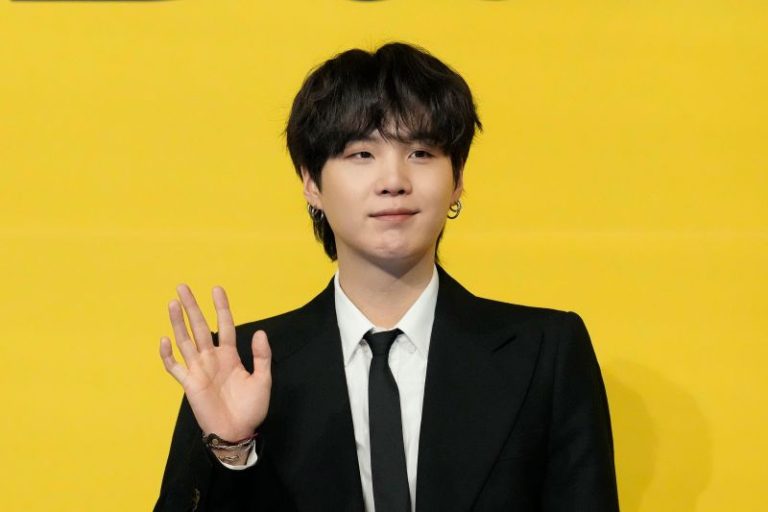
Suga, a rapper and songwriter in the global K-pop sensation BTS, has been discharged from South Korea’s mandatory military service, marking the official return of all seven members from their enlistment duties.

The label confirmed that Suga completed his alternative service duties on Wednesday after using up his remaining leave. His official discharge date is Saturday.

BTS’ management agency, Big Hit Entertainment, had said earlier that no events were planned for Suga’s release out of concern for overcrowding.

It is a momentous occasion for fans of the K-pop group BTS. The seven singers of the popular K-pop band plan to reunite as a group sometime in 2025 now that they’ve finished their service.

Last week, BTS superstars RM and V were discharged from South Korea’s military after fulfilling their mandatory service. Jimin and Jung Kook were discharged a day later. All four were enlisted in December 2023.

Six of the group’s seven members served in the army, while Suga fulfilled his duty as a social service agent, an alternative form of military service.

Jin, the oldest BTS member, was discharged in June 2024. J-Hope was discharged in October.

In South Korea, all able-bodied men aged 18 to 28 are required by law to perform 18-21 months of military service under a conscription system meant to deter aggression from rival North Korea.

The law gives special exemptions to athletes, classical and traditional musicians, and ballet and other dancers if they have obtained top prizes in certain competitions and are assessed to have enhanced national prestige. K-pop stars and other entertainers aren’t subject to such privileges.

However, in 2020, BTS postponed their service until age 30 after South Korea’s National Assembly revised its Military Service Act, allowing K-pop stars to delay their enlistment until age 30.

There was heated public debate in 2022 over whether to offer special exemptions of mandatory military service for BTS members, until the group’s management agency announced in October 2022 that all seven members would fulfill their duties.

This post appeared first on cnn.com
US President Donald Trump’s self-imposed two-week delay to decide whether to strike Iran has sparked confusion and conjecture in Israel.

Some of Israel’s most senior officials had openly pushed for US involvement, arguing that American military involvement can shorten the conflict and allow Israel to achieve its goal of removing what is has long perceived as an existential threat of a nuclear Iran armed with ballistic missiles.

But after Trump’s new timeline, Israel’s political leaders are being careful in their statements, not wanting to be seen as pushing the president into the exact type of Middle East conflict he has long sought to avoid. Netanyahu and others are more cautious now in their public messaging, extolling the potential benefits of US involvement without calling for it.

US involvement would dramatically change the nature of the conflict, Israel has argued, including a far greater chance of successfully striking Iran’s Fordow nuclear facility, which is hidden deep in a mountain south of Tehran. Such a decisive strike would likely require 30,000-pound bunker buster bombs carried only by American bombers.

“There is an understanding that the Israelis will go for Fordow anyway, but it can be much nastier and less decisive without the Americans,” said Yaki Dayan, the former Israeli consul general in Los Angeles.

After the first week of Israel’s strikes in Iran, the Israeli military no longer has the element of surprise, and the country’s political leadership must decide how far to go with the campaign, a decision that relies heavily on what Trump decides to do.

Israel has followed closely the debate within Trump’s MAGA base between the more isolationist wing that opposes US involvement in a new Middle East war and the camp that sees this as the best opportunity for decisive military action against Iran.

Publicly, Netanyahu has effusively praised Trump. On Wednesday, the Israeli leader said the two speak “frequently.” In a pre-recorded video statement, Netanyahu said, “I think President Trump for his backing.”

But Trump has deviated from the US’ traditional pro-Israel footing in the Middle East, including on negotiations with Iran, a ceasefire deal with the Houthis, and a trip to the region that skipped Israel. The White House decisions have exposed sharp divides between the two leaders.

Even so, the two governments have maintained an ongoing dialogue since Israel began attacking Iran. Dayan said that coordination between Netanyahu and Trump is “much better than people think,” but acknowledged that Trump makes decisions unilaterally, after consulting only a small circle of advisers.

Iranian Foreign Minister Abbas Araghchi was meeting his counterparts from the UK, Germany and France on Friday in Switzerland, which will allow the US to gauge the viability of a diplomatic solution to Iran’s nuclear program. On Thursday, the White House said the contact between the US and Iran “has continued” without offering any details of the communications, even as Trump weighs military strikes.

Trump’s ‘smoke and mirrors’

But the government has not signaled any sense of hysteria about Trump’s decision to hold off on a strike on Iran for two weeks.

“He wouldn’t give himself a deadline that he would have to keep to if he hadn’t already made the decision,” the official said, while acknowledging this interpretation is the most favorable to Israel.

“If you follow the statements for the last two or three weeks, it’s been a lot of zigzagging,” said another Israeli official.

What seemed like a certainty to Israeli officials just 48 hours ago – that Trump would order US military involvement – now appears far less assured. Trump went from saying “we now have complete and total control of the skies over Iran” – taking credit for Israel’s military successes – to giving himself two more weeks to make what could be one the most fateful foreign policy decisions of his presidency.

Israel launched the operation against Iran without a commitment from the US that it would take part in the campaign, officials have said, but the belief was that the headlines of Israel’s military accomplishments could entice Trump to authorize US military involvement.

But as the campaign enters its second week, Israel’s “pace of success is slowing down,” the official said. And as Israel continues its operations over Iran – roughly a thousand miles away – the likelihood of error is increasing, which could affect not only Israel’s actions, but also reduce the chance of US involvement.

“Every day that this goes on, there’s a greater chance that something goes wrong,” the official said, without elaborating.

Pinkas said Trump’s deadline to make a decision underscores that the American leader “cannot be deciphered.” It also raises the possibility that “maybe Netanyahu overplayed his cards here,” he added.

This post appeared first on cnn.com
“Iran believes in civilian dialogue,” he said. “Directly or indirectly is not important.”

“President Trump can easily stop the war by only one telephone (call) to (the) Israelis,” he said, repeating the Iranian position that talks were impossible while Israeli bombs were striking Iran.

Farahani said that Iran would not countenance halting nuclear enrichment – which Tehran insists is for peaceful purposes – but added that concessions were possible.

“Maybe it can be lower but we don’t stop it,” he said.

Iran says it needs enriched uranium for peaceful purposes, while also manufacturing large quantities of near-weapons-grade material.

Trump’s decision to open a two-week negotiating window before deciding on striking Iran has offered a slim – if improbable – path to a peace deal between Iran and Israel.

Talks are taking place in Geneva between the foreign ministers from Iran, Britain, France, and Germany, along with the European Union’s foreign policy chief, the first confirmed face-to-face meeting of its kind since the conflict began.

After days of increasingly aggressive messages from the Trump administration, it has opened the possibility that military action can be averted.

Indeed, Trump’s own camp appears to be starkly divided on whether to pursue direct strikes against Iran.

“If America gets involved in the war,” Farahani said, “there are so many options and all (of) those options are on the table.”

Pro-government protests Friday on the streets of Tehran saw an outpouring of anger at both Israel and the United States.

Chants of “death to Israel, death to America” – a staple at such events – rang out, while Iranians spoke of their fury at the bombing campaign.

This post appeared first on cnn.com

As US President Donald Trump weighs joining Israel’s assault on Iran, questions are mounting over whether such an intervention could trigger regime change in Tehran – an outcome that risks splintering the country and sending shockwaves across the region.

Home to long-simmering separatist movements that have vied for power and independence, Iran could face internal fragmentation and chaos if its government falls, experts warn.

After reportedly rejecting an Israeli plan to kill Ayatollah Ali Khamenei, Trump stated this week that Iran’s Supreme Leader is an “easy target.”

“We know exactly where the so-called ‘Supreme Leader’ is hiding,” Trump wrote in a Truth Social post on Tuesday. “He is an easy target but is safe there – We are not going to take him out (kill!), at least not for now.”

Israeli Prime Minister Benjamin Netanyahu has not ruled out targeting Khamenei either, saying that the death of the Supreme Leader is “not going to escalate the conflict, it’s going to end the conflict.”

On Thursday, Defense Minister Israel Katz went further, declaring that Khamenei cannot be allowed to “continue to exist” after an Iranian missile struck a hospital in Israel.

Iran is a nation of more than 90 million people and home one of the world’s oldest continuous civilizations. Its borders have remained more or less stable for about 100 years. The Islamic Republic has managed to preserve those frontiers despite a diverse population of ethnic and religious groups, many of whom have sought autonomy at various points.

But the comments from Israeli and US officials have prompted speculation over what Iran might look like if Khamenei is killed – with experts warning that the country could face a range of scenarios, including regime collapse or even civil war.

Why regime failure in Iran may lead to chaos

The 86-year-old cleric has ruled Iran for more than 35 years as its highest authority, rising to power a decade after the 1979 Islamic Revolution overthrew a US-backed monarch.

Over the years, he consolidated power and ruled with an iron grip under strict Islamic law. He crushed wave after wave of protests demanding social freedoms – each with increasing ferocity – and expanded Iran’s reach far beyond its borders through a network of proxy militias.

With his fate in question, attention is turning to who might succeed him, and how that uncertainty could unleash greater unrest.

The Supreme Leader is elected by the 88-member Assembly of Experts for life and doesn’t officially name a successor. It is unclear who might replace Khamenei, but that process may take place as separatist groups who have long resented the Islamic Republic seek to take advantage of what they may see as an opportunity.

Israel has already killed several of Iran’s key military figures, and experts say that the regime is now at its weakest.

Trita Parsi, executive vice president of the Quincy Institute in Washington, DC, said that regime change would require Israel or the United States having a figure in mind to replace Khamenei and send troops to the country.

The figure Israel is likely to favor is Reza Pahlavi, the US-based son of the deposed Iranian monarch who was ousted in 1979. Pahlavi has voiced support for Israel’s actions, drawing praise from some in the Iranian diaspora and accusations of betrayal from many others.

“Soon in Tehran,” Israeli Minister of Diaspora Affairs Amichai Chikli posted on X on Friday, along with a picture of himself shaking hands with a smiling Pahlavi. Pahlavi told BBC News on Sunday that Israel’s conflict with Iran was an opportunity to bring down the Iranian regime.

If the Supreme Leader is killed and the Guardian Council delays naming a successor, the risk of instability could grow, experts say.

A possible outcome of Khamenei’s potential killing is total regime collapse, Parsi said.

Several scenarios could ensue if the Iranian regime falls, none of which is expected to be to the liking of the US or neighboring states, experts said.

Hamed Mousavi, associate professor of International Relations at the University of Tehran, warned that military intervention “rarely leads to democratization.”

One outcome could be that other elements in the Iranian military assume power. They are unlikely to seek diplomatic routes with Israel or the US, but could take a more hawkish approach that sees possession of a nuclear bomb as the only deterrent to more attacks, Parsi said.

Military factions that could take over are “not going to be the type of regime that the US may have had in mind,” Parsi said.

Another possible scenario is descent into chaos, as Iran’s multiple ethnic groups vie for power.

Iran’s fractious social fabric

Iran has a diverse population, including Persians, Azeris, Arabs, Baloch and Kurds. Under Khamenei’s decades-long rule, the Islamic Republic largely managed to contain civil and ethnic unrest, despite the mistreatment faced by some groups.

Minorities faced discrimination in “their access to education, employment, adequate housing and political office,” according to Amnesty International last year. “Continued underinvestment in regions populated by ethnic minorities exacerbated poverty and marginalization,” it said.

Azeris make up around 16% of Iran’s overall population, according to Minority Rights Group. The Shiite group is the largest and most well-integrated minority in the Islamic Republic but has nonetheless faced inequity.

Arabs constitute up to 4 million people, and they have also been subjected to marginalization over the years.

A group of tribes speaking the Balochi language, the Baloch people make up nearly 5 million of Iran’s population. The predominantly Sunni group extends into neighboring Pakistan and Afghanistan, raising the possibility of separatist conflict spilling over the borders.

The “Army of Justice” organization, a Baloch Sunni militant group, has shown support for Israel’s strikes on Iran, saying in a statement: “It is clear that the current attack is not on Iran, but on the Velayat-e-Faqih (ruling) regime , it is God’s will that the ground has been prepared for us, the people of Iran, to make the best use of this vacuum.”

Kurds make up some 10% of Iran’s population and are mostly settled along the borders with Iraq and Turkey. They have been subject to “deep-rooted discrimination,” Amnesty said.

The Kurdistan Freedom Party, a nationalist and separatist militant group in Iran, published a statement backing Israel’s strikes, saying it supports “the process of destroying Iran’s military and security capabilities.”

A Kurdish rebellion in Iran would also be a major concern for neighboring Iraq and Turkey, both of which have large Kurdish minorities that have sought independence.

Another exiled group that has garnered support from US conservatives is the Mujahadin-e Khalq (MeK), a shadowy dissident group that was once a US-designated terrorist organization but today counts prominent anti-Iran politicians as key allies. Iran accuses it of terrorism, saying it carried out a series of attacks in the 1980s. The MeK denies those charges.

It is one of the best-organized opposition groups confronting the Islamic Republic, but it has little support among Iranians, largely due to its violent past and for having supported Iraqi President Saddam Hussein during his almost decade-long war with Iran.

If Iran’s regime falls, “there would be support for ethnic separatist groups by the Israelis, and perhaps the US,” Parsi said. This would lead to a situation where remnants of the state are going to be consumed with fighting separatists.

Fatemeh Haghighatjoo, executive director of the Nonviolent Initiative for Democracy and a former Iranian lawmaker who opposes the current regime, expressed fears that Iran may descend into civil conflict if the current rule falls.

This post appeared first on cnn.com