Author

admin

Browsing

Unlock the power of divergence analysis! Join Dave as he breaks down what a bearish momentum divergence is and why it matters. Throughout this video, Dave illustrates how to confirm (or invalidate) the signal on the S&P500, Nasdaq100, equal‑weighted indexes, semiconductors, and even defensive names like AT&T (T).

This video originally premiered on June 10, 2025. Watch on StockCharts’ dedicated David Keller page!

Previously recorded videos from Dave are available at this link.

Micron Technology, Inc. (MU) appears poised for an explosive breakout, both technically and fundamentally. While it remains to be seen whether this materializes by its Q3 earnings report on June 25, the setup suggests a high-probability move is about to happen, and soon.

The fundamental case for a breakout is backed by MU’s deep involvement in the AI memory boom. Its high-bandwidth memory (HBM) is powering Nvidia’s next-gen Blackwell chips, demand is outstripping supply, and prices are rising. With sold-out capacity for 2025 and earnings projected to surge 437% this year, MU’s Q3 report could be the next major catalyst.

In light of these forecasts, let’s put things into context and see where MU has stood over the past year in its comparative performance with VanEck Vectors Semiconductor ETF (SMH), our semiconductor industry proxy, Technology Select Sector SPDR Fund (XLK), for a sector comparison, and Invesco QQQ Trust (QQQ), a stand-in for the Nasdaq 100 Index ($NDX).

MU vs. SMH, XLK, and QQQ: Tracking Relative Performance

Despite its recent rally, MU remains a relative laggard. Whether it breaks out will depend on how effectively it positions itself amid shifting industry dynamics.

FIGURE 1. PERFCHARTS OF MU RELATIVE TO ITS INDUSTRY, SECTOR, AND THE NASDAQ 100.  MU has been the big laggard over the past year. You need to take a closer and more detailed look to gain more insight into MU’s current upward momentum.

While analysts are optimistic about its role in the evolving AI-driven landscape, that thesis will be put to the test when the company reports earnings in the coming weeks.

A Shift in Momentum? What the MarketCarpets Are Revealing

While MU lags its industry peers, it might help you to get a more granular view of performance within the semiconductor industry. This is where the StockCharts MarketCarpets Semiconductors summary can be helpful.

FIGURE 2. MARKETCARPETS – SEMICONDUCTORS. In contrast to its peers, a 5-day view shows that MU is the strongest performer.

Though MU has trailed its industry peers over the past year, the 5-day MarketCarpets view reveals a shift in momentum. With a 13.32% gain over the past week, MU is rapidly narrowing the gap and beginning to outpace its peers.

Weekly Chart Levels: Resistance, Support, and Entry Zones

Typically, you’d drill down to a daily chart for more precision, but, with MU, the weekly chart alone highlights the key levels worth watching.

FIGURE 3. WEEKLY CHART OF MU. The weekly chart shows all key levels, from entry to profit targets and stop loss levels.

The weekly chart view clearly outlines support, resistance, and potential entry and exit points. Listed below are the key levels and scenarios to watch.

MU Price Scenarios: Breakout or Breakdown?

  • Watch the rectangle formation: MU is approaching a breakout above key resistance at $115, just ahead of its June 25 earnings report. A decisive move above the rectangle could trigger long entries from bullish traders.
  • Upside scenario: A beat on earnings and strong forward guidance could fuel continued upside—unless derailed by broader geopolitical risks.
  • Downside scenario: If the breakout fails, look for support near the bottom of the formation. The Volume-by-Price indicator shows a heavy concentration of trading at that level, reinforcing its significance as a support zone. However, a breakdown there may cast doubt on the current uptrend thesis.
  • Profit-taking zone: If MU continues its bullish trajectory, expect resistance and likely profit-taking between $127 and $137, an area marked by multiple highs and consolidation levels throughout 2024.

Why $127 to $137, when the weekly chart shows $130 to $135? Here’s where zooming in helps.

FIGURE 4. ZOOMING N TO A DAILY CHART OF MU. This shows, in much greater detail, the potential resistance levels above.

The top and bottom of this consolidation provide a clearer view of potential resistance, which may also serve as profit-taking levels for short-term traders, so keep an eye on this.

  • Last thing – watch the peak: A second round of resistance and potential profit-taking may occur near $155, a key level that previously marked the stock’s all-time high.

Momentum-wise—and note we’re looking at a longer-term time frame—the Relative Strength Index (RSI) suggests there’s still plenty of room to run before MU enters overbought territory. Volume-wise, however, you will want to see the Chaikin Money Flow (CMF) levels increase once the breakout occurs, confirming that buying pressure is supporting the move.

Quick Take: The Setup at a Glance

In a nutshell: Watch for a breakout above $115 ahead of MU’s June 25 earnings by setting an alert using the Technical Alert Workbench. Note that entering a position ahead of earnings is always a risky prospect. If you are planning to take any action at all, make sure it’s in alignment with your own personal trading strategy and criteria.

A beat on earnings and strong guidance could fuel further upside, but watch out! If Wall Street decides to “sell the news,” due to any detail that dampens investor or analyst sentiment, a sharp decline could follow. If MU moves strongly to the upside, look for confirmation via rising CMF levels, which would signal real buying pressure.

If the breakout fails, key support lies near the bottom of the current trading range. On the upside, expect potential resistance and profit-taking between $127–$137, with a secondary ceiling near $155. The RSI still shows room for further gains before MU becomes overbought.

Final Thoughts: Will MU Deliver on the AI Hype?

MU may be lagging now, but, as the MarketCarpets data shows, momentum is quietly shifting, and the shift may accelerate as MU approaches both a potential breakout level and its earnings date. With a critical breakout level in sight and earnings just days away, consider preparing for a potential surge in volatility, which could move the stock in either direction. If MU does break to the upside, whether it can maintain its momentum post-breakout will depend on volume, CMF strength, and how convincingly MU rides the AI memory wave.


Disclaimer: This blog is for educational purposes only and should not be construed as financial advice. The ideas and strategies should never be used without first assessing your own personal and financial situation, or without consulting a financial professional.

In the heat of the Jamaican sun, where the wetlands glisten and buzz with life, an ancient predator is vanishing.

There are around 28 species of crocodiles found throughout the world’s tropical and subtropical regions. But there is only one species in Jamaica, found primarily along the southern coast from St. Thomas to Westmoreland.

Once revered and feared across the island, the American crocodile (Crocodylus acutus) has long ruled the mangroves and coastal lagoons.

But in recent years, its population has been decimated, due to illegal hunting, habitat loss and plastic pollution, as well as killings prompted by a lingering fear among locals.

Lawrence Henriques has made it his life’s mission to change that.

Known as “The Crocodile Guardian,” Henriques has spent the past four decades fighting for their survival.

He runs the Holland Bay Crocodile Sanctuary, a grassroots conservation project in the southeast of the island, perched on the edge of what he says is one of Jamaica’s last viable crocodile habitats.

From this remote corner of the island, he’s trying to undo years of damage: nursing sick crocs back to health, raising juveniles and restoring their numbers in the wild.

“There’s a real fear of crocodiles in Jamaica,” says Henriques. “They’re not tolerated by a lot of people. So if one turns up in someone’s backyard, it’s often killed for meat or just because people are afraid.”

Although crocodiles are often seen as aggressive and dangerous, attacks are few and far between. While reliable figures are hard to come by, according to the global database CrocAttack, there have been 11 incidents reported over the past decade in Jamaica, including one fatality in 2018.

That’s why Henriques is working to change the narrative about the animal and help people understand that they are far less threatening than their reputation suggests.

Born and raised in the Jamaican capital, Kingston, during the 1960s, Henriques always had a penchant for “creepy crawlies,” such as spiders, scorpions and snakes.

But it was crocodiles that truly captured his attention.

“We had a lot more crocodiles and a lot more habitat in those days,” he recalls. “I always had a half a dozen or so baby crocodiles rearing in my bedroom.”

That fascination eventually became a vocation. After studying overseas and learning more about reptiles when working with the Scientific Exploration Society, a UK charity, in Belize, Henriques returned to Jamaica in 1980. He was startled to find that despite crocodiles being classified as endangered in 1971 under the Wildlife Protection Act, there was little practical conservation happening.

“The laws were there, but nobody was doing anything,” he says. “The environmental agency was very under-resourced and still is to this day. And there was nobody really with expertise or knowledge on reptiles.”

A sanctuary on the edge

Henriques volunteered to assist the Jamaican government, carrying out crocodile rescues and providing rehabilitation, all while holding down a job in the citrus industry.

He continued like this for almost 20 years, before a brief relocation to London, UK. When he returned to Jamaica in 2010, he launched what would become the Holland Bay Crocodile Sanctuary — a facility dedicated to rescue, rehabilitation and public education.

The sanctuary, which lies on the edge of a wetland, is home to 27 adult crocodiles along with 18 baby crocs. The juvenile crocs have been bred on site and are typically released into the wild after three years, while the adults have been rescued and rehabilitated after being hit by cars, caught in traps, or found living in squalid conditions. Over the past three years, around 90 have been successfully released back into the wild according to Henriques.

One of the crocodiles living at the sanctuary currently is Xena, who was discovered guarding her eggs in an area littered with trash, her skin slimy and her teeth gray from pollution.

Savannah Boan, an international ambassador from Gatorland Global, the conservation arm of the Florida-based wildlife park which helps to fund the sanctuary, says that since being relocated, Xena’s skin has healed and her teeth are white again. Her babies have also been raised at the facility and released into safe areas, helping to boost wild populations of the species.

Black market

Despite legal protections, crocodiles in Jamaica face growing threats. Poaching is rampant, often driven by demand for meat or misguided fear, according to officers from the country’s National Environment and Planning Agency (NEPA).

“Poaching is definitely a huge problem,” says Leighton Mamdeen, an environmental officer at NEPA. “We try to limit it through enforcement measures such as regular monitoring and we partner with the Jamaica Constabulary Force and the Jamaica Defence Force to do patrols.”

According to media reports, there is a thriving black market for crocodile meat and eggs in Jamaica, with the meat sold for as much as 5,000 Jamaican dollars ($31) a pound (450 grams) – more than 10 times the price of chicken meat.

This could stem from a widespread misconception in some rural communities that crocodile meat has aphrodisiac properties.

Damany Calder, another environmental officer at NEPA, says he has noticed a troubling pattern during callouts, when crocodiles are discovered with their tails removed.

“There’s a rumour about the crocodile tail… it’s (used) either for sexual performance, fertility or longevity,” he says.

In other cases, crocodiles have been found in backyard ponds, kept as pets, or used as props for TikTok stunts or music videos. There was even a time when a small live crocodile was found stuffed in a broken fridge, says Calder. He believes it may have been part of a ritual referred to as Obeah, a Jamaican religious tradition similar to voodoo.

Social media videos have occasionally resulted in prosecutions but only if culprits are caught in the act, Calder says. Individuals found guilty of killing crocodiles may be charged a maximum fine of $100,000 or face one-year imprisonment.

“The police are heavily involved, and they’re trying to improve the penalties,” says Henriques.

“But like everything else, it’s catching the person and proving it in court. It’s a very long, drawn-out process.”

Habitat erased

Development is another killer.

Jamaica’s mangroves and wetlands are currently being cleared for tourism and residential development according to The Forestry Department. This affects the country’s coastal resilience, as mangroves reduce wave energy and storm surges, helping to prevent flooding, and it damages biodiversity, as they are serve as nurseries for fish and provide essential habitat for species like crocodiles.

As this territory shrinks, crocodiles are forced closer to humans.

“These animals are ending up in places they’ve always lived,” Henriques says. “But now those places are towns and roads … We’ve taken their habitat.”

To Henriques, the crocodile isn’t a menace — it’s a keystone species that has been on the island for millions of years. It even features on the Jamaican coat of arms, which shows a crocodile perched atop a royal helmet and mantling, designed to symbolize the island’s unique wildlife and natural heritage.

“They’re like engineers of the ecosystem,” he says. “They dig channels, control fish populations and keep the wetlands healthy.”

He explains that the presence of these apex predators helps to regulate biodiversity within aquatic ecosystems by controlling prey populations and creating microhabitats that support various flora and fauna.

But Henriques warns that because of poaching and habitat loss, the island no longer has many large male crocodiles left along the coastline: “Most now are smaller. It’s a serious shift.”

“What’s happening in Jamaica reflects a global pattern — wetland species are disappearing, and with them, the health of the entire ecosystem,” he adds.

Changing minds, one school at a time

Despite the challenges, there’s a cautious sense of hope.

Henriques and NEPA have ramped up community outreach and education programs, especially in areas near crocodile habitats.

“One of the most impactful things we’ve done is visit schools,” says Mamdeen. “If you start with the kids, you’ll have a greater chance of securing the animal’s future.”

When reports of a crocodile in a pool of water near a school caused panic among parents and children, NEPA directed its outreach efforts toward local students.

“We told them: crocodiles would rather run (from you) than rush (towards) you,” he says. “If you’re near water at night, walk with a stick. If the animal is touched, it moves.”

Henriques added: “People are beginning to understand these animals have a place … They’re not pests. They’re survivors.”

Still, the sanctuary is one of only a few conservation efforts on the island, and without continued support, Henriques fears Jamaica’s crocodiles may not survive the next few decades.

“We can’t afford to lose them,” he says. “They’ve been here longer than we have. They’re part of this land.”

This post appeared first on cnn.com

Hundreds of masked rioters attacked police and set homes and cars on fire in the Northern Irish town of Ballymena on Tuesday in the second successive night of disorder that followed a protest over an alleged sexual assault in the town.

Police said they were dealing with “serious disorder” in the town, which is about 45 km (30 miles) from the capital Belfast, and urged people to avoid the area.

Officers in riot gear and driving armoured vans responded with water cannon and plastic baton rounds after being attacked by petrol bombs, scaffolding and rocks that rioters gathered by knocking down nearby walls, a Reuters witness said.

One house was burned out and a police officer vomited after leaving another in a different part of the town that rioters had attempted to set alight, the witness added.

A number of cars were set on fire and one lay upside down in flames as police sirens blared throughout the town past midnight.

Four houses were damaged by fire and windows and doors were smashed in other homes and businesses in the first night of rioting on Monday, in what police said they are investigating as racially-motivated hate attacks.

Hundreds of protesters had gathered in Ballymena earlier on Monday in response to a case involving two teenage boys who appeared in court that day, accused of sexually assaulting a teenage girl in the County Antrim town.

Local media reported that the charges were read to the teenagers via an interpreter.

Fifteen police officers were injured on Monday, with some requiring hospital treatment.

Separate protests on Tuesday had earlier blocked off some roads in Belfast, another Reuters witness said, but no unrest was reported in other parts of the British-run region.

The British government and local politicians condemned the violence.

“The terrible scenes of civil disorder we have witnessed in Ballymena again this evening have no place in Northern Ireland,” Britain’s Northern Ireland Minister Hilary Been said on X.

This post appeared first on cnn.com

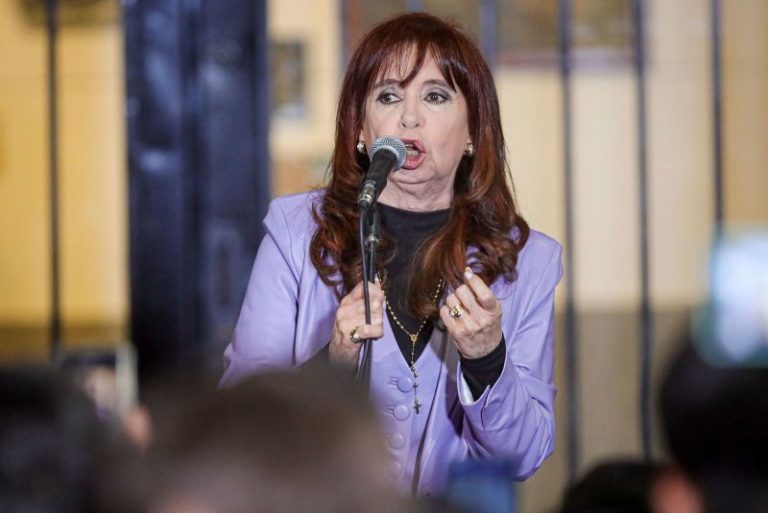
Argentina’s top court effectively banned two-term former President Cristina Fernández de Kirchner from office and upheld a six-year jail sentence, likely drawing a curtain on one of the country’s most flamboyant and divisive political careers.

Kirchner, 72, a polarizing opposition figure and leftist president from 2007 to 2015, was convicted by a trial court in 2022 for a fraud scheme that steered public road work projects in the Patagonia to a close ally while she was president.

The ruling scuppers Kirchner’s plans to run in Buenos Aires provincial legislative elections, but could galvanize her divided Peronist opposition coalition, which has been licking its wounds since being ousted in 2023 by current libertarian President Javier Milei.

The Supreme Court’s three judges rejected Kirchner’s appeal and left in effect an appellate court decision that had upheld the guilty verdict. A lower court will decide whether to grant Kirchner house arrest due to her age.

“The complaint is dismissed,” the Supreme Court said in a ruling. Kirchner has denied wrongdoing and claims she is a victim of political persecution.

In Buenos Aires, her supporters blocked roads across the city. Some banged on drums. Others carried banners with the image of Evita Perón, the wife of Juan Perón, the founder of the political movement who was known as a defender of the poor.

“A triumverate of unpresentables,” Kirchner said of the Supreme Court judges after the ruling, speaking before thousands of supporters who rallied in downtown Buenos Aires outside the headquarters of her Peronist Justicialista party.

Kirchner’s shadow looms large over the Peronist movement, which needs to identify a new generation of leaders.

“The fact that she goes to jail and can’t be a candidate doesn’t eliminate her political movement,” said political analyst Carlos Fara. “Obviously though it won’t be the same.”

A government source said that it could both weaken or strengthen the opposition. Peronism “can either entrench itself or break into a thousand pieces,” the person told Reuters.

Justice?

Prosecutors accused Kirchner of directing hundreds of millions of dollars to construction magnate Lázaro Báez. During her government and that of her late husband, Néstor Kirchner, companies tied to Báez were awarded dozens of government contracts for roadwork projects in Patagonia but nearly half of them were abandoned, prosecutors said.

Báez and other officials were sentenced to prison terms.

Peronism and Kirchner’s popularity have suffered in recent years. She served as vice president in 2019 under President Alberto Fernández, whose government oversaw a slide into economic crisis by overprinting pesos that led to sharp spike in inflation.

But she has still been able to maintain a hardcore support base, particularly from working-class voters who relied on government subsidies under her and her husband’s governments.

“As a figure she’s not been overshadowed on the political scene by anyone,” said Carolina Barry, an expert on Peronism at the Universidad Nacional de Tres de Febrero in Buenos Aires. “Her words resonate with many groups.”

Kirchner has been sharply critical of Milei’s austerity, accusing him of cutting pensions and defunding public education. Milei has shot back that he would “love to bang the last nail in the coffin of Kirchnerismo, with Cristina Kirchner inside.”

“Justice,” wrote Milei on X after the verdict on Tuesday.

Alejandro Carrió, a constitutional and criminal law expert in Buenos Aires, said that even if Kirchner serves the sentence under house arrest, it was unclear “if with time she’ll lose the clear leadership she’s held for years.”

Kirchner faces charges in several other criminal cases and is scheduled to stand trial in November on accusations that she led a large-scale bribery scheme.

She’s not the first Argentine president to face a criminal conviction, joining, among others, former President Carlos Menem, who was sentenced to over four years in prison for embezzlement of public funds during his presidency in the 1990s. As a senator, congressional immunity protected him from prison.

This post appeared first on cnn.com

Syria issued a conservative new dress code Tuesday requiring women to wear burkinis or full-body swimwear on all public beaches, the latest cultural shift since Islamist-led rebels toppled dictator Bashar al-Assad’s regime last December.

The Tourism Ministry said the new guidelines were made in “the requirements of public interest.”

“Visitors to public beaches and pools, whether tourists or locals, are required to wear appropriate swimwear that takes into account public taste and the sensibilities of various segments of society,” Tourism Minister Mazen al-Salhani said in a directive posted to Facebook.

“More modest swimwear is required at public beaches and pools (burkinis or swimsuits that cover more of the body),” said the directive, adding, “When moving between the beach and other places, it is necessary to wear a beach cover-up or loose-fitting robe (for women) over swimsuits.”

Men are required to wear shirts under the new guidance, which says that “topless clothing is not permitted in public areas outside of swimming areas, hotel lobbies, and food service areas.”

“In public areas outside of beaches and pools, it is preferable to wear loose clothing, covering shoulders and knees, and avoid transparent or overly tight clothing,” according to the directive.

However, the ministry said that in resorts and hotels “classified as international and premium (4-star)” and in private beaches and swimming pools ”typical Western swimwear is permitted.”

It’s unclear what repercussions people who do not follow the guidelines will face, but the ministry said that “lifeguards and beach supervisors” would monitor people to ensure compliance.

The new regulations reflect the influence of Hayat Tahrir al-Sham (HTS), the Islamist coalition now leading Syria’s transitional government. Formerly known as Al-Nusra Front, HTS is designated as a terrorist group by the US and UK.

Interim Syrian President Ahmad al-Sharaa, who signed the dress-code directive, led HTS in the lightning offensive that led to the fall of Assad, whose regime had been in power for several decades.

In March, al-Sharaa signed an interim constitution mandating Islamist rule for a transitional phase of five years. Al-Sharaa said in December that rewriting Syria’s constitution might take three years, with elections potentially taking place within five years.

The US-based Human Rights Watch said in March that Al-Sharaa’s “broad authority raises serious concerns about the durability of the rule of law and human rights protections unless clear safeguards are put in place.”

Tourism Minister al-Salhani, who recently courted Qatari and Saudi investors for tourism projects worth “billions of dollars,” framed the rules as respecting Syria’s cultural, social, and religious diversity.”

The announcement comes amid a push to revive Syria’s tourism industry following the lifting of US sanctions in May 2025 – a move US President Donald Trump described as a “chance at greatness” for Syria.

This post appeared first on cnn.com
Walmart’s majority-owned fintech startup OnePay said Monday it was launching a pair of credit cards with a bank partner for customers of the world’s biggest retailer.

OnePay is partnering with Synchrony, a major behind-the-scenes player in retail cards, which will issue the cards and handle underwriting decisions starting in the fall, the companies said.

OnePay, which was created by Walmart in 2021 with venture firm Ribbit Capital, will handle the customer experience for the card program through its mobile app.

Walmart had leaned on Capital One as the exclusive provider of its credit cards since 2018, but sued the bank in 2023 so that it could exit the relationship years ahead of schedule. At the time, Capital One accused Walmart of seeking to end its partnership so that it could move transactions to OnePay.

The Walmart card program had 10 million customers and roughly $8.5 billion in loans outstanding last year, when the partnership with Capital One ended, according to Fitch Ratings.

For Walmart and its fintech firm, the arrangement shows that, in seeking to quickly scale up in financial services, OnePay is opting to partner with established players rather than going it alone.

In March, OnePay announced that it was tapping Swedish fintech firm Klarna to handle buy now, pay later loans at the retailer, even after testing its own installment loan program.

In its quest to become a one-stop shop for Americans underserved by traditional banks, OnePay has methodically built out its offerings, which now include debit cards, high-yield savings accounts and a digital wallet with peer-to-peer payments.

OnePay is rolling out two options: a general purpose credit card that can be used anywhere Mastercard is accepted and a store card that will only allow Walmart purchases.

Customers whose credit profiles don’t allow them to qualify for the general purpose card will be offered the store card, according to a person with knowledge of the program.

OnePay hasn’t yet disclosed the rewards expected for making purchases with the cards. The Synchrony partnership was reported earlier by Bloomberg.

“Our goal with this credit card program is to deliver an experience for consumers that’s transparent, rewarding, and easy to use,” OnePay CEO Omer Ismail said in the Monday release.

“We’re excited to be partnering with Synchrony to launch a program at Walmart that checks each of those boxes and will help serve millions of people,” Ismail said.

This post appeared first on NBC NEWS

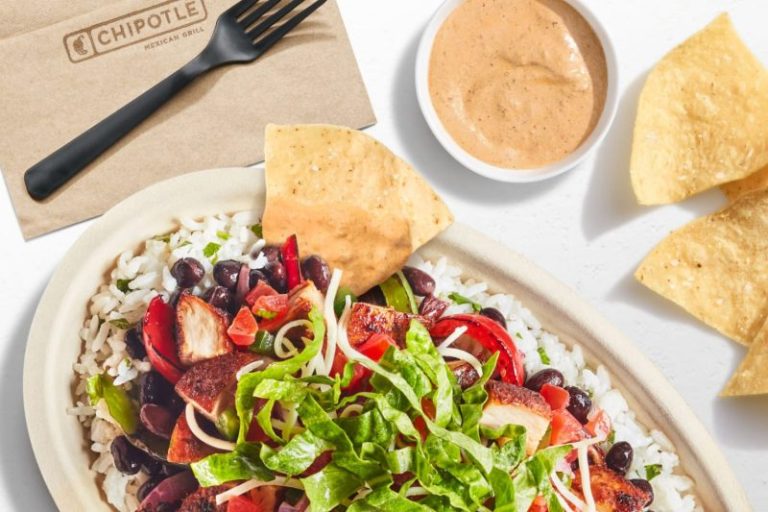
Chipotle Mexican Grill is hoping that Americans’ love for ranch will boost its sales.

On June 17, the burrito chain is launching Adobo Ranch, a spicier take on the iconic condiment that has transcended salads to adorn pizza, chicken wings and chips. The menu item is Chipotle’s first new dip since queso blanco, which launched in 2020.

The debut comes as Chipotle tries to recover from a rough start to the year. In the first quarter, the company reported its first same-store sales decline since 2020. Executives cited a pullback from consumers who had become more concerned about the economy.

The company also lowered the top end of its outlook for full-year same-store sales growth and said traffic wouldn’t grow until the second half of the year.

Shares of Chipotle have fallen 12% this year, dragging its market cap down to $71 billion.

But Adobo Ranch could help to boost the company’s sales if it draws cautious diners back to the chain’s restaurants.

The dipping sauce is made with adobo peppers, sour cream and herbs and spices, according to the company. Adding Adobo Ranch to an order will cost an extra 75 cents.

Ranch outsells ketchup, although NIQ retail sales data shows that mayo still holds the top spot as the favorite condiment of U.S. consumers.

This post appeared first on NBC NEWS

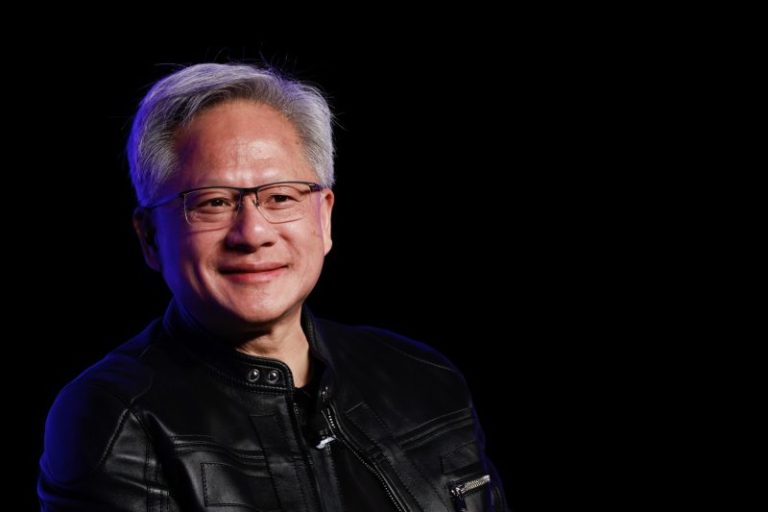
LONDON — Wherever Nvidia CEO Jensen Huang goes, excitement follows — this time, all the way to London Tech Week.

The Nvidia boss — whom Wedbush analyst Daniel Ives dubs the “godfather of AI” — is more like a rockstar these days, given his wide-spanning effect on the AI industry.

“The amount of infrastructure required for AI wouldn’t be possible without that man,” one attendee at London Tech Week said.

“He’s like Iron Man,” the attendee added, referencing the popular Marvel superhero who is a tech billionaire inventor under the name of Tony Stark.

The lines to get into the Olympia auditorium were already building around 40 minutes before Jensen was set to take the stage alongside U.K. Prime Minister Keir Starmer. Not everyone managed to get in — but there were helpfully screens around the venue where people could catch a glimpse of Huang’s talk.

The Nvidia CEO gave his continued bullish assessment of artificial intelligence, calling it an “incredible technology” and saying it should be seen as infrastructure, just like electricity.

There weren’t any multi-billion-dollar investments touted at London Tech Week. But the biggest win for Starmer and the U.K. by far was Huang’s lavish praise for the country.

Wearing his trademark leather jacket, Huang called the U.K. the “envy of the world” that is in the midst of a “Goldilocks circumstance,” boasting a vibrant venture capital ecosystem, as well as budding AI entrepreneurs from leading firms including Google DeepMind, Synthesia, Wayve and ElevenLabs.

Speaking alongside Huang, Starmer spoke in an animated manner as he touted Nvidia’s investments in the U.K. Earlier in the day, the U.S. chipmaker announced a new “U.K. sovereign AI industry forum,” as well as commitments from cloud vendors Nscale and Nebius to deploy new facilities containing thousands of its Blackwell GPU chips.

Starmer spoke at length about AI’s promise and the ways in which it could ease the burdens faced by the U.K.’s public sector institutions, from hospitals to schools.

Huang added that the U.K. is “such a great place to invest,” noting that Nvidia plans to partner with the country to upskill tech workers and build out domestic AI infrastructure.

“Infrastructure enables more research — more research, more breakthroughs, more companies,” the Nvidia chief said. “That flywheel will start taking off. It’s already quite large, but we’re just going to get that flywheel going.”

Starmer thanked Huang for his point, commenting that “the confidence it gives when you explain it that way is huge.”

“From our point of view, we’re really pleased to be seen that way,” the U.K. leader said.

The pair shook hands at the end.

Altogether, there was a lot of energy in the room. Huang said he was “excited” for London Tech Week, and he was met with a round of applause from the audience.

Huang has become the CEO everyone wants to be seen with. Nvidia has positioned itself as central to the AI revolution, which many commentators say is in the early innings.

Nvidia wants that revolution to be built on its chips. And for countries like the U.K., these moments provide a chance for the country to tout its investment potential and for its leader to publicly share a stage with the man seen as powering the AI push.

London was Huang’s first stop in a broader European tour.

The Nvidia boss will travel to Paris later this week, where the chipmaker will host its GTC conference. Politicians including President Emmanuel Macron, who has driven France’s ambition to become a European AI hub, will also likely want some face time with Huang.

This post appeared first on NBC NEWS

Red Mountain Mining Limited (“RMX” or the “Company”) is pleased to report that Highly Anomalous Antimony soil assays have been confirmed at Oaky Creek, part of RMX’s 100% owned Armidale Antimony-Gold Project. A newly defined south-east trend away from the Oaky Creek North pits has been revealed, additionally a new area near Oaky Creek South has opened where up to 333pm Sb in soil has been discovered. The distribution of Antimony in the soils suggests a network across Oaky Creek, of multiple veins existing over 2.3km along the Namoi Fault and up to 400m from the fault. The supporting rock chip assays are pending and expected to be received by the end of June.

HIGHLIGHTS

  • Highly Anomalous Antimony-in-Soil results reveal new target zones beyond known source areas at both Oaky Creek North and Oaky Creek South
  • Two New Highly Anomalous areas defined, with assays up to 333ppm Sb in soil
  • New Northern Antimony area is potentially a strike extension of Oaky Creek North, ~1km south-east away from the historic pits
  • A newly defined Antimony soil trend north of Oaky Creek South also confirms a previously undiscovered trend
  • High Gold-in-soil assay result lies in the New Northern Antimony area
  • Rock Chip assay results are anticipated to be received by the end of June

Red Mountain Widens Antimony Mineralisation at Oaky Creek

Red Mountain is pleased to report that it has discovered a new anomalous antimony target zone, which includes a spot high of 333ppm Sb and located 400m to the north of the Oaky Creek South pits. This new area represents a possible ENE strike similar to the trend at Oaky Creek South.

At Oaky Creek North distribution of antimony suggests a south easterly extension of around 1km with a strong response towards the end of the extension. The area in between is cropped and cultivation may have subdued the surface geochemical response. Local reports indicate historical pits were infilled, and displaced rock piles contained visible stibnite, identified by the onsite geologist (ASX Announcement 30 May 2025).

Antimony-in-soil anomalies also validate the mineralisation at both the historic Oaky Creek North and Oaky Creek South pits, where coarse stibnite was previously extracted by hand from the shafts/pits (Figure 1).

Red Mountain analysed the soils for gold in the Aqua regia multielement suite, although not as sensitive as a Fire Assay technique, encouragingly gold was reported in several areas (refer to Figure 2 for the Gold Heat map). The high gold-in-soil sample lies on strike to the north of the 99ppm Sb soil sample on the Oaky Creek North trend. At Oaky Creek South, gold-in-soil was located just west of the old workings.

Click here for the full ASX Release

This post appeared first on investingnews.com