
Author

admin

Browsing

Every president thinks they can change the world – and Donald Trump has an even greater sense of personal omnipotence than his recent predecessors.

But it’s not working out too well for the 47th president. Trump might intimidate tech titans to toe the line and use government power to try to bend institutions like Harvard University and judges, but some world leaders are harder to bully.

He keeps being ignored and humiliated by Russian President Vladimir Putin who is defying the US effort to end the war in Ukraine. Russian media is now portraying Trump as the tough talker who always blinks and never imposes consequences.

The president also thought that he could shape China to his will by facing down leader Xi Jinping in a trade war. But he misunderstood Chinese politics. The one thing an authoritarian in Beijing can never do is bow down to a US president. US officials say now they’re frustrated that China hasn’t followed through on commitments meant to deescalate the trade conflict.

As with China, Trump backed down in his tariff war with the European Union. Then Financial Times commentator Robert Armstrong enraged the president by coining the term TACO trade — “Trump Always Chickens Out.”

Everyone thought that Trump would be on the same page as Benjamin Netanyahu. After all, in his first term he offered the Israeli prime minister pretty much everything he wanted. But now that he’s trying to broker peace in the Middle East, Trump is finding that prolonging the Gaza conflict is existential for Netanyahu’s political career, much like Ukraine for Putin. And Trump’s ambition for an Iranian nuclear deal is frustrating Israeli plans to use a moment of strategic weakness for the Islamic Republic to try to take out its reactors militarily.

Powerful leaders are pursuing their own versions of the national interest that exist in a parallel reality and on different historical and actual timelines to shorter, more transactional, aspirations of American presidents. Most aren’t susceptible to personal appeals with no payback. And after Trump’s attempts to humiliate Ukrainian President Volodymyr Zelensky and South African President Cyril Ramaphosa in the Oval Office, the lure of the White House is waning.

Trump spent months on the campaign trail last year boasting that his “very good relationship” with Putin or Xi would magically solve deep geopolitical and economic problems between global powers that might be unsolvable.

He’s far from the first US leader to suffer from such delusions. President George W. Bush famously looked into the Kremlin tyrant’s eyes and “got a sense of his soul.” President Barack Obama disdained Russia as a decaying regional power and once dismissed Putin as the “bored kid in the back of the classroom.” That didn’t work out so well when the bored kid annexed Crimea.

More broadly, the 21st century presidents have all acted as though they’re men of destiny. Bush came to office determined not to act as the global policeman. But the September 11 attacks in 2001 made him exactly that. He started wars in Afghanistan and Iraq — which the US won, then lost the peace. And his failed second term goal to democratize the Arab world never went anywhere.

Obama tried to make amends for the global war on terror and travelled to Egypt to tell Muslims it was time for “a new beginning.” His early presidency pulsated with a sense that his charisma and unique background would in itself be a global elixir.

Joe Biden traveled the globe telling everyone that “America is back” after ejecting Trump from the White House. But four years later, partly due to his own disastrous decision to run for a second term, America — or at least the internationalist post-World War II version – was gone again. And Trump was back.

Trump’s “America First” populism relies on the premise that the US has been ripped off for decades, never mind that its alliances and shaping of global capitalism made it the most powerful nation in the planet’s history. Now playing at being a strongman who everyone must obey, he is busily squandering this legacy and shattering US soft power — ie. the power to persuade — with his belligerence.

The first four months of the Trump presidency, with its tariff threats, warnings of US territorial expansion in Canada and Greenland and evisceration of global humanitarian aid programs show that the rest of the world gets a say in what happens too. So far, leaders in China, Russia, Israel, Europe and Canada appear to have calculated that Trump is not as powerful as he thinks he is, that there’s no price for defying him or that their own internal politics make resistance mandatory.
This post appeared first on cnn.com

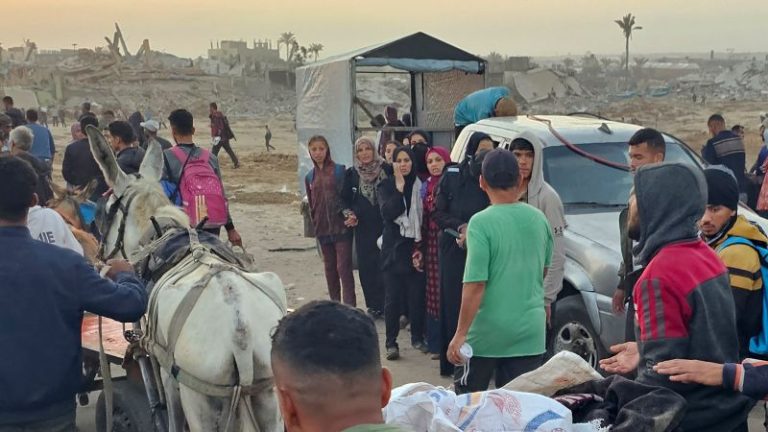
At least 26 Palestinians have been killed after Israeli forces opened fire on Sunday near a southern Gaza aid distribution center run by a controversial US-backed foundation, according to the Palestine Red Crescent Society.

“Crowds of citizens headed to receive food aid” from a site in the Rafah area, when Israeli forces opened fire, said a paramedic from the PRCS, the only medical professionals present in the area.

The GHF is a private organization backed by Israel and the United States. It was set up amid Israeli accusations that Hamas is stealing aid in Gaza and selling it for profit. Humanitarian organizations say there is no evidence of this, and Israel hasn’t presented any evidence publicly.

United Nations aid agencies have criticized the GHF’s aid mechanism, saying it violates humanitarian principles and raises the risks for Palestinians.

UN aid groups, such as UNRWA, typically check identification and rely on a database of registered families when distributing aid.

But the GHF is not screening Palestinians at aid distribution sites, despite Israeli officials saying that additional security measures were a core reason for the creation of the new program.

Criticism has been mounting against both Israel and the GHF after chaos broke out last week when tens of thousands of starving Palestinians arrived at two new food distribution sites.

According to Palestinian Ministry of Health figures from before Sunday’s incident, 11 people have been killed and dozens injured since the aid distribution sites have opened. The GHF said on Thursday that no one has been killed or injured since the distribution of aid began last week.

The statement added that it has provided more than 4.7 million meals in six days, including delivering 16 truckloads of food on Sunday morning, providing over 887,000 meals.

In a statement issued Sunday, the GHF said it will “continue scaling, with plans to build additional sites across Gaza, including in the northern region, in the weeks ahead.”

Aid was distributed “without incident,” read the statement, with the group adding it was “aware of rumors being actively fomented by Hamas suggesting deaths and injuries today.”

However, a mixed picture appears on the ground with claims of the aid distributed believed to be inaccurate.

The GHF also claims the reports of “deaths, mass injuries and chaos” at its sites are “false.”

“They are untrue and fabricated,” the statement continued.

This is a developing story and will be updated.

This post appeared first on cnn.com

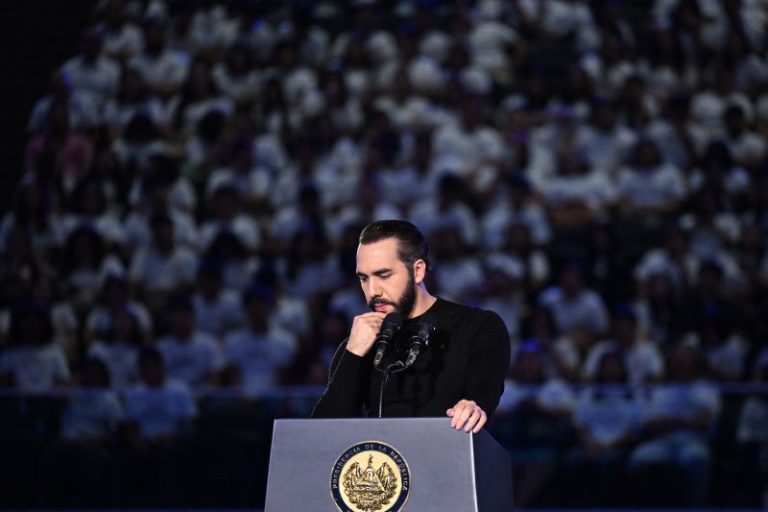
Nayib Bukele, the self-declared “world’s coolest dictator,” will mark six years as El Salvador’s president on Sunday, a period defined by contentious reforms, which critics say have brought peace to the streets at an incredibly high price.

His iron-fisted crackdown on crime in the country, that was once the most violent nation in the western hemisphere, led to the arrest and detention of around 87,000 people, often with little due process.

The government has defended the move, pointing to significant reductions in gang violence nationwide, but opponents say it has come at the cost of mass incarceration and the erosion of civil liberties.

The dragnet expanded as time wore on to include civil society groups and journalists investigating official collusion with the country’s gangs, critics say.

On May 19, Ruth López, an anti-corruption lawyer for the human rights group Cristosal, who is also a prominent critic of Bukele, was detained by Salvadoran authorities for allegedly stealing “funds from state coffers.” However, López still has not been charged with a crime despite remaining in detention.

Soon after Lopez was arrested, Bukele’s government passed a law taxing foreign donations to NGOs like Cristosal at 30%, which rights groups have described as an existential threat.

“What we have seen is a massive concentration of power in (Bukele’s) hands,” Juan Pappier, deputy director for Latin America at Human Rights Watch, said of Bukele’s six years in power. Bukele’s rule has been “based on demolition of the checks and balances of democracy and increasing efforts to silence and intimidate critics.”

The reduction of gang-related crime in El Salvador has made Bukele popular in the Central American nation, so much so that he was reelected in a landslide victory last year, even though the country’s constitution had barred anyone standing for a second term. (Bukele’s allies in Congress eventually replaced the Supreme Court’s top justices with judges willing to interpret the constitution in his favor.)

Since March 2022, the country has been under a “state of exception,” allowing the suspension of numerous constitutional rights. In the capital San Salvador, many people say they now feel safe walking through neighborhoods once considered dangerous. Though they acknowledge the country has seen a massive increase in incarcerations and a suspension of rights, Bukele’s supporters believe the resulting peace and security has been worth the tradeoff.

Not everyone agrees.

Samuel Ramírez, founder of the Movement of Victims of the Regime (MOVIR), a human rights group that works with families of people believed to have been detained without due process, says thousands have been arrested over unfounded suspicions of being linked to gangs.

Bukele has previously admitted that some innocent people have been detained by mistake but said that several thousand have already been released.

Ramírez and other activists believe that many are too afraid to speak publicly.

“Here we see soldiers armed to the teeth in the streets, the police, even armored trucks in the streets — tanks. That’s synonymous with a country at war,” he said. “The gangs, for me, have already been neutralized. And now the war is against the people, so they don’t demonstrate, don’t speak out.”

Alleged back door dealings

Though he presents himself as a law-and-order leader, Bukele has long faced allegations that he negotiated the peaceful security situation in El Salvador through back-door dealings with the gangs.

In 2021, the Biden administration accused Bukele’s regime of bribing MS-13 and Barrio 18, two of the most notorious gangs in El Salvador, to “ensure that incidents of gang violence and the number of confirmed homicides remained low.” Alleged payoffs included cash, cell phones and prostitutes for imprisoned capos.

Bukele promptly denied the allegations, calling them an “obvious lie.”

But four years later, independent newsroom El Faro published an explosive interview with two self-styled gang leaders from Barrio 18 who claimed that, in exchange for hundreds of thousands of dollars in cash, they had intimidated voters into casting their ballots for Bukele during his 2015 bid for mayor of San Salvador.

The two men gang leaders also claimed that when he became president in 2019, Bukele had arranged that the most powerful gangs in El Salvador refrain from wanton murder and extortion, lest they make him look bad, El Faro reported.

Bukele has not yet responded publicly to their allegations, but obliquely referenced the reporting from El Faro in a post on May 10, sarcastically implying the only “pact” he made with the gang leaders involved putting them in prison.

The journalists from El Faro who broke the story fled the country before it was published, anticipating arrest.

He said seven of the publication’s journalists are facing arrest warrants for reporting on the alleged deals. Even so, he said the newspaper would continue its journalistic work. For the past two years, the publication has been running most of its operations in exile from Costa Rica.

“If there was any semblance of democracy left in El Salvador, it was in independent journalism,” said Noah Bullock, executive director of Cristosal.

‘We are under a dictatorship’

Last week, Bukele’s government passed a law taxing foreign donations to NGOs at 30%.

He had proposed a similar law in 2021, but it didn’t pass. In any case, Bullock says that it’s irrelevant whether any law is proposed, passed or tabled in El Salvador: after six years of virtually unfettered power, Bukele is a law in and of himself.

She said the law will make it impossible for them to continue working. It gives them three months to renew their registration as an NGO, but they don’t know how the process will work.

Grande’s assessment of the situation is unambiguous: “Right now, we can say very openly that we are under a dictatorship.”

Despite the growing outrage from rights groups, Bukele’s punishing penal system has won him fans.

US President Donald Trump has praised the crackdown and cut a deal with Bukele, who agreed to hold hundreds of Venezuelan deportees in El Salvador’s Center for Terrorism Confinement, alongside thousands of detained Salvadorans.

Known as Cecot, the mega-prison is considered the largest penitentiary in the Americas and is notorious for the spartan conditions, which rights organizations have denounced as inhumane.

“I think what is happening here is a kind of laboratory for what could happen in other countries,” NGO worker Grande warned. “Even the United States.”

During Trump’s April meeting with Bukele at the White House, Bukele suggested the US president follow his lead when it comes to mass detentions.

“Mr. President, you have 350 million people to liberate, you know,” Bukele said of the US population. “But to liberate 350 million people, you have to imprison some. You know, that’s the way it works, right?”

This post appeared first on cnn.com

The gold price saw peaks and troughs this week.

After rising to almost US$3,350 per ounce on Monday (May 26), the yellow metal took a dive, dropping just below the US$3,260 level on May 28 (Wednesday). It was back on the rise the next day, hitting US$3,324.

Trade tensions were in focus throughout the period.

Concerns lessened early in the week, when US President Donald Trump said he would delay raising tariffs on the EU, but uncertainty ratcheted back up on Wednesday (May 28), when an American trade court issued a ruling that blocked most of his tariffs put in place by his administration.

“It is not for unelected judges to decide how to properly address a national emergency” — Kush Desai, White House spokesperson

The decision prompted a flurry of activity and backlash from Trump and his supporters, with a federal appeals court ultimately reinstating the tariffs on May 29 (Thursday).

The turmoil was beneficial for gold, as was news that the US economy shrank by 0.2 percent annually in Q1. The GDP estimate is the second of three from the Bureau of Economic Analysis, and comes in lower than the first calculation of a 0.3 percent contraction.

Bullet briefing — Glencore restructures, Anglo completes spinoff

Glencore restructuring move sparks M&A talk

Commodities giant Glencore (LSE:GLEN,OTC Pink:GLCNF) has quietly moved billions worth of global coal and ferroalloys assets into an Australian subsidiary.

The Australian Financial Review was the first to report the news, and it’s already sparked speculation about renewed M&A talks between Glencore and Rio Tinto (ASX:RIO,NYSE:RIO,LSE:RIO). The two major companies reportedly engaged in discussions last year, but in the end did not move forward.

With this restructuring from Glencore and Rio Tinto’s CEO due to step down later this year, market watchers see potential for a deal to be done.

Anglo American spins off Valterra Platinum

Anglo American (LSE:AAL,OTCQX:AAUKF) made headlines elsewhere this week as the firm finished demerging its platinum-group metals unit, Valterra Platinum (JSE:VAL).

Valterra, formerly Anglo American Platinum, began trading on the Johannesburg Stock Exchange on May 28, and will have a secondary listing in London as of June 2.

Anglo made the decision to spin off Valterra after heading off a US$49 billion takeover bid from BHP (ASX:BHP,NYSE:BHP,LSE:BHP) last year. The company embarked on a restructuring plan that will see it hone in on copper and iron ore.

Interestingly, Valterra’s debut comes alongside a platinum price boost. The metal recently broke out to its highest level in about two years, nearly reaching US$1,100 per ounce.

Edward Sterck of the World Platinum Investment Council believes it’s too soon to tell whether the rise is sustainable, but he does see a ‘perfect storm’ brewing for platinum.

Here’s how he explained it:

I think platinum’s fundamentals are just highly attractive at the moment. You’ve got really constrained supply, you’ve got demand that is actually beginning to show some real signs of growth, driven principally by an inflection in jewelry demand and by ongoing growth in investment demand.

And so given those things are resulting in these really significant deficits — this is the third year of almost a million ounces of deficit out of an 8 million ounce market — those are just rapidly depleting those aboveground stocks … this has all generally come together as a perfect storm. We are seeing that tightness in the market, and I feel quietly optimistic that we’re going to see that long-awaited price response come through.

Watch the full interview for a more in-depth look at supply and demand dynamics for platinum.

Securities Disclosure: I, Charlotte McLeod, hold no direct investment interest in any company mentioned in this article.

This post appeared first on investingnews.com

There’s no denying that the equity markets have taken on a decisively different look and feel in recent weeks.  We’ve compared the charts of the S&P 500 and Nasdaq 100, as well as leading growth stocks like Nvidia, to an airplane experiencing a “power-on stall”.  Basically, the primary uptrend has been paused, but it’s unclear whether we’ll resume the uptrend after a brief corrective period.

I stand by my previous comments that the 200-day moving average, as well as the price gap formed in early May, remains the most important “line in the sand” for this market.  And as long as the S&P 500 and other leading names remain above their 200-day moving averages, then equities are still in decent shape.

One of the key features of this market off the early April has been the dominance of traditionally “offensive” sectors such as technology and consumer discretionary.  But are these leading sectors maintaining their leadership role as we progress through the spring months into the summer?

Leading Sectors Off the April Low Starting to Falter

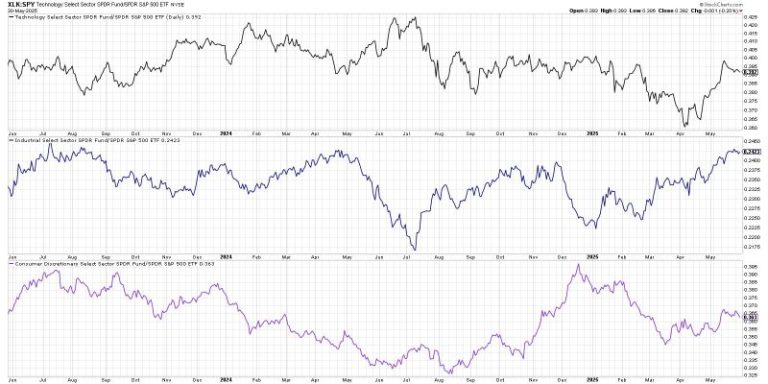
My Market Misbehavior LIVE ChartList includes a series of relative strength charts showing the performance of key sectors versus the S&P 500.  When these lines are trending higher, the sector is outperforming the benchmark.  Generally speaking, I’d prefer to own stocks where the relative strength line is trending higher, as that confirms I’m doing better than a passive investment strategy!

Only three sectors have outperformed the S&P 500 index over the last month: technology, industrials, and consumer discretionary.  Notice how two of those sectors, technology and consumer discretionary, are seeing a downturn in relative strength over the last week?  It still may be early to declare a full leadership rotation, but this initial downturn in the relative performance could be a sign of further weakness to come.

Defensive Sectors Showing Early Signs of Strength

So if these leadership sectors are starting to slow down, which sectors are showing an improving relative strength?  Our next chart shows the relative performance of the four traditionally defensive sectors, most of which have turned higher over the last two weeks. 

Again, I’d hesitate to declare this a full and confirmed rotation, but the fact that defensive sectors are improving here suggests investors are beginning to reallocate a bit to more risk-off positions.  Over the next few weeks, improvement in these defensive sectors could provide a clear validation to a “market in correction” thesis.

Relative Rotation Graphs Confirm Defensive Rotation

Of course, when we’re talking about sector rotation, I always want to bring up the Relative Rotation Graphs (RRG) and benefit from Julius de Kempenaer’s innovative data visualization approach.  First, let’s see how the daily RRG showed the 11 S&P 500 sectors back in early May.

We can see that the Leading quadrant includes those leading sectors such as technology.  In the Lagging quadrant we’ll find pretty much everything else, including all four of the defensive sectors discussed above.  Now let’s fast forward to the current RRG and see how things have rotated.

Now you’ll find health care, consumer staples, and other defensive sectors in the Improving quadrant.  Technology, industrials, and consumer discretionary have now rotated down into the Weakening quadrant.  So the RRG is showing at least an initial rotation away from the sectors that have been leading off the April market low.

One of the most important arguments from the bulls has been the dominance of offensive sectors over the last six weeks.  But as we’ve shown here today, the sector may be changing from a clearly bullish reading to a much more defensive warning sign for investors.

RR#6,

Dave

PS- Don’t miss our daily market recap show on YouTube every trading day at 5:00pm ET!

David Keller, CMT

President and Chief Strategist

Sierra Alpha Research LLC

marketmisbehavior.com

https://www.youtube.com/c/MarketMisbehavior

Disclaimer: This blog is for educational purposes only and should not be construed as financial advice.  The ideas and strategies should never be used without first assessing your own personal and financial situation, or without consulting a financial professional.  

The author does not have a position in mentioned securities at the time of publication.    Any opinions expressed herein are solely those of the author and do not in any way represent the views or opinions of any other person or entity.

Manage your stock portfolio like a pro! Learn stock portfolio management, trading strategy, and how to build stock watchlists like a professional investor with this insightful video from Grayson. He shares how to run your portfolio like a championship sports team—organizing stocks like players, keeping top performers in play, and tracking trade opportunities with precision.

This video originally premiered on May 30, 2025. Click on the above image to watch on our dedicated Grayson Roze page on StockCharts TV.

You can view previously recorded videos from Grayson at this link.

A bipartisan pair of US senators met with Ukrainian President Volodymyr Zelensky in Kyiv on Friday and urged stronger sanctions against Russia, while uncertainty swirls over whether the next round of peace talks will move ahead in the coming days.

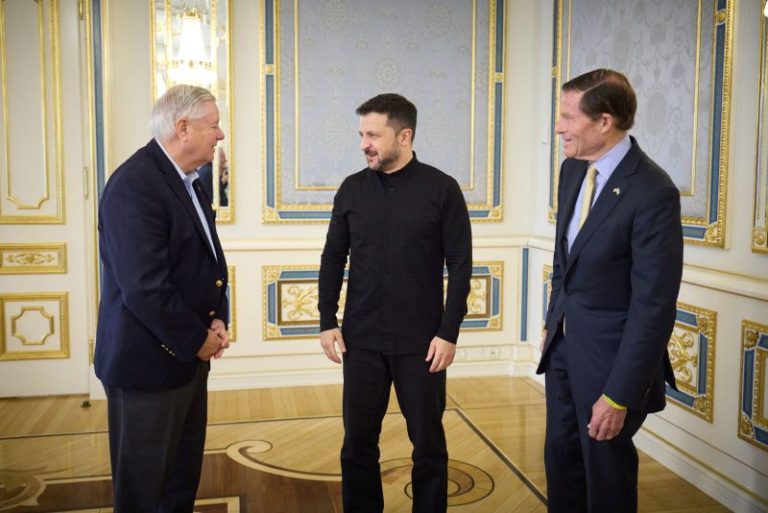
Republican Sen. Lindsey Graham of South Carolina and Democratic Sen. Richard Blumenthal of Connecticut met with Zelensky and other top Ukrainian officials in the capital. Their visit came just days after Russia launched its biggest aerial assault against Ukraine since the start of the war, and as the US ramps up pressure on Moscow to end the three-year conflict.

Among the topics discussed were the ongoing peace talks and proposed legislation to strengthen US sanctions against Russia, according to a statement from the Ukrainian presidential office.

Graham and Blumenthal are co-sponsoring a bipartisan bill to impose more sanctions on Russia – a notion that has gained support among a number of Republican lawmakers in recent weeks as Moscow steps up its deadly aerial assaults.

Graham said lawmakers would move forward next week with a vote on the bill, the Reuters news agency reported. The bill is supported by 82 senators from both sides of the aisle and would impose a 500% tariff on goods imported from countries that buy Russian oil, gas, uranium and other products. It must pass both chambers of Congress and be approved by President Donald Trump to become law.

Trump has so far held off on imposing more sanctions as he tries to negotiate a peace deal between Moscow and Kyiv. However, he has threatened in the past to impose the measures if Russia doesn’t agree to a truce.

Asked by reporters on Friday if he would support the bill, Trump responded: “I don’t know, I’ll have to see it. I’ll take a look at it.”

Graham said Friday he had talked with Trump before his trip and the US president expects “concrete action” from Moscow, according to Reuters.

The visit comes as Ukrainian officials raised questions about planned peace talks in Istanbul on Monday – as they say Russia has yet to send its negotiating proposals, a key demand of Kyiv’s.

“For a meeting to be meaningful, its agenda must be clear, and the negotiations must be properly prepared,” Zelensky wrote on X on Friday after hosting Turkey’s foreign minister for talks in Kyiv.

Zelensky also said he spoke with Turkish President Recep Tayyip Erdogan, writing on Telegram: “We share the view that this meeting cannot and should not be empty.”

“Neither we in Ukraine nor Turkey as the host side have any information about Russia’s so-called memorandum,” he said in his evening address, accusing Russia of “hiding” its memorandum from both countries.

Ukraine has already provided its own version of a peace memorandum, officials say.

Russian Foreign Minister Sergey Lavrov said on Wednesday that Moscow would present its memorandum during the next round of talks.

Zelensky said he and his Turkish counterpart also spoke about the possibility of organizing a four-way meeting with the leaders of Ukraine, Russia, Turkey, and the United States to further facilitate peace negotiations.

In recent weeks, the US president has become visibly frustrated with Russia over its deadly attacks on Ukraine and the lack of progress on peace talks.

Russian President Vladimir Putin proposed holding “direct talks” in Turkey earlier this month – but never showed up, despite Zelensky agreeing to meet. In the end, the two nations sent low-level delegations to negotiate instead.

A large-scale prisoner exchange, the biggest since the start of the war, was the only significant outcome, with both sides agreeing to release 1,000 prisoners on each side – but it was overshadowed by ongoing Russian attacks at the same time.

Trump voiced frustration with Putin at the time, saying: “We’re in the middle of talking, and he’s shooting rockets into Kyiv and other cities.”

This post appeared first on cnn.com

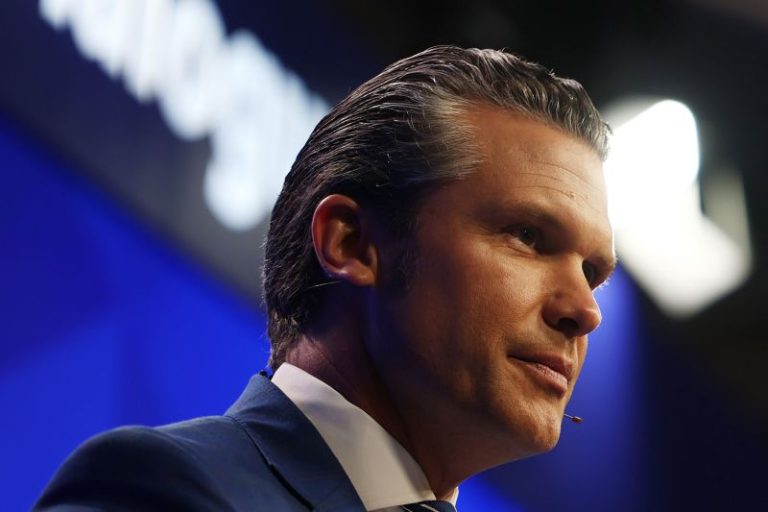
US Defense Secretary Pete Hegseth on Saturday delivered a dire warning to the Asia-Pacific region and the world: China’s designs on Taiwan pose a threat to global peace and stability that requires “our allies and partners do their part on defense.”

“There is no reason to sugarcoat it. The threat China poses is real. And it could be imminent,” Hegseth said in a speech to the Shangri-La Dialogue, Asia’s premier defense forum, in Singapore.

“Beijing is credibly preparing potentially to use military force to alter the balance of power in the Indo-Pacific,” with People’s Liberation Army (PLA) forces training daily to take military action against Taiwan, Hegseth said.

He noted that Chinese leader Xi Jinping has ordered his military to be prepared by 2027 to invade Taiwan, the democratic island of 23 million people that the Chinese Communist Party claims as its sovereign territory despite having never ruled it.

“The PLA is building the military needed to do it, training for it every day and rehearsing for the real deal,” Hegseth said, delivering some of his strongest comments against China since he took office in January.

He said US President Donald Trump has pledged not to let Taiwan fall to China on his watch, and he called on US allies and partners in the region to band together to stand up to Beijing, both on the Taiwan issue and other regional disputes where China aggressively pursues its agenda, such as in the South China Sea.

“China’s behavior towards its neighbors and the world is a wake-up call. And an urgent one,” the US defense chief said.

But he said the US cannot deter the Chinese threat alone, calling on other nations to be “force multipliers” against Beijing.

“We ask – and indeed, we insist – that our allies and partners do their part on defense,” he said.

Hegseth urged Asian countries to increase their defense spending, pointing to NATO allies who have boosted it to 5% of gross domestic product.

“So it doesn’t make sense for countries in Europe to do that while key allies in Asia spend less on defense in the face of an even more formidable threat, not to mention North Korea,” he said.

While Hegseth made clear that Washington does not seek conflict with China, he stressed the Trump administration would not let aggression from Beijing stand.

“We will not be pushed out of this critical region, and we will not let our allies be subordinated and intimidated,” he said.

Hegseth’s speech adds to heated tensions between Washington and Beijing.

China has railed against America’s efforts in recent years to tighten its alliances and stiffen its defense posture in Asia, while economic frictions rose to historic levels earlier this year after Trump imposed tariffs on China, sparking a tit-for-tat between the two countries that saw duties rise to more than 100% on each other’s goods.

The annual Shangri-La Dialogue in Singapore has in the past been a place where defense leaders from the US and China can meet on the sidelines and foster at least a minimal dialogue between the two foes.

No such meeting is expected to take place this year. China announced on Thursday that it would send only a low-level delegation from its National Defense University to Shangri-La, rather than its defense minister, who has spoken at the past five forums.

When the International Institute for Strategic Studies, which sponsors the event, belatedly released a speakers list for the forum on Friday afternoon, the usual 8:30 a.m. time slot for a Chinese representative to speak was scrubbed from the agenda.

At a Chinese Defense Ministry press conference on Thursday, a spokesperson ducked a question on why Beijing was not sending its defense minister to the forum.

China was “open to communication at all levels between the two sides,” a ministry spokesperson said, when asked about a potential sidelines meeting with the US delegation.

Hegseth’s call for allied cooperation in deterring China is a carryover from the Biden administration, but the Trump administration seems more strident than its predecessor.

Ahead of the Singapore conference, there was broad consensus among analysts that unlike the turmoil Trump has caused in Europe – with threats to pull back from NATO and abandon Ukraine in its fight against Russia’s invasion – the US role in Asia has largely been consistent, centered on a policy to counter Chinese influence and back Taiwan.

Analysts noted that US-led military exercises, especially those involving key allies Japan, Australia, the Philippines and South Korea, have continued or even been bolstered in 2025.

This post appeared first on cnn.com

Even before Israel’s war in Gaza started, the territory was one of the most densely populated places on the planet, described by United Nations officials as an “open-air prison.” Now, Israeli forces are expanding their operations, cramming the population into an ever-shrinking patch of land.

Israel’s latest military offensive, named “Gideon’s Chariots,” aims to finally “conquer” the territory, as one government minister put it. Almost 80% of the enclave has come under evacuation orders or been designated as a militarized zone since March 18 when Israel broke its ceasefire with Hamas, according to the UN. Since then, Israel has a declared policy – backed by the US – to encourage resettlement of Gaza’s residents.

As part of the “intensified operation,” Israeli Prime Minister Benjamin Netanyahu said the whole population of Gaza – around 2 million people – will be displaced to the south of the 140 square-mile territory.

The Israeli military claims the operation is aimed at destroying Hamas and freeing hostages. Meanwhile, Israel’s far-right Finance Minister Bezalel Smotrich said the operation could lead to a complete takeover of the territory.

“We are finally going to conquer the Gaza Strip,” he said after Israel’s security cabinet approved the expanded campaign.

See what Israel’s expanding operation means on the ground, in five maps.

Around 80% of Gaza is covered by evacuation orders and Israeli-militarized zones

Some Gazans in the north say they have fled to the nearby coastline in a last-ditch effort to escape the renewed bombardment, exhausted by Israel’s 19-month assault. Others are sleeping in tents surrounded by the rubble of their former homes, fearful to leave in case they are forced out of Gaza.

Since Israel broke the ceasefire in mid-March, at least 2-3 kilometers (1.2-1.9 miles) into Gaza’s land border is a no-go zone, which includes a 1 kilometer-wide (around 0.6 miles) buffer area next to Israeli territory where homes, factories and farmland have been systematically levelled.

Access to the Mediterranean Sea to fish is all but banned. According to the UN Food and Agriculture Organization (FAO), most fishing boats have been destroyed and Palestinians fishing meters from the shore have been targeted.

Another militarized corridor was established in early April — the Israeli-demarcated “Morag Corridor” in Rafah — with the stated intention of “dividing the strip.” This is one of at least four routes established to control Gaza by the Israeli military who demolish and clear all buildings and cropland to make way for them.

At least 31 evacuation orders have been issued by Israeli forces since March 18 this year covering large areas of the strip, sometimes at the rate of two a day. As a result, an estimated 600,000 people in Gaza have been displaced in that time (this figure includes people who may have been displaced multiple times), according to the United Nations-led Site Management Cluster.

In northern Gaza, these orders have recently been accompanied by instructions to move south, despite ongoing attacks there too. This week, the Israeli military issued evacuation orders for most of southern Gaza with directives to head toward the Al-Mawasi area, ahead of what its spokesperson said would be an “unprecedented attack.”

Aid groups have criticized the use of these directives, branding them as confusing, often inaccurate and overly reliant on an internet connection which most people in Gaza only have intermittent access to. The delivery mechanism is varied, with some receiving text messages or phone calls ahead of an attack, while for others the first sign is incoming Israeli fire. On the ground, Gaza no longer looks familiar to residents, with most landmarks destroyed or damaged, including shops, trees and roads, making it much more difficult to navigate. In order to move around, people need to pass through heavily militarized checkpoints, usually on foot.

“I’ve been on the street with my children for three days, and I can’t find a place to settle,” she said. “I wish for death at any moment. I don’t know what to do with my children or where this life will take us. There is no solution.”

Since Israel launched its war in Gaza following Hamas’ deadly October 2023 attacks, Gazans have been displaced an average of six times – some up to 19 times – according to the Danish Refugee Council.

For many, repeated displacement means reliving the trauma of generations uprooted by what Palestinians call al-Nakba, or “the catastrophe,” when roughly 700,000 Palestinians fled or were expelled from their homes in historic Palestine, during the creation of Israel in 1948.

Outside of the no-go zones, most of what’s left is rubble

Most of the remaining areas that are not under evacuation orders or militarized are heavily damaged. A assessment by the CUNY Graduate Center found 60% of buildings are destroyed while the United Nations Relief and Works Agency for Palestine Refugees (UNRWA) said 92% of homes have either been damaged or destroyed. According to the UN Satellite Centre, 68% of roads are also damaged, which adds to the complications of transporting aid around the strip.

Of the agricultural land, a report published in the Journal of Science of Remote Sensing found around 80% of tree crops — such as olives and fruit trees — are likely damaged, as well as 65% of greenhouses used to grow food such as tomatoes, cucumbers, peppers and strawberries. The FAO has also reported that all cropland in Rafah, and nearly all cropland in the northern governorates are not accessible.

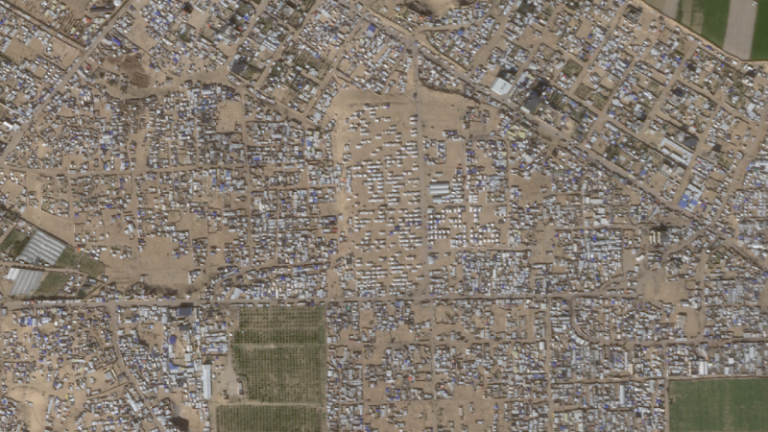
Satellite images show an increase in camps in Al-Mawasi, Gaza, on Feb. 1 and May 23. Planet Labs, PBC

Al-Mawasi, where many people have been instructed to go by the Israeli military, is a narrow coastal strip in southern Gaza. Once rural farmland, by February it was the most populated area in Gaza with an estimated 116,000 people, almost 6% of the enclave’s population, displaced there, according to the UN Office for the Coordination of Humanitarian Affairs.

“I don’t know what to answer when colleagues ask me where they can go with their children in the middle of the night. We are running out of options to stay alive,” he said.

Further south, aid workers say they are overstretched, burnt out and fearful that they won’t be able to provide adequate care for a potential influx of more uprooted people.

Do people have access to the basics – food, medical care and water – in the south of the strip?

Food is scarce

Beginning on March 2, an 11-week blockade stopped all humanitarian aid from entering the strip. In the past week, some aid has entered through the southern Kerem Shalom crossing, but humanitarian agencies say food has yet to reach the over half a million people currently facing starvation across Gaza. “It remains far from enough to meet the soaring humanitarian needs,” UN spokesperson Stéphane Dujarric said.

Medical services are overwhelmed

“If military operations continue, the existing health facilities will simply not be able to cope with the numbers of displaced people,” Al Jamal said.

They are also facing an “overwhelming number of cases that require urgent, specialized medical care. Care that we can no longer provide,” Al Jamal added, while recalling how a 10-year-old boy who recently suffered head trauma in an airstrike that killed his family could not be treated as the medication he needed is no longer available in Gaza.

“If the situation remains unchanged, we do not expect to receive any medical supplies in the near future,” she said.

Water supply is facing shutdown

As well as medical aid, experts say Israel’s displacement plans will necessitate the significant restructuring of Gaza’s water supply system, much of which has already been destroyed or damaged since the war began.

In southern Gaza, the 140,000 litres of fuel needed weekly to maintain water supply operations was not received last week, leading to warnings from local officials of an imminent full-scale shutdown, the UN reported on May 21.

“The situation is especially dire in Al-Mawasi, which is not connected to the water network,” the UN said, adding that the area depends entirely on water being delivered via trucks.

International backlash

Israel’s displacement plans have received international backlash in recent weeks, with the leaders of the United Kingdom, France, and Canada threatening to take “concrete actions,” including sanctions, if Israel does not stop its latest military operations and continues to block aid from entering Gaza.

Netanyahu has vowed to push forward with the fresh offensive: “At the end of the operation all areas of the strip will be under Israeli security control,” he said last Wednesday.

Meanwhile, despite everything, some Gazans plan to resist Israel’s latest directives.

This post appeared first on cnn.com

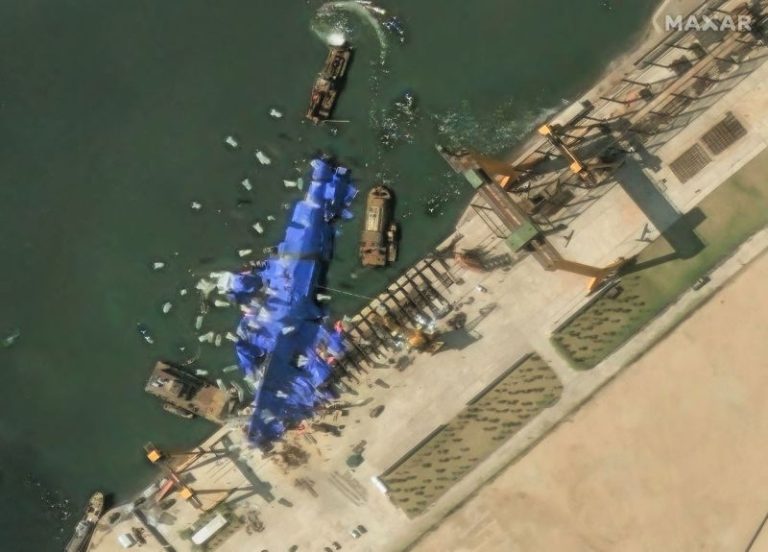
New satellite images show that North Korea has deployed what appear to be balloons alongside its damaged 5,000-ton warship that has been laying on its side and partially submerged since a botched launch last week.

The stricken destroyer was the country’s newest warship and was meant to be a triumph of North Korea’s ambitious naval modernization effort. Instead, a malfunction in the launch mechanism on May 21 caused the stern to slide prematurely into the water, crushing parts of the hull and leaving the bow stranded on the shipway, state media KCNA reported, in a rare admission of bad news.

North Korean leader Kim Jong Un, who witnessed the failed launch in the northeastern city of Chongjin, called it a “criminal act” and ordered the country to swiftly repair the as-yet-unnamed ship before the late-June plenary session of the ruling Workers’ Party, calling it a matter of national honor.

Officials have since scrambled to undo the damage and punish those they claim are responsible, detaining four people in recent days, including the shipyard’s chief engineer.

Analysts say it appears balloons are being used in North Korea’s effort to swiftly repair the destroyer.

“It looks like what appear to be balloons have been installed not to refloat the ship, but to prevent the ship from further flooding,” said Rep. Yu Yong-weon, a South Korean National Assembly lawmaker and military analyst.

Retired United States Navy Cpt. Carl Schuster said if the objects are indeed balloons, they could have one of two purposes – either to prevent “low- to mid-level drone reconnaissance,” or to reduce the stress on the part of the ship still stranded on the pier.

“That is the area that is most likely to have been damaged, suffered the most severe damage and remains under intense stress while the forward area remains out of the water,” he said.

Nick Childs, senior fellow for naval forces and maritime security at the International Institute for Strategic Studies, said North Korea could be in danger of further damaging the ship if it’s using balloons to keep it afloat or raise it.

“It is highly likely that the ship is under quite a lot of stress anyway,” and lifting from above could compound those stresses, he said.

Normal procedure would be to get as much buoyancy as possible in the ship and then raise it from below, Childs said.

According to satellite images shared by Maxar Technologies, more than a dozen white, balloon-like objects have been deployed around the destroyer since May 23.

The images don’t appear to show any flotation bladders supporting the hull or the body of the ship, Schuster said – something the US might use in such a situation. He added that North Korea’s maritime industry might not be advanced enough for such techniques.

North Korean state media had previously reported that the damage was less severe than initially feared, and that there were no holes in the hull, though it was scratched along the side and some seawater had entered the stern. It estimated repairs could take about 10 days – though analysts are skeptical.

The ship’s precarious position also makes the salvage operation unusually complex. “Having it half in and half out of the water is basically the worst possible situation,” said Decker Eveleth, an associate research analyst at CNA, a nonprofit specializing in defense research.

He added that the operation would be simpler if the ship had fully capsized into the water, or if it had fallen over entirely on land. “But as it’s half on land and half on water – if you try to pull the sunken half out, you’re risking twisting and breaking the keel,” Eveleth said, referring to the structural spine running along the ship’s bottom. “And if you do that, the whole ship is junk.”

Childs said North Korea may have to cut the ship into pieces and then try to salvage what it can because righting it from its current position is an extremely complex task.

“Very often the only way you clear the dock … is to dismantle at least part of the ship to make the operation easier, right what you have left and tow it away and make a decision on whether you rebuild it or scrap it,” he said.

This post appeared first on cnn.com