Author

admin

Browsing

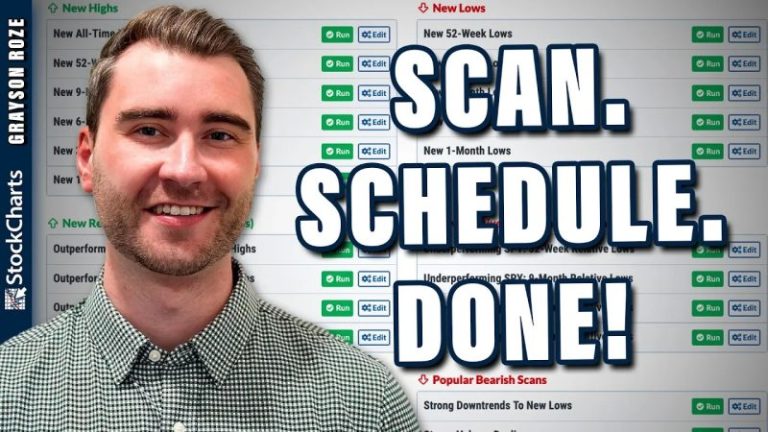
In this insightful overview, Grayson dives into StockCharts’ powerful scanning capabilities. He shows you how to navigate the markets quickly with the sample scan library, and automate your stock screening with the scheduled scans feature.

This video originally premiered on May 23, 2025. Click on the above image to watch on our dedicated Grayson Roze page on StockCharts TV.

You can view previously recorded videos from Grayson at this link.

My main question going into this weekend was, “Will the S&P 500 finish the week above its 200-day moving average?” And while the S&P 500 did indeed finish the week above this long-term trend barometer, our main equity benchmark is now within the gap range from earlier this month.

We’ll get to that crucial S&P 500 chart a little later, but first, I’d like to explain why gaps matter, why the price action post-gap is so important, and then apply these lessons to the SPX.

The “Gap and Run” Scenario Suggests an Influx of Buyers

One of two things tends to happen after a gap higher within an uptrend phase. The first scenario, which I call a “gap and run” pattern, is when additional buyers come in to push the price even higher.

Microsoft Corp. (MSFT) features this gap and run pattern, with the gap higher on their Q1 earnings report followed by an additional appreciation in price.  Basically, investors are not afraid to accumulate more MSFT, even after the stock gapped up from $395 to $430 overnight.


Did you catch our recent webcast, “Sell in May 2025: Seasonal Strategy or Outdated Myth?” We looked at the performance in May-June-July since the COVID low, then made a comparison between 2025 and the first half of 2022, when a break below the 200-day moving average was a sign of much further deterioration to come.  Check out this excerpt on our YouTube channel!


Shares of Howmet Aerospace (HWM) demonstrated a similar gap and run pattern recently, although this example is perhaps even more significant because the gap took the price to a new all-time high! Again, we can see that additional buyers are coming in and accumulating more HWM, fueling further gains after the gap.

The “Gap and Fail” Pattern Shows a Lack of Willing Buyers

Sometimes, a chart will show a very different path after the gap, forming what I’ve termed a “gap and fail” pattern.  Unlike the previous examples, here you’ll see that a lack of willing buyers causes the stock to quickly reverse lower into the range of the price gap.

In the case of semiconductor producer Monolithic Power Systems (MPWR), the gap higher earlier this month was followed by two additional up days, which propelled the stock above its 200-day moving average. This short-term pop higher was followed by a sudden downside reversal, representing an exhaustion of buyers after the upside gap.

First Solar (FSLR) is demonstrating a similar pattern to MPWR, with a gap higher which pushed the stock just above the 200-day moving average to test the 38.2% Fibonacci retracement level. A couple days later, FSLR was back below the 200-day moving average, followed by further deterioration that eventually closed the gap from earlier in May.

The S&P 500 Could Test Its Own Gap Support

So what do those example charts have to do with the S&P 500? Well, the SPX traded higher for about a week after the upside gap in early May. We’ve drawn a green-shaded range to highlight the gap from around 5725 to 5780. This gap includes the 200-day moving average and also lines up with the late March swing high.

I see the S&P 500 as in a constructive pattern as long as it remains above this price gap range. If we can see an upswing after this week’s pullback, then this could just be a pause within a broader recovery phase for the S&P.

On the other hand, if we see any further price weakness from the major benchmarks next week, then the chart of the S&P 500 will start to look pretty similar to other “gap and fail” charts that confirm a lack of willing buyers. If we do see that downside follow-through next week, we’d expect further deterioration to the 5500 level, representing a 50% retracement of the February to April selloff phase.

RR#6,

Dave

P.S. Ready to upgrade your investment process? Check out my free behavioral investing course!


David Keller, CMT

President and Chief Strategist

Sierra Alpha Research LLC

marketmisbehavior.com

https://www.youtube.com/c/MarketMisbehavior


Disclaimer: This blog is for educational purposes only and should not be construed as financial advice. The ideas and strategies should never be used without first assessing your own personal and financial situation, or without consulting a financial professional.

The author does not have a position in mentioned securities at the time of publication. Any opinions expressed herein are solely those of the author and do not in any way represent the views or opinions of any other person or entity.

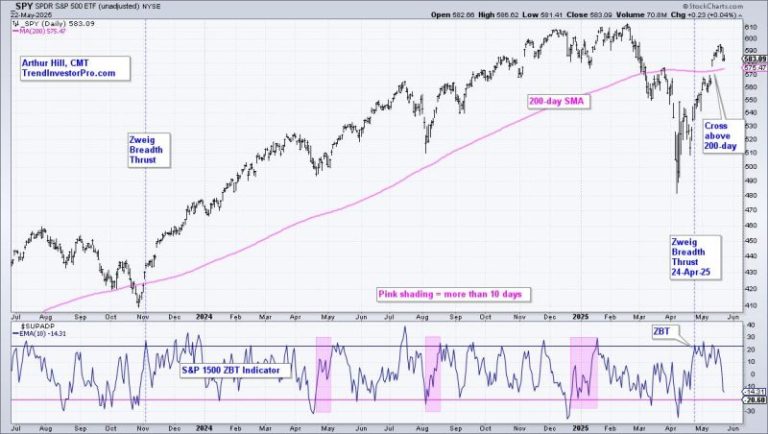
The bullish signals stacked up in April and May, but most long-term breadth indicators are still bearish. SPY and QQQ showed signs of capitulation in early April and rebounded into mid April. A Zweig Breadth Thrust triggered on April 24th and several other thrust indicators turned bullish in May. We also saw SPY and QQQ break their 200-day SMAs. TrendInvestorPro is tracking these signals and relevant exit strategies.

These are bullish indications for large-caps and, perhaps, stocks in the top half of the S&P 500. However, I would not call it a bull market until participation broadens. The chart below shows the S&P 500 EW ETF (RSP) and S&P MidCap 400 SPDR (MDY) moving back below their 200-day SMAs. The S&P SmallCap 600 SPDR (IJR) never came close and remains a big laggard.   

The bottom window is perhaps the most telling. It shows the percentage of S&P 1500 stocks above their 200-day SMAs. This long-term breadth indicator did not cross above 50% in May. Except for a 1-day dip on January 10th, this indicator was above 50% from December 2023 to February 2025 (bull market). It broke below 40% on March 10th and has yet to fully recover (bear market).

At the very least, a move above 50% is needed to show broadening participation worth of a bull market. This is how the market moves from bullish thrust signals to a bull market.  Until such a move, we are still in bear market mode and risk remains above average for stocks. Note that the S&P 1500 includes large-caps (500), small-caps (600) and mid-caps (400). Around 2/3 of components NYSE stocks and 1/3 Nasdaq stocks. It is a truly representative of the broader market.

Exit strategies are just as important as entries. The Zweig Breadth Thrust and the 5/200 day SMA cross provided entry signals in April and May. We now need an exit strategy. TrendInvestorPro put forth exit strategies for both signals and these are updated in our reports. This week we covered the gap zones in SPY and QQQ, long-term breadth signals, big moves in metals and continued strength in Bitcoin. Click here to take a trial and gain full access.

 ////////////////////////////////////////////

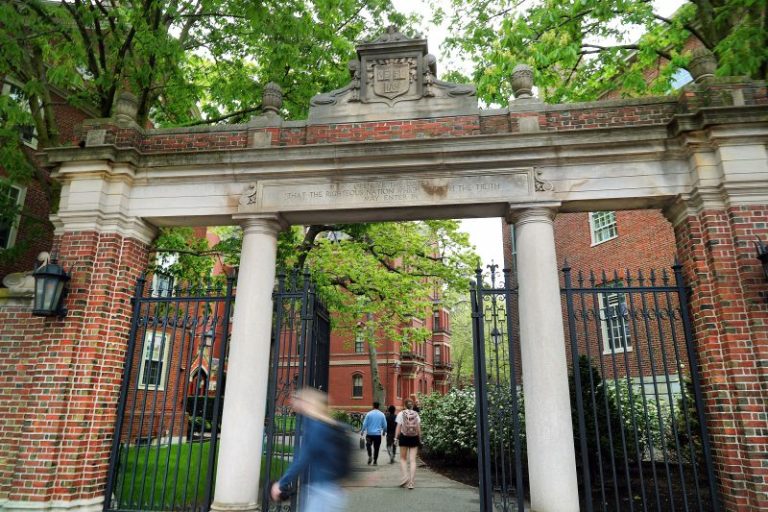
A federal judge temporarily halted the Trump administration’s ban on Friday, after the nation’s oldest and wealthiest college filed a suit in federal court. Harvard argued revocation of its certification in the Student and Exchange Visitor Program was “clear retaliation” for its refusal of the government’s ideologically rooted policy demands.

“They’re literally like, teenagers, thousands of miles away from their hometowns having to deal with this situation, which lawyers often fear to engage in,” said Sial, who is currently traveling overseas after exams and is uncertain if he’ll be able to return to campus.

About 27% of Harvard’s student body is international, with 6,793 international undergraduates and grad students hailing from nearly every country in the world.

Sial said the university and deans have been helpful in supporting international students at a time of uncertainty and “pure panic,” which is happening days after final exams ended and just one week before graduation.

As student body president, he says he is working to encourage the university to assist international students who want to transfer to other colleges and pushing for students’ financial aid packages to transfer, as well. But the window to transfer to other universities for the fall semester is already closed at most colleges, Sial said.

“Many of us have worked our entire lives to get to a university like Harvard, and now we need to wait around and see if we might have to transfer out and face difficulties with visas,” says rising junior Karl Molden, from Austria.

Molden, who is also traveling abroad and concerned he won’t be allowed to return to campus, said he feels international students are being used as a “ball in this larger fight between democracy and authoritarianism.”

Jewish students ‘being used as pawns,’ says one Israeli student

Harvard and Trump officials have been locked in conflict for months as the administration demands the university make changes to campus programming, policies, hiring and admissions to root out what the White House has called antisemitism and “racist” practices.

Like many other colleges and universities, Harvard drew intense criticism last year for its handling of pro-Palestinian protests and encampments following the start of the Israel-Hamas war, as well as complaints from Jewish alumni and students about antisemitism on campus.

Harvard has acknowledged antisemitism on its campus, particularly during the previous academic year, and said it has begun taking concrete action to address it.

An Israeli postdoctoral student studying at Harvard said she feels like Jewish students are “being used as pawns” by the Trump administration, which has accused the university of perpetuating an unsafe campus environment that is “hostile to Jewish students” and “employs racist diversity, equity and inclusion practices.”

The Israeli student, who did not want to be named in fear of being denied reentry to the United States, said she believed the Trump administration was “using” the university to “have this battle with academia that is much bigger than Harvard.”

She said the government was clamping down on ideas that “don’t always align with the administration, rather than (having) an actual concern for the safety of Jewish students, Israeli students.”

“So, I do feel like we’re being used,” she said, adding that she thinks university leadership is taking the issue of antisemitism on campus seriously. “I don’t want to diminish anyone’s experience at the university. I know people have had tough experiences, but I do feel like I have, personally, 100% trust and faith in our leadership.”

Young researchers say they will leave US

“As a graduate student, we are just fully occupied with our research work, which I would say I spend 80 to 100 hours on each week,” said the Australian student, adding that the showdown between the Trump administration and Harvard will likely lead to researchers leaving the country. “If things really hit the fan, (I) would probably be trying to transfer to a school in the UK.”

Other graduate students said they are also feeling fear and uncertainty, with concerns for their research work, their future careers and their loved ones.

“There’s the ramifications for their family, you know, spouses, their children, their enrollment, their work status, their rent, housing, everything,” said Fangzhou Jiang, 30, from China. He is a Harvard Kennedy School student going into his second year of a master’s program. “You just don’t know what’s going to happen.”

Facing deportation from the US, and retribution at home

For some international students, like those from countries at war or experiencing political turmoil, the stakes are even higher.

Maria Kuznetsova, a former spokesperson for OVD-Info, a Russian independent human rights monitoring group, is currently a graduate student at the Harvard Kennedy School of Government. She’s graduating in a week and had planned to work on a Harvard-sponsored visa that had already been granted, but she fears it may be canceled now.

“From what I see, people are still in a state of panic – everyone’s waiting for the court’s decision,” Kuznetsova said.

“It’s not just me from Russia here – there are also many Ukrainians, a lot of political students from Venezuela, and people from Afghanistan and Palestine. I even have a classmate from North Korea. These are people who, quite literally, cannot return to their home countries,” she added.

Ivan Bogantsev, also from Russia, was planning to stay in the US after completing his program at the Harvard Graduate School of Education. His wife, currently in Russia and also on a Harvard-sponsored visa, is due to arrive for his graduation, but he’s unsure whether she’ll be allowed entry.

But he said going back to Russia is not an option he is considering.

“I was detained at rallies (in Russia), and let’s just say the atmosphere was growing increasingly tense. And secondly, most of my friends are essentially labeled (in Russia) as criminals, traitors or foreign agents.”

‘Harvard campus will not be the same’

“I was looking forward to celebrating commencement next week, but now, you know, I might leave this place and it will not look the same next semester, because without these international students and its international researchers, the Harvard campus will not be the same,” Gerdén said.

“We are being used essentially as poker chips in a battle between the White House and Harvard, and it feels honestly very dehumanizing.”

This post appeared first on cnn.com

The apparent sound made when the Titan submersible imploded in June 2023 has been revealed in new footage released Thursday by the Marine Board of Investigation, the US Coast Guard’s highest level of inquiry.

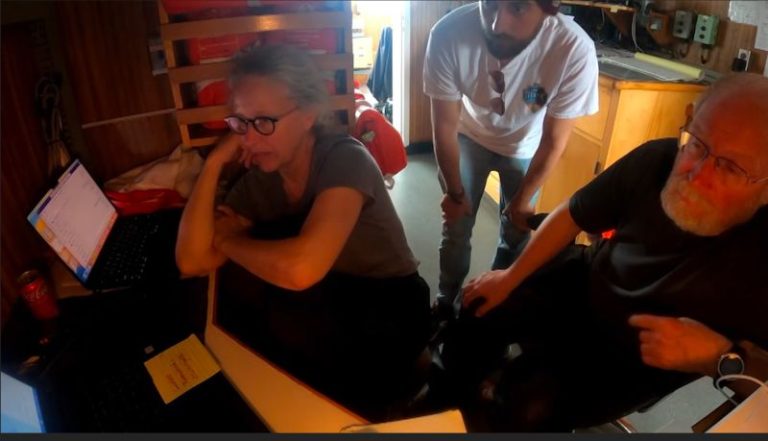
Cameras on the sub’s mother ship captured the moment when Wendy Rush – whose husband Stockton founded OceanGate, the company which built the ill-fated vessel, and was one of five people who died in its implosion – heard a faint cracking sound similar to a car door slamming.

“What was that bang?” she says, turning to the people next to her.

At that point, the sub had reached a depth of about 3,300 meters and was about 90 minutes into its descent to the ocean floor to give passengers on board an up-close view of the Titanic.

That “bang” is thought to be the moment the sub imploded. However, moments later, the crew on the support ship received a message from the sub saying it had dropped two weights – which may have created the false impression it was still operating normally.

Every system which transmits data through the water has “some inherent buffering or delay related to how they do the signal timing or processing,” he explained.

“If the ‘weights dropped’ message was sent a few seconds before the implosion … the computer may not show the message immediately when it is received. The timing is tight, but possible. It really depends on the system they were using.”

Six seconds after that message, the mother ship lost contact with the sub, according to the timeline established by authorities investigating the doomed expedition.

When the sub failed to resurface, a dramatic international search and rescue mission unfolded in the remote waters several hundred miles southeast of Newfoundland.

Authorities found the Titan’s wreckage on the floor of the North Atlantic Ocean days later, several hundred yards from the Titanic’s remains.

Rush, businessman Shahzada Dawood and his 19-year-old son, Suleman; businessman Hamish Harding; and French diver Paul-Henri Nargeolet were all killed.

Since the implosion, the sub’s fate has been held up by some as an example of the dangers of hubris and greed.

Testimony given during the hearings into the disaster painted a damning portrait of OceanGate and Rush, who charged passengers about $250,000 per dive despite several concerns being raised about the sub’s durability.

Two documentaries scheduled for release in the coming weeks – one produced by the BBC and the other by Netflix – will further investigate the causes behind the disaster.

This post appeared first on cnn.com

The Trump administration issued orders Friday to begin easing sanctions on Syria, marking a major policy shift after US President Donald Trump pledged earlier this month to roll back the measures during a trip to the Middle East.

Trump administration officials had been carrying out quiet engagements for months to pave the way for sanctions relief to help the nation recover from years of a devastating war and rebuild after the toppling of ousted leader Bashar al-Assad.

On Friday, the US Treasury Department said Syria has been issued a general license that authorizes transactions involving the interim Syrian government, as well as the central bank and state-owned enterprises.

The GL25 license “authorizes transactions prohibited by the Syrian Sanctions Regulations, effectively lifting sanctions on Syria,” and “will enable new investment and private sector activity consistent with the President’s America First strategy,” it said in a press release.

The US State Department concurrently issued a 180-day waiver under the Caesar Act to ensure sanctions do not impede investment, and advance Syria’s recovery and reconstruction efforts, Secretary of State Marco Rubio said in a statement.

Rubio said the waivers will facilitate the provision of electricity, energy, water, and sanitation, and enable a more effective humanitarian response across Syria.

“Today’s actions represent the first step in delivering on the President’s vision of a new relationship between Syria and the United States,” Rubio said.

While in Saudi Arabia last week, where he met with Syria’s interim President Ahmed al-Sharaa, Trump announced that sanctions on Syria would be swiftly removed, taking some officials by surprise and triggering a scramble across the US government to implement the decision,

Rubio said shortly after that the US would issue waivers to Syria sanctions, which are currently required by law. Meanwhile, the administration is engaged in a complicated technical review of the sanctions, which is expected to take weeks, officials said at the time.

“If we make enough progress, we’d like to see the law repealed, because you’re going to struggle to find people to invest in a country when any in six months, sanctions could come back. We’re not there yet. That’s premature,” Rubio said.

Speaking in Saudi Arabia, Trump said he made the decision to lift sanctions after speaking with Saudi Crown Prince Mohammed bin Salman and Turkish President Recep Tayyip Erdogan.

Saudi officials had coordinated behind the scenes on the topic for months, making the case that removing sanctions would boost the Syrian economy and help to stabilize the entire region.

The Turkish government also had contacts with the US about Syria and knew about the work being done to see if the lifting of sanctions was possible, a source familiar with the matter said. The Turkish government expressed support for those efforts.

But not all US allies in the region were in favor of where Trump was headed: Israel had opposed the move and Trump ignored their objections.

Trump acknowledged last week that he “didn’t ask” Israel about the Syria sanctions relief.

“I thought it was the right thing to do,” he said as he wrapped up his tour of the Middle East.

This post appeared first on cnn.com

Ukraine’s capital Kyiv came under a large-scale Russian drone and missile attack overnight into Saturday, just hours after Russia and Ukraine began a major prisoner exchange.

At least eight people were injured in the attacks, which triggered fires and left debris strewn in districts throughout the city, the city’s mayor Vitali Klitschko said in a post on Telegram.

Klitschko said two residents had required hospital treatment and that air defense units were in action, Reuters reported, adding that fragments from one drone struck the top floor of an apartment building.

Explosions and loud sirens could be heard blaring across the capital in video shared by Reuters news agency. Several fires could be seen against the nighttime skyline.

Timur Tkachenko, head of Kyiv’s military administration, said a fire had broken out on two floors of an apartment building in Dniprovskyi district, according to Reuters.

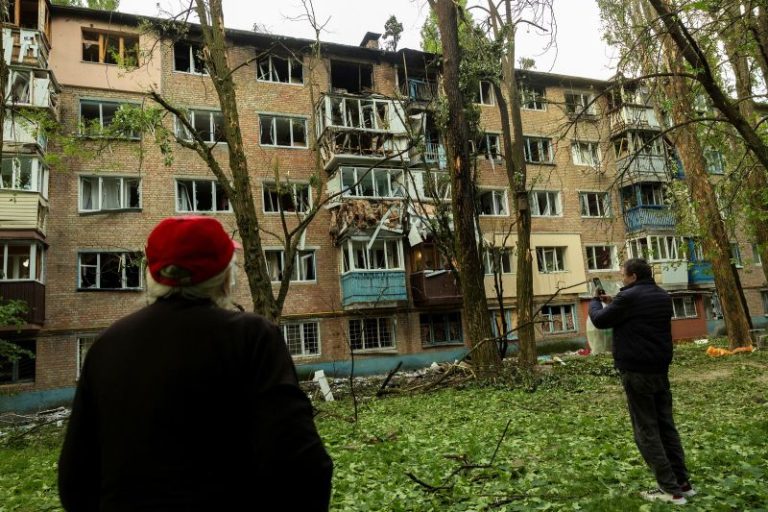
Officials also reported a fire in Obolon in the city’s northern suburbs and fallen debris on a shopping center in the same area, Reuters reported. They also said drone fragments hit the ground in a number of other widely separated neighborhoods.

The nighttime attack came after Russia and Ukraine completed the first phase of what is expected to be the biggest prisoner exchange since the start of the war.

The swap started on Friday and will continue on Saturday and Sunday, with Kyiv and Moscow expected to swap 2,000 people – 1,000 from each side.

The agreement to release 1,000 prisoners on each side was the only significant outcome of the meeting between Kyiv and Moscow in Istanbul last week, which marked the first time the two sides have met directly since soon after Russia’s full-scale unprovoked invasion of Ukraine in February 2022.

The Istanbul meeting was initially proposed by Russian President Vladimir Putin in response to a ceasefire-or-sanctions ultimatum given to Moscow by Kyiv’s European allies – which many saw as a clear attempt by the Kremlin leader to distract and delay.

Ukraine and its allies demanded that Russia agree to an immediate and unconditional ceasefire in Istanbul, but that did not happen.

Neither Ukrainian President Volodymyr Zelensky nor Russian President Vladimir Putin attended the talks in Istanbul.

This is a developing story and will be updated.

This post appeared first on cnn.com

A popular Mexican singer, Julión Álvarez, says he and his band have had to cancel a show in Texas on Saturday night after the singer’s visa to enter the United States had been allegedly revoked.

The band, called Julión Álvarez y Su Norteño Banda, was due to play at AT&T Stadium in Arlington, around 30 miles west of Dallas, for a sold-out concert with nearly 50,000 tickets sold, the artist’s team said in a statement Friday.

The artist, show promoter CMN and management company Copar Music said that the show had been cancelled “due to unforeseen circumstances,” and that Álvarez was “unable to enter the United States in time for the event.”

Álvarez also announced the news on his Instagram account, saying in a video that he and his team were notified that his work visa had been revoked by US authorities earlier Friday.

“It is not possible for us to go to the United States and fulfill our show promise with all of you. It’s a situation that is out of our hands. That’s the information I have and what I can share,” he said in the video.

Álvarez said the stage had already been built and that his production team was already in Texas preparing for the show.

“I apologize to all of you, and if God permits, we will be in touch to provide more information,” he said.

The show’s promoter and Copar Music said they were working with Álvarez’s team to reschedule the performance. All previously purchased tickets will be honored for the new date and refund details will be provided for those who cannot attend, it said.

Álvarez and his band are the latest Mexican artists to allegedly have their US visas revoked amid Trump’s sweeping immigration crackdown.

Last month, the State Department revoked the tourist visas of members of the Mexican band Los Alegres del Barranco, after they projected the face of a drug cartel boss onto a screen during a performance in the western state of Jalisco.

The Trump administration has also cracked down on foreign nationals allegedly linked directly or indirectly to drug cartels. This includes revoking the visas of artists whose work depicts drug cartels that the administration has deemed foreign terrorist organizations.

In 2017, Álvarez had his US work visa revoked after the US alleged he and around 20 other people – including soccer player Rafael Márquez – had ties to a drug trafficker linked to major cartels and were put under sanctions, according to a US Treasury statement.

Álvarez denied those allegations and said he was only connected to the trafficker over a real estate purchase.

Álvarez was removed from the sanctions list in 2022 and was able to regain his visa, making a return to the United States earlier this year with three sold-out shows at SoFi Stadium in Los Angeles in April.

With nearly 17 million monthly listeners on Spotify, Álvarez is renowned in Mexico for his traditional music style with elements of banda, norteña, and mariachi. Some of his top hits include heartbreak hits like “Póngamonos de Acuerdo” and “Te Hubieras Ido Antes.”

This post appeared first on cnn.com
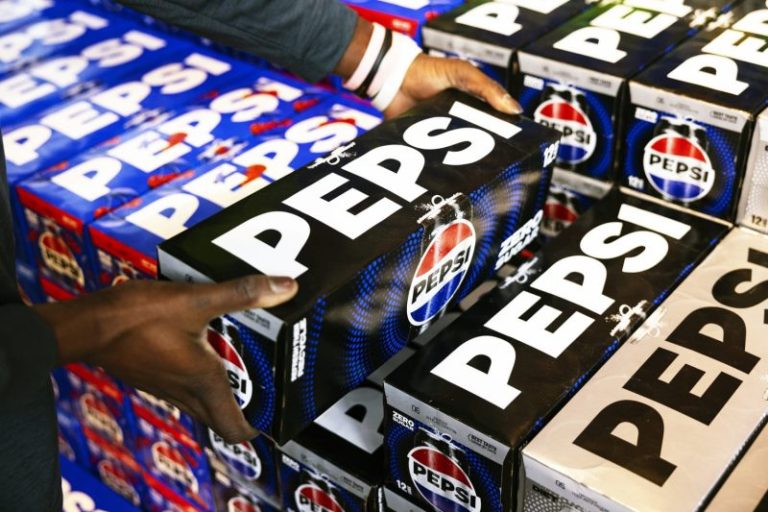
The Federal Trade Commission voted to dismiss a lawsuit filed in the last days of the Biden administration that accused PepsiCo of offering sweetheart pricing to big retailers.

FTC Chair Andrew Ferguson dissented to the suit when it was filed in January, when he was one of the regulator’s commissioners. Now the agency’s leader, Ferguson on Thursday again criticized the case as “a nakedly political effort to commit this administration to pursuing little more than a hunch that Pepsi had violated the law.”

“The FTC’s outstanding staff will instead get back to work protecting consumers and ensuring a fair and competitive business environment,” he said in a statement.

The FTC voted 3-0 to drop the suit. The panel is supposed to be made up of five commissioners, no more than three of whom can share the same political party. But it is currently led by three Republicans after President Donald Trump fired its two Democratic commissioners in March. The two ousted officials have slammed their removals as illegal and are urging a judge to reinstate them.

Pepsi welcomed the FTC decision Thursday. “PepsiCo has always and will continue to provide all customers with fair, competitive, and non-discriminatory pricing, discounts and promotional value,” a spokesperson said in a statement. Beyond its namesake soda, the company makes an array of snacks and other food products, including Doritos, Rold Gold pretzels and Sabra hummus.

Former FTC Chair Lina Khan, who led the commission when the agency brought its case against Pepsi, criticized the move Thursday as “disturbing behavior” by the agency.

“This lawsuit would’ve protected families from paying higher prices at the grocery store and stopped conduct that squeezes small businesses and communities across America,” she wrote on X Thursday evening. “Dismissing it is a gift to giant retailers as they gear up to hike prices.”

The decision comes little more than a week after top-ranking Democrats on Capitol Hill sent a letter to Pepsi demanding more information about its pricing strategy. They sought to revive a Biden-era focus on price-gouging as a driver of inflation, an argument that has taken a back seat to the Trump administration’s attention on purportedly unfair trade arrangements.

But major corporations continue to draw scrutiny from the White House over pricing in other ways. Last weekend, Trump slammed Walmart for warning that it was likely to raise prices to offset the costs of his import taxes, demanding on social media that it “EAT THE TARIFFS.”

In the days since then, other major consumer brands have appeared to tread cautiously around pricing. Target said Wednesday that charging customers more would be its “very last resort.” Home Depot virtually ruled out price hikes this week, and Lowe’s barely mentioned tariff impacts in its Wednesday earnings call at all.

CORRECTION (May 22, 2025, 8:45 p.m. ET): Due to an editing error, a previous version of this article misstated when congressional Democrats sent their letter to Pepsi. It was on May 11, not last weekend.

This post appeared first on NBC NEWS

Virtual Investor Conferences, the leading proprietary investor conference series, today announced the presentations from Precious Metals & Critical Minerals Hybrid Virtual Investor Conference held May 22 nd are now available for online viewing.

VIEW PRESENTATIONS HERE

The company presentations will be available 24/7 for 90 days. Investors, advisors, and analysts may download
investor materials from the company’s resource section.

May 22 nd

Presentation Ticker(s)
Keynote Presentation: ‘What’s next for precious metals?’
-Jeff Christian, Managing Partner of CPM Group
Viva Gold Corp. (OTCQB: VAUCF | TSXV: VAU)
StrikePoint Gold, Inc. (OTCQB: STKXF | TSXV: SKP)
Honey Badger Silver Inc. (OTCQB: HBEIF | TSXV: TUF)
Relevant Gold Corp. (OTCQB: RGCCF | TSXV: RGC)
Keynote Presentation: ‘Surveying the Critical Metals Landscape,’
–Jack Lifton, Senior Advisor, Energy Fuels, Inc.
Azimut Exploration Inc. (OTCQX: AZMTF | TSXV: AZM)
Energy Fuels Inc. (NYSE American: UUUU | TSX: EFR)
Lion Copper & Gold Corp. (OTCQB: LCGMF | CSE: LEO)
Alaska Silver Corp. (Pink: WAMFF |TSXV: WAM)
Cygnus Metals Ltd. (OTCQB: CYGGF |TSXV: CYG |ASX: CY5)
Power Metallic Mines, Inc. (OTCQB: PNPNF |TSXV: PNPN)

To facilitate investor relations scheduling and to view a complete calendar of Virtual Investor Conferences, please visit www.virtualinvestorconferences.com .

About Virtual Investor Conferences ®

Virtual Investor Conferences (VIC) is the leading proprietary investor conference series that provides an interactive forum for publicly traded companies to seamlessly present directly to investors.

Providing a real-time investor engagement solution, VIC is specifically designed to offer companies more efficient investor access. Replicating the components of an on-site investor conference, VIC offers companies enhanced capabilities to connect with investors, schedule targeted one-on-one meetings and enhance their presentations with dynamic video content. Accelerating the next level of investor engagement, Virtual Investor Conferences delivers leading investor communications to a global network of retail and institutional investors.

Media Contact:  
OTC Markets Group Inc. +1 (212) 896-4428, media@otcmarkets.com

Virtual Investor Conferences Contact:
John M. Viglotti
SVP Corporate Services, Investor Access
OTC Markets Group
(212) 220-2221
johnv@otcmarkets.com

News Provided by GlobeNewswire via QuoteMedia

This post appeared first on investingnews.com