
Author

admin

Browsing

‘Not for distribution to United States newswire services or for dissemination in the United States.’

Forte Minerals Corp . ( ‘ Forte ‘ or the ‘ Company ‘ ) ( CSE: CUAU ) ( OTCQB: FOMNF ) ( Frankfurt: 2OA ), intends to complete a non-brokered private placement (the ‘Offering’) to raise up to C$2,400,000 for drilling and exploration programs on the Company’s Peruvian projects and for general working capital, all as further outlined below.

The Offering involves the sale of up to 6,000,000 units (each a ‘Unit’) at a price of $0.40 per Unit.

Unit Terms:

  • Each Unit: one common share and one-half of one common share purchase warrant
  • Warrant: each whole warrant exercisable for one common share at C$0.60 until the date that is 24 months from the closing of the Offering, provided the warrants are subject to accelerated exercise such that if the closing price of the Company’s common shares exceeds C$0.90 per share for a period of 20 consecutive trading days, the Company may give notice of the acceleration of the warrants’ term to a period of 30 days following such notice.

All securities issued will be subject to a statutory four-month-plus-one-day hold period in accordance with applicable Canadian securities laws. Additional restrictions may apply pursuant to the Securities Act of 1933, as amended, to U.S. investors, if any.

Use of Proceeds:

  • Pucarini: Inaugural five-hole drill program for total of 1750m scheduled to start this July 2025.
  • Esperanza : MT Survey
  • Alto Ruri : DIA Drill Permitting and Community Agreements, surface exploration work including follow-up alteration and geological mapping, geochemical sampling, spectral analysis, IP and CSMAT.
  • General working capital

Finder’s fees may be paid to eligible persons in connection with the Offering, subject to the policies of the CSE.

The Company, at its discretion, reserves the right to increase the size of the Offering by up to $300,000.00 through the sale of 750,000 additional Units, for an aggregate Offering not exceeding $2,700,000.

We appreciate our shareholders’ continued confidence,’ stated Patrick Elliott, President and CE O. ‘This financing positions us to drill test a high sulphidation system that’s never been drilled and to unlock the value of Alto Ruri, Esperanza and Miscanthus .’

The Offering is expected to close on or before June 15, 2025, subject to customary conditions, including the receipt of all required regulatory approvals .

ABOUT Forte Minerals CORP.

Forte Minerals Corp. is an exploration company with a strong portfolio of high-quality copper (‘ Cu ‘) and gold (‘ Au ‘) assets in Perú. Our strategic partnership with GlobeTrotters Resources Perú S.A.C. (‘ GTR ‘) grants us access to a comprehensive project pipeline, enabling us to target the most promising opportunities. This collaboration focuses on historically discovered, drill-ready targets, driving significant value in Cu and Au resource development.

On behalf of  Forte Minerals CORP.
(signed) ‘ Patrick Elliott’
Chief Executive Officer

For further information, please contact:
Forte Minerals Corp.
office: (604) 983-8847
info@forteminerals.co m
www.forteminerals.com

Certain statements included in this press release constitute forward-looking information or statements (collectively, ‘forward-looking statements’), including those identified by the expressions ‘anticipate’, ‘believe’, ‘plan’, ‘estimate’, ‘expect’, ‘intend’, ‘may’, ‘should’ and similar expressions to the extent they relate to the Company or its management. The forward-looking statements are not historical facts but reflect current expectations regarding future results or events. This press release contains forward looking statements. These forward-looking statements and information reflect management’s current beliefs and are based on assumptions made by and information currently available to the company with respect to the matter described in this new release. Forward-looking statements involve risks and uncertainties, which are based on current expectations as of the date of this release and subject to known and unknown risks and uncertainties that could cause actual results to differ materially from those expressed or implied by such statements. Additional information about these assumptions and risks and uncertainties is contained under ‘Risk Factors and Uncertainties’ in the Company’s latest management’s discussion and analysis, which is available under the Company’s SEDAR+ profile at www.sedarplus.ca, and in other filings that the Company has made and may make with applicable securities authorities in the future.

Forward-looking statements are not a guarantee of future performance and involve risks, uncertainties and assumptions which are difficult to predict. Factors that could cause the actual results to differ materially from those in forward-looking statements include the continued availability of capital and financing, and general economic, market or business conditions. Forward-looking statements contained in this press release are expressly qualified by this cautionary statement. These statements should not be read as guarantees of future performance or results. Such statements involve known and unknown risks, uncertainties and other factors that may cause actual results, performance or achievements to be materially different from those implied by such statements. Although such statements are based on management’s reasonable assumptions, there can be no assurance that the statements will prove to be accurate or that management’s expectations or estimates of future developments, circumstances or results will materialize. The Company assumes no responsibility to update or revise forward-looking information to reflect new events or circumstances unless required by law. Readers should not place undue reliance on the Company’s forward-looking statements.

Neither the Canadian Securities Exchange (the ‘CSE’) nor its Regulation Services Provider (as that term is defined in the policies of the CSE) accepts responsibility for the adequacy or accuracy of this release.

News Provided by GlobeNewswire via QuoteMedia

This post appeared first on investingnews.com

It was a slow start to the week for gold, but it didn’t take long for the price to pick up.

The yellow metal began the period at the US$3,220 per ounce level, but was gaining steam by Tuesday (May 20), briefly breaking US$3,300. Gold continued higher the next day, and after pulling back briefly on Thursday (May 22) was able to finish the week strong, changing hands at the US$3,360 level.

Bond market turmoil is one factor that’s been influencing gold’s price movements.

A Wednesday (May 21) auction of 20-year bonds was poorly received, with yields surging past 5.1 percent to reach the highest level seen since November 2023. Yields for 10-year and 30-year bonds were also on the rise, with the latter nearing a two-decade high as stocks and the dollar took hits.

The upheaval in bonds came on the back of US President Donald Trump’s efforts to get the One Big Beautiful Bill through the House. Slowing the passage of the wide-ranging domestic policy package were concerns that Trump’s plan to cut taxes would significantly increase US debt.

‘Make no mistake, the bond market will have its own vote on the terms of the budget bill. It doesn’t seem this president or this Congress is actually going to meaningfully reduce the deficit’ — George Catrambone, DWS Americas

Last week’s downgrade of US debt from Moody’s (NYSE:MCO) also didn’t help bonds. The agency bumped its rating down from AAA, its highest ranking, to AA1, which is one step lower. It expects even larger deficits in the US in the coming decade as government revenue stays flat and entitlement spending rises.

The One Big Beautiful Bill ultimately passed on Thursday by a very slim margin, receiving 215 votes in favor and 214 against. It will now proceed to the Senate, where it may face further obstacles.

Contained in the bill are tax cut extensions for both individuals and corporations, as well as provisions for removing taxes on tips and overtime. Among other points, it also allows for tax deductions on American-made vehicles, and offers ‘Trump savings accounts’ for newborns. It cuts funding to initiatives like Medicaid and the Supplemental Nutrition Assistance Program, better known as SNAP.

Preliminary analysis from the Congressional Budget Office, which is a nonpartisan organization, suggests that the bill will increase the federal deficit by US$3.8 trillion during the 2026 to 2034 period.

Bullet briefing — Trump signs nuclear orders, ECB issues gold warning

Trump executive orders boost uranium stocks

The uranium sector got a boost on Friday (May 23) after Trump signed several executive orders geared at overhauling the country’s Nuclear Regulatory Commission and speeding up nuclear reactor deployment.

‘It’s a hot industry. It’s a brilliant industry. You have to do it right,’ Trump told reporters about the nuclear energy sector. The executive orders also focus on power up US uranium mining and enrichment, and will allow nuclear reactors to be built on federal land.

The news sent uranium stocks powering higher, with sector major Cameco (TSX:CCO,NYSE:CCJ) closing the day up 10.04 percent at C$80.55. Denison Mines (TSX:DML,NYSEAMERICAN:DNN) and Uranium Energy (NYSEAMERICAN:UEC) saw even larger gains of 13.49 percent and 25 percent, respectively.

The Sprott Uranium Miners ETF (ARCA:URNM) finished up 12.14 percent.

Gold a threat to financial stability?

A note from the European Central Bank (ECB) turned heads this week with the suggestion that certain dynamics could make the gold market a threat to financial stability. Here’s a key excerpt from the report:

While gold prices are driven by many factors, investors showed high demand for gold as a safe haven asset and, at the beginning of 2025, a notable preference for gold futures contracts to be settled physically. These dynamics hint at investors’ expectations that geopolitical risks and policy uncertainty could remain elevated or even intensify in the foreseeable future. Should extreme events materialise, there could be adverse effects on financial stability arising from gold markets.

The full ECB report is definitely worth a read if you have the time.

China’s April gold imports surge

Gold’s high price hasn’t deterred buyers in China — new customs data from the country shows that April imports clocked in at 127.5 metric tons, an 11 month high.

That’s also a 73 percent increase from the previous month, according to Bloomberg. The news outlet notes that China’s central bank controls the flow of gold in and out of the country, so the strong increase is likely the result of fresh quotas given to some commercial banks.

Securities Disclosure: I, Charlotte McLeod, hold no direct investment interest in any company mentioned in this article.

This post appeared first on investingnews.com

Here’s a quick recap of the crypto landscape for Friday (May 23) as of 9:00 a.m. UTC.

Get the latest insights on Bitcoin, Ethereum and altcoins, along with a round-up of key cryptocurrency market news.

Bitcoin and Ethereum price update

Bitcoin (BTC) was priced at US$110,637 as markets closed, down 2.4 percent in 24 hours. The day’s range for the cryptocurrency brought a low of US$108,334 and a new all-time high of US$111,814.

Bitcoin performance, May 23, 2025.

Chart via TradingView.

Ethereum (ETH) finished the trading day at US$2,659.55, a 3.5 percent decrease over the past 24 hours. The cryptocurrency reached an intraday low of US$2,541.09 and saw a daily high of US$2,720.92.

Altcoin price update

  • Solana (SOL) closed at US$179.09, down 0.5 percent over 24 hours. SOL experienced a low of US$176.13 and a high of US$186.92.
  • XRP is trading at US$2.43, reflecting a 3.0 percent decrease over 24 hours. The cryptocurrency reached a daily low of US$2.34 and a high of US$2.47.
  • Sui (SUI) is priced at US$3.83, showing a decreaseof 5.0 percent over the past 24 hours. It achieved a daily low of US$3.62 and a high of US$3.96.
  • Cardano (ADA) is trading at US$0.7973, down 3.2 percent over the past 24 hours. Its lowest price of the day was US$0.7717, and it reached a high of US$0.8341.

Today’s crypto news to know

Bitcoin price blasts past US$111,000

Bitcoin soared to a new all-time high of US$111,980 this week, extending its bull run on the back of rising institutional demand and increasingly vocal political support from Donald Trump.

The rally came as Trump hosted a private dinner at his Virginia golf club for top holders of his $TRUMP memecoin, an event that underscored his pivot to becoming crypto’s most visible political backer.

Analysts pointed to surging interest from entities like Strategy (formerly MicroStrategy), which just filed to sell US$2.1 billion in stock to buy more Bitcoin, as a key driver.

The rally is also fueled by expectations of clearer crypto regulation, with the Senate advancing a pro-stablecoin bill that Trump allies have framed as a pro-growth measure.

Major US banks bill unified Stablecoin

Several of the biggest US banks — including JPMorgan, Wells Fargo, Bank of America, and Citigroup — are in early discussions to jointly launch a stablecoin, according to a new Wall Street Journal report.

The goal: to create a financial instrument that can keep pace with crypto-native payment systems and prevent a further shift away from traditional finance.

Industry insiders say payment infrastructure arms like Zelle’s operator, Early Warning Services, and The Clearing House are also involved in talks. The stablecoin would likely be dollar-pegged and open to broader banking adoption beyond the founding consortium, reflecting a desire to modernize settlement rails and attract fintech interest.

The move comes as the GENIUS Act gains momentum in the US Senate, laying the groundwork for a formal regulatory framework around stablecoins.

Sun praises Trump at dinner, calls memecoins ‘underrated’

Justin Sun, once under legal siege during the Biden administration, was front and center at Donald Trump’s exclusive dinner for TRUMP memecoin whales — using the moment to declare a new era for crypto in the US.

In an interview after the event, Sun pushed back against critics who accused the memecoin gathering of being a crypto-access-for-cash scheme, saying skeptics are missing the big picture.

Sun has been a key figure in Trump’s crypto orbit since late last year, reportedly investing up to US$75 million in Trump-affiliated crypto projects, including World Liberty Financial tokens.

Legal issues still follow Sun — including an ongoing DOJ investigation — but his comments make clear that the crypto industry sees Trump’s administration as a major opening.

Ember Sword becomes latest Web3 game casualty amid market slump

Ethereum-based MMORPG Ember Sword has shut down its development, citing an inability to raise sufficient funding despite a previously strong start and multimillion-dollar NFT land sales.

The studio behind the game posted a farewell note to supporters, saying that even with early access launched and high-profile advisors onboard, current market conditions were too harsh to sustain the project.

The team had switched platforms multiple times — from Polygon to Immutable X and later to Mantle — in search of better scalability, but the moves weren’t enough to keep the dream alive.

Ember Sword joins a growing list of web3 gaming failures this year, including Deadrop and Tatsumeeko, as investor appetite for blockchain games cools significantly. The game’s token, EMBER, has lost over 99 percent of its value from its peak, now trading at a mere US$0.00047.

Securities Disclosure: I, Giann Liguid, hold no direct investment interest in any company mentioned in this article.

This post appeared first on investingnews.com

On Wednesday, only 4% of the S&P 500’s holdings logged gains — a pretty rare occurrence. Since the start of 2024, this has only happened three other times:

  • August 5, 2024: The last day of the summer correction
  • December 18, 2024: The Fed’s hawkish cut
  • April 4, 2025: Tariffs

Let’s recall that major trading lows were etched last August, and again just a few weeks ago in early April. The S&P 500 ($SPX) dropped 10% and 21%, respectively, from its peak to trough both times, with the lows being marked by emphatic capitulation events (April 7 was the real pivot low). The market’s rubber band violently snapped back in the ensuing weeks, both times.

FIGURE 1. PAST LOWS IN THE S&P 500 INDEX. Note the rebounds following the August 5, December 18, and April 4 drops.With the SPX now having gained 20% from the April low, the setup is more like mid-December 2024. The index had just gained 19% from early August through early December and was hovering near 6,100. The FOMC’s actions put a major dent in the calm uptrend.

The S&P 500 didn’t completely crumble after that, spending the next 10 weeks backing and filling. But the market’s character changed, and the cracks eventually gave way to the waterfall decline.

So, what does that tell us about this moment? There’s a clear risk given the one-sided advance the last few weeks, but, with bullish patterns still in play and the $SPX having built up a big cushion, it can afford to back and fill again now. It’s the first gut punch in four weeks, and the market must prove it can absorb it.

Short-Term View of the S&P 500

The drawdown measured from this Monday’s high now stands at -2.4% — most of which happened on Wednesday. Given how small the moves have been over the last few weeks, Wednesday’s big decline hit the 14-period relative strength index (RSI) on the two-hour chart very hard. It’s now at 41, which is very close to the 30-oversold threshold.

Again, we’ve seen the short-term indicator fall to oversold territory several times, even during the market’s upswing from August through December. Seeing that happen again this time wouldn’t be a surprise. If it happens, it will be important to see the ensuing bounce pull the SPX back to overbought territory relatively soon. Remember, we went nearly four months between overbought readings from late January through mid-May.

FIGURE 2. TWO-HOUR CHART OF THE S&P 500 WITH RSI.

S&P 500 Patterns

Despite the sell-off, there was no change in the patterns at work. The two bullish patterns remain in play, with targets of 6,125 and 6,555, respectively. The S&P 500 started Thursday, at about 2.5% above the last breakout zone (5,695).

FIGURE 3. DAILY CHART OF THE S&P 500 WITH BULLISH PATTERNS. Here you see the pattern with a 6,125 target.

FIGURE 4. DAILY CHART OF S&P 500 WITH 6,555 PRICE TARGET.

Monitor the VIX

Not surprisingly, the Cboe Volatility Index ($VIX) gained 15% on Wednesday in response to the market’s sell-off. It remains close to 20, but continues to log higher lows, which has been the trend since late 2024. Indeed, it’s way off spike highs from April, but it’s a trend worth watching.

Let’s recall that the VIX never truly capitulated in 2022, but its trend of higher lows coincided with the equity market’s downtrend. When the SPX logged a true low in October 2022, lower lows in the VIX became evident. This lasted through this past summer.

If the snapback in the SPX turns into a longer, new uptrend, the VIX’s uptrend will morph into a downtrend again.

FIGURE 5. WEEKLY CHART OF THE CBOE VOLATILITY INDEX ($VIX).

Bonds Display Bullish Patterns

The bullish pattern in the weekly 30-Year Treasury yields and 10-Year Treasury yields is crystal clear. An acceleration through the 2023 highs after Wednesday would have an obvious negative effect on stocks.

As discussed before, the equity market has shown it can advance with higher rates, as long as said rates go higher gradually. The intermittent up-moves in rates have been capped for the last two years as well. Thus, stocks have been able to withstand it. That wasn’t the case from January to September 2022, and that’s the potential concern.

FIGURE 6. WEEKLY CHART OF THE 30-YEAR US TRASURY YIELD INDEX.

FIGURE 7. WEEKLY CHART OF THE 10-YEAR US TREASURY YIELD INDEX.

Bitcoin Holding Strong

So far, Bitcoin has maintained noticeable relative strength even as stocks got hit hard on Wednesday. Simply put, continuing to hold above this breakout zone would keep the new measured move target of 142k in play.

FIGURE 8. WEEKLY CHART OF $BTCUSD WITH ITS MEASURED MOVE TARGET.

From another perspective, this move can also be viewed as the fourth wedge breakout since 2023. The prior three times, BTC’s 14-week RSI stayed very overbought for weeks before slowing down. The 14-week RSI is just approaching overbought levels, which suggests it has further to go.

FIGURE 9. WEEKLY CHART OF $BTCUSD WITH WEDGE BREAKOUTS AND RSI.

In this video, Joe shares how to use MACD and ADX indicators to analyze stock pullbacks, focusing on the good while avoiding the weak setups. He explains how these indicators can complement one another. Joe then shows the Summary Page in ACP and how he uses it on a regular basis to look at different markets, including the SPX, COMP, S&P 600, 10-Year Rates, Copper, Gas, and a few Country Funds. Finally, he goes through the symbol requests that came through this week, including CRSP, VC, and more.

The video premiered on May 21, 2025. Click this link to watch on Joe’s dedicated page.

Archived videos from Joe are available at this link. Send symbol requests to stocktalk@stockcharts.com; you can also submit a request in the comments section below the video on YouTube. Symbol Requests can be sent in throughout the week prior to the next show.

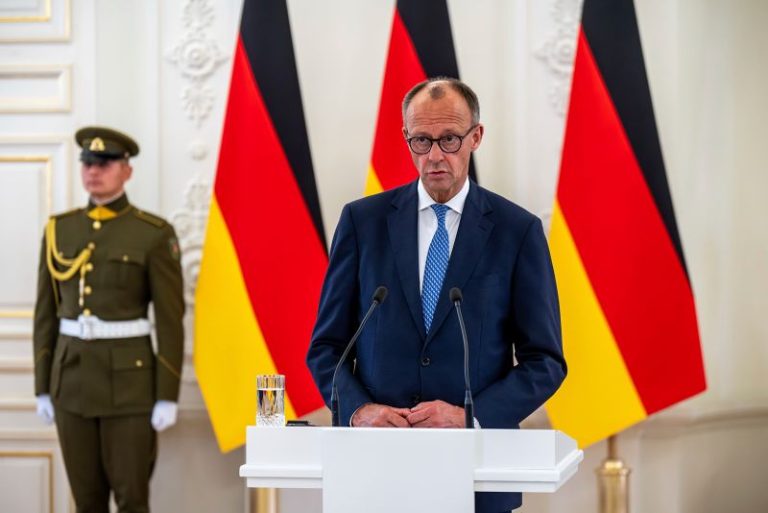
Chancellor Friedrich Merz inaugurated a groundbreaking German brigade in Lithuania that is meant to help protect NATO’s eastern flank and declared Thursday that “the security of our Baltic allies is also our security” as worries about Russian aggression persist.

He said Berlin’s strengthening of its own military sends a signal to its allies to invest in security.

The stationing in Lithuania marks the first time that a German brigade is being based outside Germany on a long-term basis since World War II. “This is a historic day,” Lithuanian President Gitanas Nausėda said after meeting Merz. “This is a day of trust, responsibility and action.”

German brigade to be at full strength in 2027

Germany has had troops in Lithuania — which borders Russia’s Kaliningrad exclave and Moscow-allied Belarus — since 2017, as part of efforts to secure NATO’s eastern fringe, but the new brigade deepens its engagement significantly.

An advance party started work on setting it up just over a year ago and expanded into an “activation staff” of about 250 people last fall. The 45 Armored Brigade is expected to be up to its full strength of about 5,000 by the end of 2027, with troops stationed at Rukla and Rudninkai.

Dozens of military helicopters roared over the central cathedral square in Lithuania’s capital, Vilnius, as the inauguration wrapped up on a rainy Thursday afternoon, with hundreds of troops and spectators attending. Merz told the event that “protecting Vilnius is protecting Berlin.”

The deployment in Lithuania has been taking shape as Germany works to strengthen its military overall after years of neglect as NATO members scramble to increase defense spending, spurred by worries about further potential Russian aggression and pressure from Washington.

Beefing up the Bundeswehr

Merz said that, beyond the new brigade, “Germany is investing massively in its own armed forces.”

“With this, we also want to send a signal to our allies: let us now invest with determination in our own security,” he added. “Together with our partners, we are determined to defend alliance territory against every — every — aggression. The security of our Baltic allies is also our security.”

Shortly after Russia launched its full-scale invasion of Ukraine in 2022, then-Chancellor Olaf Scholz pledged to increase Germany’s defense spending to the current NATO target of 2% of gross domestic product and announced the creation of a 100 billion-euro ($113-billion) special fund to modernize the Bundeswehr.

Germany met that target thanks to the fund, but it will be used up in 2027. Even before it took office earlier this month, the new governing coalition pushed plans through parliament to enable higher defense spending by loosening strict rules on incurring debt.

Merz, the first chancellor to have served in the Bundeswehr himself, told parliament last week that “the government will in the future provide all the financing the Bundeswehr needs to become the strongest conventional army in Europe.”

Lithuania to spend more than 5% on defense

Host Lithuania said in January that it would raise its defense spending to between 5% and 6% of GDP starting next year, from a bit over 3%. That made it the first NATO nation to vow to reach a 5% goal called for by US President Donald Trump.

A plan is in the works for all allies to aim to spend 3.5% of GDP on their defense budgets by 2032, plus an extra 1.5% on potentially defense-related things like infrastructure — roads, bridges, airports and seaports.

Merz said in Lithuania that those figures “seem sensible to us, they also seem reachable — at least in the time span until 2032 that has been stipulated.”

German Defense Minister Boris Pistorius said earlier this week that the plan is to increase defense spending by 0.2 percentage points each year for five to seven years.

Merz has plunged into diplomatic efforts to bring about a ceasefire in Ukraine since taking office earlier this month.

“We stand firmly by Ukraine, but we also stand together as Europeans as a whole — and, whenever possible, we play in a team with the US,” he said.

This post appeared first on cnn.com

Wildlife rangers are being killed at a rate of nearly two a week, and it’s a toll Prince William has said the world can no longer ignore.

This is the reality laid bare in “Guardians,” a new six-part docuseries from the Prince of Wales which offers a rare insight into the dangerous work of rangers operating on the front lines of conservation across the globe.

A champion of the environment for over a decade, William introduces each episode of the series, which aims to capture both the beauty of the natural world, and the brutality of the protectors’ fight to defend it.

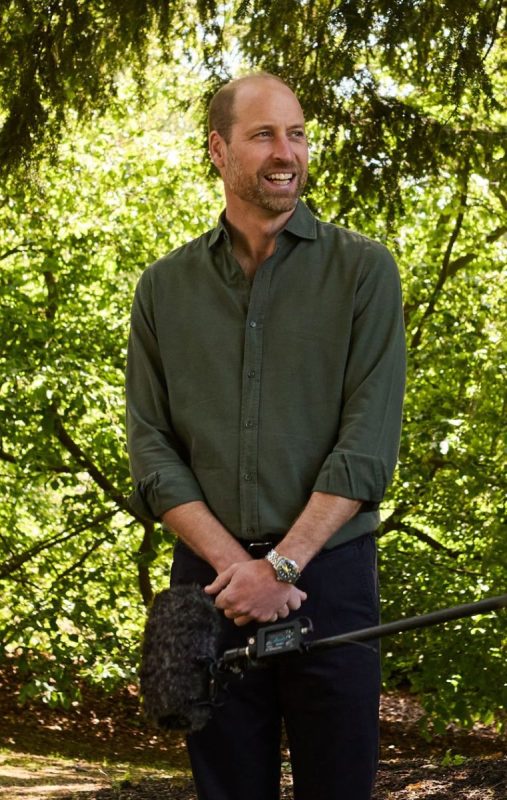
“I’ve been dying to do something around this sort of space for a while,” William said after making an unexpected appearance at a screening in London on Tuesday. “This one is particularly special to me, because I’ve got lots of friends and people I’ve met over the years on my trips and going abroad who are living this life on a daily basis.”

Rangers make huge sacrifices and take incredible risks as nature’s front line by standing between poachers and numerous endangered species. They endure similar ordeals to soldiers in combat, routinely facing death, injury, or torture from poachers, and the animals they protect can kill them too.

William, 42, who founded United for Wildlife through his Royal Foundation in 2013 to combat illegal wildlife trade, said the series was shaped by firsthand accounts from rangers he’s met and the “vital yet unseen” work they do to protect the planet.

They’re “unsung heroes,” William told the audience. “I like to see the ranger as the glue between the human world we live in and the natural world.”

Chris Galliers, chair of the International Ranger Federation, echoed William, describing rangers as playing an “indispensable role in securing and maintaining the health of our planet.”

“Although often under resourced and supported, their tireless work secures our natural and cultural heritage and the stability of global economies, proving that environmental protection is deeply interconnected with human survival,” he said.

The series follows stories from rangers working in the Central African Republic, the Indian Himalayas, Mexico’s Sea of Cortez, South Africa’s Kruger National Park, Sri Lanka, and the Caru Indigenous land in Brazil.

William has spent years advocating for rangers and conservation teams. He has witnessed the risks firsthand, and has met those who patrol some of the world’s most volatile environments, where many have lost their lives while safeguarding nature.

“This is now one of the most dangerous jobs on the planet,” William said. “And really it shouldn’t be. Protecting the natural world, it shouldn’t be that dangerous.”

“At some point,” he added, “we have to say enough’s enough.”

William also reflected on the power of documentary storytelling, citing David Attenborough as a “big inspiration” during his childhood. The renowned veteran broadcaster’s ability to bring “wonderful parts of the world” into people’s homes is something “Guardians” also strives for, the heir to the British throne said.

“Any future we want from the natural world, has to come from the ranger community being valued, respected, seen,” William continued. “We value them, we care for them, and we hope that momentum builds, and that people support them.”

The series launches just weeks after William paid tribute to two rangers who were killed and another who was severely injured in an attack in Mozambique, which he described as “yet another brutal reminder of the immense sacrifices made by those protecting our natural world.”

In November, William announced a new life insurance initiative for rangers across Africa. The five-year financial package, funded in part by his foundation, will benefit 10,000 rangers, giving them access to health and life insurance cover, as well as opportunities for training and development.

The digital series, launched by United for Wildlife and co-produced with award-winning studio ZANDLAND, will premiere globally on BBC Earth’s YouTube and social channels on Friday with episodes released weekly.

This post appeared first on cnn.com

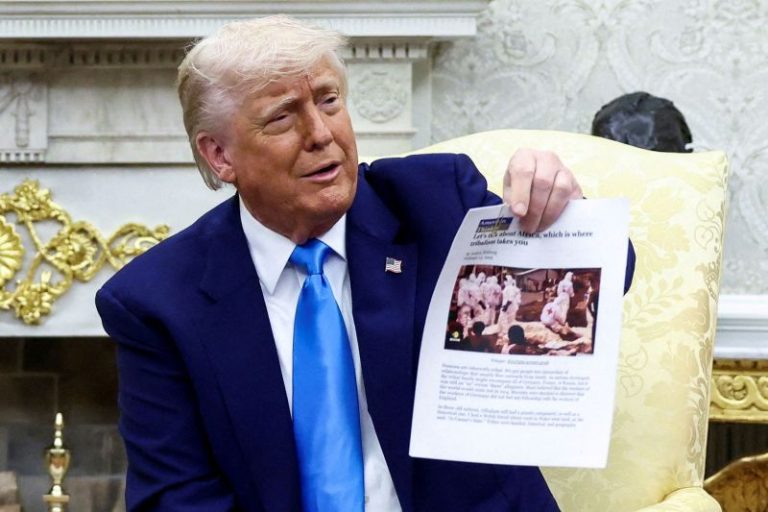
U.S. President Donald Trump showed a screenshot of Reuters video taken in the Democratic Republic of Congo as part of what he falsely presented on Wednesday as evidence of mass killings of white South Africans.

“These are all white farmers that are being buried,” said Trump, holding up a print-out of an article accompanied by the picture during a contentious Oval Office meeting with South African President Cyril Ramaphosa.

In fact, the video, published by Reuters on February 3 and subsequently verified by the news agency’s fact check team, showed humanitarian workers lifting body bags in the Congolese city of Goma. The image was pulled from Reuters footage shot following deadly battles with Rwanda-backed M23 rebels.

The blog post showed to Ramaphosa by Trump during the White House meeting was published by American Thinker, a conservative online magazine, about conflict and racial tensions in South Africa and Congo.

The post did not caption the image but identified it as a “YouTube screen grab” with a link to a video news report about Congo on YouTube, which credited Reuters.

The White House did not respond to a request for comment. Andrea Widburg, managing editor at American Thinker and the author of the post in question, wrote in reply to a Reuters query that Trump had “misidentified the image.”

She added, however, that the post, which referred to what it called Ramaphosa’s “dysfunctional, race-obsessed Marxist government”, had “pointed out the increasing pressure placed on white South Africans.”

The footage from which the picture was taken shows a mass burial following an M23 assault on Goma, filmed by Reuters video journalist Djaffar Al Katanty.

“That day, it was extremely difficult for journalists to get in… I had to negotiate directly with M23 and coordinate with the ICRC to be allowed to film,” Al Katanty said. “Only Reuters has video.”

Al Katanty said seeing Trump holding the article with the screengrab of his video came as a shock.

“In view of all the world, President Trump used my image, used what I filmed in DRC to try to convince President Ramaphosa that in his country, white people are being killed by Black people,” Al Katanty said.

Ramaphosa visited Washington this week to try to mend ties with the United States after persistent criticism from Trump in recent months over South Africa’s land laws, foreign policy, and alleged bad treatment of its white minority, which South Africa denies.

Trump interrupted the televised meeting with Ramaphosa to play a video, which he said showed evidence of genocide of white farmers in South Africa. This conspiracy theory, which has circulated in far-right chat rooms for years, is based on false claims.

Trump then proceeded to flip through printed copies of articles that he said detailed murders of white South Africans, saying “death, death, death, horrible death.”

This post appeared first on cnn.com

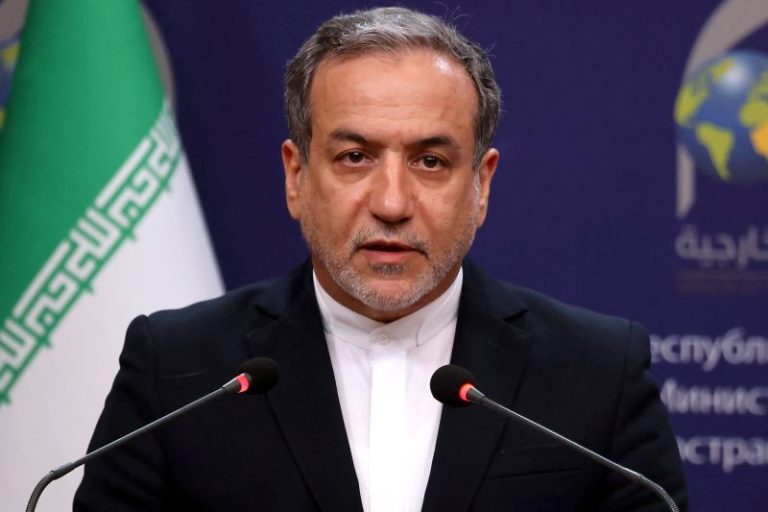
Iran and the United States are set to begin a fifth round of high-stakes nuclear talks in Rome on Friday amid growing skepticism in Tehran about the chances of a deal as Washington hardens its position.

The sources said Iran’s participation in the Rome talks is solely to gauge Washington’s latest stance rather than pursue a potential breakthrough.

Iranian Foreign Minister Abbas Araghchi reiterated Tehran’s red lines before he departed for Rome on Friday.

“Figuring out the path to a deal is not rocket science,” he posted on X before his flight. “Zero nuclear weapons = we DO have a deal. Zero enrichment = we do NOT have a deal.”

The Trump administration has demanded Iran stop all uranium enrichment activity, which lead US negotiator Steve Witkoff says “enables weaponization.” Uranium, a key nuclear fuel, can be used to build a bomb if enriched to high levels. Iran maintains that its nuclear program is peaceful and says it is willing to commit not to enrich uranium to weapons-grade as part of an agreement.

Speaking Thursday, Araghchi said Iran was open to enhanced monitoring by international inspectors but would not relinquish its right to pursue nuclear energy, including uranium enrichment. Washington is offering to wind back crippling economic sanctions on Iran in exchange for de-nuclearization.

The US had previously sent mixed signals about whether Iran would be allowed to enrich uranium, but in recent weeks it has hardened its stance, insisting that no enrichment will be permitted.

That shift has prompted officials in Tehran to question Washington’s commitment to a deal, as Iran has repeatedly said enrichment is a red line in negotiations.

“The media statements and negotiating behavior of the United States has widely disappointed policy-making circles in Tehran,” the sources said in a joint message. “From the perspective of decision-makers in Tehran, when the US knows that accepting zero enrichment in Iran is impossible and yet insists on it, it is a sign that the US is fundamentally not seeking an agreement and is using the negotiations as a tool to intensify pressure.”

Initially, the sources noted, some Iranian officials believed Washington might seek a “win-win” compromise. However, a consensus has now emerged that the Trump administration is steering discussions toward a deadlock.

The sources said that although neither the US nor Iran wants to leave the negotiating table, the position of the US is making the talks unproductive and formal meetings are unlikely to continue much longer.

They said that Tehran no longer takes seriously US efforts to distance itself from Israel’s hardline stance on Iran, and it sees proposals made by the American side as following the agenda of Israeli Prime Minister Benjamin Netanyahu, who has insisted that no enrichment be allowed in Iran.

On Friday, Iranian delegates in Rome aim to probe whether the US has revised its approach. The sources suggested that Tehran will likely take a tougher stance unless the US offers tangible concessions.

US imposes more sanctions ahead of talks

Washington has kept up the pressure on Iran with fresh sanctions and threats of war even as diplomatic talks continue.

On Wednesday, the US State Department announced new measures, identifying Iran’s construction sector as being “controlled directly or indirectly” by the Islamic Revolutionary Guard Corps (IRGC) and 10 strategic materials that it said Iran is using in connection with its nuclear, military or ballistic missile programs.

“With these determinations, the United States has broader sanctions authorities to prevent Iran from acquiring strategic materials for its construction sector under IRGC control and its proliferation programs,” State Department spokesperson Tammy Bruce said.

Iran’s foreign ministry spokesperson criticized US Secretary of State Marco Rubio for the move, calling it “as outrageous as it is unlawful and inhuman.”

“The US’s consecutive rounds of sanctions only reinforce our people’s deeply held belief that the American decision makers are set to make every malign effort to hinder Iran’s development & progress. These sanctions, announced on the eve of the fifth round of Iran-US indirect talks, further put to question the American willingness & seriousness for diplomacy,” Baqaei wrote on X.

This post appeared first on cnn.com