Author

admin

Browsing

Hundreds of supporters of ex-President Evo Morales marched toward Bolivia’s top electoral court on Friday to push for their leftist leader’s candidacy in presidential elections later this year, a rally that descended into street clashes as police tried to clear out a group of demonstrators.

The confrontations come in response to a ruling by Bolivia’s Constitutional Court that blocks Morales, the nation’s first Indigenous president who governed from 2006 until his ouster in 2019, from running again in Aug. 17 elections.

The turmoil escalates political tensions as Bolivia undergoes its worst economic crisis in four decades.

As the march arrived in Bolivia’s capital of La Paz, protesters seeking to register Morales’ candidacy surged toward the Supreme Electoral Tribunal, chanting, “Comrades, what do we want? For Evo to come back!”

Security forces barricading a road to the court held them back. Police reported that the clashes between rock-throwing protesters and tear gas-lobbing police forces injured two officers, a journalist and a local merchant.

“They’re using firecrackers and rocks that are hurting our forces,” said police Commander Juan Russo. “This is not a peaceful march.”

The authorities did not report on any injuries among the protesters, who were seen being pushed onto the ground, shoved into police cars and blasted with tear gas. Morales had promised to attend the march Friday but did not show up.

The court’s unanimous decision Wednesday upheld an earlier ruling that bans presidents from serving more than two terms. Morales has already served three, and, in 2019, resigned under pressure from the military and went into exile as protests erupted over his bid for an unprecedented fourth term.

Morales returned to Bolivia a year later as the 2020 elections vaulted to power his preferred candidate, President Luis Arce, from his long-dominant Movement Toward Socialism, or MAS, party.

Arce, who announced earlier this week that he would not seek re-election, insisted that the Constitutional Court had disqualified Morales, his mentor-turned-rival, from running in 2025.

But many experts doubt the legitimacy of that decision in a country where political conflicts undermine the courts and presidents have maneuvered to get their allies on the bench.

“The Constitutional Court issues unconstitutional arbitrary rulings at the whim of those in power,” said Morales, who himself reaped the benefits of favorable judges while seeking to run for a fourth consecutive term in 2017.

After Morales lost a referendum seeking to do away with term limits while still in power, the Constitutional Court ruled it would be against Morales’ human rights to stop him from running for another term.

That 2017 ruling allows Morales to register his candidacy, said Oscar Hassentoufel, the president of the Supreme Electoral Tribunal. “Then the tribunal will decide whether he’s eligible or not.”

In defiance of the latest court ruling, Morales called a mass march that marshaled his loyal supporters in the rural tropics. They long have championed the Indigenous coca-grower for transforming the country during his tenure — redistributing Bolivia’s natural gas wealth and seeking greater inclusion for its Indigenous majority.

Although he had earlier promised to participate, it appeared that Morales remained holed up in his stronghold for fear of arrest on human trafficking charges that he claims are politically motivated.

The government confirmed that fear Friday. “We ask Mr. Morales to surrender voluntarily,” said Eduardo del Castillo, a key minister in Arce’s government whom the MAS party endorsed for president later Friday in place of Arce. “If we find him walking the streets, we will arrest him.”

Instead, scores of his supporters walked the capital’s streets on Friday wearing masks of Morales’ face.

“Evo Morales is each and every one of us. If they want to detain Evo Morales they would need to take every one of us, too,” said David Ochoa, a representative of the marchers.

This post appeared first on cnn.com

Russia has sentenced an Australian man to 13 years in a maximum-security prison for fighting alongside Ukrainian forces, state prosecutors in the Russian-controlled parts of eastern Ukraine said Friday.

Oscar Jenkins, 33, was found guilty by a court in Luhansk of participating in an armed conflict as a mercenary, prosecutors said in a statement, after it ruled he had fought for Ukraine against Russia between March and December last year.

Australian Foreign Minister Penny Wong said on Saturday that her government was “appalled” by the sentencing, calling it a “sham trial” and urged Russia to treat Jenkins in accordance with international humanitarian law.

Australia has repeatedly called for the release of Jenkins, who is originally from Melbourne, since he was captured by Russian forces in December.

“We continue to hold serious concerns for Mr Jenkins. We are working with Ukraine and other partners, including the International Committee of the Red Cross, to advocate for his welfare and release,” Wong said in a statement.

Russian prosecutors accused Jenkins of being paid between $7,400 and $10,000 a month to fight in Ukraine as a mercenary. The Kremlin maintains that mercenaries are subject to criminal prosecution and not entitled to prisoner-of-war protections under international law.

In a photo shared by the Russian-controlled court in Luhansk, Jenkins was seen standing in a glass cage with his hands behind his back.

The court ordered Jenkins to serve his sentence in a maximum-security penal colony, the prosecutor’s office said.

Jenkins is thought to have joined an international brigade among the Ukrainian ranks, according to Reuters. His arrest came to light late last year when a video surfaced on Russian Telegram accounts purportedly showing Jenkins being taken as a prisoner of war.

Speaking in a mix of English, Ukrainian and Russian, he identifies himself as “a soldier” and says he is a teacher in China and a student in Australia.

Earlier this year, media reports suggesting he might have been killed prompted Canberra to summon the Russian ambassador, with Prime Minister Anthony Albanese vowing the “strongest action” over any harm caused to the man.

Albanese said last month his government would continue to make representations to the “reprehensible regime” of Russian President Vladimir Putin on behalf of Jenkins.

Australia has repeatedly condemned Russia’s invasion of Ukraine and has given Kyiv close to $1 billion in assistance since 2022, while its military has provided training for Ukraine’s armed forces.

This post appeared first on cnn.com

For millions across India, a rigid caste system thousands of years old still dictates much of daily life – from social circles to dating pools to job opportunities and schooling.

The Indian government has long insisted that the social hierarchy has no place in the world’s most populous nation, which banned caste discrimination in 1950.

So, it came as a surprise when Prime Minister Narendra Modi’s administration announced that caste would be counted in the upcoming national census for the first time since 1931 – when India was still a British colony.

Counting caste will “ensure that our social fabric does not come under political pressure,” the government said in its April press release. “This will ensure that society becomes stronger economically and socially, and the country’s progress continues without hindrance.”

The release didn’t include any detail on how the caste data would be collected, or even when the census will take place (it has been repeatedly delayed from its original 2021 date). But the announcement has revived a longstanding debate about whether counting caste will uplift disadvantaged groups – or further entrench divisions.

The proposal is so controversial because a caste census “forces the state to confront structural inequalities that are often politically and socially inconvenient,” said Poonam Muttreja, Executive Director of the Population Foundation of India.

The lack of caste data over the past century means “we are effectively flying blind, designing policies in the dark while claiming to pursue social justice,” she added. “So, the next census is going to be a historical census.”

What is caste?

India’s caste system has roots in Hindu scriptures, and historically sorted the population into a hierarchy that defined people’s occupations, where they can live and who they can marry based on the family they’re born into. Today, many non-Hindus in India, including Muslims, Christians, Jains and Buddhists, also identify with certain castes.

There are several main castes, and thousands of sub-castes – from the Brahmins at the top, who were traditionally priests or scholars, to the Dalits, formerly known as the “untouchables,” who were made to work as cleaners and waste pickers.

For centuries, castes on the bottom rung – Dalits and marginalized indigenous Indians – were considered “impure.” In some cases they were even barred from entering the homes or temples of the upper castes, and forced to eat and drink from separate utensils in shared spaces.

India tried to wipe the slate clean after it won independence from Britain in 1947, introducing a flurry of changes in its new constitution. It set up specific categories of castes, used to establish affirmative action quotas and other benefits – eventually setting aside 50% of jobs in government and places at educational institutions for marginalized castes. It also abolished the concept of “untouchability” and banned caste discrimination.

The decision to stop counting caste in the census was another part of this mission.

“After independence, the Indian state consciously moved away from enumerating caste … in the census,” said Muttreja. “They thought they should not highlight caste, and that in a democracy, it will automatically even out.”

But that hasn’t happened. Although the hard lines of caste division have softened over time, especially in urban areas, there are still major gaps in wealth, health and educational attainment between different castes, according to various studies. The most disadvantaged castes today have higher rates of illiteracy and malnutrition, and receive fewer social services such as maternal care and reproductive health, Muttreja added.

Social segregation is also widespread; only 5% of marriages in India are inter-caste, according to the India Human Development Survey. Similar divides linger in friend groups, workplaces, and other social spaces.

These persistent gaps have fueled rising demand for a caste census, with many arguing that data could be used to secure greater federal government aid and reallocate resources to the needy.

In some states – such as Bihar, one of India’s poorest states – local authorities have conducted their own surveys, prompting calls for Modi and his Bharatiya Janata Party (BJP) government to follow suit.

Now, it appears, they will.

Why now?

Modi has long pushed back on attempts to define the population along traditional caste lines, previously declaring that the four “biggest castes” were the poor, youth, women and farmers – and that uplifting them would aid the entire country’s development.

But rising discontent among underprivileged castes boosted opposition parties during the 2024 national election, which delivered a shock result: although Modi won a third term, the BJP failed to win a majority in parliament, diminishing their power.

Modi’s U-turn on the caste census, his rivals claim, is a political maneuver to shore up support in upcoming state elections, particularly in Bihar – a battleground state where the issue has been particularly sensitive.

“The timing is no coincidence,” wrote M. K. Stalin, the Chief Minister of Tamil Nadu state and a longtime Modi critic, in a post on X. “This sudden move reeks of political expediency.”

Bihar’s own caste survey in 2023 found there were far more people in marginalized castes than previously thought, sparking an ongoing legal battle to raise the affirmative action quotas.

Several other states took their own surveys, which the federal government said in its statement were “varied in transparency and intent, with some conducted purely from a political angle, creating doubts in society.”

The main opposition Congress party celebrated the government’s announcement, claiming Modi had bowed to their pressure. BJP leaders, meanwhile, say the opposition neglected to conduct any caste census during their years in power, and had now politicized the issue for their own gain.

The previous Congress-led government did conduct a national caste survey in 2011, but the full results were never made public, and critics alleged the partial findings showed data anomalies and methodology issues. It was also separate from the national census conducted that same year, meaning the two sets of data can’t be analyzed against each other.

Though authorities haven’t said when the new census will take place, they have enough time to refine the methodology and make sure key information is collected, said Sonalde Desai, demographer and Professor Emerita of Sociology at the University of Maryland College Park.

After the census is complete, the next battle will begin: how to use that data to shape policy.

A controversial proposal

Not all are in favor of the caste census.

Opponents argue that the nation should be trying to move away from these labels instead of formalizing them. Some believe that instead of focusing on caste, government policies like affirmative action should be based on other criteria like socioeconomic class, said Desai, also a professor of applied economic research at the National Council of Applied Economic Research in New Delhi.

She supports the caste census, but said opponents might view such a survey as regressive, instead of helping to create “a society in which (Indians) transcend that destiny” defined by caste.

There’s another factor, too: if the census reveals that marginalized castes are bigger than previously thought, as was the case in Bihar, the government could increase how much affirmative action they receive, angering some traditionally privileged castes who already dislike the quota system.

Over the years, anti-affirmative action protests have broken out, some turning deadly – with these groups accusing the government of reverse discrimination, echoing similar controversies in the United States about race-conscious college admissions and job hiring. These same groups are likely to decry the caste census, Muttreja said.

Already, some opposition leaders are calling to remove the 50% cap on affirmative action quotas, and to implement affirmative action in other institutions like private companies and the judiciary – controversial proposals that have prompted online firestorms.

It might also show how the balance of power and privilege has shifted over the past century, said Desai. Since the 1931 census, some previously disadvantaged castes may have been buoyed by affirmative action and other measures – while other castes that once sat higher on the ladder may no longer be considered as privileged.

This is why, she argues, India’s government should use the data to perform a “re-ranking” – reorganizing which castes belong in which of the specific categories used to allocate resources and benefits.

The census could clearly illustrate who needs what kind of help and how to best deliver it, instead of relying on outdated data, said Muttreja. It can reveal intersectional gaps; for instance, a woman in rural India may struggle far more than a man of the same caste, or a peer in an urban area. And it could show whether any castes have ballooned in size, demanding more funding than currently allocated.

“It can shape school funding, for instance, health outreach, employment schemes and more,” she said. It “helps ensure that quotas reflect real disadvantage, not just historical precedent.”

Once that data is out there, Muttreja believes, the government will be forced to act – it can’t afford not to. And for those who still deny that caste discrimination remains rampant, or who argue that affirmative action is no longer necessary: “This data will stare at people’s faces.”

This post appeared first on cnn.com

Nvidia said it won’t be sending graphics processing unit plans to China following a report that the artificial intelligence chipmaker is working on a research and development center in Shanghai in light of recent U.S. export curbs.

“We are not sending any GPU designs to China to be modified to comply with export controls,” a spokesperson said in a statement to CNBC.

The Financial Times was the first to report the news, citing two sources familiar with the matter. CEO Jensen Huang discussed the potential new center with Shanghai’s mayor, Gong Zheng, during a visit last month, the FT reported.

The center will assess ways to meet U.S. restrictions while catering to the local market, although production and design will continue outside China, according to the report.

AI chipmakers such as Nvidia have been hit with major China roadblocks since 2022 as the U.S. began cracking down on sending advanced chips to China because of concerns of possible military use.

Last week, the Trump administration said it would replace restrictions put in place under President Joe Biden with a “much simpler rule that unleashes American innovation and ensures American AI dominance.” Nvidia said last month that it would take a $5.5 billion charge tied to selling its H20 GPUs in China and other countries.

Huang has previously commented on the significance of China, which is one of the company’s major market after the U.S., Singapore and Taiwan. He told CNBC this month that getting shut out of the world second-largest economy would be a “tremendous loss,” estimating that China’s AI market could hit $50 billion over the next two to three years.

“We just have to stay agile,” Huang told CNBC’s Jon Fortt, in an interview alongside ServiceNow CEO Bill McDermott. “Whatever the policies are of the government, whatever is in the best interest of our country, we’ll support,” he added.

This post appeared first on NBC NEWS

A Russian drone attack on a bus in northeastern Ukraine killed at least nine people and injured seven others, Ukrainian officials said Saturday, just hours after the two countries met for the first direct peace talks in three years.

While the two sides discussed a possible meeting between the two countries’ leaders, a ceasefire and agreed a prisoner swap, there was no major breakthrough and since then Russia’s aerial assault continued.

The drone attack took place Saturday morning in the city of Bilopillia in the Sumy region, local authorities said, with Oleh Hrihorov – head of Sumy’s military administration – saying that seven people were injured, three of whom were in critical condition.

“This is not just another shelling – it is a cynical war crime,” Ukraine’s National Police also said on Telegram. Police and local authorities said Russia had struck a civilian target.

Moscow has not yet responded to Ukraine’s claims it struck a civilian bus.

However, Russia’s state news agency TASS reported around the same time, citing a statement from the defense ministry, that Russian forces did strike a Ukrainian equipment staging site in the Sumy region with drones.

Russia and Ukraine have both accused each other of targeting civilians, which each denies.

An image shared by Ukraine’s national police showed a heavily damaged van bearing massive holes in the right and top side of the passenger seats. Its windows, as well as the windshield, were shattered.

Overall in Ukraine, Russian attacks killed at least 13 people and injured over 38 in the past 24 hours, which includes the attack in Sumy, Ukrainian authorities say. Two were killed in Donetsk region, and one person was killed in both Kharkiv and Kherson regions.

Friday’s talks marked the first face-to-face meeting between the two sides since the early weeks of the war.

But the meeting – which took place in Istanbul chaired by Turkey – was not attended by Russian President Vladimir Putin, who had first proposed the talks but instead sent a junior delegation. Ukrainian President Volodymyr Zelensky also stayed away, having said he would not meet any other Russian official but Putin.

On Saturday, the Kremlin said that a meeting between Zelensky and Putin could happen, but only if certain conditions are met.

“Such a meeting is possible as a result of the work of the delegations of both sides in reaching certain agreements,” Kremlin spokesperson Dmitry Peskov said.

Peskov also spoke about preparing a list of “conditions” for a ceasefire agreement, that would then be exchanged with the Ukrainian side. Kyiv and its allies have repeatedly called for an unconditional truce and accuse Russia of deliberately holding up peace efforts.

This post appeared first on cnn.com
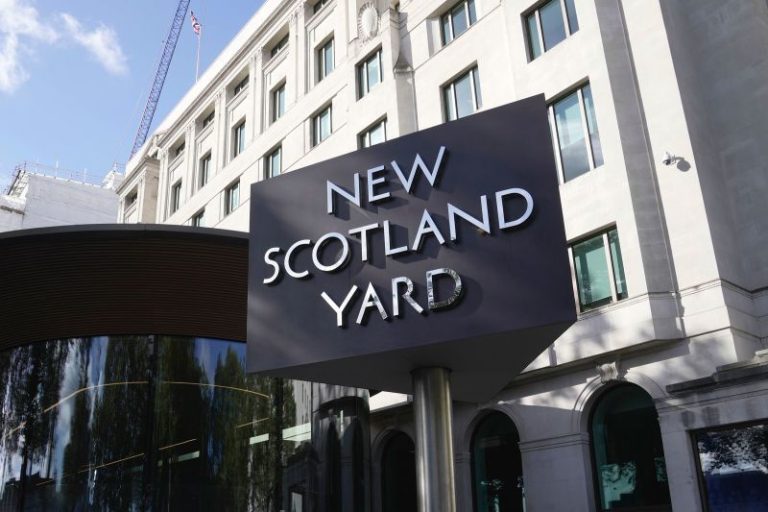
Police in the UK have charged three Iranian nationals with national security offenses following a counter-terror investigation.

The three men, arrested on Saturday, 3 May, have been charged with “engaging in conduct likely to assist a foreign intelligence service,” namely Iran, between 14 August 2024 and 16 February 2025, London’s Metropolitan Police said in a statement Saturday.

The men, aged between 39 and 55, have been named by police as Mostafa Sepahvand, Farhad Javadi Manesh, and Shapoor Qalehali Khani Noori.

They have been charged with engaging in surveillance and reconnaissance, with one man charged with the intention of committing “serious violence against a person in the United Kingdom,” the statement outlined.

The UK’s Crown Prosecution Service charged the men on Friday, and they are due to appear at Westminster Magistrates’ Court on Saturday. The investigation is being led by the British counter terrorism police.

Commander Dominic Murphy, from the Met’s Counter Terrorism Command, said: “These are extremely serious charges under the National Security Act, which have come about following what has been a very complex and fast-moving investigation.”

A fourth man, aged 31, who was arrested on Friday, May 9, has been released without charge.

This post appeared first on cnn.com
(TheNewswire)

Vancouver, British Columbia May 16, 2025 TheNewswire Allied Critical Metals Inc. (formerly Deeprock Minerals Inc.) (CSE: ACM) (OTCQB: 0VJ0) (the ‘ Company ‘ or the ‘ Resulting Issuer ‘) is pleased to provide a corporate update as to its updated uses of funds updating the disclosure in its Listing Statement dated April 23, 2025 (the ‘ Listing Statement ‘) which is publicly available under the Company’s profile on SEDAR+ at www.sedarplus.ca, to better reflect the actual results of concurrent financing (‘ Concurrent Financing ‘) of approximately $4.6 million announced by the Company on March 25, 2025 and corresponding updated uses of funds.

The following provides an outline of the Company’s principal purposes of funds, which updates the disclosure in the Listing Statement.

Principal Purposes of Funds

The Company intends to use the funds available to it upon completion of the Company’s transactions (the ‘Transactions ‘) for listing (the ‘Listing’) on the Canadian Securities Exchange (the ‘CSE’) to further its business objectives. Specifically, the Company intends to use the funds available to it following compl etion of the Transactions over the next 12 months as follows:

Use of Proceeds

Estimated Amount
($2.5 million minimum Concurrent Financing)

Estimated Amount
($5.0 million maximum Concurrent Financing)

Resulting Amount
(actual $4.6 million Concurrent Financing)

Variation from maximum $5.0 million Concurrent Financing

Exploration [1]

Borralha – Phase 1

$492,600

$492,600

$492,600

$0

Borralha – Phase 2 [2]

$1,503,200

$1,503,200

$0

Vila Verde – Phase 1 [3]

$226,000

($226,000)

Vila Verde – Phase 2 [4]

$1,066,835

($1,066,835)

Prepayment on 2027 Note [5]

$100,000

$100,000

$100,000

$0

12 months general and administrative costs [6]

$182,000

$182,000

$180,000

($2,000)

Estimated transaction costs [7]

$250,000

$250,000

$250,000

$0

Investor Relation Services [8]

$885,500

$885,500

Additional working capital [9]

$496,035

$231,866

$231,866

Totals:

$1,520,635

$3,820,635

$3,574,811

($245,824)

Notes:

  1. The Exploration is comprised of the recommended work programs for the Borralha Tungsten Project and the Vila Verde Tungsten Project, which are summarized in the Listing Statement. For more detail, please see the Borralha Technical Report and the Vila Verde Technical Report.

  2. Phase 2 of the recommended work program for Borralha was estimated at $1,503,200.

  3. The Company prioritises exploration of Borralha over Vila Verde, but once exploration of Borralha is addressed and if there are sufficient remaining funds then such funds may be allocated towards exploration at Vila Verde, which totals $226,000 for Phase 1 and $1,066,835 for Phase 2. As a portion of drilling expenses are expected to be settled in common shares, the Company expects that there will be sufficient available funds to begin exploration at Vila Verde.

  4. The total cost for Vila Verde’s Phase 2 work program is $2,279,000, but if drilling expenses are partly settled in common shares there may be sufficient funds available to commence Phase 2 of the Vila Verde work program following completion of Phase 1.

  5. On Closing, ACM must pay $100,000 to Pan Iberia as a prepayment of the 2027 Note. The funds available is already net of payment of short term promissory notes, which are paid on Listing and are related to repayment of mineral property license fees and acquisition of the 1% NSR.

  6. The 12 months general and administrative costs are expected to include $35,000 for audit and accounting expenses, $15,000 for regulatory, $45,000 for legal fees, $61,645 for investor conferences marketing fees and expenses, and $23,355 contingency for other general and administrative matters. The budget for management fees ($72,000) was reallocated to Borralha exploration as they pertain to license regulatory expenditure and other work in Portugal in respect of Borralha and the $60,000 budget for legal fees was adjusted to $45,000.

  7. The Transaction costs includes $170,000 legal expenses, $20,000 for the subscription receipt and warrant agent and CDS, $40,000 for CSE listing fees, and $20,000 filing fees and contingency.

  8. Since completion of the Listing, the Company has reallocated $885,500 fixed fees for investor relations services, as described in the Company’s news release dated May 2, 2025. A further amount of up to $15,560 per month variable cost of investor relations was allocated as additional working capital as such services will be terminated to limit costs within budgeted amounts. A discussion of the rationale for the allocation to investor relations services is provided below.

  9. Additional working capital will be deployed towards exploration of Borralha, then Vila Verde, and as working capital for expenses, which may include variable monthly expenses of up to $72,000 for market making ($6,000 per month) and other such expenses for investor relations services.

Prioritizing Borralha Exploration – Rationale for Changes to Uses of Proceeds

As previously disclosed in the Listing Statement (Section 3.3—Resulting Issuer), the Company is prioritizing exploration of Borralha as such exploration enables completion of a preliminary economic assessment( PEA) or prefeasibility study( PFS) for Borralha by the end of summer 2025. In particular, the above use of funds will enable the Company to complete Phase 1 and Phase 2 exploration of Borralha by the end of August 2025. Drilling is expected to commence at Borralha as soon as May 22, 2025.

Borralha is a brownfield past-producing advanced stage, near term production tungsten project which requires a proportionate approach to investor relations to adequately position the Company for the next stage of development. Accordingly, total funds of $885,500 (less than one fifth of the Concurrent Financing) were allocated for investor relations services to sufficiently position the Company’s profile for more significant capital raising following completion of the PEA/PFS this summer to prepare for eventual project financing. Funds allocated to investor relations are aimed at direct interactions with potential capital providers and market participants in the critical metals and tungsten markets to fast track the development and construction the Borralha as a key western source of global tungsten production, highlighting the Company’s profile as particularly well-placed to become a significant leader in global tungsten mineral exploration and development in Portugal. While global macro-economic and political factors are creating an excellent positive environment for the Company with tungsten prices rising 25% from $320/MTU (metric tonne unit) to $400/MTU over the past five months [Source: Fastmarkets, May 2025], tungsten remains a lesser known niche critical mineral in the capital markets community. Accordingly, the Company in consultation with its financial advisors, have developed a strategy to accelerate increased profile recognition in the lead up to completion of its PEA/PFS in the coming months. The Company is excited to begin the next chapter of development of its Borralha and Vila Verde Tungsten Projects and look forward to providing updates as drilling and further exploration progresses over the coming weeks and months.

The Company intends to spend the funds available to it on completion of the principal purposes described above. Nevertheless, there may also be circumstances where, for sound business reasons, a reallocation of funds may be necessary for the Company to achieve its short term and long term objectives. The Company may require additional funds in order to fulfill all of the Company’s objectives, in which case the Company expects to either issue additional shares or incur indebtedness. It is anticipated that the available funds will be sufficient to satisfy the Company’s objectives over the next twelve months.

New CFO

In addition, the Company is pleased to announce Sean Choi as its new Chief Financial Officer who replaces Keith Margetson who has stepped down effective May 14, 2025. The Company greatly appreciates all of Keith’s efforts in completing the Transactions as Chief Financial Officer for the Company since April 2023, and Keith will remain a consultant to the Company to provide assistance as necessary going forward.

Mr. Choi has over 19 years of experience in public accounting and mining industry. During his career, he has served as Chief Financial Officer of Ecuador Gold and Copper Corp. and Northern Sun Mining Corp. which were both reporting issuers listed on the TSX Venture Exchange. He also served as Chief Financial Officer of York Harbour Metals (TSXV: YORK) from April 2014 to June 2024.  Sean is a Chartered Professional Accountant and Chartered Accountant (Ontario) and holds a Bachelor of Administrative and Commercial Studies degree from the University of Western Ontario.

Options and RSUs

The Company also hereby announces the grant of 3,500,000 stock options (the ‘ Options ‘) at an exercise price of $0.22 per share granted to directors, officers, employees and consultants of the Company pursuant to its omnibus equity incentive plan, which vests immediately and expire 5 years after the date of grant. The Company also announces that it has granted 4,097,760 restricted share units (‘ RSUs ‘) to directors, officers, employees and consultants of the Company pursuant to its omnibus equity incentive plan, which vests on September 16, 2025.

The Options and RSUs will be subject to a four month hold period in accordance with applicable Canadian securities laws and the policies of the Canadian Securities Exchange.

ABOUT Allied Critical Metals INC.

The Company is is a Canadian-based mining company focused on the expansion and revitalization of its 100% owned past producing Borralha Tungsten Project and the Vila Verde Tungsten Project in northern Portugal. Tungsten has been designated a critical metal by the United States and other western countries, as they are aggressively seeking friendly sources of this unique metal. Currently, China and Russia represent approximately 90% of the total global supply and reserves. The Tungsten market is estimated to be valued at approximately $5 – $6 billion USD and it is used in a variety of industries such as defense, automotive, manufacturing, electronics, and energy.

Please also visit our website at www.alliedcritical.com.

Also visit us at:

LinkedIn: https://www.linkedin.com/company/allied-critical-metals-inc/

X: https://x.com/@alliedcritical/

Facebook: https://www.facebook.com/alliedcriticalmetalscorp/

Instagram: https://www.instagram.com/alliedcriticalmetals/

CAUTIONARY NOTE REGARDING FORWARD-LOOKING STATEMENTS

This news release contains ‘forward-looking statements’, including with respect to the use of proceeds. Wherever possible, words such as ‘may’, ‘would’, ‘could’, ‘should’, ‘will’, ‘anticipate’, ‘believe’, ‘plan’, ‘expect’, ‘intend’, ‘estimate’, ‘potential for’ and similar expressions have been used to identify these forward-looking statements. These forward-looking statements reflect the current expectations of the Company’s management for future growth, results of operations, performance and business prospects and opportunities and involve significant known and unknown risks, uncertainties and assumptions, including, without limitation, those listed in the Company’s Listing Statement and other filings made by the Company with the Canadian securities regulatory authorities (which may be viewed under the Company’s profile at www.sedarplus.ca ). Examples of forward-looking statements in this news release include, but are not limited to, statements regarding the proposed timeline and terms of the investor awareness campaign, anticipated benefits to Company from running the investor awareness campaign, and the performance of the investor relations services providers of the marketing services as contemplated in the marketing agreements, or at all. Should one or more of these risks or uncertainties materialize or should assumptions underlying the forward-looking statements prove incorrect, actual results, performance or achievements may vary materially from those expressed or implied by the forward-looking statements contained in this news release. These factors should be considered carefully, and prospective investors should not place undue reliance on the forward-looking statements. This list is not exhaustive of the factors that may affect any of the Company’s forward-looking statements and reference should also be made to the Company’s Listing Statement dated April 23, 2025 , and the documents incorporated by reference therein, filed under its SEDAR+ profile at www.sedarplus.ca for a description of additional risk factors. The Company disclaims any intention or obligation to revise forward-looking statements whether as a result of new information, future developments or otherwise, except as required by law.

The Canadian Securities Exchange does not accept responsibility for the adequacy or accuracy of this press release and has neither approved now disapproved the contents of this press release.

ON BEHALF OF THE COMPANY

‘Roy Bonnell’

Chief Executive Officer and Director

For further information, contact:

Dave Burwell

VP Corporate Development

¿¿ daveb@alliedcritical.com

¿¿ 403-410-7907

Copyright (c) 2025 TheNewswire – All rights reserved.

News Provided by TheNewsWire via QuoteMedia

This post appeared first on investingnews.com

The Justice Department isn’t planning to prosecute Boeing in a case tied to two crashes of the aerospace giant’s 737 Max, a person familiar with the matter said, a tentative agreement that would allow the plane-maker to avoid a guilty plea.

Boeing agreed to plead guilty in the case last summer in a deal with the Justice Department after the Biden administration found earlier that year that the company violated a 2021 agreement tied to the crashes. A judge rejected that plea deal last year, citing concerns about diversity, equity and inclusion, and opened the possibility that Boeing could face trial.

The fraud charge stems from Boeing’s development of the 737 Max. The U.S. had accused Boeing of misleading regulators about its inclusion of a flight-control system on the Max that was later implicated in the two crashes.

A final, non-prosecution agreement hasn’t been reached yet, the person said. The Justice Department and Boeing didn’t immediately comment.

Under the new agreement, Boeing could pay family members of victims of the two Max crashes. In total, the two crashes of the best-selling Boeing jet killed all 346 people on board the planes.

The new tentative agreement, which was reported earlier on Friday by Reuters, would mean Boeing wouldn’t be labeled a felon. That label could have come with restrictions on defense contractor work.

Boeing is the country’s biggest exporter and, in addition to making commercial jetliners, it’s a major defense contractor. The Trump administration recently awarded the company a multibillion-dollar contract to build a next-generation fighter jet.

This post appeared first on NBC NEWS

Cava on Thursday reported better-than-expected sales in its latest fiscal quarter, shaking off the malaise the broader restaurant industry has felt as consumers have cut back on dining.

The Mediterranean chain said its same-store sales grew 10.8% in the three months that ended April 20, lifted by traffic growth of 7.5%. Analysts surveyed by StreetAccount were projecting same-store sales growth of 10.3%.

“When we look at our consumers in the quarter, we saw an increase in premium attachment on higher priced items, like our pita chips or amazing housemade juices. We also saw that our per person average continued to increase, and then when we look at our results, there’s positive traffic across all of our geographies, across all of our income cohorts, as well as the different formats of our restaurants and dayparts,” Chief Financial Officer Tricia Tolivar told CNBC.

She added that diners have been trading up from fast food and down from casual-dining restaurants into Cava’s bowls and pitas, a trend the company has seen for several quarters.

Elsewhere in the restaurant industry, companies have been reporting very different behavior from consumers, although many companies’ results did not include any time in April, when the industry’s sales and traffic performance improved.

Fast-casual rival Chipotle said its transactions fell 2.3% in the first quarter as consumers pulled back their spending in February, spooked by economic uncertainty. Sweetgreen reported its first quarterly same-store sales decline since it went public in 2021. McDonald’s CEO Chris Kempczinski said fast-food industry data showed both low- and middle-income consumers spending less. The burger giant said U.S. same-store sales declined 3.6% for the first quarter.

Despite the strong quarterly performance, Cava reiterated its same-store sales forecast, sticking with its projections of a 6% to 8% increase. The chain said last quarter that it is expecting slower growth in the back half of its fiscal 2025.

The stock fell 5% in extended trading. As of Thursday’s close, Cava shares have slid 11% so far this year, hurt by investor concerns over its conservative outlook for the fiscal year and the economic fallout from the Trump administration’s tariffs.

Here’s what the company reported compared with what Wall Street was expecting, based on a survey of analysts by LSEG:

The company reported fiscal first-quarter net income of $25.71 million, or 22 cents per share, up from $13.99 million, or 12 cents per share, a year earlier. Cava reported an income tax benefit of $10.7 million related to stock-based compensation, which boosted its earnings this quarter.

Net sales climbed 28% to $332 million. On a 12-month trailing basis, Cava’s revenue has surpassed $1 billion, representing a major milestone for the company.

The company did raise some of its projections for the fiscal year.

Cava now anticipates adjusted earnings before interest, taxes, depreciation and amortization of $152 million to $159 million, up from its prior forecast of $150 million to $157 million. The company also plans to open between 64 and 68 new locations, higher than its previous outlook of between 62 and 66 restaurant openings.

This post appeared first on NBC NEWS

As the global energy transition accelerates, the mining sector is increasingly navigating a complex landscape of shifting demand, volatile prices and growing sustainability priorities.

During an S&P Global webinar on the state of the mining industry in Q1, analysts highlighted renewable power development and mine-site electrification as key sustainability drivers shaping the future of resource extraction.

Copper, a key component of the energy shift, remains a focal point, with average prices holding at US$9,412 per metric ton in the first quarter, though forecasts suggest a slight decline to US$9,317 by year end.

Meanwhile, the battery metals space continues to feel the squeeze.

Lithium prices slumped to US$9,000 per metric ton, leaving an estimated 27 percent of producers operating at a loss, according to S&P. Cobalt held above US$14 per pound, bolstered by the Democratic Republic of Congo’s export ban.

Nickel, driven by surging Indonesian output, is forecast to fall to US$15,730 per metric ton.

The webinar also touched on broader sector dynamics, including ongoing trade tensions, subdued financing activity and an uptick in M&A as companies reposition for long-term growth amid tightening supply and geopolitical uncertainty.

Copper supply disrupted, green demand bolstered

As mentioned, copper prices are expected to dip slightly to US$9,317 by year end.

While positive drivers like a weaker US dollar and resilient Chinese demand are offering some support, refined production cuts, bad weather in Chile and smelter challenges have added pressure to the global supply chain.

Notably, production disruptions in Chile — including a national blackout and Glencore’s (LSE:GLEN,OTC Pink:GLCNF) partial suspension at Altonorte — along with declining US consumer confidence, have led S&P to revise its US refined copper demand growth forecast down to just 1.5 percent for the year. Meanwhile, tightness in the concentrate market has sent spot treatment charges to record lows, amplifying strain on smelter margins.

“(A) developing demand driver for copper is the increasing demand from the green energy transition,’ said Naditha Manubag, associate research analyst, metals and mining research, at S&P Global Commodity Insights.

‘Despite the intensifying US-China trade disputes, copper demand in China has shown resilience, with copper concentrate imports growing by 10 percent in Q1 and cathode imports increasing month-over-month.’

Lithium, cobalt and graphite markets under pressure

In contrast, the battery metals space continues to reel from oversupply and weak pricing. Lithium carbonate CIF Asia dropped to just US$9,000, the lowest level seen since 2021.

“Overcapacity will continue to limit lithium prices until the next decade,” said Manubag. “With this, we have lowered the lithium carbonate CIF Asia price in 2025 to US$9,031. And using this price assumption, 27 percent of lithium operations will be loss-making on a total cash operating margin basis.”

Prices are expected to dip further to US$8,600 in Q3 before a modest recovery in 2027.

The cobalt market, while supported by the Democratic Republic of Congo’s export ban, is forecast to remain in surplus through 2025, though prices are likely to hold above US$14.

“The Democratic Republic of Congo accounts for over 70 percent of global cobalt mine output, yet its ongoing export ban is unlikely to trigger significant production cuts,” the analyst said, adding that the stockpiled supply is expected to re-enter the market once the ban lifts — supporting a sustained price recovery.

Cobalt hydroxide prices have surged the most since the ban began due to tightening supply, and cobalt prices are expected to remain above US$14 through 2025. However, elevated prices may accelerate the trend toward substituting cobalt in battery chemistries as the lithium market braces for further cuts.

Meanwhile, graphite prices are under pressure despite tightening Chinese export controls.

China’s December export ban on key critical minerals, including gallium and germanium, has prompted tighter scrutiny on graphite exports to the US. With China supplying roughly half of America’s antimony and natural graphite imports, pressure on prices has mounted as Tanzanian supply grows, but export options narrow.

Despite current oversupply, a structural deficit is forecast in the medium to long term.

“Spot prices for natural graphite have come under further pressure,” Manubag said. “(US President Donald) Trump’s Section 232 probes import dependence on processed graphite, supporting US anode projects.”

As such, S&P sees US capacity growing to 236,000 metric tons in 2028.

“We maintain our view that continued high feedstock cost on the synthetic anode supply chain could support fine flake and spherical graphite prices,’ the expert added.

Gold leads Q1 mining M&A

M&A in the mining sector slowed sharply in Q1, with both the number and value of deals declining.

Although gold transactions accounted for 86 percent of total M&A value, overall gold deal value dropped 62 percent quarter-over-quarter to US$4.02 billion. In the lead for the period was Equinox Gold’s (TSX:EQX,NYSEAMERICAN:EQX) planned US$1.87 billion takeover of Calibre Mining (TSX:CXB,OTCQX:CXBMF).

Nickel followed, with MMG’s (OTC Pink:MMLTF,HKEX:1208) US$500 million acquisition of Anglo American’s (LSE:AAL,OTCQX:AAUKF) nickel business, including producing assets like Barro Alto and Codemin.

In copper, the top transaction was Hudbay Minerals’ (TSX:HBM,NYSE:HBM) purchase of Mitsubishi Materials’ (OTC Pink:MIMTF,TSE:5711) remaining stake in the Copper Mountain mine for US$44.3 million.

“Gold deals are expected to continue leading M&A activity as the metal maintains its safe-haven appeal amid global trade uncertainty,” Gian Seblos, associate research analyst, metals and mining research, at S&P Global Commodity Insights, said during this week’s webinar. He added, “Meanwhile, cash-rich producers may drive consolidation in base metals, either to secure future output or diversify amid shifting trade dynamics.”

Capital raised by mining companies surged to US$11.92 billion — doubling from the previous quarter and marking the second consecutive quarter of growth following the US Federal Reserve’s December rate cut. Debt financing jumped to 65 percent of total capital raised, up from 35 percent previously, fueled by a surge in senior debt offerings.

Major mining companies led the charge, raising US$7.57 billion — nearly six times more than Q4 2024.

Juniors saw a 25 percent increase, raising US$3.48 billion. Gold companies captured half of the funding, followed by those focused on base metals (33 percent) and specialty commodities (17 percent).

Regionally, Asia and the Middle East posted a 331 percent gain to US$1.58 billion, primarily driven by Saudi Arabia’s Ma’aden through two non-convertible bond offerings worth US$1.25 billion.

Africa and Europe also saw strong growth, while Australia, Canada and the US experienced declines.

Securities Disclosure: I, Georgia Williams, hold no direct investment interest in any company mentioned in this article.

This post appeared first on investingnews.com