Author

admin

Browsing

Coinbase Global (NASDAQ:COIN), one of the world’s largest crypto exchanges, has announced an investment in Stablecorp to bring QCAD — a Canadian dollar-denominated stablecoin — to Canadians.

The announcement was made in Toronto at the Blockchain Futurist Conference, where it was presented during a fireside chat by Lucas Matheson, Canada country director at Coinbase, and Alex McDougall, CEO of Stablecorp.

The pair positioned the launch as part of a global shift toward stablecoin integration and digital financial innovation, underscoring Canada’s unique opportunity to carve out a leadership role in the emerging digital currency ecosystem.

‘Stablecoins are probably the topic to draw this year in crypto, for a lot of good reasons,” said Matheson.

“When you look at volume around the world for cryptocurrencies, stablecoins currently account for about 70 percent of all volume in cryptocurrency, while maintaining about 10 percent of the market cap.”

Matheson pointed out that governments around the world, from the US to the UK, are moving quickly to legislate and define these assets as legitimate payment instruments. He stressed that Canada needs to be part of that conversation.

Stablecorp’s QCAD is not new to the scene. McDougall noted that the company has been working since 2020 to create a homegrown stablecoin that reflects Canada’s economic standing. Despite the US dollar’s dominance in the global stablecoin market, McDougall believes the Canadian dollar has a compelling case to make.

“The Canadian dollar trades over C$400 billion a day in foreign exchange. Over C$3.6 billion of goods cross the American border, back and forth every day,’ he told audience members. “There’s over C$316 billion in international central bank reserve currencies, and that’s up to C$65 billion over 2024 — the Canadian dollar quietly kicks ass.’

The Coinbase-Stablecorp partnership aims to fill this void by integrating QCAD into use cases ranging from simple peer-to-peer transactions to institutional finance and global trade. Matheson explained that Coinbase’s backing will bring the reach, trust and compliance capabilities needed to scale QCAD nationally and internationally.

Their discourse also revolved around real-world applications. McDougall described QCAD as a solution that dramatically lowers costs and increases speed in cross-border and domestic payments.

He pointed to practical examples already being piloted, such as Brazilian students paying Canadian tuition fees using QCAD, and Filipino workers receiving remittances via seamless FX-to-stablecoin pipelines.

In both cases, traditional banking systems are circumvented in favor of instant, lower-fee digital rails.

The stablecoin, McDougall added, also opens new doors for small business financing. Canadian businesses will soon be able to draw international lines of credit that settle in QCAD in real-time, with FX baked into transactions, a feature traditional banks currently do not offer. He also highlighted use cases in global telecommunications billing, where cross-border carrier settlements, a US$5 billion annual burden, could be simplified via programmatic stablecoin payments.

Even more futuristically, he envisions QCAD being critical infrastructure for Canada’s artificial intelligence ambitions.

“From just simple everyday things like sending money around and taking that power back, all the way to having these fully automated global webs of commerce — stablecoins are the building blocks for every single one of those,” he said.

Despite the momentum, both Matheson and McDougall acknowledged that Canada’s regulatory environment has not kept pace with innovation. Unlike jurisdictions such as the US and UK, where stablecoins are being defined through legislation as distinct asset classes, often as e-money, Canada remains entangled in a fragmented regulatory landscape.

“Our challenge is that we have 13 different provincial securities regulators, each approaching crypto through the lens of securities law,” said Matheson. “That’s led to a square peg, round hole problem.”

The lack of a unified federal framework has made it difficult for firms like Stablecorp to fully operationalize a compliant and scalable stablecoin solution. However, the panelists hope this may be changing with a cabinet shakeup.

With the QCAD rollout and further announcements expected in the coming weeks, the pressure now shifts to Ottawa to match private sector ambition with public policy action.

Securities Disclosure: I, Giann Liguid, hold no direct investment interest in any company mentioned in this article.

This post appeared first on investingnews.com

As the global energy transition accelerates, the mining sector is increasingly navigating a complex landscape of shifting demand, volatile prices and growing sustainability priorities.

During an S&P Global webinar on the state of the mining industry in Q1, analysts highlighted renewable power development and mine-site electrification as key sustainability drivers shaping the future of resource extraction.

Copper, a key component of the energy shift, remains a focal point, with average prices holding at US$9,412 per metric ton in the first quarter, though forecasts suggest a slight decline to US$9,317 by year end.

Meanwhile, the battery metals space continues to feel the squeeze.

Lithium prices slumped to US$9,000 per metric ton, leaving an estimated 27 percent of producers operating at a loss, according to S&P. Cobalt held above US$14 per pound, bolstered by the Democratic Republic of Congo’s export ban.

Nickel, driven by surging Indonesian output, is forecast to fall to US$15,730 per metric ton.

The webinar also touched on broader sector dynamics, including ongoing trade tensions, subdued financing activity and an uptick in M&A as companies reposition for long-term growth amid tightening supply and geopolitical uncertainty.

Copper supply disrupted, green demand bolstered

As mentioned, copper prices are expected to dip slightly to US$9,317 by year end.

While positive drivers like a weaker US dollar and resilient Chinese demand are offering some support, refined production cuts, bad weather in Chile and smelter challenges have added pressure to the global supply chain.

Notably, production disruptions in Chile — including a national blackout and Glencore’s (LSE:GLEN,OTC Pink:GLCNF) partial suspension at Altonorte — along with declining US consumer confidence, have led S&P to revise its US refined copper demand growth forecast down to just 1.5 percent for the year. Meanwhile, tightness in the concentrate market has sent spot treatment charges to record lows, amplifying strain on smelter margins.

“(A) developing demand driver for copper is the increasing demand from the green energy transition,’ said Naditha Manubag, associate research analyst, metals and mining research, at S&P Global Commodity Insights.

‘Despite the intensifying US-China trade disputes, copper demand in China has shown resilience, with copper concentrate imports growing by 10 percent in Q1 and cathode imports increasing month-over-month.’

Lithium, cobalt and graphite markets under pressure

In contrast, the battery metals space continues to reel from oversupply and weak pricing. Lithium carbonate CIF Asia dropped to just US$9,000, the lowest level seen since 2021.

“Overcapacity will continue to limit lithium prices until the next decade,” said Manubag. “With this, we have lowered the lithium carbonate CIF Asia price in 2025 to US$9,031. And using this price assumption, 27 percent of lithium operations will be loss-making on a total cash operating margin basis.”

Prices are expected to dip further to US$8,600 in Q3 before a modest recovery in 2027.

The cobalt market, while supported by the Democratic Republic of Congo’s export ban, is forecast to remain in surplus through 2025, though prices are likely to hold above US$14.

“The Democratic Republic of Congo accounts for over 70 percent of global cobalt mine output, yet its ongoing export ban is unlikely to trigger significant production cuts,” the analyst said, adding that the stockpiled supply is expected to re-enter the market once the ban lifts — supporting a sustained price recovery.

Cobalt hydroxide prices have surged the most since the ban began due to tightening supply, and cobalt prices are expected to remain above US$14 through 2025. However, elevated prices may accelerate the trend toward substituting cobalt in battery chemistries as the lithium market braces for further cuts.

Meanwhile, graphite prices are under pressure despite tightening Chinese export controls.

China’s December export ban on key critical minerals, including gallium and germanium, has prompted tighter scrutiny on graphite exports to the US. With China supplying roughly half of America’s antimony and natural graphite imports, pressure on prices has mounted as Tanzanian supply grows, but export options narrow.

Despite current oversupply, a structural deficit is forecast in the medium to long term.

“Spot prices for natural graphite have come under further pressure,” Manubag said. “(US President Donald) Trump’s Section 232 probes import dependence on processed graphite, supporting US anode projects.”

As such, S&P sees US capacity growing to 236,000 metric tons in 2028.

“We maintain our view that continued high feedstock cost on the synthetic anode supply chain could support fine flake and spherical graphite prices,’ the expert added.

Gold leads Q1 mining M&A

M&A in the mining sector slowed sharply in Q1, with both the number and value of deals declining.

Although gold transactions accounted for 86 percent of total M&A value, overall gold deal value dropped 62 percent quarter-over-quarter to US$4.02 billion. In the lead for the period was Equinox Gold’s (TSX:EQX,NYSEAMERICAN:EQX) planned US$1.87 billion takeover of Calibre Mining (TSX:CXB,OTCQX:CXBMF).

Nickel followed, with MMG’s (OTC Pink:MMLTF,HKEX:1208) US$500 million acquisition of Anglo American’s (LSE:AAL,OTCQX:AAUKF) nickel business, including producing assets like Barro Alto and Codemin.

In copper, the top transaction was Hudbay Minerals’ (TSX:HBM,NYSE:HBM) purchase of Mitsubishi Materials’ (OTC Pink:MIMTF,TSE:5711) remaining stake in the Copper Mountain mine for US$44.3 million.

“Gold deals are expected to continue leading M&A activity as the metal maintains its safe-haven appeal amid global trade uncertainty,” Gian Seblos, associate research analyst, metals and mining research, at S&P Global Commodity Insights, said during this week’s webinar. He added, “Meanwhile, cash-rich producers may drive consolidation in base metals, either to secure future output or diversify amid shifting trade dynamics.”

Capital raised by mining companies surged to US$11.92 billion — doubling from the previous quarter and marking the second consecutive quarter of growth following the US Federal Reserve’s December rate cut. Debt financing jumped to 65 percent of total capital raised, up from 35 percent previously, fueled by a surge in senior debt offerings.

Major mining companies led the charge, raising US$7.57 billion — nearly six times more than Q4 2024.

Juniors saw a 25 percent increase, raising US$3.48 billion. Gold companies captured half of the funding, followed by those focused on base metals (33 percent) and specialty commodities (17 percent).

Regionally, Asia and the Middle East posted a 331 percent gain to US$1.58 billion, primarily driven by Saudi Arabia’s Ma’aden through two non-convertible bond offerings worth US$1.25 billion.

Africa and Europe also saw strong growth, while Australia, Canada and the US experienced declines.

Securities Disclosure: I, Georgia Williams, hold no direct investment interest in any company mentioned in this article.

This post appeared first on investingnews.com
Newly elected Canadian Prime Minister Mark Carney announced his cabinet on Tuesday (May 13). Among his selections was Tim Hodgson, the Member of Parliament from Markham-Thornhill, as the new Minister of Energy and Natural Resources.

Hodgson’s portfolio will involve overseeing Canada’s resource sector. His selection has been seen as a nod to Alberta’s oil and gas sector due to his time serving as a board member of MEG Energy (TSX:MEG,OTC Pink:MEGEF), an oilsands producer based in Calgary.

Hodgson also spent time running Goldman Sachs’ (NYSE:GS) Canadian operations, where he advised the Bank of Canada during Carney’s tenure as the central bank’s governor.

South of the border, the United States Bureau of Labor Statistics released April’s consumer price index (CPI) data on Tuesday, reporting that all-items inflation rose by 0.2 percent on a monthly basis, as did core CPI, which doesn’t include the volatile food and energy categories.

The figures indicate a reversal in the deceleration seen over the past few months. During that time, all-items inflation slowed from a 0.5 percent increase in January to a 0.2 percent gain in February before recording a 0.1 percent decline in March. Similarly, core CPI had slowed to a 0.1 percent increase in March.

On an annualized basis, CPI posted a 2.3 percent increase, down from the 2.4 percent recorded in March. However, core CPI remained steady at 2.8 percent.

Markets and commodities react

In Canada, major indexes were mixed at the end of the week.

The S&P/TSX Composite Index (INDEXTSI:OSPTX) gained 2.07 percent during the week to close at 25,971.93 on Friday, the S&P/TSX Venture Composite Index (INDEXTSI:JX) fell 1.93 percent to 672.84 and the CSE Composite Index (CSE:CSECOMP) shed 0.5 percent to 119.01.

US equities were in positive territory this week, with the S&P 500 (INDEXSP:INX) gaining 2.6 percent to close at 5,958.37, the Nasdaq-100 (INDEXNASDAQ:NDX) rising 2.88 percent to 21,412.91 and the Dow Jones Industrial Average (INDEXDJX:.DJI) adding 1.8 percent to 42,654.75.

The gold price was in decline this week, posting a loss of 3.75 percent, to close Friday at US$3,199.69. The silver price was also down, shedding 1.37 percent during the period to US$32.28.

In base metals, the COMEX copper price fell 2.34 percent over the week to US$4.60 per pound. Meanwhile, the S&P GSCI (INDEXSP:SPGSCI) posted a small gain of 0.31 percent to close at 533.11.

Top Canadian mining stocks this week

How did mining stocks perform against this backdrop?

Take a look at this week’s five best-performing Canadian mining stocks below.

Stock data for this article was retrieved at 3 p.m. EDT on Friday using TradingView’s stock screener. Only companies trading on the TSX, TSXV and CSE with market capitalizations greater than C$10 million are included. Companies within the non-energy minerals and energy minerals sectors were considered.

1. Foremost Clean Energy (CSE:FAT)

Weekly gain: 133.11 percent
Market cap: C$29.88 million
Share price: C$3.45

Foremost Clean Energy is a uranium explorer advancing projects in Saskatchewan’s Athabasca Basin. In 2025, its primary focus has been its Hatchet Lake property, part of its Eastern Athabasca projects. The site consists of nine mineral claims within two blocks covering an area of 10,2012 hectares and has seen exploration dating back to the 1960s.

Foremost announced in October 2024 that it had completed the first phase of an option agreement with Denison Mines (TSX:DML,NYSEAMERICAN:DNN) to acquire a 20 percent stake in 10 uranium properties, including Hatchet Lake, in exchange for 1.37 million common shares. Under the terms of the agreement, Foremost can earn up to a 70 percent stake in the properties in exchange for meeting certain milestones within 36 months.

Shares in Foremost have gained after making several positive exploration announcements over the past few weeks.

On May 1, Foremost announced a new uranium discovery at Hatchet Lake based on initial results from an ongoing inaugural drill program. The company said the discovery includes multiple intervals of mineralization, highlighting one grading 0.22 percent equivalent U3O8 over 0.9 meters, including two intersections of 0.1 meters grading 0.58 percent and 0.5 percent.

Follow up information from the program was released on Thursday (May 15) when Foremost reported anomalous radioactivity was detected in 6 out of 10 completed drill holes. After receiving the preliminary results, the company expanded its program from the original eight hole, 2,000 meter program to a 10 hole, 2,400 meter program. Assay results remain pending.

2. Anfield Energy (TSXV:AEC)

Weekly gain: 50 percent
Market cap: C$10.27 million
Share price: C$0.09

Anfield Energy is a uranium and vanadium development company working to advance several projects in the United States.

Among them is its Velvet-Wood project located in Lisbon Valley, Utah, a region with historic uranium exploration and production. The site itself hosts underground infrastructure that was used to recover approximately 4 million pounds of uranium oxide between 1979 and 1984.

According to a January 2023 preliminary economic assessment, the site hosts a measured and indicated resource of 4.64 million pounds of uranium oxide equivalent from 811,000 metric tons of ore at an average grade of 0.29 percent, as well as an inferred resource of 8.41 million pounds of uranium oxide equivalent from 1.84 million metric tons at 0.24 percent.

The report also showed an inferred vanadium oxide resource of 54.4 million pounds from 2.65 million metric tons of ore at an average grade of 1.03 percent.

Shares in Anfield gained this week after it announced on Tuesday that the US Department of the Interior selected Velvet-Wood for expedited environmental permitting as part of the government’s FAST-41 initiative to bolster domestic mineral production. Under the expedited process, the Bureau of Land Management has been directed to complete its review of the project within 14 days.

3. Roscan Gold (TSXV:ROS)

Weekly gain: 44.44 percent
Market cap: C$30 million
Share price: C$0.065

Roscan Gold is an exploration and development company working to advance its Kandiole gold project in the Republic of Mali. The company’s permits cover an area of 288.8 square kilometers and host several mineralized targets.

Kandiole hosts an indicated mineral resource of 1.02 million ounces of gold from 27.4 million metric tons at an average grade of 1.2 grams per metric ton (g/t) gold, and an inferred resource of 200,000 ounces from 5.2 million metric tons at 1.2 g/t.

Roscan has focused on de-risking its project as it moves towards obtaining a mining permit, and spent much of 2024 raising funds. The latest funding announcement came in October 2024 when Roscan closed a non-brokered private placement for gross proceeds of C$2 million. At the time, the company said it would use the funds for general working capital and exploration and development at the Kandiole project.

The most recent news release from Roscan came on March 10 when it welcomed an announcement by the Government of Mali that lifts the partial suspension of the processing of mining license applications. The company said the decision marks a milestone for de-risking the Kandiole gold project.

License applications in Mali had been suspended since 2022. At the time, the military government, which took power in 2021, said the action was to improve the issuance process and better serve the industry.

4. Baru Gold (TSXV:BARU)

Weekly gain: 44.44 percent
Market cap: C$19.55 million
Share price: C$0.065

Developer Baru Gold is advancing its Sangihe gold project in Indonesia. The company holds a 70 percent stake in the 42,000 hectare project, with the remaining 30 percent interest held by three Indonesia-based companies.

Baru Gold is progressing toward approval of its production operations plan, which was redesigned due to the significant macroeconomic shift and increase in the gold price since its last resource estimate in May 2017.

On February 14, the company published a technical report with an updated resource estimate. The resource estimate demonstrates an indicated resource of 114,000 ounces of gold and 1.93 million ounces of silver from 3.15 million metric tons of ore with grades of 1.12 g/t gold and 19.4 g/t silver. The project also hosts an inferred resource of 91,000 ounces of gold and 1.08 million ounces of silver from 2.3 million metric tons of ore with grades of 1.22 g/t gold and 14.5 g/t silver.

The update marks a significant step toward government approval for production operations status, with the only remaining requirement being the payment of taxes.

On Thursday, Baru announced it entered into an arm’s length binding preliminary collaboration agreement with Quantum Metal Thailand, a gold ecommerce platform, which would invest up to US$100 million in Baru as part of an offtake and funding collaboration. Baru said the funding would be used to enhance its gold production and refining capacity to a purity rate of 99.99 percent.

Under the terms of the potential deal, funding would be broken down into an initial investment worth up to US$30 million, and subsequent tranches worth US$10 million. Baru will repay the amount with refined gold based on the London Bullion Market Association gold price, with the first tranche discounted at 30 percent and remaining tranches discounted at 20 percent.

Once production commences, Quantum will also receive 20 percent of the company’s monthly refined gold production until the investment is fully repaid.

5. Talon Metals (TSX:TLO)

Weekly gain: 42.86 percent

Market cap: C$140.21 million
Share price: C$0.15

Talon Metals is an exploration and development company working to advance its Tamarack North polymetallic project in Minnesota, US. Talon owns a 51 percent stake in the 31,000 acre project, with Rio Tinto (ASX:RIO,NYSE:RIO,LSE:RIO) owning the remaining 49 percent.

A technical report released in November 2022 reported a total indicated resource of 8.56 million metric tons of ore at an average grade of 1.73 percent nickel and 0.92 percent copper, 0.05 percent cobalt, 0.34 g/t platinum, 0.21 g/t palladium and 0.15 g/t gold.

Talon has been working through 2024 and 2025 to expand the resource at the project. On May 1 the company announced the highest grade intercept encountered at Tamarack: 8.25 meters at 12.62 percent nickel, 13.88 percent copper, 0.12 percent cobalt, 4.7 g/t palladium, 7.08 g/t platinum, 6.17 g/t gold and 44.31 g/t silver.

The company followed up with further significant news on Monday (May 12), announcing a drill hole encountered 34.9 meters of cumulative massive nickel mineralization over a total length of 47.33 meters.

Brian Goldner, Talon’s chief exploration and operations officer, commented, “In my 19 years working on the Tamarack Project, I’ve never seen anything like this. This 34.9 meter intercept of high-grade massive sulphide isn’t just the longest ever recorded at Tamarack, it’s a defining moment.”

FAQs for Canadian mining stocks

What is the difference between the TSX and TSXV?

The TSX, or Toronto Stock Exchange, is used by senior companies with larger market caps, and the TSXV, or TSX Venture Exchange, is used by smaller-cap companies. Companies listed on the TSXV can graduate to the senior exchange.

How many mining companies are listed on the TSX and TSXV?

As of February 2025, there were 1,572 companies listed on the TSXV, 905 of which were mining companies. Comparatively, the TSX was home to 1,859 companies, with 181 of those being mining companies.

Together the TSX and TSXV host around 40 percent of the world’s public mining companies.

How much does it cost to list on the TSXV?

There are a variety of different fees that companies must pay to list on the TSXV, and according to the exchange, they can vary based on the transaction’s nature and complexity. The listing fee alone will most likely cost between C$10,000 to C$70,000. Accounting and auditing fees could rack up between C$25,000 and C$100,000, while legal fees are expected to be over C$75,000 and an underwriters’ commission may hit up to 12 percent.

The exchange lists a handful of other fees and expenses companies can expect, including but not limited to security commission and transfer agency fees, investor relations costs and director and officer liability insurance.

These are all just for the initial listing, of course. There are ongoing expenses once companies are trading, such as sustaining fees and additional listing fees, plus the costs associated with filing regular reports.

How do you trade on the TSXV?

Investors can trade on the TSXV the way they would trade stocks on any exchange. This means they can use a stock broker or an individual investment account to buy and sell shares of TSXV-listed companies during the exchange’s trading hours.

Article by Dean Belder; FAQs by Lauren Kelly.

Securities Disclosure: I, Dean Belder, hold no direct investment interest in any company mentioned in this article.

Securities Disclosure: I, Lauren Kelly, hold no direct investment interest in any company mentioned in this article.

This post appeared first on investingnews.com
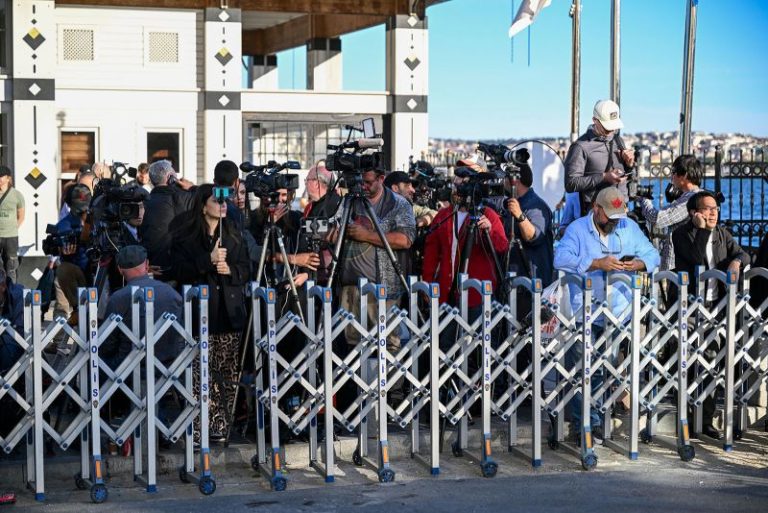
After five days of confusion over Russian President Vladimir Putin’s proposal for direct talks with Ukraine, the day they were supposed to begin initially brought only more of the same: a seven-hour stakeout on the banks of the Bosphorus, an unruly scrum at the Russian consulate, and finally a decision from Ukraine’s president that may open a new chapter in this intractable conflict.

Russia’s dogged defense of its position is a key reason the Russian president unexpectedly proposed these talks five days ago. Faced with an ultimatum from Kyiv and its allies to sign on to a 30-day ceasefire or face major new sanctions, Putin chose a third path.

“We are proposing to the Kyiv authorities to renew the negotiations, that they cut off” in 2022, he told journalists in a briefing early Sunday. And so, to reinforce that point, he picked the same city that hosted some of those early peace talks – Istanbul – and, he revealed late Wednesday, the same lead negotiator, Vladimir Medinsky, a former culture minister and chairman of Russia’s Military-Historical Society.

“The delegation is committed to a constructive approach,” Medinsky said in a brief appearance Thursday afternoon at the Russian consulate, in which he took no questions. The media scrum was so intense that consular officials could be overheard threatening to cancel the briefing if journalists didn’t calm down.

Medinsky claimed the direct talks were to “establish long-term peace, eliminating the root causes of the conflict.” The use of the phrase “root causes,” which for Russia run the gamut from Ukraine’s NATO ambitions all the way to its existence as a sovereign state, was a reminder of just how distant a deal could be.

And yet, to complicate things further, Russia and Ukraine are now balancing their own interests with their relationship with Donald Trump. The US president once again Thursday dangled the prospect of his own attendance at the talks, saying “if something happened” he would consider going on Friday. White House envoys Keith Kellogg and Steve Witkoff are already slated to be in Istanbul on Friday.

And Zelensky made no attempt to hide Trump was a key part of his eventual decision to engage with Russia. Emerging from his meeting with Erdogan in late afternoon, he said he would not only send a delegation to Istanbul, but it would be led by a higher-ranking official than the Russian side – Defense Minister Rustem Umerov, “out of respect for President Trump.”

Russia is also watching closely for Trump’s next move, still holding out hope for that promised reset in relations. And Trump may have raised those hopes Thursday, telling reporters as he arrived in Abu Dhabi, “nothing’s gonna happen until Putin and I get together.”

Former Russian diplomat Boris Bondarev, who left his post in Geneva in 2022, said he believes a meeting with Trump would be a major win for Putin, while he remains uninterested in meeting with Zelensky.

This post appeared first on cnn.com

Where are we in the market cycle? In this video, Julius reviews the sector rotation and asset class performance from the past 2-3 weeks to provide an objective take on where we stand in the current market cycle. Using his signature Relative Rotation Graphs (RRG), he uncovers shifts in momentum and leadership across sectors and asset classes.

This video was originally published on May 15, 2025. Click on the icon above to view on our dedicated page for Julius.

Past videos from Julius can be found here.

#StayAlert, -Julius

Police in Thailand have arrested a man on suspicion of wildlife trafficking after he was found with two baby orangutans in a basket at a gas station in the Thai capital.

The 47-year-old suspect was apprehended Wednesday as he was about to deliver the two primates to a customer, Thai police said in a statement on Thursday.

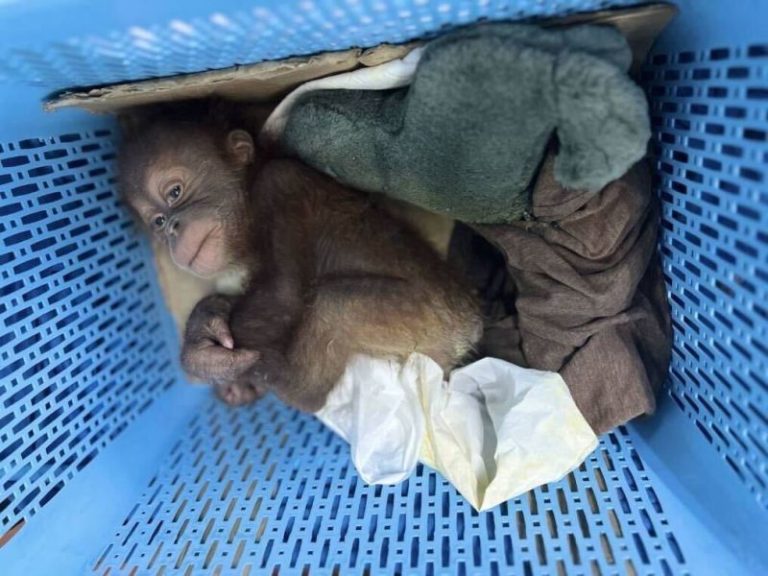
Officers discovered the orangutans – one about 1-year-old and the other 1 month-old – in plastic baskets, police said.

Images released by authorities showed one of the orangutans in a plastic basket, wearing a diaper and hugging a soft toy alongside feeding bottles.

The man was arrested on charges of “illegally possessing protected wildlife” under Thai law and could face up to four years in prison, police said.

The man had admitted he was delivering the animals, “but he didn’t say where he got the babies from,” Kasidach said.

Police said they had uncovered an illegal wildlife trade network and were working to find out whether the orangutans had been bred in Thailand or abroad, he added.

The operation was carried out in collaboration with the US Fish and Wildlife Service, the Wildlife Justice Commission in the Netherlands, and the United Nations Office on Drugs and Crime, the police statement said.

The department said that Stefan, the 1-month-old, is in an incubator because of weak health and Christopher, the 1-year-old, has been relocated to a sanctuary run by the agency.

Authorities said the orangutans are believed to have been sold for around 300,000 Thai baht ($9,050).

Orangutans are native to Sumatra and Borneo, two Southeast Asian islands that are home to some of the world’s most diverse rainforests, and have come under threat as a result of deforestation, habitat destruction and poaching.

They are listed as “critically endangered” under the International Union for Conservation of Nature (IUCN) Red List of Threatened Species, which assesses extinction risks.

The gentle apes, once found in greater numbers across Southeast Asia, have experienced sharp population declines, according to the World Wide Fund for Nature (WWF).

Thailand has long been a hub for the illegal wildlife trade.

Its border area with Myanmar, Laos, and China – known as the Golden Triangle – is a hotspot of cross-border trafficking, illegal wildlife trade and consumption, according to WWF.

This post appeared first on cnn.com

An American basketball player for the Indonesian league was arrested for allegedly attempting to smuggle illegal drugs to the country, police said Thursday.

The Southeast Asian country has extremely strict drug laws, and convicted smugglers are sometimes executed by firing squad.

Jarred Dwayne Shaw, 34, from Dallas, Texas, was arrested May 7, after police raided his apartment in Tangerang regency, just outside the capital, Jakarta, and seized 132 pieces of cannabis candies, said Ronald Sipayung, the Soekarno-Hatta Airport police chief.

The arrest followed a tip from the airport’s customs that reported Shaw had received a suspicious airway package from Thailand, Sipayung said. Cannabis has been decriminalized in Thailand since November 2024. Under Indonesia’s anti-drug laws, Shaw faces up to life sentence or death penalty if found guilty, Sipayung said.

A video circulating on social media purportedly showed Shaw, wearing a black T-shirt and shorts, resisting as he’s being pushed away by police and shouting “Help … help!” when he was about to be arrested.

Shaw has played for several clubs in the Indonesian Basketball League since 2022, and signed a contract with Tangerang Hawk last year. He told police during interrogation that he wanted to share the cannabis candy with fellow basketball players, according to Sipayung.

He said the candy contained a total gross weight of 869 grams (30.6 ounces) of illegal cannabinoid inside a package.

“We are still running the investigation to uncover the international drugs network behind this case and to stop its distribution,” Sipayung said.

Shaw did not make any statement when he was presented by the authorities at a news conference Wednesday wearing a detainee orange T-shirt and a mask with his hands tied.

Tangerang Hawks’ manager, Tikky Suwantikno, told reporters on Thursday that they regretted what had been done by Shaw and the club had immediately fired him as he has breached the contract.

The Indonesian Basketball League banned Shaw from playing for life, said its chair, Budisatrio Djiwandono.

“We don’t tolerate players, administrators or anyone in the field involved in drugs. There is no room for drug users in the basketball world,” Djiwandono said.

The United Nations Office on Drugs and Crime says Indonesia is a major drug-smuggling hub despite having some of the strictest drug laws in the world, in part because international drug syndicates target its young population.

About 530 people are on death row in Indonesia, mostly for drug-related crimes, including 96 foreigners, the Ministry of Immigration and Corrections’ data showed. Indonesia’s last executions, of an Indonesian and three foreigners, were carried out in July 2016.

This post appeared first on cnn.com

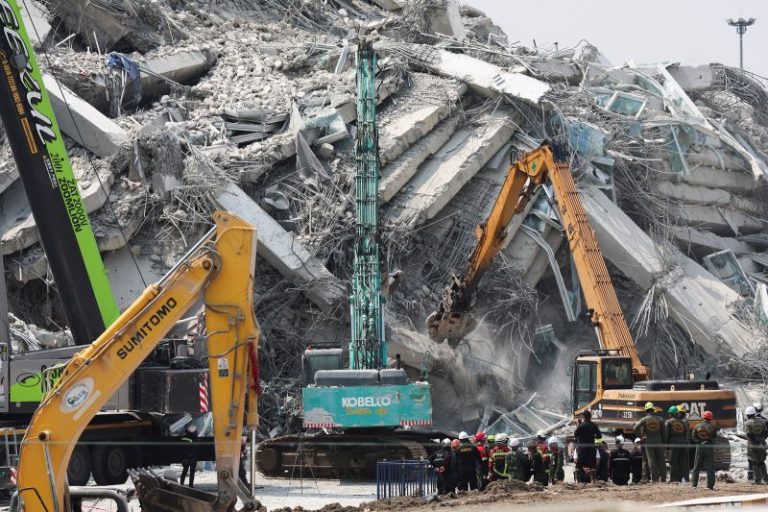
A Thai court has issued arrest warrants for 17 people including a high-profile construction tycoon, police said on Thursday, over their alleged involvement in the building of a skyscraper that collapsed and killed scores of workers during a powerful March earthquake.

Search teams recovered 89 bodies in a six-week operation in the rubble of the partially constructed 30-story State Audit Office tower in the capital Bangkok, which was the only skyscraper to collapse during tremors caused by a massive 7.7 magnitude quake in neighboring Myanmar.

The charges included building code violations that caused deaths, carrying a maximum sentence of life imprisonment, said deputy Bangkok police chief, Police Major General Somkuan Puengsap.

Thai authorities are investigating the cause of the building collapse and have yet to release findings. It was one of the deadliest accidents of its kind in Thailand and seven people are still missing.

An anti-corruption watchdog has said it had flagged to authorities irregularities in the construction of the skyscraper before it collapsed, while industry officials said initial tests of materials at the site indicated the presence of substandard steel.

Those charged include executives and engineers from seven companies involved in the design, construction and building supervision of the collapsed tower, police said, without providing more details.

Police named only one of the 17 wanted individuals, Premchai Karnasuta, a former president of Thailand’s largest construction company Italian Thai Development Pcl ITD.BK.

Italian Thai Development has held meetings with investors and has said it was cooperating with the probe.

Premchai could not be reached for comment on Thursday.

He was convicted and sentenced to more than three years in jail in 2021 for poaching protected species after he was caught by rangers at a jungle campsite in a wildlife sanctuary with carcasses of protected animals, including a black Indochinese leopard.

This post appeared first on cnn.com

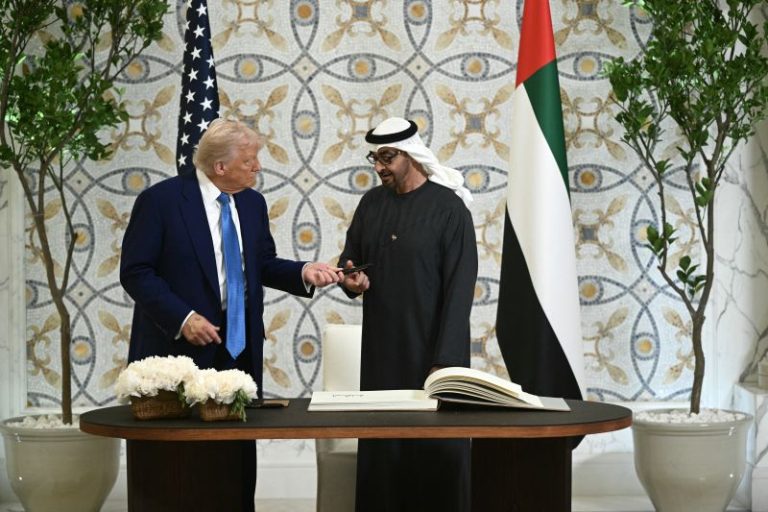
The United States and United Arab Emirates will partner to build a massive data center complex in Abu Dhabi to advance artificial intelligence capabilities with 5-gigawatts of capacity — enough to power a major city.

The agreement, announced Thursday during US President Donald Trump’s visit to the UAE, will mark the largest data center deployment outside of the United States, according to the Commerce Department. It will begin with a 1-gigawatt AI data center, but will eventually span 10 square miles.

The project is also expected to expand the footprint of American AI and cloud companies in the Middle East, allowing them to better serve the global south.

No companies were named in the Commerce Department’s announcement, although Nvidia CEO Jensen Huang was spotted at one of Trump’s UAE meetings. Nvidia declined to comment.

Trump has been working to push AI investment, as the success of US tech companies are seen as key to retaining the US’s position as a global superpower.

“By extending the world’s leading American tech stack to an important strategic partner in the region, this agreement is a major milestone in achieving President Trump’s vision for US AI dominance,” Commerce Secretary Howard Lutnick said in a statement.

The UAE has also said it wants to become a global leader in artificial intelligence by 2031.

Ahead of Trump’s visit, UAE Minister of Education Sarah Al Amiri said the country is looking to diversify its economy, especially in the areas of AI and technology. Investments in AI infrastructure are seen as crucial to securing the region’s post-oil future.

The White House also announced on Thursday an agreement under which the UAE has committed to build or finance data centers in the United States that are “at least as large and as powerful” as those in the UAE.

This post appeared first on cnn.com

Dick’s Sporting Goods is buying the struggling footwear chain Foot Locker for about $2.4 billion, the second buyout of a major footwear company in as many weeks as business leaders struggle with uncertainty over President Donald Trump’s tariffs.

Dick’s said Thursday that it expects to run Foot Locker as a standalone unit and keep the Foot Locker brands, which include Kids Foot Locker, Champs Sports, WSS and Japanese sneaker brand atmos.

“Sports and sports culture continue to be incredibly powerful, and with this acquisition, we’ll create a new global platform that serves those ever evolving needs through iconic concepts consumers know and love, enhanced store designs and omnichannel experiences, as well as a product mix that appeals to our different customer bases,” Dick’s CEO Lauren Hobart said in a statement.

Both companies are led by women. Hobart became CEO at Dick’s in 2021, while Mary Dillon has served as CEO of Foot Locker since 2022.

Foot Locker announced a turnaround plan in 2023 in part to help improve its relationship with big brands. Speaking at the J.P. Morgan Retail Round Up Conference last month, Dillon said that Foot Locker is working closely with Nike, specifically in categories including basketball, sneaker culture and kids.

Earlier this month, Skechers announced that it was being taken private by the investment firm by 3G Capital in a transaction worth more than $9 billion.

A Foot Locker store in San Diego.Kevin Carter / Getty Images file

The retail industry has been growing increasingly concerned over Trump’s trade war with other countries, particularly China. Athletic shoe makers have invested heavily in production in Asia.

Shares of sporting goods and athletic shoe companies have been under pressure all year. Foot Locker’s stock has plunged 41% this year. It is also facing pressure elsewhere, with major athletic companies like Nike and Adidas shifting their sales strategies.

Skechers had fallen almost 8% this year.

About 97% of the clothes and shoes purchased in the U.S. are imported, predominantly from Asia, according to the American Apparel & Footwear Association. Using factories overseas has kept labor costs down for U.S. companies, but neither they nor their overseas suppliers are likely to absorb price increases due to new tariffs.

Foot Locker, based in New York City, offers Dick’s a lot of potential, namely its huge real estate footprint, and would give the Pittsburgh company its first foothold overseas.

Foot Locker has about 2,400 retail stores across 20 countries in North America, Europe, Asia, Australia and New Zealand. It also has a licensed store presence in Europe, the Middle East and Asia. The company had global sales of $8 billion last year.

Jefferies analyst Jonathan Matuszewski said that about 33% of Foot Locker’s sales come from outside the United States. He anticipates that the combined company would generate approximately 12% of sales internationally on a pro forma basis.

The deal also broadens Dick’s customer base, with sneaker collectors anxiously anticipating new drops from Foot Locker.

Neil Saunders, managing director of GlobalData, said in an emailed statement that Foot Locker, which has a 4.3% share of the sporting goods market, would give an immediate boost to Dick’s.

“It would also give Dick’s substantially more bargaining power with national brands, especially in the sneaker space,” he added.

Foot Locker shareholders can choose to receive either $24 in cash or 0.1168 shares of Dick’s common stock for each Foot Locker share that they own.

Dick’s said that it anticipates closing on the Foot Locker deal in the second half of the year. The transaction still needs approval from Foot Locker shareholders.

Dick’s stock dropped more than 10% before the market open, while shares of Foot Locker surged more than 82%.

This post appeared first on NBC NEWS