Author

admin

Browsing

(TheNewswire)

Vancouver, Canada, January 23, 2026 TheNewswire – Spartan Metals Corp. (‘Spartan’ or the ‘Company’) (TSX-V: W | OTCQB: SPRMF | FSE: J03) announces its shareholders have approved the Company’s new 10% rolling stock option plan (the ‘Option Plan’) and it’s share unit plan (the ‘Share Unit Plan’) (collectively the ‘Equity Incentive Plans’) at the Company’s annual meeting of shareholders held on January 19, 2026 (the ‘Shareholders’ Meeting’).


The Equity Incentive Plans provide the Company with the ability to issue stock options (‘Options‘), restricted share units (‘RSU’s‘) and deferred share units  (‘DSU’s‘) to directors, officers, employees or consultants of the Company or its subsidiaries. The aggregate number of common shares reserved for issuance in connection with the Option Plan shall not exceed 10% of the issued and outstanding common shares of the Company at the time of grant.  The number of shares reserved for issuance under the Share Unit Plan shall not exceed 2,500,000 common shares.


Further details regarding the Equity Incentive Plans are included in the management information circular of the Company filed on SEDAR+ in connection with the Shareholders’ Meeting.


The Company further announces it has granted an aggregate of 1,850,000 Options to directors, officers, employees and consultants of the Company in accordance with the Company’s Option Plan. These Options are exercisable at $0.395per share for a period of five years. The Company also announces that it has granted an aggregate of 682,000 DSU’s to directors and officers of the Company and 60,000 RSU’s to eligible persons of the Company. The DSUs and RSUs are governed by the Company’s Share Unit Plan and will be subject to applicable securities law hold periods.


About Spartan Metals Corp.

Spartan Metals is focused on developing critical minerals projects in well-established and stable mining jurisdictions in the Western United States, with an emphasis on building a portfolio of diverse strategic defense minerals such as Tungsten, Rubidium, Antimony, Bismuth, and Arsenic.


Spartan’s flagship project is the Eagle Project in eastern Nevada that consists of one of the highest-grade historic tungsten resources in the USA (the past-producing Tungstonia Mine) along with significant under-defined resources consisting of: rubidium; antimony; bismuth; indium; as well as precious and base metals. More information about Spartan Metals can be found at www.SpartanMetals.com  


On behalf of the Board of Spartan

‘Brett Marsh’

President, CEO & Director


Further Information:

Brett Marsh, M.Sc., MBA, CPG

President, CEO & Director

1-888-535-0325

info@spartanmetals.com


Neither the TSX Venture Exchange nor its Regulation Service Provider (as that term is defined in the policies of the TSX Venture Exchange) accepts responsibility for the adequacy or accuracy of this press release


Copyright (c) 2026 TheNewswire – All rights reserved.

News Provided by TheNewsWire via QuoteMedia

This post appeared first on investingnews.com

Domestic Metals Corp. (the ‘Company’ or ‘Domestic’) (TSXV: DMCU; OTCQB: DMCUF; FSE: 03E) announces that it has engaged the services of ICP Securities Inc. (‘ICP’) to provide automated market making services, including use of its proprietary algorithm, ICP Premium, in compliance with the policies and guidelines of the TSX Venture Exchange and other applicable legislation. ICP will be paid a monthly fee of C$7,500, plus applicable taxes. The agreement between the Company and ICP was signed with a start date of January 23, 2026 and is for four (4) months (the ‘Initial Term’) and shall be automatically renewed for subsequent one (1) month terms (each month called an ‘Additional Term’) unless either party provides at least thirty (30) days written notice prior to the end of the Initial Term or an Additional Term, as applicable. There are no performance factors contained in the agreement and no stock options or other compensation in connection with the engagement. ICP and its clients may acquire an interest in the securities of the Company in the future.

ICP is an arm’s length party to the Company. ICP’s market making activity will be primarily to correct temporary imbalances in the supply and demand of the Company’s shares. ICP will be responsible for the costs it incurs in buying and selling the Company’s shares, and no third party will be providing funds or securities for the market making activities.

Engagement of Michael Pound

Pursuant to the Company’s news release dated December 11, 2025, the Company provides additional clarification pursuant to Michael Pound’s engagement. The Company added Michael Pound to its Investor Relations team. Michael has over 30 years of Market experience and also holds a wealth of knowledge including an extensive network within the small cap community. Mr. Pound will be focused on investor outreach to that community and will provide shareholder and corporate communication services and other investor relations related services. Mr. Pound will be paid a monthly cash fee of C$7,500 per month plus applicable taxes. The term of the agreement is for twelve (12) months and, will automatically renew for an additional one-year term, and shall thereafter renew for further one-year terms unless terminated pursuant to the terms of the agreement. On February 17, 2025, Mr. Pound was granted 500,000 options at an exercise price of $0.10 and included vesting provisions whereby one-quarter of the options vest every four months. The Company confirms that Mr. Pound is a less than 5% shareholder of the Company and, his engagement is at arm’s length to the Company.

Opportunity to Meet with Domestic’s Management

We appreciate meeting with our supporters and shareholders in person to provide a detailed update and as such are looking forward to seeing you at our booth #1101 at the VRIC in Vancouver on January 25-26, 2026 and booth #3139 at the Investors Exchange at the PDAC, March 1-4, 2026, in Toronto.

About ICP Securities Inc.

ICP Securities Inc. is a Toronto based CIRO dealer-member that specializes in automated market making and liquidity provision, as well as having a proprietary market making algorithm, ICP Premium, that enhances liquidity and quote health. Established in 2023, with a focus on market structure, execution, and trading, ICP has leveraged its own proprietary technology to deliver high quality liquidity provision and execution services to a broad array of public issuers and institutional investors.

About Domestic Metals Corp.

Domestic Metals Corp. is a mineral exploration company focused on the discovery of large-scale, copper and gold deposits in exceptional, historical mining project areas in the Americas.

The Company aims to discover new economic mineral deposits in historical mining districts that have seen exploration in geologically attractive mining jurisdictions, where economically favorable grades have been indicated by historic drilling and outcrop sampling.

The Smart Creek Project is strategically located in the mining-friendly state of Montana, containing widespread copper mineralization at surface and hosts 4 attractive porphyry copper, epithermal gold, replacement and exotic copper exploration targets with excellent host rocks for mineral deposition.

Domestic Metals Corp. is led by an experienced management team and an accomplished technical team, with successful track records in mine discovery, mining development and financing.

On behalf of Domestic Metals Corp.

Gord Neal, CEO and Director
(604) 657 7813

Follow us on:
X, LinkedIn, Facebook and Instagram

For more information on Domestic Metals, please contact:
Gord Neal, Phone: 604 657-7813 or Michael Pound, Phone: 604 363-2885

Please visit the Company website at www.domesticmetals.com or contact us at info@domesticmetals.com.

For all investor relations inquiries, please contact:
John Liviakis, Liviakis Financial Communications Inc., Phone: 415-389-4670

Neither TSX Venture Exchange nor its Regulation Services Provider (as that term is defined in the policies of the TSX Venture Exchange) accepts responsibility for the adequacy or accuracy of this release.

Cautionary Note Regarding Forward-Looking Statements

This news release contains certain statements that may be deemed ‘forward-looking statements’. Forward-looking statements are statements that are not historical facts and are generally, but not always, identified by the words ‘expects’, ‘plans’, ‘anticipates’, ‘believes’, ‘intends’, ‘estimates’, ‘projects’, ‘potential’ and similar expressions, or that events or conditions ‘will’, ‘would’, ‘may’, ‘could’ or ‘should’ occur. Forward-looking statements may include, without limitation, statements relating to the Company’s continued stock exchange listings and the planned exploration activities on properties. Although the Company believes the expectations expressed in such forward-looking statements are based on reasonable assumptions, such statements are not guarantees of future performance, are subject to risks and uncertainties, and actual results or realities may differ materially from those in the forward-looking statements. Such material risks and uncertainties include, but are not limited to: competition within the industry; actual results of current exploration activities; environmental risks; changes in project parameters as plans continue to be refined; future price of commodities; failure of equipment or processes to operate as anticipated; accidents, and other risks of the mining industry; delays in obtaining approvals or financing; risks related to indebtedness and the service of such indebtedness; as well as those factors, risks and uncertainties identified and reported in the Company’s public filings under the Company’s SEDAR+ profile at www.sedarplus.ca. Although the Company has attempted to identify important factors that could cause actual actions, events or results to differ materially from those described in forward-looking information, there may be other factors that cause actions, events or results not to be as anticipated, estimated or intended. Accordingly, readers should not place undue reliance on forward-looking statements. There can be no assurance that such information will prove to be accurate as actual results and future events could differ materially from those anticipated in such statements. Forward-looking statements are made as of the date hereof and, accordingly, are subject to change after such date. The Company disclaims any intention or obligation to update or revise any forward-looking information, whether as a result of new information, future events or otherwise unless required by law.

News Provided by GlobeNewswire via QuoteMedia

This post appeared first on investingnews.com

Wording in 3rd paragraph ‘Engagement of Michael Pound’ has been corrected to reflect that Mr. Pound is no longer at arm’s length of the company.

Domestic Metals Corp. (the ‘Company‘ or ‘Domestic‘) – (TSXV: DMCU,OTC:DMCUF; OTCQB: DMCUF; FSE: 03E) announces that it has engaged the services of ICP Securities Inc. (‘ICP‘) to provide automated market making services, including use of its proprietary algorithm, ICP Premium, in compliance with the policies and guidelines of the TSX Venture Exchange and other applicable legislation. ICP will be paid a monthly fee of C$7,500, plus applicable taxes. The agreement between the Company and ICP was signed with a start date of January 23, 2026 and is for four (4) months (the ‘Initial Term’) and shall be automatically renewed for subsequent one (1) month terms (each month called an ‘Additional Term’) unless either party provides at least thirty (30) days written notice prior to the end of the Initial Term or an Additional Term, as applicable. There are no performance factors contained in the agreement and no stock options or other compensation in connection with the engagement. ICP and its clients may acquire an interest in the securities of the Company in the future.

ICP is an arm’s length party to the Company. ICP’s market making activity will be primarily to correct temporary imbalances in the supply and demand of the Company’s shares. ICP will be responsible for the costs it incurs in buying and selling the Company’s shares, and no third party will be providing funds or securities for the market making activities.

Engagement of Michael Pound

Pursuant to the Company’s news release dated December 11, 2025, the Company provides additional clarification pursuant to Michael Pound’s engagement. The Company added Michael Pound to its Investor Relations team. Michael has over 30 years of Market experience and also holds a wealth of knowledge including an extensive network within the small cap community. Mr. Pound will be focused on investor outreach to that community and provide shareholder and corporate communication services and other investor relations related services. Mr. Pound will be paid a monthly cash fee of C$7,500 per month plus applicable taxes. The agreement was entered into on February 17, 2025 and is for twelve (12) month term which will automatically renew for an additional one-year term, and shall thereafter renew for further one-year terms unless terminated pursuant to the terms of the agreement. On February 17, 2025, Mr. Pound was granted 500,000 options at an exercise price of $0.10 for a period of five years and includes vesting provisions whereby one-quarter of the options vest every four months. Mr. Pound is no longer at arm’s length to the Company as he holds stock options and is a less than 5% shareholder of the Company.

Opportunity to Meet with Domestic’s Management

We appreciate meeting with our supporters and shareholders in person to provide a detailed update and as such are looking forward to seeing you at our booth #1101 at the VRIC in Vancouver on January 25-26, 2026 and booth #3139 at the Investors Exchange at the PDAC, March 1-4, 2026, in Toronto.

About ICP Securities Inc.

ICP Securities Inc. is a Toronto based CIRO dealer-member that specializes in automated market making and liquidity provision, as well as having a proprietary market making algorithm, ICP Premium, that enhances liquidity and quote health. Established in 2023, with a focus on market structure, execution, and trading, ICP has leveraged its own proprietary technology to deliver high quality liquidity provision and execution services to a broad array of public issuers and institutional investors.

About Domestic Metals Corp.

Domestic Metals Corp. is a mineral exploration company focused on the discovery of large-scale, copper and gold deposits in exceptional, historical mining project areas in the Americas.

The Company aims to discover new economic mineral deposits in historical mining districts that have seen exploration in geologically attractive mining jurisdictions, where economically favorable grades have been indicated by historic drilling and outcrop sampling.

The Smart Creek Project is strategically located in the mining-friendly state of Montana, containing widespread copper mineralization at surface and hosts 4 attractive porphyry copper, epithermal gold, replacement and exotic copper exploration targets with excellent host rocks for mineral deposition.

Domestic Metals Corp. is led by an experienced management team and an accomplished technical team, with successful track records in mine discovery, mining development and financing.

On behalf of Domestic Metals Corp.

Gord Neal, CEO and Director
(604) 657 7813

Follow us on:
X, LinkedIn, Facebook and Instagram

For more information on Domestic Metals, please contact:
Gord Neal, Phone: 604 657-7813 or Michael Pound, Phone: 604 363-2885

Please visit the Company website at www.domesticmetals.com or contact us at info@domesticmetals.com.

For all investor relations inquiries, please contact:
John Liviakis, Liviakis Financial Communications Inc., Phone: 415-389-4670

Neither TSX Venture Exchange nor its Regulation Services Provider (as that term is defined in the policies of the TSX Venture Exchange) accepts responsibility for the adequacy or accuracy of this release.

Cautionary Note Regarding Forward-Looking Statements

This news release contains certain statements that may be deemed ‘forward-looking statements’. Forward-looking statements are statements that are not historical facts and are generally, but not always, identified by the words ‘expects’, ‘plans’, ‘anticipates’, ‘believes’, ‘intends’, ‘estimates’, ‘projects’, ‘potential’ and similar expressions, or that events or conditions ‘will’, ‘would’, ‘may’, ‘could’ or ‘should’ occur. Forward-looking statements may include, without limitation, statements relating to the Company’s continued stock exchange listings and the planned exploration activities on properties. Although the Company believes the expectations expressed in such forward-looking statements are based on reasonable assumptions, such statements are not guarantees of future performance, are subject to risks and uncertainties, and actual results or realities may differ materially from those in the forward-looking statements. Such material risks and uncertainties include, but are not limited to: competition within the industry; actual results of current exploration activities; environmental risks; changes in project parameters as plans continue to be refined; future price of commodities; failure of equipment or processes to operate as anticipated; accidents, and other risks of the mining industry; delays in obtaining approvals or financing; risks related to indebtedness and the service of such indebtedness; as well as those factors, risks and uncertainties identified and reported in the Company’s public filings under the Company’s SEDAR+ profile at www.sedarplus.ca. Although the Company has attempted to identify important factors that could cause actual actions, events or results to differ materially from those described in forward-looking information, there may be other factors that cause actions, events or results not to be as anticipated, estimated or intended. Accordingly, readers should not place undue reliance on forward-looking statements. There can be no assurance that such information will prove to be accurate as actual results and future events could differ materially from those anticipated in such statements. Forward-looking statements are made as of the date hereof and, accordingly, are subject to change after such date. The Company disclaims any intention or obligation to update or revise any forward-looking information, whether as a result of new information, future events or otherwise unless required by law.

News Provided by GlobeNewswire via QuoteMedia

This post appeared first on investingnews.com

On Monday (January 19), Statistics Canada released the consumer price index (CPI) figures for December. The data showed an uptick in inflation to 2.4 percent year-over-year, up from 2.2 percent in November.

Much of the increase was driven by a 5 percent increase in grocery prices and an 8.5 percent increase in food purchased from restaurants. StatsCan noted that the rise coincides with the GST/HST holiday that began on December 14, 2024, which primarily affected those two categories. The holiday ended on February 15, 2025.

Balancing out the increase were declines in prices at the pump, with gas prices falling 13.8 percent year-over-year, following a 7.8 percent decrease in November.

The reporting agency also released its annual CPI review on Monday. In that release, StatsCan indicated that on an annual average basis, CPI rose 2.1 percent in 2025, after recording a 2.4 percent increase in 2024. The year’s growth rate also marked the smallest increase since 2020. However, over the past 5 years, consumer prices have increased by 19.9 percent.

In 2025, energy prices declined 5.7 percent after a modest 0.6 percent decrease in 2024 due to the removal of the carbon tax. On the other hand, grocery prices rose by 3.5 percent in 2025, after a 2.2 percent increase in 2024.

Statistics Canada released its November monthly mineral production survey on Tuesday (January 20). StatsCan noted that data from September and October were revised for this release, with October’s figures for gold, silver, and copper production receiving downward revisions.

As for November’s numbers, gold production decreased to 18,086 kilograms compared to 18,342 kilograms in October. Meanwhile, copper production rose to 39.7 million kilograms from 39.3 million kilograms, and silver production fell to 23,198 kilograms from 27,169 kilograms.

Gold shipments rose to 17,625 kilograms from 15,145 kilograms, and silver shipments grew to 27,799 kilograms from 26,207 kilograms. Copper shipments increased to 45.87 million kilograms from 26.45 million kilograms.

This week also marked the latest meeting of the World Economic Forum in Davos, Switzerland. In a speech at the forum, Canadian Prime Minister Mark Carney made waves when he spoke of a rupture in the world order and the importance for middle powers to diversify their relationships amid the uncertainty that has arisen among the world’s superpowers.

The speech was broadly hailed by world leaders, including Mexico’s President Claudia Sheinbaum, Finnish President Alexander Stubb and California Governor Gavin Newsom, who said, ‘I respect what Carney did because he had courage of convictions, he stood up, and I think we need to stand up in America and call this out with clarity.’

However, some US leaders were less complimentary, with US Commerce Secretary Howard Lutnik calling the speech “political noise.” It may also be among the reasons that US President Donald Trump rescinded his invitation for Carney to join his newly minted “Board of Peace” on Thursday (January 22).

For more on what’s moving markets this week, check out our top market news round-up.

Markets and commodities react

Canadian equity markets were mixed this week.

The S&P/TSX Composite Index (INDEXTSI:OSPTX) gained 0.34 percent over the week to close Friday at 33,144.98, while the S&P/TSX Venture Composite Index (INDEXTSI:JX) fared better, rising 5.53 percent to 1,154.15. The CSE Composite Index (CSE:CSECOMP) went the other way, losing 0.39 percent to close at 187.36.

The gold price continued to trade at all-time highs this week, reaching US$4,989.94 on Friday afternoon. Overall, it gained 7.96 percent on the week to trade at US$4,984.92 by Friday at 4:00 p.m. EST.

The silver price performed even better, officially hitting triple digit silver when it broke above US$100 per ounce on Friday at new highs. It posted a weekly gain of 11.19 percent, closing Friday at US$102.72. Silver has gained nearly 42 percent since the start of 2026 and 233 percent from this same time last year.

In base metals, the Comex copper price rose 1 percent this week to US$5.98.

The S&P Goldman Sachs Commodities Index (INDEXSP:SPGSCI) rose 3.61 percent to end Friday at 584.13.

Top Canadian mining stocks this week

How did mining stocks perform against this backdrop?

Take a look at this week’s five best-performing Canadian mining stocks below.

Stocks data for this article was retrieved at 4:00 p.m. EST on Friday using TradingView’s stock screener. Only companies trading on the TSX, TSXV and CSE with market caps greater than C$10 million are included. Mineral companies within the non-energy minerals, energy minerals, process industry and producer manufacturing sectors were considered.

1. Euro Manganese (TSXV:EMN)

Weekly gain: 134.29 percent
Market cap: C$23.56 million
Share price: C$0.41

Euro Manganese is a manganese development company working to advance its Chvaletice waste recycling project. The operation is focused on extracting manganese from tailings that are part of a decommissioned mine site near Prague, Czechia. As part of the project’s scope, the company says it will carry out remediation and reclamation work to bring the site into compliance with environmental regulations.

A 2022 feasibility study for the Chvaletice project indicates that it will produce 48,000 metric tons of manganese per year and is expected to have a project life of 25 years. In the study, the company reports a post-tax net present value of US$1.3 billion with an internal rate of return of 22 percent and a payback period of 4 years.

Shares in Euro Manganese were up this week, but the company has not released news since January 13, when it announced that John Webster tendered his resignation from the company’s board of directors.

Euro noted on Friday that it was unaware of any material change in its operations that could have caused the price rise.

2. Kingfisher Metals (TSXV:KFR)

Weekly gain: 106.35 percent
Market cap: C$38.24 million
Share price: C$0.65

Kingfisher Metals is an exploration company focused on its HWY 37 project located in British Columbia, Canada.

The property, located in BC’s Golden Triangle, covers 933 square kilometers and hosts several porphyry and epithermal copper and gold deposits, including Hank and Williams, which were identified during historical exploration of the site.

On January 13, the company announced additional results from its 2025 exploration and drill program at HWY 37, releasing assays for three drill holes at the Williams deposit, two of which some of Williams’ longest copper intercepts yet. Kingfisher highlighted one hole, with grades of 0.47 percent copper equivalent over 889.35 meters, starting 3.65 meters from surface, which also included an interval of 1.16 percent copper equivalent over 40 meters.

Then on Thursday (January 22), Kingfisher reported that it had received the final results from the program, this time in the form of a deep drill hole at the Hank epithermal gold-silver system. While the hole intersected Hank’s typical mineralisation in the upper half of the hole, starting at 534 meters it encountered a 425 meter interval grading 0.4 percent copper equivalent.

The company said this represented a blind discovery, with no previous porphyry copper and gold mineralization being reported at Hank.

“The final hole of the 2025 program validates our long-standing belief that the shallow Hank Au-Ag epithermal mineralization is driven by a large porphyry Cu-Au system,” said Kingfisher CEO Dustin Perry.

3. Core Critical Metals (TSXV:CCMC)

Weekly gain: 94.68 percent
Market cap: C$15.04 million
Share price: C$1.83

Core Critical Metals is an exploration company working on its Timmins nickel project in Ontario, Canada. The company was previously known as Xander Resources but announced in August that it was changing its name to Core Critical Metals.

The project holds a strategic position, with two properties totaling 393 claims located west along trend from Canada Nickel Company’s (TSXV:CNC,OTCQX:CNIKF) Crawford property and adjacent to Canada Nickel’s Reid discovery.

On Monday, Core Critical Minerals issued a release congratulating Canada Nickel on the success of Crawford’s development. It also noted Crawford’s inclusion for the second tranche of projects from the Government of Canada’s Major Project Office in November 2025, and the more recent designation under Ontario’s One Project, One Process framework on January 13.

Additionally, the company announced on January 15 that it had issued 1.24 million common shares to settle a C$400,000 exploration debt with the vendor of a property option agreement for the CNC West property. It followed this news the next day when it announced a two-for-one stock split on January 16.

4. GoldHaven Resources (CSE:GOH)

Weekly gain: 94.44 percent
Market cap: C$10.3 million
Share price: C$0.35

GoldHaven Resource is an exploration and development company advancing projects in British Columbia and Brazil.

Its most recent focus has been on its Magno project in BC’s Cassiar mining district. The property consists of 53 mineral claims covering 36,814.16 hectares and borders mineral claims held by Cassiar Gold (TSXV:GLDC,OTCQX:CGLCF) and Coeur Mining (NYSE:CDE).

The site hosts silver, lead and gold mineralization at Magno North, with additional quantities of tin, indium and gallium. Porphyry targets at Magno West have shown mineralization with copper and molybdenum.

Since the start of the year, the company has released a trio of updates from Magno.

The first came on January 6, when it announced that preliminary assays from surface exploration confirmed the presence of silver, lead, zinc, tungsten and critical minerals across multiple zones at the property. The release highlighted grades of up to 2,370 grams per metric ton silver, 19.25 percent zinc, 6,550 parts per million (ppm) tungsten and 334 ppm indium.

The second release came on January 14, providing additional information on its tungsten results, noting that exploration confirmed anomalous tungsten mineralization at the historical Kuhn and Dead Goat showings, and found a new tungsten zone at Vines Lake.

The most recent release came on Thursday when GoldHaven reported that indium grades at the site show it is a ‘meaningful critical mineral component of the Magno system.’ These elevated grades were found to be restricted to the Magno and D Zones, as well as the Kuhn and Dead Goat showings.

5. Ascot Resources (TSX:AOT)

Weekly gain: 91.21 percent
Market cap: C$38.24 million
Share price: C$1.74

Ascot Resources is a Canadian gold exploration and development company focused on the negotiating the restart of mining operations at its Premier gold project, and on its Red Mountain gold project.

The site is located within the Golden Triangle area of Northern British Columbia, and hosts the Premier, Silver Coin and Big Missouri deposits, as well as one of only three mills in the region.

Production at the mine began in April 2024, but operations were placed on care and maintenance in September 2024. At the time, the company said it had fallen behind schedule in developing the mine and did not have enough material to feed the mill.

In an update from April 2025, the company said it was anticipating the mine would restart in early August at an initial rate of 1,250 metric tons per day. However, on June 25, Ascot announced that the mine would not restart as negotiations with mining contractor Procon Mining regarding the cost of mining services had stalled.

On October 23, the company announced that the mine would remain on care and maintenance and that it had engaged Fiore Management to assist with restructuring, refinancing and enhancing the leadership team at Ascot.

Since that time, the company has launched a fundraising effort, with the most recent news on December 31, when it announced it had closed the first tranche of a private placement raising C$809.1 million.

In that release, President and CEO Robert McLeod stated that further detailed updates on Ascot’s plans, as well a proposed rebrand, would be coming in the weeks ahead. ‘We believe the rapid development of the high-grade, underground bulk-mineable Red Mountain Project is the key to the successful commissioning and operation of a centralized mill to process material from the multiple deposits in the Golden Triangle.”

FAQs for Canadian mining stocks

What is the difference between the TSX and TSXV?

The TSX, or Toronto Stock Exchange, is used by senior companies with larger market caps, and the TSXV, or TSX Venture Exchange, is used by smaller-cap companies. Companies listed on the TSXV can graduate to the senior exchange.

How many mining companies are listed on the TSX and TSXV?

As of May 2025, there were 1,565 companies listed on the TSXV, 910 of which were mining companies. Comparatively, the TSX was home to 1,899 companies, with 181 of those being mining companies.

Together, the TSX and TSXV host around 40 percent of the world’s public mining companies.

How much does it cost to list on the TSXV?

There are a variety of different fees that companies must pay to list on the TSXV, and according to the exchange, they can vary based on the transaction’s nature and complexity. The listing fee alone will most likely cost between C$10,000 to C$70,000. Accounting and auditing fees could rack up between C$25,000 and C$100,000, while legal fees are expected to be over C$75,000 and an underwriters’ commission may hit up to 12 percent.

The exchange lists a handful of other fees and expenses companies can expect, including but not limited to security commission and transfer agency fees, investor relations costs and director and officer liability insurance.

These are all just for the initial listing, of course. There are ongoing expenses once companies are trading, such as sustaining fees and additional listing fees, plus the costs associated with filing regular reports.

How do you trade on the TSXV?

Investors can trade on the TSXV the way they would trade stocks on any exchange. This means they can use a stock broker or an individual investment account to buy and sell shares of TSXV-listed companies during the exchange’s trading hours.

Article by Dean Belder; FAQs by Lauren Kelly.

Securities Disclosure: I, Dean Belder, hold no direct investment interest in any company mentioned in this article.

Securities Disclosure: I, Lauren Kelly, hold no direct investment interest in any company mentioned in this article.

This post appeared first on investingnews.com

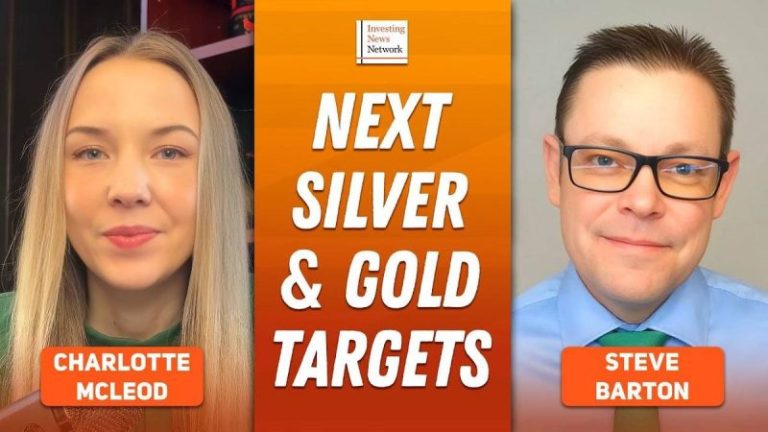
Steve Barton, host of In It To Win It, shares price targets for silver and discusses when silver stocks may start to outperform the metal.

‘I fully expect a catch-up trade like this — I think that it’s coming, and I think it’s going to come this year and probably this first quarter,’ he said.

Securities Disclosure: I, Charlotte McLeod, hold no direct investment interest in any company mentioned in this article.

This post appeared first on investingnews.com
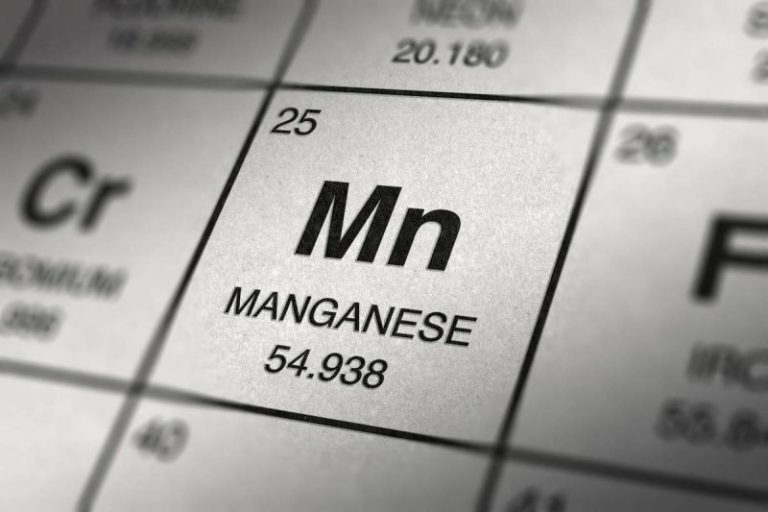
After taking a bearish turn in late 2024, manganese prices started 2025 on a flat note despite a robust demand outlook supported by growth in the electric vehicle (EV) battery segment.

In the first half of 2025, the manganese market experienced mixed signals as supply dynamics shifted and demand from the steelmaking sector remained uneven. Early in the year, logistical disruptions and tight inventories in China briefly supported manganese ore prices — China’s port stocks fell to multi-year lows in March, drawing down to roughly 3.7 million metric tons due to by logistical bottlenecks and steady consumption by alloy makers and steel producers.

A rebound in sales in early spring pushed ore prices to a 2025 high of US$4.48 per metric ton.

However, by mid-year, the broader picture was one of ample supply and downward price pressure.

Manganese ore production climbed to around 10.1 million metric tons in H1, buoyed by strong export volumes from South Africa and Gabon and the resumption of Australian shipments that had been disrupted in 2024.

At the same time, global steel output weakened, particularly in China, where production declined about 3 percent year-on-year amid slowing domestic demand, while India and North America posted modest gains.

Demand for manganese alloys also softened, with sales volumes down modestly and margins compressed by rising feedstock costs, especially for alloy producers facing less favorable mixes.

Manganese prices struggle as structural demand builds

By June 20, 2025, manganese’s H1 gains had eroded and ore prices fell to US$4.21.

Eramet (EPA:ERA,OTCPL:ERMAF), a major producer, said it expected supply of manganese ore to increase in the second half of 2025, partly as key producers such as Australia returned volumes to market after earlier disruptions.

‘Ore supply should increase in H2, driven by the full return to the market of the leading Australian producer, partly offset by a potential downward revision of South African exports,’ the company notes. Demand for manganese alloys was expected to weaken in line with seasonality and softer global steel production.

Analysts cautioned that production expansions from major manganese producers could exacerbate oversupply. “Production increases … can only lead to oversupply, leading to a reduction in price,” one industry executive said.

Protectionist measures in key markets, including new EU quotas on ferroalloys, added uncertainty by potentially disrupting traditional trade flows and affecting alloy pricing dynamics.

Beyond the steel sector, structural shifts in consumption patterns emerged.

Although steelmaking still accounts for the lion’s share of manganese demand, interest in battery-related uses, particularly high-purity manganese for lithium-ion and next-generation EV chemistries, continued to gain attention.

“Our expectations of ongoing strengthening battery-grade demand and production in China in Q4 have been tempered somewhat by ongoing challenges within the nickel cobalt manganese (NCM) market,” Rob Searle, battery raw materials analyst at Fastmarkets, wrote in a November battery metals market update.

“While we expect a level of demand ramp-up in Q4, in the wider context of geopolitical challenges and a challenging Chinese market, the manganese demand uptick in the short term could be somewhat tempered,’ he added.

Changing battery chemistries

During a June Supply Chain (SC) Insights webinar, experts noted that manganese-rich cathode chemistries are increasingly drawing attention as automakers seek to cut costs and reduce exposure to cobalt and nickel.

Andy Leyland, founder of SC Insights, pointed out “manganese-rich chemistry is really offering a good solution … in terms of costs,” highlighting the commodity’s role in emerging battery designs.

While high-nickel NCM batteries remain dominant, industry players are exploring manganese as a lower-cost, high-performance alternative in Europe and North America, where supply chains remain heavily reliant on imports, particularly from China. OEMs are under pressure to secure raw materials directly, with vertical integration and direct sourcing emerging as key strategies to manage price volatility and supply security.

John Mulcahy, supply chain specialist at SC Insights, emphasized that sourcing upstream allows companies to negotiate better terms and reduce exposure to market fluctuations, even amid low pricing environments.

Manganese-rich chemistries are expected to expand steadily, complementing existing NCM and lithium iron phosphate (LFP) batteries, rather than replacing them entirely.

As Leyland noted, these materials are “definitely very high up on the focus from the demand side,” signaling growing adoption in the global push for cost-effective, low-cobalt battery solutions.

In March, Firebird Metals (ASX:FRB,OTCPL:FRBMF) produced its first lithium manganese iron phosphate (LMFP) EV batteries, becoming the first Australian company to achieve the feat. The move could position Firebird as a low-cost manganese cathode player, and highlights growth in the LMFP battery production segment.

Rising nationalism presents trade challenges

With the demand picture for manganese showing promise, analysts warn that export restrictions in Gabon could lead to a supply crunch before the decade is over. According to the US Geological Survey, 63 percent of US manganese imports come from Gabon. In June, the African nation announced plans to implement an export ban in January 2029.

Gabon’s renewed push to ban manganese ore exports from 2029 underscores Africa’s broader shift toward value addition, but it also risks tightening an already fragile global supply picture, a Project Blue market note reads.

As the world’s second largest exporter, Gabon shipped more than 7 million metric tons of high-grade ore in 2024, material that is critical to both ferroalloy production and emerging battery supply chains.

An export ban would hit Chinese buyers and European processors reliant on Gabonese feedstock, while adding pressure to the high-grade market at a time when Australia’s GEMCO mine is expected to wind down later this decade.

Although in-country processing — through ferroalloys or batteries — offers a path to capture more value locally, it would require significant investment and could shift, rather than eliminate, environmental and logistical costs.

For global markets, Gabon’s move signals rising resource nationalism in Africa and a potential structural squeeze on manganese supply heading into the next decade.

“However, without large-scale investments from China, a key battery producer, such ambitious plans of African governments risk remaining unrealised,” the Project Blue overview states.

“China has invested in Africa’s mineral industry (e.g. Ghana), securing access to the continent’s high-quality raw materials, while keeping production of high value-added products directly in China.”

In early 2025, Euro Manganese (TSXV:EMN,OTCPL:EUMNF) scored a major boost when its Chvaletice manganese project was designated a “strategic project” under the EU’s Critical Raw Materials Act.

The move underscores the EU’s push to secure local supply of critical battery materials and could tighten the manganese market by prioritizing European production in the continent’s energy transition.

Oversupply vs. new manganese demand drivers

For 2026, analysts expect the manganese market to remain broadly balanced, but with pressures and opportunities on both the supply and demand fronts. However, longer-term fundamentals point to steady growth.

Global market forecasts indicate the manganese industry could expand modestly in value and volume by 2035, driven by ongoing demand from steel and increasing uptake in battery and clean-energy applications.

Some reports project market size rising through the decades, with Asia-Pacific demand remaining dominant and new opportunities emerging in the electrification and high-purity material segments.

Steel demand will continue to be the principal driver in 2026, with India’s expanding production offering a potential buffer against slower growth in China and Europe. Battery applications may not yet move the pricing needle dramatically, but their structural importance is increasing as automakers and cathode developers look to diversify away from nickel and cobalt reliance, a trend that could support manganese demand in the medium term.

“Looking ahead to the coming weeks and months, it is likely we won’t see too much further upward pressure on prices. Asian markets are heading towards the seasonal lull in demand and manufacturing activity in February as the Lunar New Year holidays begin,” Searle said in a January Fastmarkets report.

“At the same time, there are concerns around what China’s EV demand outlook looks like in Q1 2026, with changes to subsidy schemes potentially leading to softening consumption of battery-grade manganese.”

Securities Disclosure: I, Georgia Williams, hold no direct investment interest in any company mentioned in this article.

This post appeared first on investingnews.com

Aura Energy Limited (ASX: AEE, AIM: AURA) (“Aura” or “the Company”) is pleased to announce that MMCAP International Inc. SPC (‘MMCAP’) and certain other strategic investors (together the ‘Strategic Investors’) will provide funding of C$10 million for a 19.7% interest in the Company’s polymetallic Häggån project (‘the Häggån Project’) located in Sweden, establishing its value at C$50 million.

Aura has entered into a binding agreement to transfer 100% of the Häggån Project to SIU Metals Corp. (‘SIU Metals‘), an unlisted Canadian public company, in consideration for acquiring shares in SIU Metals. The agreement will result in SIU Metals being the 100% owner of the Häggån Project.

Aura will retain 78.7% ownership of SIU Metals and the Strategic Investors will own 19.7% after contributing C$10 million via a private placement. SIU Metals intends to seek a stock market listing on the TSX Venture Exchange (‘TSXV’) in connection with the transaction.

HIGHLIGHTS

  • Valuation for Häggån project established at C$50 million (A$55 million)
  • Agreement with MMCAP and certain other strategic investors to provide aggregate gross proceeds of C$10 million to SIU Metals, which will be renamed following the transaction
  • Proceeds to be used for the advancement of the Häggån project, including permitting and resource expansion through continued exploration including on surrounding tenements
  • Aura will retain ownership of 78.7% of SIU Metals and consequently will retain indirect exposure to the Häggån project post-transaction
  • Aura to appoint new officers and directors to SIU Metals on closing of transaction
  • Financing is expected to complete in February 2026, with the transaction expected to complete in June 2026
  • New Canadian listed company to benefit from increased visibility and direct comparison with valuation of other public companies with similar deposits
  • On 1 January 2026, the Minerals Act in Sweden was amended to allow exploration for and extraction of uranium
Phil Mitchell, Executive Chairman Aura Energy, said:

“We are delighted to welcome investors of the calibre of MMCAP, Aura’s largest shareholder, and other high-quality investors into this new vehicle for Aura’s Häggån project, and the future support they can bring. We believe their investment is a demonstration of the quality and potential of the project, and its exciting future as, following legislation changes brought into effect on 1 January 2026, mining of uranium is now allowed again in Sweden. This transaction shines a spotlight on the under-recognized value of Häggån within Aura Energy, and creates an independent and dedicated pathway for funding, growth and management of the project.

Upon successful completion of the transaction, Aura’s existing shareholders will continue to benefit from Häggån’s upside potential, and by way of a direct comparison with the valuation of other companies with similar deposits in the region.”

Click here for the full ASX Release

This post appeared first on investingnews.com

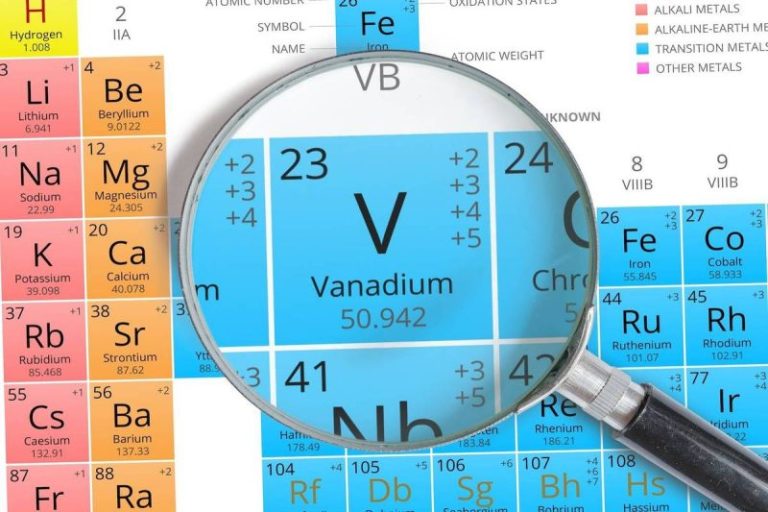
The vanadium market remained subdued in H1 2025, weighed down by persistent oversupply and weak usage from the steelmaking sector, even as new demand avenues like energy storage gained attention.

Price data shows that vanadium pentoxide in major regions such as the US, China and Europe traded in roughly the US$9,300 to US$13,000 per metric ton range in Q1 and Q2, with no dramatic price spikes. Modest support was provided by demand for vanadium redox flow batteries (VRFBs) and stricter Chinese rebar standards.

Producers reported ongoing pressure on prices and profitability, with oversupply from China and Russia continuing to temper upward momentum and buyers delaying purchases amid resilient feedstock availability.

At the same time, vanadium’s role in long‑duration energy storage, particularly VRFBs, emerged as a potential growth driver as the year progressed, hinting at deeper structural demand beyond traditional industrial uses.

“The expected growth in vanadium demand from VRFBs as an energy storage solution at the grid-level represents a bright future for increased consumption,” a July CRU report reads. “However, the present reality is vanadium consumption is still dominated by use as a ferroalloy (ferrovanadium and vanadium nitride).”

Vanadium market to see structural change?

As 2025 progressed, the vanadium market continue to grapple with weakness as steel production demand struggled to absorb available supply and the broader metals complex remained in the doldrums.

Vanadium pentoxide prices stayed under pressure in most regions, with figures from the second quarter showing US prices near US$9,584, and Chinese prices around US$8,655, reflecting tepid buying activity and ongoing oversupply, even as emerging applications such as VRFBs sustained pockets of interest.

As mentioned, a key factor has been sluggish steel sector demand. Globally, crude steel production has weakened, particularly in China — historically the largest vanadium consumer — slowing vanadium’s traditional core market as rebar and structural steel consumption softened amid broader economic headwinds.

Although new Chinese rebar standards introduced earlier in 2025 mandate higher vanadium intensity in steel, anticipated increases in consumption have only partially materialized, leaving producers competing for limited contracts and putting downward pressure on average ferrovanadium and vanadium pentoxide prices.

At the same time, market participants reported that producers were cutting output and tightening supply in response to persistent low pricing. Several companies in China and the west curtailed production or deferred capital projects, indicating that margins were strained and cost discipline was becoming an industry imperative.

Global vanadium production has been declining since 2021, when the US Geological Survey reported total global output of 105,000 metric tons; that’s compared to 2024’s 100,000 metric tons.

Emerging vanadium demand from energy storage

Despite headwinds, structural changes in vanadium demand were evident in H2 2025.

VRFBs continued to gain momentum as more utility‑scale projects were announced and commissioned. The technology’s appeal lies in its scalability, long cycle life and safety profile compared to conventional lithium‑ion systems; installations in China, Japan and North America point to a slowly growing pipeline of demand outside steel.

Industry analysts have noted that vanadium demand from VRFBs could nearly triple by 2040 as long‑duration storage becomes a more integral part of renewable power grids, even if these applications currently represent a small fraction of total consumption. In China alone, installations of large‑scale VRFB systems were projected to consume tens of thousands of metric tons of vanadium pentoxide equivalent in 2025, offsetting some weakness in steel alloying use.

This bifurcation — weak traditional demand versus nascent battery demand — typified H2, producing a market where prices remained subdued, but underlying interest in new applications suggested a shift in fundamentals.

All eyes on Australia’s vanadium potential

Although US Geological Survey data shows Australia doesn’t currently produce vanadium, the nation holds the largest recorded vanadium reserves at more than 8.5 million metric tons.

Looking to tap this potential, the country has focused its attention on the industrial metal.

In January 2025, Australian Vanadium (ASX:AVL,OTCPL:ATVVF) received environmental approval from Western Australia for the Gabanintha vanadium project. The approval, granted by Minister for Environment Reece Whitby under section 45 of the Environmental Protection Act 1986 (WA), cleared the way for construction and production.

Shortly afterwards, the company’s namesake Australian Vanadium project, located in Western Australia’s Murchison province, earned a green energy major project designation.

The Queensland government has also invested in expanding refinement and processing capacity. Last May, construction began at Queensland’s first resources common user facility at the Cleveland Bay Industrial Park in Townsville.

The facility is designed to support the development, extraction and production of critical minerals, enabling the creation of mineral samples at scale and serving as a testing hub for commercializing production processes.

The government has identified vanadium as the initial focus, highlighting its key role in renewable energy applications.

In November, Western Australia launched a AU$150 million vanadium battery energy storage system project, aiming to make the state a leader in renewable energy and energy storage.

The 50 megawatt/500 megawatt-hour flow battery will use locally sourced and processed vanadium, and is expected to be the largest of its kind in Australia, supporting advanced manufacturing and a domestic supply chain.

Growing energy storage demand meets tightening supply

Looking ahead, analysts forecast that vanadium dynamics will begin to tilt in favor of tighter supply and strengthened pricing, though the timing and pace remain contingent on several variables.

A combination of reduced output and rising consumption — particularly from VRFBs — is expected to push the market toward a deficit by late 2026, encouraging a gradual recovery in vanadium prices.

Central to that shift is the energy transition. Demand for vanadium in long‑duration energy storage is projected to rise sharply as utilities and grid operators seek cost‑effective solutions to buffer renewables and stabilize electricity systems.

The vanadium market’s long‑term promise is underpinned by projections that VRFB deployment could grow at double‑digit rates, even as the bulk of demand remains tied to steel alloying.

On the supply side, a cautionary mood among producers — reflected in delayed project developments and tighter output discipline — may limit new material flowing onto the market in 2026.

With prices remaining below historical averages, many potential expansions are unbankable in the current price environment, meaning that new supply additions are likely to be limited absent a sustained price uptick.

“Vanadium market prices are likely to rise from late 2026, supported by tightening supply and growing demand from VRFBs. With weak prices in 2024 and 2025, driven by sluggish steel demand, vanadium producers have curbed output,” a CRU report published this past December notes.

Analysts at CRU project a late-year rebound, but caution that demand could triple by 2040 far outpacing production.

“Meanwhile VRFB demand is accelerating, evidenced by robust vanadium electrolyte project pipeline,” the firm’s report continues. “Rising demand will quickly run into depressed production, where prices will need to increase to support higher utilisation rates in mid-to late 2026.”

Securities Disclosure: I, Georgia Williams, hold no direct investment interest in any company mentioned in this article.

This post appeared first on investingnews.com

Steve Penny, founder of SilverChartist.com, shares his thoughts on silver’s price breakout and next move, as well as the gold, platinum, uranium and oil markets.

‘In 1979, silver went up 700 percent, 8X in 12 months. I think that moment still lies ahead,’ he said.

Securities Disclosure: I, Charlotte McLeod, hold no direct investment interest in any company mentioned in this article.

This post appeared first on investingnews.com