
Author

admin

Browsing

After a year of stop‑start policy signals, the US cannabis market ended 2025 with a new wave of attention as US President Donald Trump moved to accelerate federal cannabis rescheduling efforts.

His December executive order directing the attorney general to complete the process of shifting marijuana from Schedule I to Schedule III has energized the sector. At the same time, companies are reshaping product portfolios around changing consumer behavior, with rapid growth in edibles and rising interest in cannabis‑infused beverages as smoke‑free formats gain traction.

With policy catalysts still unfolding and demand trends evolving, many investors are revisiting the space. For those looking to get exposure, starting with the key US and Canadian names held by major cannabis exchange‑traded funds (ETFs) offers a practical way to focus on the largest, most established public operators.

This list of the biggest publicly traded cannabis companies was put together based on the top-weighted cannabis stocks included in the AdvisorShares Pure US Cannabis ETF (ARCA:MSOS) and the Global X Marijuana Life Sciences Index ETF (TSX: HMMJ) as of January 2, 2026. Share price information for the companies was accurate as of that time.

US cannabis market

Cannabis is federally illegal in the US, but state market openings have allowed some operators to thrive. Typically these firms set up vertically integrated businesses with a focus on branded products, retail networks and licenses.

While these companies have adapted to regulatory challenges, they have much to gain from country-level reform in the US, and are eager to see more welcoming federal laws that will allow their businesses to develop further.

Top cannabis stocks in the AdvisorShares Pure US Cannabis ETF

The AdvisorShares Pure US Cannabis ETF provides exposure to public companies exclusively operating within the US cannabis industry. By investing in companies that are working in states with clear guidelines, MSOS gives investors a way to be more selective about the types of cannabis companies they’re investing in.

1. Trulieve Cannabis (CSE:TRUL,OTCQX:TCNNF)

ETF weight: 24.53 percent
Market cap: C$2.28 billion
Share price: C$11.91

Trulieve is a major player in the cannabis industry, with a strong focus on medical cannabis. The company offers a diverse selection of cannabis products, including flower, pre-rolls, concentrates, edibles, topicals and more.

Vertically integrated, Trulieve Cannabis has over 200 dispensaries across the US. It holds a dominant market share in its home state of Florida, and also has a significant presence in Arizona and Pennsylvania.

2. Curaleaf Holdings (CSE:CURA)

ETF weight: 22.25 percent
Market cap: C$2.76 billion
Share price: C$3.58

Cureleaf Holdings also has a significant presence in the US cannabis market, with 158 dispensaries and several cultivation centers across 17 states. The company is also continuing its expansion into the European cannabis sector, with a July 2025 buyout of its minority partner for full control and a partnership with Australia Natural Therapeutics Group to supply medical cannabis to the UK.

Curaleaf has a wide range of brands covering a variety of cannabis product types, including flower, vapes, edibles and hemp-derived THC beverages.

3. Green Thumb Industries (CSE:GTII,OTCQX:GTBIF)

ETF weight: 20.93 percent
Market cap: C$2.57 billion
Share price: C$11.10

Green Thumb Industries is a multi-state operator (MSO) with headquarters in Chicago, Illinois. The company is involved in the entire process of the industry, from cultivating and producing cannabis products to selling them in its own retail stores across the US.

Green Thumb Industries produces and distributes a portfolio of well-known cannabis brands like Rythm, Beboe, Dogwalkers, Incredibles and Doctor Solomon’s.

The company previously owned the intellectual property for these brands. However, following a 2025 strategic transaction, Green Thumb now manufactures them under a long-term licensing agreement with RYTHM (NASDAQ:RYM), which changed its name from Agrify following the deal.

4. Cresco Labs (CSE:CL,OTCQX:CRLBF)

ETF weight: 7.01 percent
Market cap: C$774.16 million
Share price: C$1.74

Cresco Labs is a vertically integrated multi-state cannabis operator in the US. Founded in 2013, it is known for its strong brands like Cresco, High Supply and Good News.

Cresco Labs controls its supply chain from cultivation to retail, offering a wide range of products. While it has its own stores, it focuses heavily on wholesale, getting its products into dispensaries across the country.

5. Glass House Brands (CBOE:GLAS.A.U,OTC:GLASF)

ETF weight: 6.79 percent
Market cap: C$481.48 million
Share price: C$8.97

Glass House Brands is a vertically integrated cannabis company focused on the California market and founded in 2015. The company emphasizes sustainable, low-cost production. Glass House controls its products’ full supply chain, cultivating cannabis in large facilities such as its flagship 5.5 million square foot site in Southern California.

Following a federal immigration raid in July 2025 that significantly disrupted operations and impacted Q3 revenue, Glass House says it has overhauled its labor model and expects to reach full production capacity in Q1 2026.

Canadian cannabis market

In 2018, Canada became the first G7 nation to legalize adult-use cannabis and create its own streamlined program regulated by both federal and provincial powers. Since then, companies working in the country have faced ups and downs in dealing with tight marketing rules, high tax rates and ongoing competition with the unregulated market.

Top cannabis stocks in the Global X Marijuana Life Sciences Index ETF

The Global X Marijuana Life Sciences Index ETF was the first cannabis ETF available in Canada, and it holds a variety of publicly traded companies involved in cannabis, along with several non-flower companies.

While HMMJ does not invest in US-based multi-state operators, it does have exposure to the US market through Canadian companies that have interests in the US cannabis industry. Overall, HMMJ is designed to give investors broad exposure to the cannabis industry, with a particular focus on North American companies.

1. Jazz Pharmaceuticals (NASDAQ:JAZZ)

ETF weight: 10.75 percent
Market cap: US$8.3 billion
Share price: US$136.90

Jazz Pharmaceuticals is a global biopharmaceutical company focused on developing and commercializing medicines for people with serious diseases, often with limited or no other options. It has a diverse portfolio of products in areas like sleep disorders, cancer and epilepsy.

Jazz Pharmaceuticals’ cannabis business stems from its 2021 acquisition of GW Pharmaceuticals and its epilepsy medicine Epidiolex for a whopping US$7.2 billion.

At the American Epilepsy Society 2025 meeting in December, Jazz presented four abstracts on Epidiolex’s non-seizure outcomes and real-world effectiveness in treating rare forms of epilepsies like Dravet syndrome, Lennox-Gastaut syndrome and tuberous sclerosis complex associated epilepsy.

2. Innovative Industrial Properties (NYSE:IIPR)

ETF weight: 10.06 percent
Market cap: US$1.5 billion
Share price: US$24.56

Innovative Industrial Properties is a real estate investment trust that provides specialized real estate opportunities for cannabis companies in 19 states. Its properties mostly consist of processing plants, greenhouses and warehouses, with retail spaces making up a small percentage of its portfolio.

The firm has provided long-term absolute net lease agreements to some of the cannabis industry’s biggest names, including Green Thumb, TILT Holdings (NEO:TILT,OTCQB:TLLTF), Ascend Wellness (CSE:AAWH.U,OTCQX:AAWH) and Curaleaf. The company’s sale-leaseback program has helped cannabis companies access a source of capital, a much-needed workaround in the US where there are fewer traditional financing options.

3. Cronos Group (NASDAQ:CRON,TSX:CRON)

ETF weight: 9.84 percent
Market cap: US$1.02 billion
Share price: US$2.66

Cronos Group is the Canada-based company behind the Spinach, Peace Naturals and Lord Jones cannabis brands. Founded in 2012, its portfolio spans a wide range of affordable products. In Canada, Cronos’ Spinach brand is in the top three for retail sales in the flower and edible categories.

The company also has a presence in Israel and Germany with its brand Peace Naturals. In late 2023, the company re-entered the German medical cannabis market through its partnership with a German medical cannabis company called Cansativa Group. Cronos serves the Israeli market through its subsidiary Cronos Israel.

4. Tilray Brands (NASDAQ:TLRY)

ETF weight: 9.56 percent
Market cap: US$1.84 billion
Share price: US$1.66

Tilray Brands is a pharmaceutical cannabis company headquartered in New York City, with operations spanning Canada, Australia, New Zealand, Latin America, Germany and Portugal. Established in 2013, it was among Canada’s first licensed cannabis producers and has evolved into a global leader in medical and recreational cannabis products. Some of its cannabis brands include Good Supply, Broken Coast and Soleil.

The company operates through several segments, including cannabis cultivation and distribution, and it also owns multiple craft breweries. In 2023, it acquired eight beverage brands and breweries from Anheuser-Busch for US$85 million, expanding into cannabis-infused beverages alongside traditional craft beer.

Recent highlights include a 1:10 reverse stock split in November 2025 and premium vape launches under its Redecan brand.

5. SNDL (NASDAQ:SNDL)

ETF weight: 9.36 percent
Market cap: US$653.8 million
Share price: US$2.54

SNDL, formerly known as Sundial Growers, is the largest private-sector liquor and cannabis retailer on the Canadian market. It cultivates and sells cannabis products under various brands, including Top Leaf, Palmetto, Versus, No Future and more. It focuses on premium indoor cultivation and have a strong presence in the Canadian market.

SNDL has faced financial challenges in the past, but in Q3, the company’s cannabis business revenue grew year-on-year for the 15th consecutive quarter. The company has continued to make strategic investments in 2025, including a deal to acquire 32 cannabis retail stores in two stages.

FAQs for investing in cannabis

Are cannabis stocks worth investing in?

Each investor will have to think and act for themselves to manage their own risk exposure, but it’s no secret that cannabis stocks have taken a beating for some time now. While financial experts point to the long-term upside of US operators as more state markets expand, the stock market has not been kind to these names lately.

Are cannabis stocks considered a high- or low-risk investment?

Cannabis investments are extremely young in the grand scheme of the investment universe. There is an exciting and refreshing element to these stocks, but the market has always been characterized by volatility and unpredictability.

While wild, spontaneous swings in the open market have become less common, cannabis stocks are often moved — both positively and negatively — by big pieces of market news or legalization updates.

Why do people buy cannabis stocks?

Investors may choose to get exposure to the cannabis market as a way to participate in the development of a new drug market with consumer packaged goods capabilities. Some participants are bullish on the industry’s long-term outlook and expect more welcoming laws in the US and across the world to provide upward momentum.

Securities Disclosure: I, Meagen Seatter, hold no direct investment interest in any company mentioned in this article.

This post appeared first on investingnews.com

Doug Casey of InternationalMan.com and the podcast Doug Casey’s Take shares his thoughts on gold, silver and more heading into the new year.

Casey, who is also a best-selling author, sees higher prices for both precious metals ahead.

Securities Disclosure: I, Charlotte McLeod, hold no direct investment interest in any company mentioned in this article.

This post appeared first on investingnews.com

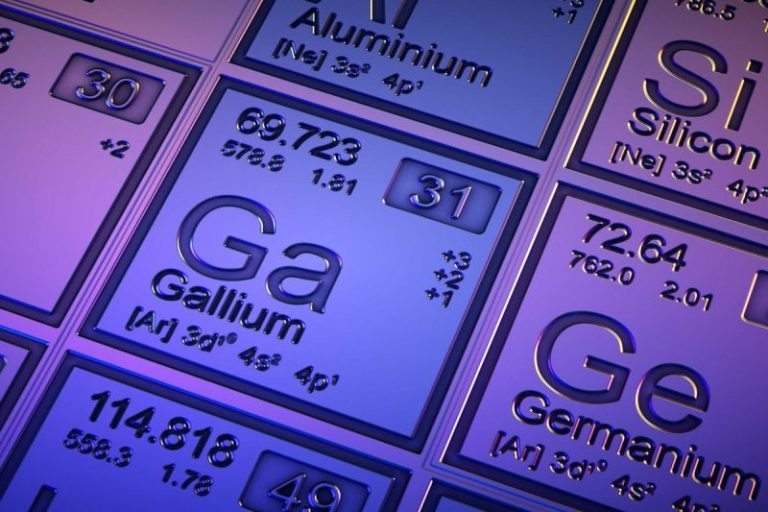
The Trump administration is considering a direct equity stake in a Louisiana-based refinery to establish what officials say would become the only large-scale producer of gallium in the US.

The Department of Defense is set to invest US$150 million in preferred equity in Atlantic Alumina, known as ATALCO, as part of a strategic partnership with an affiliate of Pinnacle Asset Management, according to Bloomberg.

The unannounced deal will fund an expansion of ATALCO’s alumina output and the construction of a new circuit to recover gallium, a critical metal used in military systems and advanced semiconductors.

Under the agreement, ATALCO will pair the Pentagon’s investment with an additional US$300 million from Pinnacle. The US government is also expected to provide additional funding within 30 days of the transaction’s closing.

“This strategic partnership is an essential step in reducing reliance on foreign nations for critical minerals,” ATALCO said.

Once fully built out, the facility is expected to produce more than 1 million metric tons of alumina annually and up to 50 metric tons of gallium per year. Gallium is typically recovered as a by-product of alumina refining, and China currently dominates both global alumina processing and gallium supply.

ATALCO has operated continuously since the late 1950s at its refinery in Gramercy, Louisiana, where it processes Jamaican bauxite into alumina, a fine white powder used in aluminum production.

After the closure of a neighboring refinery in 2020, the facility became the last alumina refinery of its kind in the country. The company says it currently supplies roughly 40 percent of domestic alumina demand.

The investment is a continuation of the Trump administration’s shift toward taking direct financial stakes in companies it views as strategically important in its effort to rebuild a domestic supply chain for rare earths and critical minerals.

Last November, the government backed a US$1.4 billion public-private partnership involving Vulcan Elements and ReElement Technologies, a subsidiary of American Resources (NASDAQ:AREC), to expand domestic rare earth magnet production.

In October, officials explored taking an equity stake in Critical Metals (NASDAQ:CRML), a US-listed company developing Greenland’s Tanbreez rare earths deposit.

Securities Disclosure: I, Giann Liguid, hold no direct investment interest in any company mentioned in this article.

This post appeared first on investingnews.com

Aided by rising demand for permanent magnets, the rare earths market entered 2025 on firmer footing, with prices and investor sentiment trending higher.

That early optimism, however, was quickly overtaken by mounting geopolitical risk as US-China trade tensions returned rare earths to the center of global supply chain concerns.

Through the first quarter, uncertainty around tariffs and the prospect of tighter Chinese controls weighed heavily on downstream industries and reinforced the strategic value of rare earths.

That risk crystallized in early April, when China issued Announcement 18, a sweeping export control regime covering a range of medium and heavy rare earths — including terbium, dysprosium, samarium and yttrium — as well as related oxides, alloys, compounds and permanent magnet technologies.

Framed by Beijing as a national security and nonproliferation measure, the policy added a new layer of regulatory friction to supply chains underpinning electric vehicles, defense systems, clean energy and advanced manufacturing.

The response was swift. In Washington, the Trump administration moved to reassess US critical minerals security, singling out rare earths as a strategic vulnerability.

“An overreliance on foreign critical minerals and their derivative products could jeopardize US defense capabilities, infrastructure development, and technological innovation,” the White House said, underscoring a shift from market-driven concern to national security imperative.

For Jon Hykawy, president and chief executive at Stormcrow Capital, the Trump administration’s rare earths ambitions and its understanding of the minerals markets was the most impactful trend of 2025, commenting, “By far the biggest impact was the implication from re-elected US President Donald Trump that rare earths and other critical materials, to be found in Ukraine or Greenland or Canada or wherever, are the most bigly important things, ever.’

The seasoned market analyst also questions the administration’s broader goals.

“Critical materials are, to me, what is necessary for ensuring that important projects can be completed,’ he said.

‘But President Trump has also decided that climate change is a scam, that electrified vehicles and wind power are terrible and coal and oil are where it’s at,’ Hykawy continued.

‘In that case, whether or not Trump has even the concept of a plan regarding what a rare earth actually is, and he isn’t using ‘rare earth’ as a catch-all phrase for ‘weird metal that I don’t know how to spell,’ then rare earths or lithium are not critical materials, as far as the USA should be concerned: if you don’t need ‘em, they ain’t critical.”

China’s rare earths chokehold exposes supply chain fault lines

By mid-year, the impact of China’s controls was being felt most acutely in the automotive sector. European suppliers warned of production shutdowns as licensing delays rippled through tightly integrated supply chains.

The Asian nation controls roughly 70 percent of global rare earths mine output, as well as 85 percent of refining capacity and about 90 percent of magnet manufacturing.

That concentration left markets highly exposed when Beijing escalated restrictions again in October, expanding export controls to cover a total of 12 rare earths and associated permanent magnets.

Although some measures were later paused through November 2026, earlier dual-use restrictions stayed in place, reinforcing the perception that rare earths are now a tool of geopolitical leverage.

“At its core, China has shown a greater willingness to use its dominance in critical minerals to advance its trade and geopolitical influence, potentially causing significant disruptions to global supply chains for industries like automotive, aerospace, defense, and electronics,” states a S&P Global Energy report.

Against that backdrop, efforts to diversify supply accelerated.

In the US, government support moved from rhetoric to capital. The Department of Defense committed US$400 million to MP Materials (NYSE:MP) to expand processing at Mountain Pass and build a second domestic magnet plant, securing a US-based source of permanent magnets for defense applications.

Days later, Apple (NASDAQ:AAPL) announced a US$500 million agreement with MP to supply recycled rare earth magnets for hundreds of millions of devices starting in 2027, tying supply chain security to sustainability.

As Hykawy explained, these developments are setting the stage for ex-China supply:

“We are at the beginning of producing, processing and utilizing rare earths in a supply chain entirely outside of China. There is absolutely nothing that prevents us from building that western supply chain except time and money. Rare earth deposits of all types, including ionic clays and their relatively inexpensive production of heavy rare earths, are readily available outside of China.”

He went on to note that there has been a misconception about the impacts of rare earths production, paired with a lack of investment and expertise that has prevented a faster buildout.

“It’s a media cliché that rare earth mining and processing is somehow much more destructive to the environment than other types of mining, but that’s also just plain wrong,” Hykawy added.

“Unfortunately, building that supply chain will take money and, especially, time, because we need the people who know how to do all of this, and there is no substitute for the time required to give them their required experience.”

Rare earths supply security and growing demand

As global demand for rare earths accelerates and supply chain risks heighten, experts believe the sector’s importance on the global stage will keep intensifying.

During a Benchmark Week presentation, Michael Finch of Benchmark Mineral Intelligence explained that rare earths have “become far more strategic in nature” over recent years, with applications spanning electric vehicles, consumer electronics, wind energy, robotics and modern military systems.

While permanent magnets remain a headline driver, non-magnetic uses now account for a larger share of total demand, underscoring the material’s broad industrial importance.

Demand projections for rare earths forecast robust growth, underpinned key segment expansion.

According to Finch’s data an average 100 kW EV traction motor contains roughly five kilograms of neodymium-praseodymium and about one kilogram of dysprosium oxide, illustrating how electrification is fueling consumption.

Additionally, permanent magnet applications are projected to grow at an 8.5 percent compound annual rate through 2030, with magnetic and non-magnetic uses expected to reach parity over the next decade.

Military demand is also a significant driver.

“(There are) 418 kilograms of rare earths going into an F 35 type two fighter (jet), 2.6 metric tons going into a type 51 (naval) destroyer, and 4.6 metric tons going into a Virginia class submarine,” said Finch.

As stated, supply remains heavily concentrated in China which controls 91 percent of the overall supply chain, from mining to permanent magnets. Finch emphasized that this concentration creates a single-country risk, noting, “When a country owns so much of a supply chain, it’s easy to use it as a bargaining chip.”

The global rare earths supply chain is gradually diversifying. North America and Africa are emerging as key growth regions, with projects expected to significantly expand non-Chinese production in the coming decade.

Finch pointed to Africa, which could account for up to 7 percent of global supply after 2030, driven by low capital intensity and favorable mining costs. Despite this progress, he cautioned that complete self-sufficiency outside China remains a distant prospect, emphasizing the need for rapid investment and strategic coordination to secure supply.

Rare earths investment bolstered by government support

In addition to the Department of Defense’s MP Materials investment, the US government has established a price floor for NdPr oxide, the high-value rare earths ingredient inside permanent magnets.

During a fireside chat at Benchmark Week, Ryan Corbett, CFO of MP Materials, explained the impact of the price floor in support of the burgeoning US supply chain. He told the audience that the deal is “absolutely transformational,’ and pointed to China’s ability to control pricing by flooding or starving the market. “What good is it to invest billions of dollars if the second you turn your refinery on, prices go from US$170 to US$45?” said Corbett.

In October, the Trump administration announced another strategic investment aimed at reshoring critical supply chains through a US$1.4 billion public-private partnership with Vulcan Elements and ReElement Technologies.

Under the agreement, the Commerce Department will provide US$50 million in CHIPS Act incentives for neodymium-iron-boron magnet production in exchange for an equity stake, alongside up to US$700 million in conditional Defense Department loans to support facilities targeting up to 10,000 metric tons of annual output.

On the private investment side, Rare earths developer Pensana (LSE:PRE,OTCPL:PNSPF) secured a US$100 million strategic investment to advance its mine-to-magnet ambitions in the US, at the end of 2025.

Although the rare earths sector saw several multimillion-dollar deals in 2025, exploration capital remains scarce.

According to S&P Global’s Senior Principal Analyst, Mining Studies & Mine Economics, Paul Manalo the rare earths account for 1 percent of global exploration budgets, however, that number has improved in recent years.

“For the sixth consecutive year, budgets for rare earths were up reaching US$155 million in 2025; it’s the highest level since 2012,” Manalo said during the S&P Global Market Intelligence 2026 Corporate Exploration Strategies webinar.

Although exploration budgets are growing, the expert said 80 percent of that capital is being deployed in only four countries: Australia, Brazil, USA and Canada. “Just like in other minor metals, the juniors are the primary drivers for exploration of rare earths, with only a few majors dabbling in it,” Manalo told listeners, adding, “There are few rare earth mines outside of China, so most pending exploration is for late stage projects.”

The government funding and strategic stockpile proposal were acknowledged as a good starting point by Stormcrow Capital’s Hykawy, who also cautioned that they may not be as meaningful as markets anticipate.

“I give the efforts so far an ‘A’ for enthusiasm but a ‘C-‘ for effectiveness. From what I have seen, the powers-that-be are beavering away to create a supply chain that can provide what the world is demanding, today,” he said.

“Unfortunately, many of their efforts can’t bear fruit for 5 years or more, and none of these agencies seemed to think it worthwhile to try and evaluate what will be required in 5 or 10 years.”

More long-term foresight is needed.

“Technology giveth, but technology also taketh away, and while no one can be sure what the technology-driven need will be in 5 or 10 years, we should at least try to incorporate that into planning,” he said.

“If the wrong projects are being backed, the economics for that producer or processor in 5 or 10 years are not going to look good and money and time will have been completely wasted.”

Securities Disclosure: I, Georgia Williams, hold no direct investment interest in any company mentioned in this article.

This post appeared first on investingnews.com

Sydney, Australia (ABN Newswire) – BPH Energy Limited (ASX:BPH) announced that it has received binding commitments from new and existing sophisticated investors to raise approximately $1.2 million (before costs) (‘Placement’). The Placement will comprise the issue of 134,222,222 new fully paid ordinary shares (‘Placement Shares’) in the Company at an issue price of $0.009 per share. The Placement Shares will be issued pursuant to the Company’s existing placement capacity under ASX Listing Rule 7.1 and 7.1A.

HIGHLIGHTS

– Binding commitments received to raise approximately $1.2 million through a Placement at $0.009 per share

– Placement participants will receive 1 Attaching Option for each New Share subscribed for under the Placement, exercisable at $0.03 per share, with an expiry date being the same as the Options to be issued under the Options Prospectus dated 2 December 2025

– BPH funded to execute its next phase of hydrocarbon and Cortical Dynamics investments

– The Federal Court hearing for the PEP-11 judicial review application is scheduled for February 20 and 23, 2026

Placement participants will receive 1 free Attaching Option for each Placement Share subscribed for under the Placement, exercisable at $0.03 each with an expiry date being the same as the options to be issued under the Options Prospectus dated 2 December 2025 (‘Attaching Options’).

Oakley Capital Partners Pty Limited (‘Oakley Capital’) and 62 Capital Limited (’62 Capital’) acted as Joint Lead Managers for the Placement. Oakley Capital and 62 Capital will be paid a cash fee of 6% on funds raised under the Placement and an aggregate of 33,555,555 Broker Options (‘Broker Options’) on the same terms as the Attaching Options.

The Attaching Options and Broker Options will be issued on the same day as the Options to be issued under the Options Prospectus and the Company intends to apply for quotation of the Options subject to the Company meeting ASX quotation requirements.

Commenting on the capital raising, Executive Director Mr David Breeze said:

‘We are pleased to have received strong support in the Placement. The funding allows BPH to accelerate the exploration programs to unlock the potential on our gas projects especially with the current gas supply crisis as well as assist the next phase of associate Cortical Dynamic Limited’s expansion. The funding also leaves BPH well-placed ahead of the Federal Court hearing for the PEP-11 judicial review scheduled for February 20 and 23, 2026, where the PEP-11 Joint Venture will seek to overturn the Federal Government’s rejection of the PEP-11 permit extension’

USE OF FUNDS

The proceeds raised under the Placement provide BPH with an enhanced cash position to fund its hydrocarbon projects and to assist in the continued development of Cortical Dynamics.

The intended use of funds will be for:

– $0.85 million – Funding for exploration and development of oil and gas investments

– $0.1 million – For working capital including costs of the offer

– $0.25 million – Funding for Cortical Dynamics

PLACEMENT DETAILS

The Placement offer price of $0.009 per share represents a 18.2% discount to BPH’s last price of $0.0011 per share on Thursday, 8 January 2026, and a 7.8% discount to the 15-day VWAP of $0.00976 per share.

Settlement of the Placement is expected to be completed on or around 14 January 2026.

A total of 12,259,551 Placement Shares, 134,222,222 free Attaching Options, and 33,555,555 Broker Options (pro rata to their management of the Placement) will be issued under ASX Listing Rule 7.1. A total of 121,962,671 Placement Shares will be issued under ASX Listing Rule 7.1A.

The Attaching Options and Broker Options will be issued following the close of the Offer under the Options Prospectus dated 2 December 2025.

Placement Shares will rank equally with existing fully paid ordinary shares.

The Company will issue a supplementary Options Prospectus as soon as possible.

About BPH Energy Limited:

BPH Energy Limited (ASX:BPH) is an Australian Securities Exchange listed company developing biomedical research and technologies within Australian Universities and Hospital Institutes.

The company provides early stage funding, project management and commercialisation strategies for a direct collaboration, a spin out company or to secure a license.

BPH provides funding for commercial strategies for proof of concept, research and product development, whilst the institutional partner provides infrastructure and the core scientific expertise.

BPH currently partners with several academic institutions including The Harry Perkins Institute for Medical Research and Swinburne University of Technology (SUT).

Source:
BPH Energy Limited

Contact:
David Breeze
admin@bphenergy.com.au
www.bphenergy.com.au
T: +61 8 9328 8366

News Provided by ABN Newswire via QuoteMedia

This post appeared first on investingnews.com

Warner Bros. Discovery on Wednesday rejected Paramount Skydance’s amended takeover offer, the latest in a series of rejections in David Ellison’s pursuit of the streaming and cable giant.

The media company said it remains committed to the $82.7 billion deal it reached in December to sell its streaming service, studio and HBO cable channel to Netflix.

‘The Board unanimously determined that the Paramount’s latest offer remains inferior to our merger agreement with Netflix across multiple key areas,’ Warner Bros. Discovery Chairman Samuel Di Piazza said in a statement.

‘Paramount’s offer continues to provide insufficient value,’ he continued.

In a letter to shareholders, Di Piazza wrote that Paramount Skydance’s offer carries ‘significant costs, risks and uncertainties as compared to the Netflix merger.’ The way the Paramount deal is structured creates a ‘lack of certainty’ about its finalization, he added.

Di Piazza adds in the letter that if the company were to agree to the Paramount merger and it failed to close, it would result in a ‘potentially considerable value destruction.’

‘What matters most right now is our focus as we start the year,’ Warner Bros. Discovery CEO David Zaslav said in a memo to employees seen by NBC News. ‘Our operating plans remain unchanged, and our priorities for 2026 are clear and intentional.’

Zaslav wrote that the ‘review was conducted with discipline and rigor, and was supported by independent financial and legal advisors.’

On Dec. 22, Paramount Skydance increased its offer for Warner Bros. Discovery with a personal guarantee from billionaire Larry Ellison, who was backing the financing for the deal. His son, David Ellison, is the CEO of Paramount Skydance.

However, that was not enough for Warner Bros. Discovery. That beefed-up offer followed Warner Bros. Discovery’s Dec. 17 public rejection of Paramount. It also preceded multiple private rejections before Paramount Skydance went public.

In a statement Thursday, Paramount said it remained committed to the offer that WBD has rejected twice. “WBD continues to raise issues in Paramount’s offer that we have already addressed, including flexibility in interim operations,” Paramount said.

At stake is the future of one of the most storied media empires in the United States.

The bidding by Paramount also comes amid a monumental shift in the media and streaming landscape at large. On Monday, Versant Media, the cable network spinoff from Comcast, began trading as an independent company. Shares have plunged more than 20% over the course of those two days. (Comcast is the parent company of NBCUniversal and NBC News.)

On CNBC, Di Piazza said it would be a mistake to compare Warner Bros. Discovery‘s cable networks to Versant. ‘Discovery Global is different, it has a lot more scale,’ he said.

Streaming companies such as Apple, Netflix and Amazon are also challenging traditional broadcasters such as Paramount-owned CBS for sports rights.

Warner Bros. Discovery controls properties ranging from CNN Worldwide and the Discovery Channel to HBO, as well as the Warner Bros. film studio and archive.

Despite the back and forth between Warner Bros. Discovery and Paramount, Netflix has so far proceeded with the deal it inked Dec. 5, under which the world’s largest streaming company would acquire a stake in WBD.

Warner’s cable networks would be spun out into a separate company as part of that deal. However, Paramount Skydance wants to buy everything Warner Bros. Discovery owns.

Paramount’s controlling shareholders, the Ellisons, have suggested they could obtain regulatory clearance more quickly and easily than Netflix.

In mid-2025, the Ellisons acquired Paramount with approval from the Trump administration. But that approval only came after CBS News agreed to pay $16 million to President Donald Trump’s future presidential library over an interview that “60 Minutes” had conducted with then-presidential candidate, Vice President Kamala Harris.

Netflix, for its part, has met with Trump at the White House over the deal. But Trump has said either bidder poses potential problems, in his view.

Netflix said in a statement that it ‘welcomed the Warner Bros. Discovery board of directors’ continued commitment to the merger agreement’ the two companies reached last year. ‘Netflix and Warner Bros. will bring together highly complementary strengths and a shared passion for storytelling,’ Netflix’s co-CEOs Ted Sarandos and Greg Peters said.

Di Piazza said on CNBC that the difference between Paramount’s offer and that of Netflix is that Warner Bros. and Netflix already ‘have a signed merger agreement’ that has ‘a clear path to closing.’ Di Piazza also said the Netflix deal offers ‘protections for our shareholders, if something stops the close, whatever that might be.’

Trump has said he will be personally involved in reviewing whichever merger proceeds.

Paramount did not immediately respond to a request for comment.

This post appeared first on NBC NEWS

We also break down next week’s catalysts to watch to help you prepare for the week ahead.

In this article:

    This week’s tech sector performance

    Tech markets spent the first full week of 2026 responding to headlines out of the Consumer Electronics Show (CES) in Las Vegas, where semiconductor and artificial intelligence (AI) announcements helped drive Nasdaq Composite (INDEXNASDAQ:.IXIC) momentum. This enthusiasm pushed the index to a fresh record midweek before a bout of profit taking and renewed concerns weighed on sentiment heading into Friday (January 9).

    The Nasdaq finished the week up 0.95 percent from Monday’s (January 5) open, powered by gains in memory and storage names like Micron Technology (NASDAQ:MU) and Western Digital (NASDAQ:WDC) after upbeat commentary on next-generation data infrastructure. However, the rally faded as investors rotated into defensive stocks after US President Donald Trump proposed a US$1.5 trillion “Dream Military” budget.

    Labor market indicators for the week suggest a continued, gradual cooling in the American job market, supporting the case for future US Federal Reserve interest rate cuts.

    North of the border, Canada’s S&P/TSX Composite Index (INDEXTSI:OSPTX) retreated after briefly hitting a record, mirroring the US market’s rotation in the second half of the week, weighed down by Venezuela oil fears.

    3 tech stocks moving markets this week

    1. Micron Technology (NASDAQ:MU)

    Shares of Micron Technology rose 0.12 percent on Monday after the company provided an investor update confirming strong demand for its high-bandwidth memory, critical for AI GPUs, through 2026.

    Comments on storage shortages at CES amplified gains on Tuesday, driving an 8.25 percent advance for Micron that day alongside additional memory stocks. The company saw a 6.14 percent weekly gain.

    2. Lockheed Martin (NYSE:LMT)

    Lockheed Martin jumped by as much as 2.06 percent on Thursday (January 8) after Trump’s Truth Social post prompted an investor rotation to defensive tech stocks.

    3. SanDisk (NASDAQ:SNDK)

    Sandisk, a company focused on NAND flash, SSDs and memory cards for consumer and AI data center use, jumped as much as 27.57 percent on Tuesday as comments at CES from NVIDIA (NASDAQ:NVDA) and Samsung Electronics (KRX:005930,OTCPL:SSNLF) executives reignited concerns of forthcoming price increases for NAND flash memory.

    SanDisk, Lockheed Martin and Micron Technology performance, January 5 to 9, 2026.

    Chart via Google Finance.

    Top tech news of the week

      • Huang also announced that NVIDIA’s new AI server racks will not require outside cooling, a revelation that caused the stocks of cooling equipment suppliers, such as Modine Manufacturing (NYSE:MOD) and Johnson Controls International (NYSE:JCI), to fall.

                      Tech ETF performance

                      Tech exchange-traded funds (ETFs) track baskets of major tech stocks, meaning their performance helps investors gauge the overall performance of the niches they cover.

                      This week, the iShares Semiconductor ETF (NASDAQ:SOXX) advanced by 2.47 percent, while the Invesco PHLX Semiconductor ETF (NASDAQ:SOXQ) saw a gain of 1.45 percent.

                      The VanEck Semiconductor ETF (NASDAQ:SMH) also increased by 1.98 percent.

                      Tech news to watch next week

                      Next week will bring bank earnings, starting with JPMorgan Chase (NYSE:JPM) on January 12, and Bank of America (NYSE:BAC) on January 15. January 15 will also bring the latest quarterly results from Taiwan Semiconductor Manufacturing Company (NYSE:TSM).

                      US producer price index data will hit on January 14, testing Fed interest rate cut bets, while Micron is set to break ground on its US$100 billion New York mega-fab on January 16.

                      Securities Disclosure: I, Meagen Seatter, hold no direct investment interest in any company mentioned in this article.

                      This post appeared first on investingnews.com