Author

admin

Browsing

The Prospectors & Developers Association of Canada (PDAC) is pleased to announce that registration is now open for PDAC 2026, taking place March 1-4, 2026, at the Metro Toronto Convention Centre in Toronto. The world’s leading gathering for mineral exploration and mining will once again unite industry leaders, investors, governments, students and Indigenous communities for four days of deals, ideas and discovery.

“PDAC 2026 is where conversations, connections and capital converge at a scale you won’t find anywhere else,” said PDAC President Karen Rees. “It’s a unique opportunity to meet directly with company leaders, government officials, policymakers and investors, to strike new deals and move projects forward. Just as importantly, it’s a place to advance respectful and mutually beneficial partnerships with Indigenous communities and other local partners. From students and early-career professionals to senior executives, everyone who attends PDAC 2026 can gain insight, build relationships and help shape the direction of our industry.”

What to expect at PDAC 2026

World-class scale and reach:
PDAC 2026 builds on the momentum of recent years, following a 2025 Convention that welcomed more than 27,000 attendees from over 130 countries and 91 government exhibitors. Its global scale and strong government-to-industry presence make it the most influential event for the mineral exploration and mining community.

Exhibits:
Bigger than ever in 2026, PDAC will feature more than 1,300 exhibitors across the Trade Show, Investors Exchange, and an expanded Trade Show North. Attendees can explore show floors packed with projects, equipment, technology, services, and country and regional displays that showcase the latest developments and opportunities across the sector.

Investment opportunities:
PDAC 2026 is a must-attend event for investors. Connect at the Investors Exchange, evaluate projects and meet management teams. See results first-hand in Core Shack, hear company updates through Corporate Presentations for Investors (CPI), and gain market insight at the Investment Leaders Forum.

Programming:
Hundreds of presenters will deliver cutting-edge content through panels, technical sessions, short courses, and keynote presentations. Programming spans Indigenous partnerships, sustainability, capital markets and financing, and advances in geoscience and exploration techniques, as well as the convention’s flagship keynote themes: commodities, mining industry outlook, technology and innovation, and discovery of the year.

Networking and events:
From daily meetups like Coffee Connections and the Lunch Social to flagship social events such as The Network: Gold Rush Gathering and the high-energy We Will Rock You Finale, PDAC 2026 offers countless ways to connect. Plus, the Awards Celebration & Nite Cap honours the 2026 PDAC Award recipients and brings the global industry together to recognize excellence and drive the sector forward.

Register now

Be part of PDAC 2026 in Toronto, March 1-4, 2026. Register and plan your experience today at pdac.ca/convention-2026.

About PDAC

The Prospectors & Developers Association of Canada (PDAC) is the leading voice of the mineral exploration and development community, an industry that employs more than 724,000, and contributed $156 billion to Canada’s GDP in 2024 (Natural Resources Canada, February 2025). Currently representing over 8,200 members around the world, PDAC’s work centres on supporting a competitive, responsible, and sustainable mineral sector. PDAC 2026, our 94th annual convention, will take place in person in Toronto, Canada from March 1-4. Please visit pdac.ca for more information.

Media contact

Scott Barber
Director, Communications
sbarber@pdac.ca
416-362-1969 x 244

Source

This post appeared first on investingnews.com

Jennifer Newstead to join Apple as senior vice president, will become general counsel in March 2026

Kate Adams to retire late next year

Lisa Jackson to retire

Apple® today announced that Jennifer Newstead will become Apple’s general counsel on March 1, 2026, following a transition of duties from Kate Adams, who has served as Apple’s general counsel since 2017. She will join Apple as senior vice president in January, reporting to CEO Tim Cook and serving on Apple’s executive team.

In addition, Lisa Jackson, vice president for Environment, Policy, and Social Initiatives, will retire in late January 2026. The Government Affairs organization will transition to Adams, who will oversee the team until her retirement late next year, after which it will be led by Newstead. Newstead’s title will become senior vice president, General Counsel and Government Affairs, reflecting the combining of the two organizations. The Environment and Social Initiatives teams will report to Apple chief operating officer Sabih Khan.

‘Kate has been an integral part of the company for the better part of a decade, having provided critical advice while always advocating on behalf of our customers’ right to privacy and protecting Apple’s right to innovate,’ said Tim Cook, Apple’s CEO. ‘I am incredibly grateful to her for the leadership she has provided, for her remarkable determination across a myriad of highly complex issues, and above all, for her thoughtfulness, her deeply strategic mind, and her sound counsel.’

‘I am deeply appreciative of Lisa’s contributions. She has been instrumental in helping us reduce our global greenhouse emissions by more than 60 percent compared to 2015 levels,’ said Cook. ‘She has also been a critical strategic partner in engaging governments around the world, advocating for the best interests of our users on a myriad of topics, as well as advancing our values, from education and accessibility to privacy and security.’

‘We couldn’t be more pleased to have Jennifer join our team,’ said Cook. ‘She brings an extraordinary depth of experience and skill to the role, and will advance Apple’s important work all over the world. We are also pleased that Jennifer will be overseeing both the Legal and Government Affairs organizations, given the increasing overlap between the work of both teams and her substantial background in international affairs. I know she will be an excellent leader going forward.’

‘I have long admired Apple’s deep focus on innovation and strong commitment to its values, its customers, and to making the world a better place,’ said Newstead. ‘I am honored to join the company and to lead an extraordinary team who are dedicated each and every day to doing what’s in the best interest of Apple’s users.’

‘It has been one of the great privileges of my life to be a part of Apple, where our work has always been about standing up for the values that are the foundation of this great company,’ said Adams. ‘I am proud of the good our wonderful team has done over the past eight years, and I am filled with gratitude for the chance to have made a difference. Jennifer is an exceptional talent and I am confident that I am leaving the team in the very best hands, and I’m really looking forward to working more closely with the Government Affairs team.’

‘Apple is a remarkable company and it has been a true honor to lead such important work here,’ said Jackson. ‘I have been lucky to work with leaders who understand that reducing our environmental impact is not just good for the environment, but good for business, and that we can do well by doing good. And I am incredibly grateful to the teams I’ve had the privilege to lead at Apple, for the innovations they’ve helped create and inspire, and for the advocacy they’ve led on behalf of our users with governments around the world. I have every confidence that Apple will continue to have a profoundly positive impact on the planet and its people.’

Newstead was most recently chief legal officer at Meta and previously served as the legal adviser of the U.S. Department of State, where she led the legal team responsible for advising the Secretary of State on legal issues affecting the conduct of U.S. foreign relations. She held a range of other positions in government earlier in her career as well, including as general counsel of the White House Office of Management and Budget, as a principal deputy assistant attorney general of the Office of Legal Policy at the Department of Justice, as associate White House counsel, and as a law clerk to Justice Stephen Breyer of the U.S. Supreme Court. She also spent a dozen years as partner at Davis Polk & Wardwell LLP, where she advised global corporations on a wide variety of issues. Newstead holds an AB from Harvard University and a JD from Yale Law School.

Apple revolutionized personal technology with the introduction of the Macintosh in 1984. Today, Apple leads the world in innovation with iPhone, iPad, Mac, AirPods, Apple Watch, and Apple Vision Pro. Apple’s six software platforms — iOS, iPadOS, macOS, watchOS, visionOS, and tvOS — provide seamless experiences across all Apple devices and empower people with breakthrough services including the App Store, Apple Music, Apple Pay, iCloud, and Apple TV. Apple’s more than 150,000 employees are dedicated to making the best products on earth and to leaving the world better than we found it.

NOTE TO EDITORS: For additional information visit Apple Newsroom ( www.apple.com/newsroom ), or email Apple’s Media Helpline at media.help@apple.com .

© 2025 Apple Inc. All rights reserved. Apple and the Apple logo are trademarks of Apple. Other company and product names may be trademarks of their respective owners.

View source version on businesswire.com: https://www.businesswire.com/news/home/20251204848925/en/

Josh Rosenstock
Apple
jrosenstock@apple.com

News Provided by Business Wire via QuoteMedia

This post appeared first on investingnews.com

Silver is known as the most versatile precious metal, and its end uses range from silverware to medicine, as well as industrial and technological applications, which account for well over half of annual global demand.

In 2024, global physical silver demand reached 1.16 billion ounces, shy of the record of 1.28 billion ounces set in 2022, as per the Silver Institute’s latest World Silver Survey released in April 2025.

Industrial demand is on an upward trend from the push toward renewable energy — in particular, silver demand should benefit from the expansion of the solar energy sector, electric vehicles and the growing use of AI and data centers. The metal is a great conductor of both heat and electricity, making it perfect for use in solar panels.

In 2025, the Silver Institute expects global demand for silver to decline by 1 percent to 1.15 billion ounces, but remain at historically high levels. With all of that in mind, here’s a look at four factors driving silver demand.

1. Industrial fabrication

Expected demand in 2025: 677.4 million ounces

Silver is the best electrical and thermal conductor of all the metals, so it’s no surprise that it’s used in industrial fabrication. Industrial silver demand has seen steady growth in recent years. Coming in at just 491 million ounces in 2016, industrial demand rose to 592.3 million ounces in 2022, 657.1 million ounces in 2023 and a record 680.5 million ounces in 2024.

For 2025, the Silver Institute believes industrial demand will see a slight regression of 0.5 percent to 677.4 million ounces.

Here’s a brief rundown of the main industrial uses driving silver demand:

Electronics — In electronics, industrial silver is used mainly in multi-layer ceramic capacitors, membrane switches, silvered film, electrically heated automobile windshields, conductive adhesives and the preparation of thick-film pastes.

Electronics is expected to remain an important driver for silver going forward, as per the Silver Institute, which expects overall industrial silver consumption to reach 456.6 million ounces in 2025. Photovoltaics form the largest portion of electronic demand, totaling 197.6 million tons in 2024.

Using silver as conductive ink, photovoltaic cells transform sunlight into electricity. These cells are combined to form solar panels. The use of silver in the fabrication of photovoltaic cells, also known as solar cells, is seen as an area of rapid growth in the short to medium term. In fact, SolarPower Europe reported that total installations reached 2.2 terawatts by the end of 2024, and are expected to more than triple to more than 7 terawatts by 2030.

Automotive industry — Every electrical action in a modern car is activated with silver-coated contacts. Basic functions such as starting the engine, opening power windows, adjusting power seats and closing power trunks are all activated using a silver membrane switch. Furthermore, in January 2021, the Silver Institute reported that, depending on the model, battery electric vehicles contain between 25 and 50 grams of silver, while hybrid vehicles use 18 to 34 grams of silver. That’s compared to 15 to 28 grams of silver in a light internal combustion engine vehicle.

The Silver Institute has projected that automotive demand for silver could reach 90 million ounces by 2025. The association states that silver demand from the car industry will be driven by infrastructure investment, broader decarbonization efforts and the expansion of charging stations.

Brazing and soldering — Adding silver to the process of soldering or brazing helps produce smooth, leak-tight and corrosion-resistant joints when combining metal parts. In addition, silver-brazing alloys are used widely in everything from air conditioning and refrigeration to electric power distribution. The Silver Institute predicts demand from this segment to total 52.9 million ounces in 2025.

2. Jewelry

Expected demand in 2025: 196.2 million ounces

Jewelry is often what laypeople think about when they consider silver demand. And for good reason — few materials are better suited for jewelry than silver. Lustrous but resilient, silver responds well to sculpting, requires minimal care and lasts a lifetime.

While silver and gold possess similar working qualities, the white metal enjoys greater reflectivity and can achieve a brilliant polish. A vast amount of silver supply from mine production gets turned into a form of jewelry. The segment grew moderately by 3 percent in 2024, rising to 208.7 million ounces, but the Silver Institute is predicting a significant reversal in 2025, with a 6 percent decline to 196.2 million ounces.

3. Silver bullion, coins and bars

Expected demand in 2025: 204.4 million ounces

Another source of silver demand is for silver as an investment in the form of silver coins, bars and rounds. This category includes the silver used to fabricate the bullion, as well as small bar purchases by retail investors, according to the Silver Institute.

Silver coins have a long history. Minted silver coins were first used in the Eastern Mediterranean region in 550 BCE, and by 269 BCE the Roman Empire had adopted silver as well. Silver was the main circulating currency until the 19th century, when it was phased out of regular coinage.

While silver is not used in many circulating coins today, mints in many countries still create high-purity bullion coins and bars for investors.

Physical silver investment demand reached a record high of 338.3 million ounces in 2022, but declined considerably to 244.3 million ounces in 2023, before falling another 22 percent to 190.9 million ounces in 2024.

However, with rising uncertainty in global financial markets, the institute is predicting 7 percent growth in 2025 to 204.4 million ounces.

Silver exchange-traded products (ETPs) and silver ETFs purchase significant amounts of physical silver. Silver ETPs have experienced high volatility over the last five years, with demand peaking in 2020 with net inflows of 331.1 million ounces of silver, which fell to to 64.9 million ounces in 2021. Following the pandemic, ETPs experienced heavy outflows with investors selling off 117.4 million ounces in 2022 and 37.6 million ounces in 2023.

In 2024, as uncertainty began to seep into global financial markets, investors once again returned to ETPs, pushing demand to 61.6 million ounces of silver flowing into the products.

The Silver Institute expects demand to grow by 14 percent in 2025 to 70 million ounces, attributing these inflows to cuts to the Federal Funds rate, concerns over US debt load, and instability in the Middle East.

4. Silverware

Expected demand in 2025: 46 million ounces

Sterling silver has been the standard for silver holloware and silver flatware since the 14th century. Silver cutlery and other decor lasts for generations as it resists tarnish and is a traditional decoration in homes around the world. Base metal copper is mixed with silver to strengthen it for use as cutlery, bowls and decorative items.

Demand for the metal from the silverware industry reached 73.5 million ounces in 2022 but has declined since then to 54.2 million ounces in 2024. The Silver Institute expects the market to shed another 15 percent in 2025 to 46 million ounces.

Securities Disclosure: I, Melissa Pistilli, hold no direct investment interest in any company mentioned in this article.

This post appeared first on investingnews.com

Frank Holmes of US Global Investors (NASDAQ:GROW) shares his forecast for gold and silver.

He sees gold testing US$5,000 per ounce next year and then reaching US$7,000 by the end of US President Donald Trump’s second term in office.

‘And I think that silver will be over US$100,’ he added.

Securities Disclosure: I, Charlotte McLeod, hold no direct investment interest in any company mentioned in this article.

This post appeared first on investingnews.com

Apple’s top artificial intelligence executive is stepping down and will retire in 2026, the company announced Monday.

John Giannandrea had been at Apple since 2018, where his official title was senior vice president for machine learning and AI strategy.

He will be replaced by Amar Subramanya, who comes to Apple after a brief stint as corporate vice president of AI at Microsoft and more than a decade at Google.

Subramanya will report to one of CEO Tim Cook’s deputies, Craig Federighi, rather than to Cook directly, as Giannandrea had.

‘AI has long been central to Apple’s strategy, and we are pleased to welcome Amar to Craig’s leadership team and to bring his extraordinary AI expertise to Apple,’ Cook said Monday.

The abrupt change at a company known for its careful succession planning highlights Apple’s challenge as it tries to compete with top AI developers such as Google, ChatGPT owner OpenAI, Meta and Microsoft.

Earlier this year, Apple delayed the release of an upgraded version of Siri with AI powered features. At the time, it said it was going to ‘take us longer than we thought’ to develop the new version.

The company said it anticipated rolling out new features ‘in the coming year,’ but it has not offered any more specifics.

‘We’re making good progress on it, and, as we’ve shared, we expect to release it next year,’ Cook said on the company’s quarterly earnings call in late October.

“With Apple Intelligence, we’ve introduced dozens of new features that are powerful, intuitive, private and deeply integrated into the things people do every day,” Cook said on the Oct. 30 call

The company is targeting the spring to release the upgraded Siri, Bloomberg News recently reported.

When a user grants permission, Siri can tap into ChatGPT’s broad world knowledge and present an answer directly.Apple

While Apple’s iOS and macOS are integrated with ChatGPT, those features are somewhat limited.

In recent weeks, Apple has reportedly neared deals to integrate with Google’s Gemini, as well as AI models from Perplexity and Anthropic.

Apple introduced Apple Intelligence on June 10, 2024.Apple

Apple’s stock has also felt the effect of what some perceive to be its lagging AI services.

This year, Apple shares have returned 13%, which tops both Amazon and Microsoft. But shares of Oracle have popped 20%, Nvidia has surged 34%, and Google parent company Alphabet has soared 65%.

Still, Apple remains the world’s second-largest publicly traded company, with a market value of $4.2 trillion, behind only Nvidia.

Overall, the S&P 500 has risen almost 16% this year.

This post appeared first on NBC NEWS

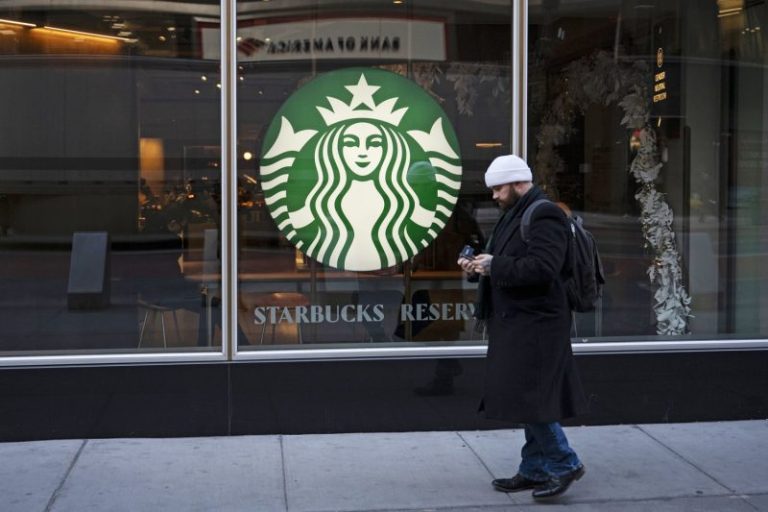
Starbucks will pay about $35 million to more than 15,000 New York City workers to settle claims it denied them stable schedules and arbitrarily cut their hours, city officials announced Monday.

The company will also pay $3.4 million in civil penalties under the agreement with the city’s Department of Consumer and Worker Protection. It also agrees to comply with the city’s Fair Workweek law going forward.

A company spokeswoman said Starbucks is committed to operating responsibly and in compliance with all applicable local laws and regulations in every market where it does business, but also noted the complexities of the city’s law.

“This (law) is notoriously challenging to manage and this isn’t just a Starbucks issue, nearly every retailer in the city faces these roadblocks,” spokeswoman Jaci Anderson said.

Most of the affected employees who held hourly positions will receive $50 for each week worked from July 2021 through July 2024, the department said. Workers who experienced a violation after that may be eligible for compensation by filing a complaint with the department.

The $38.9 million settlement also guarantees employees laid off during recent store closings in the city will get the chance for reinstatement at other company locations.

The city began investigating in 2022 after receiving dozens of worker complaints against several Starbucks locations, and eventually expanded its investigation to the hundreds of stores in the city. The probe found most Starbucks employees never got regular schedules and the company routinely reduced employees’ hours by more than 15%, making it difficult for staffers to know their regular weekly earnings and plan other commitments, such as child care, education or other jobs.

The company also routinely denied workers the chance to pick up extra shifts, leaving them involuntarily in part-time status, according to the city.

Starbucks Workers United members and supporters picket outside a Starbucks in New York on Nov. 21.Michael Nagle / Bloomberg via Getty Images

The agreement with New York comes as Starbucks’ union continues a nationwide strike at dozens of locations that began last month. The number of affected stores and the strike’s impact remain in dispute by the two sides.

This post appeared first on NBC NEWS

MILAN — The Prada Group announced Tuesday that it has officially purchased Milan fashion rival Versace in a 1.25 billion euro (nearly $1.4 billion) deal that puts the fashion house known for its sexy silhouettes under the same roof as Prada’s “ugly chic” aesthetic and Miu Miu’s youth-driven appeal.

The highly anticipated deal is expected to relaunch Versace’s fortunes, after middling post-pandemic performance as part of the U.S. luxury group Capri Holdings.

Prada said in a one-line statement that the acquisition had been completed after receiving all regulatory clearances.

Prada heir Lorenzo Bertelli will steer Versace’s next phase as executive chairman, in addition to his roles as group marketing director and sustainability chief.

The son of co-creative director Miuccia Prada and longtime Prada Group chairman Patrizio Bertelli has said he doesn’t expect to make any swift executive changes at Versace. But Bertelli has said that the company, which places among the top 10 most recognized brands in the world, has long been underperforming in the market.

Prada has underlined that the 47-year-old Versace brand offered “significant untapped growth potential.’’

Versace has been in the midst of a creative relaunch under a new designer, Dario Vitale, who previewed his first collection during Milan Fashion Week in September. He had previously been head of design at Miu Miu, but his move to Versace was unrelated to the Prada deal, executives have said.

Capri Holdings, which owns Michael Kors and Jimmy Choo, paid $2 billion for Versace in 2018, but had been struggling to position Versace’s bold profile in the recent era of “quiet luxury.″

Versace represented 20% of Capri Holdings 2024 revenue of 5.2 billion euros. An analyst presentation for the Prada deal said that Versace would represent 13% of the Prada Group’s pro-forma revenues, with Miu Miu coming in at 22% and Prada at 64%. The Prada Group, which also includes Church’s footwear, reported a 17% boost in revenues to 5.4 billion euros last year.

The Prada Group has already begun preparations to incorporate crosstown rival Versace into its Italian manufacturing system, a point of pride for the group.

“Making a bag for one brand or another, the know-how is the same,″ Bertelli told reporters last week at the group’s Scandicci leather goods factory, which already makes bags for the Prada and Miu Miu brands and will soon add Versace.

The Prada Group’s has invested 60 million euros in its supply chain this year, including a new leather goods factory near Siena, a new knitwear factory near Perugia as well as increasing production at its factory Church’s footwear factory in Britain and expanding another Tuscan factory. That’s on top of 200 million euros in investments from 2019-24.

Prada’s efforts include an academy that has trained some 570 new artisans over the last 25 years in an in-house training academy operating in the Tuscany, Marche, Veneto and Umbria regions.

Last year, Prada hired 70% of the 120 artisans who trained in the academy. The number of trainees rose by 28% to 152 this year.

This post appeared first on NBC NEWS

Tech billionaires Michael and Susan Dell announced Tuesday that they are pledging $6.25 billion to create some 25 million additional ‘Trump Accounts’ for children across the country.

These accounts will be seeded with $250 each, and available for children who missed the eligibility cutoff for the $1,000 federally funded ‘Trump Accounts’ for babies born after Jan. 1, 2025.

Children living in ZIP codes with median incomes below $150,000 will be the first to receive the funds, the White House said.

‘The greatest investment that we could possibly make is in children,’ Susan Dell said alongside President Donald Trump at the White House.

‘It’s really an amazing moment that two people would do that kind of a contribution,’ Trump said.

The president said he was also talking to other wealthy donors and friends to potentially make similar contributions.

Michael Dell; President Donald Trump.Errich Petersen; Chip Somodevilla / Getty Images

Asked how this donation came to be, Michael Dell said: ‘We started talking about Texas only at the beginning. And then we thought about it some more, and we went back and forth, as we do on these things, and this is where we ended up.’

The Dells said they considered making the pledge for a long time. But they said they didn’t want the pledge to be the end of their involvement.

Michael Dell encouraged states to ‘really grow financial literacy’ to help educate families about how the accounts and markets work.

‘These deposits will reach the accounts of most children age 10 and under who were born prior to the qualifying date for the federal newborn contribution,’ the Dells said in a statement issued by their foundation.

‘Children older than 10 may benefit, too, if funds remain available after initial sign-ups,’ the Dell family said. ‘It is an incredibly practical and direct step to help families begin saving today.’

The Dells say they ‘believe this effort will expand opportunity, strengthen communities, and help more children take ownership of their future.’

The Dell family gift “is expected to reach nearly 80% of children age 10 and under across 75% of U.S. zip codes,” according to the nonprofit Invest America.

Children born after Jan. 1 and until Dec. 31, 2028, will receive an account infused with a $1,000 investment from the U.S. Treasury, as part of the recently passed One Big Beautiful Bill.

The accounts will open and begin accepting contributions starting on July 4, 2026. The accounts will initially be held by a financial firm designated by the Treasury Department, but later will be able to be transferred to any brokerage firm.

Those accounts will also be eligible for additional contributions of up to $5,000 per year until the beneficiary child reaches age 18. Withdrawals from the accounts are not permitted until the children reach that age.

Trump accounts can be invested only in low-cost index funds or ETFs that either mirror the S&P 500 or ‘another American stock index,’ according to the White House Council of Economic Advisers.

‘These investment accounts are simple, secure, and structured to grow in value through market returns over time,’ the Dell family said.

‘Trump Accounts represent a potentially valuable tool for building up savings and tapping the power of compound growth for the young,’ Charles Schwab tax planning director Hayden Adams recently wrote.

If a family could contribute and invest the maximum $5,000 per year in the accounts, and with a reasonable growth rate of about 6%, ‘by age 18, the child’s account would hold around $191,000 in assets.’

Once a child turns 18, the accounts are eligible to be converted to a traditional individual retirement account, ‘meaning it could continue to accumulate potential gains on a tax-free basis’ for many years.

The Dells are one of the wealthiest families in America, with a fortune of nearly $150 billion, according to Bloomberg Billionaires. The family’s primary source of wealth is Dell Technologies, the company founded by Michael Dell in 1984.

In recent years, the value of Dell shares have been fueled by the booming AI revolution, for which Dell is a supplier of servers and other technology.

This post appeared first on NBC NEWS

Outages on Shopify’s e-commerce platform have been resolved, the company said late Monday, bringing to an end a daylong glitch on the annual ‘Cyber Monday’ shopping day.

Some merchants that use Shopify’s service to sell goods online said they experienced issues with checkouts through the company’s point-of-sale system.

Businesses that run on Shopify also had trouble logging into their administrative portals.

In a statement, Shopify said: ‘We had a system degradation that has now been mitigated.’

Throughout the day, business owners posted angry messages directed at the company on X, where Shopify President Harvey Finkelstein had posted ‘HAPPY CYBER MONDAY! Let’s finish strong!’ earlier in the day, with an emoji of a flexed arm.

One business, Costack Spices, based in London, replied: ‘How??? [We] cannot fulfill orders or log on,’ with three red-faced emojis. In a follow-up, the company posted, ‘This is unbelievable.’

Another user wrote, ‘@ShopifySupport I haven’t been able to access it for the last couple hours.’

Shopify replied to most users on X with the same message: ‘We are aware of an issue with Admins impacting selected stores, and are working to resolve it.’

In 2024, merchants using Shopify services recorded $11.5 billion in sales from Black Friday through Cyber Monday, the company said, with more than 76 million customers buying from businesses powered by the platform.

Shopify provides website design tools, online checkout services and digital advertising products to businesses of all sizes. The company says that millions of merchants use its services.

While Shopify’s share of Cyber Monday sales may be limited, smaller businesses that rely on the company to process their transactions may have missed out on crucial sales at the start of the all-important holiday season.

Total Cyber Monday sales are expected to be more than $53 billion, according to Salesforce.

Shopify stock ended the trading day down 5.9%.

This post appeared first on NBC NEWS