Author

admin

Browsing

Zeus Resources (ASX:ZEU,FSE:ZEU) is a mineral exploration company dedicated to advancing high-grade critical mineral projects in underexplored regions. Its primary focus is the 100-percent-owned Casablanca antimony project in Morocco, while also maintaining exploration interests in uranium, lithium and rare earth elements across Australia.

Targeting Europe’s industrial and defence supply chains, Zeus is leveraging Morocco’s efficient permitting environment to fast-track development. In July 2025, Zeus completed its acquisition of Casablanca and immediately initiated a high-resolution geophysics program. The company aims to progress from reconnaissance to drilling within months, capitalising on record-high antimony prices and tightening Western supply chains. The Casablanca project represents one of the few high-grade antimony exposures outside China.

Zeus also strengthened its Moroccan strategy through a five-year, non-exclusive license agreement with Newmont, covering its Morocco exploration database and regional framework study across the Anti-Atlas and Central Meseta regions. The database integrates geochemical, geophysical and structural datasets, providing Zeus with a competitive advantage in prospectivity analysis and target generation. Key terms include a 1 percent NSR royalty on any properties Zeus acquires in these regions and a 15-year right of first refusal for Newmont on transfers. The agreement streamlines project identification, reduces early-stage risk and positions Zeus to efficiently expand its Moroccan footprint.

Company Highlights

  • Casablanca Antimony Project: Six exploration licenses over 79 sq km in central Morocco. Surface sampling during due diligence returned astonishing results: up to 61.9 percent antimony, with additional samples ranging 7.8 to 46.52 percent antimony along a mapped strike exceeding 4 km
  • Strategic Location for Supply Security: Morocco is a long-standing antimony producer with historic supply to Europe, ranking 19th globally on the Fraser Institute’s mining jurisdiction index- – on par with Western Australia.
  • Rapid Advancement Exploration Model: Geophysics survey underway within weeks of licence acquisition, trenching program planned, and drill commencement targeted for early Q4 2025.
  • Favourable Market Dynamics: Antimony prices have quadrupled since early 2024 to ~US$55,000/t amid tightening global supply and rising demand from defence, electronics and renewable energy sectors.
  • Strategic Advisory Firepower: Former US Ambassador Christopher Dell has joined as US business and strategic development advisor aiming to leverage his extensive diplomatic experience and proven negotiation skills to facilitate Zeus navigate capital-raising, geopolitical positioning and partnerships aligned with Western critical minerals policy
  • Strategic Data Access: Access to Newmont’s Morocco exploration database and framework study strengthens Zeus’s ability to fast-track target generation and expand its Moroccan footprint
  • Lean Valuation, Clear Milestones: Market capitalization sits around AU$9 to AU$13 million, offering early-stage leverage if exploration success continues.

This Zeus Resources profile is part of a paid investor education campaign.*

Click here to connect with Zeus Resources (ASX:ZEU) to receive an Investor Presentation

This post appeared first on investingnews.com

Resolution Minerals Ltd (RML or Company) (ASX: RML) is pleased to announce it has received firm commitments for a placement of fully paid ordinary shares in the Company (Shares) to sophisticated investors to raise a total of $25.1 million (before costs) at an issue price of $ 0.05 per Share (Placement).

Highlights

  • Commitments received for a successful placement of $25.1 million at $0.05 per share
  • Placement supported by a range of high net worth and global institutions including John Hancock’s Family Office, Astrotricha Capital SEZC and S3 Consortium (Stocks Digital), as well as director participation of $200,000
  • The placement has institutionalised the Company’s register, including $7.75m cornerstoned by high-calibre, supportive and value-add local and international investor groups
  • RML’s medium term work programs and working capital requirements are now fully funded
  • RML balance sheet strengthened ahead of the proposed NASDAQ listing
  • RML is aiming to become a major player in the US critical minerals space and is aiming to meet the needs of the current White House Administration’s and the Department of War’s critical mineral US national security supply requirements

Of the total $25.1 million placement funds, $18,400,000 (Tranche 1) will be settled on or around 26 September 2025, and the remaining $6,700,000 (Tranche 2) (total of $25.1 million) is anticipated to settle within approximately 60 days, and following the next shareholder meeting.

Subject to receipt of shareholder approval in a general meeting (anticipated mid November 2025), participants in the Placement will also be issued one (1) option for every two (2) Shares issued under the Placement, for no additional consideration. The Options will have an exercise price of $0.10 per Share and expire on 30 November 2029 – key terms included in this announcement (Option). The Options will be listed, subject to ASX listing requirements being met.

The Placement will be conducted via two (2) tranches, as follows:

(a) Tranche 1: 422,000,000 Shares as follows:

(i) 150,000,000 Shares will be issued under the Company’s existing pre-approved placement capacity that was approved by shareholders at the general meeting held on 25 July 2025; and

(ii) 272,000,000 Shares will otherwise be issued under the Company’s Listing Rule 7.1 & 7.1A capacity (146,542,986 Shares under Listing Rule 7.1 and 125,457,014 Shares under Listing Rule 7.1A); and

(b) Tranche 2: subject to shareholder approval under Listing Rule 7.1, via the issue of 80,000,000 Shares and up to 251,000,000 attaching Options (subject to rounding).

Click here for the full ASX Release

This post appeared first on investingnews.com

Vanadium is an important metal for both the steel and battery manufacturing industries.

Both of these sectors play key roles in economic growth and a new era in defense and energy security. Supply and demand fundamentals for the metal indicate a strong long-term outlook for the vanadium market.

Many investors believe the vanadium industry is compelling and are interested in getting involved in this evolving market. Read on for a brief overview of the metal, from supply and demand to how to invest in this exciting industrial and battery metal.

In this article

    What is vanadium?

    Named after Vanadis, the Norse god of beauty, vanadium is a silvery-gray transition metal that was discovered in 1801.

    Vanadium occurs in about 65 different minerals, and is mined as a by-product of other metals, usually uranium. It is also found in deposits of phosphate rock, titaniferous magnetite, uraniferous sandstone and siltstone. Aside from that, it is present in bauxite and in carboniferous materials such as crude oil, coal, oil shale and tar sands.

    Vanadium demand trends

    Vanadium applications have grown in recent years, contributing to price growth. The vast majority of vanadium is used as an additive in the steel industry to make a high-strength product that is lighter, stronger and more resistant to shock and corrosion.

    Vanadium content of less than 0.1 percent is needed to double the strength of steel, and although other metals — including manganese, molybdenum, niobium, titanium and tungsten — can be interchanged with vanadium for alloying with steel, there is no substitute for vanadium in aerospace titanium alloys.

    Over the last few years, China has increased its vanadium use, producing steel rebar with high tensile strength for construction. Vanadium compounds are also used in nuclear reactors because they have low neutron-absorbing properties. Vanadium oxide is used as a pigment for ceramics and glass, and can act as a catalyst in the production of superconducting magnets.

    In addition to the steel alloy sector, the metal is often used to make parts for jet engines, as well as crankshafts, axles and gears. What’s more, vanadium redox batteries (VRFB) are currently generating excitement because they are reusable over semi-infinite cycles, and do not degrade for at least 20 years, allowing energy storage systems the ability to bank renewable energy.

    However, these batteries are quite large compared to lithium-ion batteries, and are better suited for industrial or commercial use rather than for use in electric vehicles. That said, there are a number of companies around the world working on developing the technology for residential and smaller-scale use.

    Vanadium supply trends

    The top vanadium producing countries are China, Russia and South Africa, and worldwide vanadium production totaled 100,000 metric tons (MT) in 2024. China was the world’s largest producer of vanadium by far, contributing 70,000 metric tons of vanadium. Russia came in at a distant second with output of 21,000 MT, and South Africa was in third place with 8,000 MT.

    Russian-owned Evraz is a large vanadium producer with assets in Russia and Czechia, and is a major supplier of ferrovanadium to the European steel market. In the first half of 2022, Russia’s invasion of Ukraine and subsequent trade sanctions have prompted end-users to look for more secure vanadium supplies. By the end of 2024, Russian vanadium pentoxide exports to China had dried up, and supply uncertainties were also reported in South Africa.

    For his part, CRU Group’s Goel believes other nations are also interested in boosting domestic vanadium production. “Governments worldwide have recognized vanadium as a critical mineral, leading to increased support for emerging vanadium projects,” he said. Goel cited as an example the private Australian company Vecco Group, which received an AU$3.8 million grant to advance the feasibility and design of its vanadium project in Brisbane.

    However, vanadium will have to break free from the current low pricing environment if ex-China projects are to move from discovery to production.

    How to invest in vanadium stocks

    Vanadium bullion is available from private individuals, but the metal is not publicly traded, and so most experts do not advise investing in physical vanadium. Instead, vanadium stocks are a common way to gain exposure.

    There are several publicly traded companies currently producing vanadium for investors to consider, as well as many companies exploring or developing vanadium projects, including as a by-product of other minerals. See the list of vanadium stocks you can invest in below for more details on their operations.

    [shortcode-js-qm-watchlist-widget stocks=’AVL:AU,BMN:LN,EFR:CC,LGO,NEXT:CC,QEM:AU,SR:CC,VRB:CC,WUC:CC’

    Australian Vanadium (ASX:AVL)
    Australian Vanadium is building a vanadium pit-to-battery value chain in Western Australia that will incorporate its flagship Australian Vanadium project, considered one of the most advanced vanadium projects being developed globally.

    Bushveld Minerals (LSE:BMN)
    Bushveld Minerals is a primary vanadium mining company with one of the world’s largest high-grade primary vanadium resources. The company’s assets, all in South Africa, include two of the world’s four operating primary vanadium production processing facilities and an under-construction vanadium electrolyte production facility.

    Energy Fuels (TSX:EFR,NYSEAMERICAN:UUUU)
    Energy Fuels is primarily focused on uranium and rare earth metals, but its White Mesa mill in Utah, US, has the ability to process uranium-bearing ore from its mines into vanadium pentoxide (V2O5) as well. While the company is not currently producing vanadium, it has a stockpile of finished V2O5, with production and sales awaiting stronger market prices.

    Largo Resources (TSX:LGO,NASDAQ:LGO)
    Largo Resources owns and operates the Maracas Menchen mine in Brazil, and has annual V2O5 equivalent production guidance of between 9,000 and 11,000 MT. The company supplies vanadium products for multiple applications, and has developed vanadium redox battery systems for advanced renewable energy storage solutions.

    Manuka Resources (ASX:MKR)
    Manuka Resources holds two fully permitted precious metals projects in the Cobar Basin of New South Wales, Australia. Through its wholly owned subsidiary, it is also advancing the Taranaki VTM iron-vanadium-titanium project, which would extract vanadium-rich iron sands from the seabed of the New Zealand exclusive economic zone.

    NextSource Materials (TSX:NEXT,OTCQB:NSRCF)
    NextSource Materials’ advanced-stage Green Giant in-situ vanadium project in Madagascar is one of the world’s largest-known vanadium deposits, with a resource estimate of 60 million MT of V2O5 at an average grade of almost 0.7 percent. Green Giant is adjacent to NextSource’s Molo graphite mine.

    QEM (ASX:QEM)
    QEM is advancing its flagship Julia Creek vanadium and energy project in Queensland’s North West Minerals Province. The project hosts one of the largest vanadium deposits in the world, with a JORC resource of 2.87 billion MT at 0.31 percent V2O5, and a contingent oil resource of up to 654 million barrels.

    Strategic Resources (TSXV:SR)
    Strategic Resources is targeting the green steel market with its flagship BlackRock vanadium-titanium-iron project in the Eeyou Istchee James Bay region of Québec, Canada. The project, which will host a mine and concentrator, is fully permitted and construction ready. The company will also have a metallurgical facility located in the Port of Saguenay.

    VanadiumCorp Resource (TSX:VRB)
    VanadiumCorp’s goal is to become a fully integrated producer of high-quality vanadium electrolytes for vanadium flow batteries. It plans to source material from its Lac Doré vanadium- and titanium-bearing magnetite deposit in the Eeyou Istchee James Bay region of Québec.

    Western Uranium and Vanadium (CSE:WUC,OTCQX:WSTRF)
    Western Uranium and Vanadium is developing high-grade uranium and vanadium production at its Sunday Mine Complex in Colorado, US, and licensing and developing the nearby Mustang mineral processing plant. In Q2 2025, it delivered stockpiled and new production from Sunday to Energy Fuels’ White Mesa mill through an ore purchase agreement.

    Securities Disclosure: I, Melissa Pistilli, hold no direct investment interest in any company mentioned in this article.

    This post appeared first on investingnews.com

    LimeWire, the filesharing service that set the internet ablaze in the 2000s before being shut down for copyright infringement, said Tuesday that is acquiring the rights to Fyre Festival.

    And it appreciates the irony.

    ‘LimeWire Acquires Fyre Festival Brand — What Could Possibly Go Wrong?’ the company titled its news release.

    LimeWire said it would “unveil a reimagined vision for Fyre — one that expands beyond the digital realm and taps into real-world experiences, community, and surprise.” The company offered no additional details about how the Fyre brand will be relaunched.

    For years, LimeWire operated as a competitor to fellow file-sharing platform Napster before being effectively shut down by a court ruling in 2010 after a judge ruled it had facilitated large-scale copyright violations. In 2022, Austrian brothers Julian and Paul Zehetmayr bought LimeWire’s intellectual property and turned it into an NFT service.

    Fyre Festival was a 2017 music festival that saw ticket buyers spend thousands of dollars for a weekend in the Bahamas only to be met with a logistics debacle that included portable bathrooms taking the place of regular toilets, and low-budget food options that betrayed promises of celebrity chef fare. Organizer Billy McFarland was later convicted of fraud and sentenced to six years in prison.

    “Fyre became a symbol of hype gone wrong, but it also made history,” LimeWire CEO Julian Zehetmayr said. “We’re not bringing the festival back — we’re bringing the brand and the meme back to life. This time with real experiences, and without the cheese sandwiches.”

    LimeWire said its bid was backed by Maximum Effort, the creative agency co-founded by the actor and entrepreneur Ryan Reynolds.

    “Congrats to LimeWire for their winning bid for Fyre Fest,” Reynolds said in the release. “I look forward to attending their first event but will be bringing my own palette of water.”

    This post appeared first on NBC NEWS

    Laramide Resources (TSX:LAM,ASX:LAM,OTCQX:LMRXF) announced that it has identified multiple target areas for a 15,000 meter drill program at its Chu-Sarysu project in Kazakhstan.

    Uranium remains the company’s primary focus, but the asset is also prospective for rare earths and copper.

    “This inaugural exploration program for Laramide in Kazakhstan is targeting high-grade, large-scale uranium deposits, amenable to cost-efficient and environmentally responsible in-situ recovery mining, and within a district that already hosts infrastructure and producing operations, which provides clear cost advantages,” said President and CEO Marc Henderson in a press release shared on Monday (September 15).

    Situated in the Suzak District of the South Kazakhstan Oblast, Chu-Sarysu is located in one of Kazakhstan’s main uranium-producing basins. The country accounted for almost 40 percent of global U3O8 production in 2024, with the Chu-Sarsyu and neighboring Syr Darya basins contributing over 75 percent of the nation’s output.

    Chu-Sasryu is Laramide’s only asset outside the US and Australia, and forms part of Laramide’s three year option agreement to acquire shares of Kazakh company Aral Resources. The agreement closed in December 2024, and Laramide has the option to acquire all of Aral’s shares and gain full ownership of the project.

    As part of its efforts, Laramide has compiled a large dataset from Kazakhstan’s state National Geological Services with assistance from local geological contractors over the past year.

    “We have found the Kazakhstan Government to be supportive of mineral exploration with policies that encourage foreign investment and streamline permitting,” Henderson added. “This creates a favourable environment for advancing new discoveries that can ultimately contribute to the growing global demand for nuclear fuel.”

    Laramide submitted the required exploration work plans to Kazakhstan’s Ministry of Industry and Construction this year, and the remaining permits for drilling are currently being finalized.

    Phase 1 of drilling is expected to begin toward the end of 2025.

    Securities Disclosure: I, Gabrielle de la Cruz, hold no direct investment interest in any company mentioned in this article.

    This post appeared first on investingnews.com

    Investor Insight

    Green Technology Metals aims to build Ontario’s first integrated lithium business, developing two mining hubs and a downstream conversion facility to supply North America’s fast-growing EV and battery industry. The company’s approach is straightforward: bring Seymour into production, secure the downstream footprint at Thunder Bay with EcoPro, and then layer in Root as a long-life second feed. The plan is underpinned by offtake agreements, government funding and a management team with direct experience building lithium mines.

    Overview

    Green Technology Metals (ASX:GT1) is building Ontario, Canada’s first integrated lithium business, anchored by three upstream assets and a planned downstream conversion facility. The portfolio consists of the flagship Seymour project, the large-scale Root lithium project, and the Junior exploration project, which together provide a clear pipeline of feed into a proposed lithium hydroxide facility in Thunder Bay, Ontario.

    The company is actively leveraging Canadian policy support for critical minerals development and supporting a growing number of EV and battery manufacturers in Ontario. The province’s Building More Mines Act, alongside several federal programs, is creating a supportive funding environment for new projects. GT1 has already received conditional approval for C$5.5 million from the Critical Minerals Innovation Fund (CMIF) to support road and infrastructure upgrades at Seymour. In addition, the company has received a letter of intent for a C$100-million project financing support from Export Development Canada, and has pending applications with SIF/NRCan and CMIF Round 2, including a C$5-million submission tied to the Root project. These mechanisms substantially de-risk the financing path and provide tangible momentum toward development.

    The strategy is being executed in three phases. First, Seymour will be brought into production with a concentrator based on a dense media separation flowsheet, taking advantage of coarse spodumene mineralogy and proven metallurgical performance. Second, GT1 will construct the Thunder Bay lithium conversion facility in partnership with EcoPro Innovation, replicating proven hydrometallurgical technology to produce battery-grade lithium hydroxide. Finally, Root will be developed as the company’s second, larger mining hub, designed to provide long-life scale and additional feed into the Thunder Bay facility.

    Pilot processing of 600 kg of Seymour concentrate produced exceptional overall recoveries averaging >94 percent.

    Strategic partnerships reinforce this integrated model. LG Energy Solution has secured a binding offtake for a portion of Seymour’s concentrate production and has invested directly into GT1, providing early validation of the project’s place in the EV supply chain. EcoPro Innovation, as the company’s technical partner on the Thunder Bay facility, has already piloted Seymour concentrate into high-purity lithium hydroxide.

    Company Highlights

    • Integrated strategy in Ontario: The Seymour and Root projects form the foundation for a vertically integrated lithium business, supported by a proposed lithium hydroxide plant in Thunder Bay, Ontario, with rail, port, power, gas and water access.
    • Marketing and offtake secured: LG Energy Solution has a binding offtake for 25 percent of Seymour concentrate and has invested directly into the company, demonstrating strong downstream demand.
    • Strategic process partner: EcoPro Innovation is co-developing the conversion facility. Pilot work has already produced battery-grade lithium hydroxide with high recoveries.
    • Government backing: GT1 has secured conditional approval for significant funding programs, including C$5.5 million for road upgrades, a C$100 million project financing support LOI from EDC, and additional CMIF and SIF applications.
    • Resource base: A combined inventory of over 30 Mt @ ~1.2 percent lithium oxide across Seymour and Root, providing both near-term production and long-life scale.
    • By-product upside: Seymour hosts a significant rubidium resource in mica streams that could be recovered alongside lithium, creating an additional revenue line.

    Key Projects

    Seymour Lithium Project

    The Seymour lithium project, near Armstrong, Ontario, contains a total resource of 10.3 million tonnes (Mt) @ 1.03 percent lithium oxide, including 6.1 Mt indicated @ 1.25 percent lithium oxide. Mineralization is hosted in the North and South Aubry pegmatites, which remain open along strike and at depth. An optimized preliminary economic assessment (PEA) demonstrated strong project economics based on a DMS-only concentrator producing 130 ktpa. Key numbers include a C1 cash cost of US$680/t, an after-tax NPV of US$251 million, an IRR of 33 percent, and a three-and-a-half-year payback.

    The project benefits from existing road and rail access, low strip ratios, and simple metallurgy with coarse spodumene that responds well to dense medium separation (DMS). Mining leases were granted in August 2025, the environmental assessment submission has been lodged, and the closure plan is nearing completion.

    An offtake agreement with LG Energy Solution secures sales for 25 percent of initial concentrate production. Seymour also includes a maiden rubidium resource (8.3 Mt @ 0.27 percent rubidium oxide, with a 3.4 Mt high-grade core at 0.40 percent), which can be recovered from mica streams already separated in the flow sheet, creating potential for a by-product circuit.

    Thunder Bay Lithium Conversion Facility

    GT1 and EcoPro Innovation are developing a lithium hydroxide monohydrate facility in Thunder Bay. The selected site is fully serviced with rail access, 44 kV power, municipal water and gas, and port facilities. The plant will replicate EcoPro’s operating hydromet trains, with two parallel ~13 ktpa back-end lines designed to scale with Seymour and Root concentrate supply.

    Pilot-scale processing of 600 kg of Seymour concentrate at EcoPro’s Pohang facility achieved battery-grade lithium hydroxide, meeting downstream specifications with >94 percent overall recovery. This demonstration significantly de-risks the conversion step and supports ongoing financing discussions with Invest Ontario, SIF and EDC. The project is being advanced through PFS-level engineering, with permitting and JV structuring underway.

    Root Lithium Project

    Located in Northwestern Ontario, Root is GT1’s scale project, hosting 14.6 Mt @ 1.21 percent lithium oxide (10.0 Mt Indicated @ 1.32 percent). The April 2025 optimized PEA outlined a combined open-pit and underground mining scenario producing ~213 ktpa. The project carries a C1 cost of ~US$677/t, an after-tax NPV of US$668 million, an IRR of 53.5 percent, and a three-year payback.

    Root enjoys outstanding infrastructure advantages: road and rail access, proximity to port, and most critically, grid hydro power delivered by the Watay transmission line, reducing both operating costs and upfront capex for power infrastructure. Drilling has confirmed stacked pegmatite bodies that remain open along strike and down dip, leaving scope for significant resource expansion. A bulk sample has been completed, with further testwork and pilot runs at EcoPro planned. Permitting is in its early stages, with a PFS targeted for 2026 and potential construction by late 2027.

    Junior Lithium Project

    The Junior project is located near Seymour and contains three drill-ready targets. Its proximity to the planned Seymour concentrator makes it a strategic satellite project, with the potential to extend Seymour’s mine life and provide incremental feed. Drilling is expected to test these targets in upcoming campaigns, potentially increasing the overall feed available for the Seymour hub.

    Management Team

    John Young – Non-executive Chairman

    John Young co-founded Pilbara Minerals and played a key role in transforming it into a multi-billion-dollar lithium producer. His background as a geologist spans more than three decades, with significant contributions across discovery, development and financing of lithium and gold projects. At GT1, Young provides strategic oversight and proven operational expertise to scale a lithium developer into a fully integrated producer.

    Cameron Henry – Managing Director

    Cameron Henry was appointed managing director in June 2024, stepping up from his earlier role as executive director. A founder and substantial shareholder of GT1, Henry has over 20 years’ experience in minerals processing and project delivery. Prior to GT1, he built Primero Group into a respected global leader in lithium infrastructure EPC, successfully executing major projects in Australia and globally. His role is to drive Seymour into production and to lead the execution of the Thunder Bay downstream strategy.

    Patrick Murphy – Non-executive Director

    Patrick Murphy brings nearly two decades of experience in resource sector investment and deal-making. He has held senior positions at Macquarie and AMCI Group, with expertise in capital deployment, project financing and strategic partnerships. His presence on GT1’s board ensures strong connectivity to the financial community and a disciplined approach to structuring project funding.

    Robin Longley – Non-executive Director

    With more than 30 years of experience in exploration and project evaluation, Robin Longley is a seasoned geologist who has led successful exploration and development programs across lithium, gold and other critical minerals in Australia, Canada and Africa. His practical technical knowledge and management experience strengthen GT1’s ability to evaluate and expand its Ontario portfolio.

    Han Seung Cho – Non-executive Director

    Representing EcoPro Innovation, Han Seung Cho serves as a direct link between GT1 and its strategic partner on the Thunder Bay conversion facility. As general manager of EcoPro’s strategic business team, he brings decades of experience in lithium procurement, downstream offtake structuring, and project development for LHM plants. His position ensures that GT1’s downstream ambitions remain closely aligned with end-user requirements in the battery sector.

    This post appeared first on investingnews.com

    Coinbase Global (NASDAQ:COIN) said on Tuesday (September 16) that it is rolling out rewards on USD Coin (USDC) balances for Canadian users, offering returns of up to 4.5 percent

    This marks the first time Canadians can automatically earn interest-like payouts simply by holding USDC on the platform. Coinbase customers in Canada will receive 4.1 percent annualized rewards on their USDC, paid weekly.

    Members of Coinbase One, the company’s subscription service, can boost the rate to 4.5 percent on up to US$30,000 in holdings, while any amount above that earns the base 4.1 percent.

    There are no lockups or opt-ins required, and users retain full access to withdraw or spend their USDC at any time.

    USDC is a stablecoin that is pegged 1:1 to the US dollar and backed by reserves of cash and short-term US treasuries held with regulated institutions. Unlike volatile cryptocurrencies such as Bitcoin, stablecoins are designed to maintain price stability, making them more suitable for payments, savings and yield-generating products.

    Angus Reid research conducted for Coinbase in August 2024 shows 83 percent of Canadians believe the global financial system needs an overhaul, while 91 percent think domestic banks prioritize profits over customers’ financial wellbeing.

    Coinbase’s Canadian rollout builds on the company’s November 2024 introduction of USDC rewards through Coinbase Wallet, with a 4.7 percent annual yield offered to global users.

    At the time, the company highlighted USDC’s utility in combining “the stability of the U.S. dollar with the power and speed of the internet,” enabling instant, borderless transactions.

    “Along with earning rewards, you can send USDC on Base instantly and with zero fees,” Coinbase said when it launched the wallet-based program last year, noting that payouts would be deposited monthly into user accounts.

    That feature was made available across most regions, including the US.

    The wallet program also builds on another strategic advantage of stablecoins: cross-border efficiency. Transactions conducted on blockchain networks like Base, Coinbase’s Ethereum Layer 2 chain, are settled in real time, which means the fees and delays associated with traditional payment rails are sidestepped.

    The Canadian launch arrives as stablecoins gain momentum in mainstream finance. Companies including Visa (NYSE:V), PayPal Holdings (NASDAQ:PYPL) and a growing number of fintech platforms have announced integrations in the past year, allowing users to pay, settle or transfer value using tokens like USDC and Tether’s USDT.

    Coinbase is betting that frustration with legacy systems, combined with the appeal of higher yields and fast payments, will be enough to tip more users toward digital assets.

    Securities Disclosure: I, Giann Liguid, hold no direct investment interest in any company mentioned in this article.

    This post appeared first on investingnews.com

    NVIDIA’s (NASDAQ:NVDA) new RTX6000D chip, built to comply with US export curbs, is seeing little demand from major Chinese firms, sources familiar with the matter told Reuters this week.

    Tests showed it lags the banned RTX5090, which remains widely available through gray market channels at less than half the RTX6000D’s price of roughly 50,000 yuan (around US$7,000).

    NVIDIA currently faces a balancing dilemma in China, where the US has barred exports of its most advanced processors to limit Beijing’s artificial intelligence (AI) progress, forcing the company to design downgraded models.

    While sell-side analysts had forecast robust demand, including projections of 1.5 million to 2 million RTX6000Ds produced in the second half of 2025, some of China’s biggest technology buyers appear unconvinced.

    Instead, tech giants Alibaba (NYSE:BABA), Tencent Holdings (OTC Pink:TCEHY,HKEX:0770) and ByteDance are waiting for clarity on shipments of NVIDIA’s H20, the most powerful AI processor the US has permitted the firm to sell in China.

    The US reinstated licenses for the H20 in July, but deliveries have not restarted. Companies are also watching closely to see whether NVIDIA’s B30A, a stronger model still under review in Washington, will win approval.

    Chinese tech firms turn to local alternatives

    At the same time, NVIDIA is facing a longer-term challenge: leading Chinese firms are beginning to lean more heavily on their own silicon. Alibaba and Baidu (NASDAQ:BIDU) have started using internally designed chips to train AI models, according to the Information, marking a shift away from exclusive reliance on NVIDIA hardware.

    Alibaba has deployed its chips for smaller AI models since early this year, while Baidu is experimenting with training new versions of its Ernie AI model using its Kunlun P800 processor.

    According to the report, three employees who have worked with Alibaba’s chip said that its performance is now competitive with NVIDIA’s H20, a sign of the rapid improvement in China’s homegrown designs.

    Neither Alibaba nor Baidu responded to requests for comment from Reuters.

    In response to the report, NVIDIA said: “The competition has undeniably arrived … We’ll continue to work to earn the trust and support of mainstream developers everywhere.”

    Although most companies still rely on NVIDIA chips for their most advanced systems, Beijing has made clear that it wants its local firms to reduce dependence on foreign suppliers by adopting domestic alternatives where feasible.

    Regulatory pressure from Beijing

    Compounding NVIDIA’s difficulties, China’s market regulator has accused the US chipmaker of violating anti-monopoly laws. The watchdog did not specify what conduct was under investigation, but said it will continue its probe.

    NVIDIA refuted the allegations, stating that it has complied with Chinese law “in all respects” and pledging to cooperate with “all relevant government agencies.”

    The company has been under scrutiny in China since December, when regulators launched an initial inquiry seen as a countermeasure in the wider semiconductor standoff with Washington.

    NVIDIA CEO Jensen Huang said late last month that discussions with the White House over licensing a less advanced version of its next-generation chip for China “will take time.”

    Separately, the company has reportedly struck a deal with US President Donald Trump to exchange 15 percent of its China sales revenue from H20 chips in return for export approvals.

    Securities Disclosure: I, Giann Liguid, hold no direct investment interest in any company mentioned in this article.

    This post appeared first on investingnews.com

    GBM Resources (ASX:GBZ) announced it has regained ownership of the Mount Coolon gold project in Queensland following Newmont’s (TSX:NEM,NYSE:NEM,ASX:NEM) termination of a 2022 farm-in agreement.

    GBM made the deal with Newcrest Mining before that company was acquired by Newmont in 2023.

    Newmont’s withdrawal is part of its focus on divesting non-core assets to hone in on its more profitable and stable tier one operations. The company has made substantial adjustments to its portfolio this year.

    GBM reacted positively to Monday’s (September 15) news, saying that regaining full ownership of the project aligns with its strategy to build a leading gold portfolio in the Drummond Basin.

    “We are excited to regain 100 percent ownership, and our exploration team are enthusiastic about getting on the ground as we see significant upside on the Mt Coolon Tenure,” commented CEO Daniel Hastings.

    Located within the Drummond Basin and near GBM’s Twin Hills and Yandan projects, Mount Coolon has a JORC resource of 6.65 million tonnes at 1.54 grams per tonne gold for 330,000 ounces of the metal.

    Together, Twin Hills and Yandan hold a total resource of 1.84 million ounces of gold.

    “With Twin Hills and Yandan nearby, we now control a substantial area of highly prospective ground within the Drummond Basin which provides GBM with the scale and flexibility to unlock significant value,’ Hastings added.

    Newmont also announced the sale of its Coffee project in Yukon, Canada, to Fuerte Metals (TSXV:FMT,OTCQB:FUEMF) on Monday for potential total consideration of US$150 million. The company said that sale was also part of its efforts to streamline its portfolio and sharpen its focus on core operations.

    On September 10, Newmont said it plans to voluntarily delist from the Toronto Stock Exchange.

    Securities Disclosure: I, Gabrielle de la Cruz, hold no direct investment interest in any company mentioned in this article.

    This post appeared first on investingnews.com

    Fast-food restaurants are losing breakfast customers to convenience stores.

    Morning meal traffic to fast-food chains rose 1% in the three months ended in July, while visits to food-forward convenience stores climbed 9% in the same period, according to market research firm Circana.

    “Over the long run, convenience stores have taken share, really at foodservice overall, but the morning meal has been their strong suit,” David Portalatin, Circana senior vice president and foodservice industry advisor, told CNBC, noting the trend has largely been driven by what the group calls “food-forward convenience stores.”

    For decades, McDonald’s and its rivals have tried to lure consumers away from home to eat their early morning offerings, betting that convenience and unique items will win over diners.

    While fast-food chains have made some inroads, 87% of what consumers eat and drink in the morning comes from their own refrigerators or pantries, according to Portalatin. That leaves plenty of opportunity for fast-food chains — and anyone else who wants a slice of the breakfast pie.

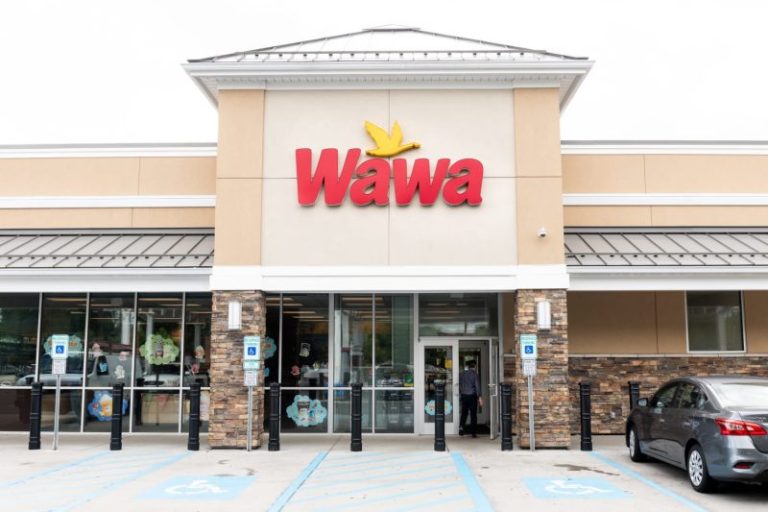
    Before the pandemic, fast-food chains started seeing a new rival for their breakfast customers: convenience stores. Regional chains like Wawa in the Northeast and Casey’s General Store in the Midwest were expanding their reach and investing in their foodservice options, taking pages from the fast-food companies’ own playbooks.

    For a time, lockdowns and the shift to hybrid work reversed those market share gains. But in the three months ended in July, food-forward convenience stores once again gained the upper hand in the battle to serve consumers breakfast, according to Portalatin.

    Circana separates food-forward convenience stores like Buc-ee’s and Sheetz from the broader industry, although more chains may soon fit under that umbrella. 7-Eleven, the biggest convenience, or c-store, in the U.S., is planning to invest more in its prepared foods business, inspired by the success of its Japanese business. C-store chain RaceTrac on Wednesday announced that it’s buying Potbelly for about $566 million, although it’s unclear what its plans for the sandwich chain include beyond expanding its footprint.

    In recent years, more diners have been watching their budgets, conscious of rising menu prices and a tight job market.

    Year-over-year morning traffic to fast-food chains has fallen every quarter for the last three years, according to data from Revenue Management Solutions, which advises restaurants on how to increase sales and profits. In the second quarter, fast-food breakfast visits fell 8.7%.

    To see the struggles, look no further than McDonald’s, which dominates the quick-service breakfast category.

    ″The breakfast daypart is the most economically sensitive daypart, because it’s the easiest daypart of a stressed consumer to either skip breakfast or choose to eat breakfast at home,” McDonald’s CEO Chris Kempczinski said on the company’s earnings call in late July. “And we, as well as the rest of the industry, are seeing that the breakfast daypart is absolutely the weakest daypart in the day.”

    McDonald’s morning visits accounted for 33.5% of its traffic in the first half of 2019 but fell to 29.9% in the first half of 2025, according to Placer.ai data. To try to drum up traffic, the chain has included breakfast items in its new Extra Value Meals, including a deal for a Sausage McMuffin with Egg with a hash brown and a small coffee for $5.

    To reverse breakfast’s slide, fast-food chains are taking hints from their competition. After years of convenience stores looking to fast-food chains for ideas on how to grow prepared food sales, from installing ordering kiosks to new menu items, the dynamic has flipped.

    ″[Quick-service restaurants] are looking at late-night sales and early morning sales, and they are directly looking at convenience stores and saying, ‘What is working? How can we bring that to our stores?’” National Association of Convenience Stores spokesperson Jeff Lenard told CNBC.

    Prepared foods have offered a lifeline for convenience stores as demand for gasoline, tobacco and lottery tickets has fallen over time. The industry’s overall foodservice sales reached $121 billion in 2024, according to data from the NACS.

    Most customers visit the gas pump during the morning and evening rush hours, on their way to and from work, presenting the perfect opportunity for c-stores to sell them breakfast or dinner. This year, 72% of consumers surveyed by InTouch Insight said they saw c-stores as a real alternative to fast-food chains, up from 56% a year ago and 45% two years ago.

    Broadly, the c-stores that have focused on fresh food have been winning over more customers.

    For example, Wawa has seen its customer base grow by 11.5% since 2022, while fast-food chains McDonald’s, Burger King and Wendy’s have seen their combined customer base shrink 3.5% in the same time, according to data from Indagari, a transaction data analytics firm.

    The majority of 1,170 respondents to an InTouch Insight survey for CNBC said that they have purchased made-to-order breakfast from a c-store in the morning in the past three months. Forty-eight percent of respondents said that when they choose breakfast from a convenience store, they are replacing a visit that they might otherwise make to a fast-food restaurant like McDonald’s or Dunkin’.

    Buying coffee and breakfast from a c-store likely won’t be cheaper than making it at home. But consumers perceive it as “good bang for their buck,” according to Sarah Beckett, vice president of sales and marketing for InTouch Insight.

    Plus, c-store customers get a wider breadth of options. In addition to coffee, gas stations sell energy drinks, protein shakes and yogurt smoothies. And customers can pick up a granola bar or banana to accompany their breakfast sandwich. Fast-food chains lack that kind of variety.

    But above all, what matters to consumers is the food itself.

    “While [a] convenience store broadly does have some tailwind from being a lower price point, the ultimate differentiator, and what’s really going to set apart the winners from losers, is that quality aspect of it,” Circana’s Portalatin said.

    Brady Caviness, a 33-year-old account executive at Bailiwick who lives in Minneapolis, told CNBC that he indulges in a breakfast pizza from Casey’s General Store when he’s traveling. If he’s back home, where there isn’t a Casey’s nearby, he’ll stop by McDonald’s, Dunkin’ or Starbucks if he’s in the mood to buy his breakfast.

    The Iowa-based chain is the country’s third-largest c-store chain and claims to be the fifth-largest pizza concept based on its number of locations. Casey’s reported same-store sales growth of 5.6% for its prepared food and dispensed beverages for the three months ended July 31.

    Like Taco Bell’s Mexican Pizza, Casey’s breakfast pizza, topped with cheese, scrambled eggs and a choice of bacon, sausage or vegetables, has grown a cult following since its launch in 2001.

    “I think Casey’s is kind of a unique thing,” Caviness said. “My whole life, I’ve had the Egg McMuffins.”

    This post appeared first on NBC NEWS