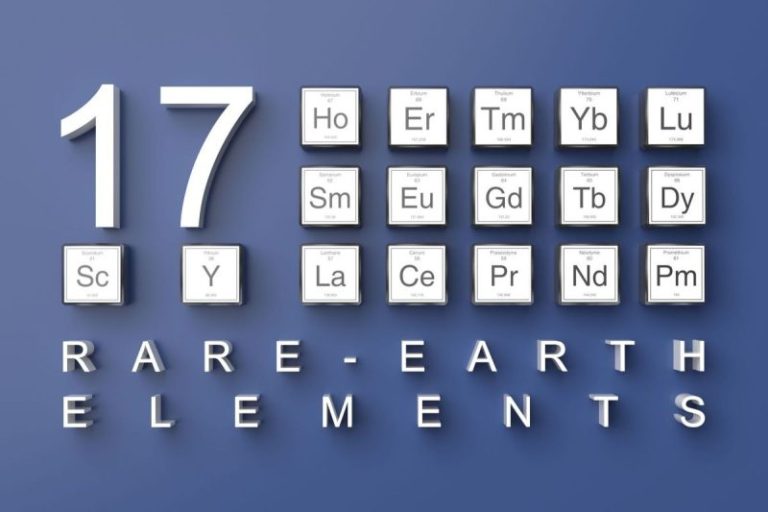
Rare earth elements (REEs) are crucial for technologies like smartphone cameras and defense systems.
A select few from the group of 17 are also vital to clean energy transition industries such as electric vehicles (EVs) — neodymium and praseodymium are found in the permanent magnet synchronous motors used in EV drive trains.
The rare earths sector has been thrust back into the geopolitical spotlight as supply chains face mounting pressure from escalating US-China trade tensions and tightening global regulations.
In May 2024, the former US administration imposed a 25 percent tariff on Chinese rare earth magnets starting in 2026, marking the first time these components have been targeted under Section 301. The move hits sintered neodymium-iron-boron (NdFeB) magnets, vital for EVs and wind turbines, highlighting their strategic role in clean energy and defense.
Soon after, China’s State Council announced new rules effective October 1, 2024, tightening control over rare earth production and banning the export of extraction and magnet-making technology.
Since taking office in January 2025, US President Donald Trump has escalated the trade conflict, imposing cumulative tariffs of 54 percent on Chinese goods. Beijing responded by heightening export controls on seven strategic rare earth metals associated with global defense, renewable energy and the technology sectors.
China’s dominance remains a defining feature of the market: the country accounts for nearly 70 percent of mine output and more than 80 percent of refining capacity. That concentration has created persistent vulnerabilities, especially for medium and heavy rare earths like dysprosium and terbium, which are already in tight supply.
Analysts note that tariffs and export restrictions are setting the stage for a two-tiered market, where ex-China buyers face premiums while domestic Chinese buyers remain insulated.
Despite the volatility, demand fundamentals continue to trend upward. Permanent magnets are driving growth across EVs, clean energy and defense, and efforts to diversify supply are accelerating.
In the US, Washington has increased Department of Defense (DoD) funding and streamlined permitting to support domestic production, while in Europe, a law enacted in May 2024 aims to reduce Chinese reliance by boosting output of critical minerals by 2030.
These recent escalations could be a boon to rare earth minerals and rare earth magnet stocks operating in the space outside of China. Investors are watching closely to see which rare earth companies are best positioned to capture the opportunity.
US rare earths stocks
The US is striving to secure stable domestic supply of REEs outside China, a matter that has become even more pressing in 2025 due to the escalation of the US-China trade war and China’s new rare earth mineral export restrictions.
The nation has vast rare earths reserves and is the second largest global REE producer thanks to its sole operating rare earth mine, Mountain Pass. However, it currently lacks sufficient processing facilities.
American rare earths companies are working to address this imbalance, presenting investment opportunities for those looking to capitalize on the market’s growth potential. Learn more about MP Materials, Energy Fuels and NioCorp Developments, the three largest US rare earths stocks by market cap, below.
1. MP Materials (NYSE:MP)
Market cap: US$11.79 billion
Share price: US$66.60
MP Materials, the largest producer of rare earths in North America, focuses on high-purity separated neodymium and praseodymium (NdPr) oxide, heavy rare earths concentrate, lanthanum and cerium oxides and carbonates.
The company went public in mid-2020 after acquiring the Mountain Pass mine in California, the only operational US-based rare earths mine and processing facility. In Q3 2023, MP Materials began producing separated NdPr, marking a significant milestone.
In April 2024, MP Materials was awarded US$58.5 million under the Section 48C tax credit to build the US’s first fully integrated rare earth magnet plant.
Located in Fort Worth, Texas, the facility began making NdFeB magnets in January, with first deliveries due by year-end. MP Materials sources feedstock from its Mountain Pass mine, creating a fully integrated, closed-loop supply chain with integrated recycling.
In its Q2 2025 results, MP Materials reported an 84 percent year-over-year increase in revenue, which totaled US$57.4 million in Q2. Additionally, the company achieved record NdPr output of 597 metric tons (MT), while its rare earth oxide (REO) production reached 13,145 MT, marking its second-highest quarterly production ever and a 45 percent increase from last year.
In early July, MP penned a deal with the US DoD in which the government would purchase US$400 million worth of preferred stock in the company, making the DoD the company’s largest shareholder.
The funds are earmarked for the expansion of its processing capabilities at Mountain Pass and the construction of a second magnet manufacturing facility in the US.
MP also signed a US$500 million deal with Apple (NASDAQ:AAPL) to produce rare earth magnets in the US using only recycled materials. Starting in 2027, MP will supply magnets for hundreds of millions of Apple devices, including iPhones, iPads and MacBooks.
2. Energy Fuels (NYSEAMERICAN:UUUU,TSX:EFR)
Market cap: US$1.97 billion
Share price: US$8.53
Energy Fuels is a leading US uranium and rare earths company that operates key uranium production centers, including the White Mesa mill in Utah and the Nichols Ranch and Alta Mesa projects in Wyoming and Texas.
The company finished construction of Phase 1 REE separation infrastructure at White Mesa in early 2024, and in June reported successful commercial production of separated NdPr that meets the specifications required for REE-based alloy manufacturing. The Phase 1 REE separation circuit is now operating at full capacity.
Following its 2023 acquisition of the Bahia heavy mineral sands project in Brazil, Energy Fuels made multiple deals in 2024 with the aim of acquiring feedstock for White Mesa.
In early June of last year, Energy Fuels executed a joint venture that gives it the option to earn a 49 percent stake in Astron’s (ASX:ATR) Donald rare earths and mineral sands project in Victoria, Australia. Donald is expected to begin production as early as 2026, and will supply the White Mesa mill with 7,000 to 8,000 MT of monazite sand in rare earths concentrate annually in Phase 1.
In October 2024, Energy Fuels acquired Australian mineral sands company Base Resources, which owns the Toliara project in Madagascar.
As for 2025, in mid-March Energy Fuels inked a memorandum of understanding with South Korea-based POSCO Holdings (NYSE:PKX,KRX:005490) for the potential creation of a non-China REE supply chain for EVs and hybrid EV drivetrains for US, EU, Japanese and South Korean auto markets.
In June 2025, the Government of Victoria approved the work plan for the construction and operation of the Donald rare earth and mineral sand project. The site can now move into construction.
A month later, Energy Fuels achieved pilot-scale production of heavy rare earth oxides at its White Mesa mill and aims for commercial output by late 2026. Additionally, the company noted that it could source feedstock from the Donald project by the end of 2027.
In late August, Energy Fuels successfully produced its first kilogram of 99.9 percent pure dysprosium oxide at pilot scale from White Mesa. Using monazite sourced from Florida and Georgia, Energy Fuels now plans to produce 2 kilograms weekly.
“Multiple magnet manufacturers and OEMs have already expressed their strong interest in obtaining these samples to accelerate their validation processes,” the company said.
3. NioCorp Developments (NASDAQ:NB)
Market cap: US$291.32 million
Share price: US$4.01
NioCorp Developments is advancing its Elk Creek project in Nebraska, which features North America’s highest-grade niobium deposit under development, with significant scandium production capacity. The Elk Creek project is fully permitted for construction.
NioCorp is working to secure financing to move the project forward, and the US Export-Import Bank advanced its application for financing to its next stage of due diligence in February.
An updated 2022 feasibility study highlights an extended mine life, improved ore grades and enhanced economics for niobium, scandium and titanium.
In April 2024, NioCorp began exploring integrating permanent rare earth magnet recycling at its Elk Creek project to produce separated rare earth oxides which could then be used to produce new NdFeB magnets. It completed initial bench-scale tests in October.
2025 has been busy for NioCorp. It completed a US$45 million public offering in July, which, combined with an additional US$15 million, will be used to accelerate pre-construction activities at Elk Creek.
NioCorp also secured up to US$10 million from the US DoD under the Defense Production Act’s Title III program. The funding, tied to milestone achievements, is aimed at establishing the country’s first domestic scandium mine-to-manufacture supply chain.
The award is expected to bolster NioCorp’s efforts to secure up to US$800 million in debt financing from the US Export-Import Bank.
In an effort to bolster its Nebraska land position, NioCorp acquired three key land parcels associated with the Elk Creek project in early August. The adjacent parcels will house production operations and infrastructure.
NioCorp is currently awaiting the results from the Phase I drilling campaign completed in mid-August. The program aims to convert portions of the resource from the indicated and probable categories to measured and proven.
Canadian rare earths stocks
As part of Canada’s Critical Minerals Strategy, the government has allocated C$3.8 billion in federal funding for opportunities across the critical minerals value chain, from exploration to recycling.
REEs are among the minerals listed as critical.
Additionally, the government has designated C$7.5 million to support the establishment of a rare earths processing facility in Saskatoon, Saskatchewan. In mid-September 2024, the Saskatchewan Research Council (SRC) announced that the facility reached commercial-scale production, making it the first in North America to achieve this milestone.
The SRC plans to produce 400 MT annually once it is fully operational.
Learn about Aclara Resources, Mkango Resources and Ucore Rare Metals, the three largest Canada-listed rare earth stocks by market cap, below.
1. Aclara Resources (TSX:ARA)
Market cap: C$321.18 million
Share price: C$1.46
Aclara Resources is advancing its Penco Module project in Chile, characterized by ionic clays abundant in heavy rare earths, and its Carina Module project in Brazil.
Its objective at the Penco Module is to generate rare earths concentrate via an environmentally friendly extraction process. This approach aims to eliminate the need for a tailings facility, minimize water use and ensure the absence of radioactivity in the final product.
Aclara successfully concluded a semi-industrial pilot plant program for Penco Module in 2023, yielding 107 kilograms of wet high-purity heavy rare earths concentrate from 120 MT of ionic clays. Aclara and Vacuumschmelze penned a memorandum of understanding in early July 2024 to jointly pursue a ‘mine-to-magnets’ solution for ESG-compliant permanent magnets.
The company submitted a new environmental impact assessment (EIA) for the project in June 2024, and it moved to the next stage in August.
In May 2025, Aclara received the second round of technical observations (Second ICSARA) from the Environmental Service Assessment Authority, including 205 questions regarding technical aspects of the EIA. The company plans to submit its response during Q3 2025.
Aclara is also advancing its Carina Module project in Brazil, which it discovered in 2023. In December of that year, Aclara disclosed an initial inferred resource for the project, saying it encompasses approximately 168 million MT grading 1,510 parts per million TREO and 477 parts per million desorbable rare earth oxides.
In August 2024, Aclara released an updated preliminary economic assessment for Carina Module featuring initial capital costs of US$593 million and sustaining capital costs of US$86 million. Later in the month, the company signed a memorandum of understanding (MoU) with the State of Goiás and Nova Roma to expedite the Carina Module project.
In late May 2025, Aclara submitted its EIA for the Carina Module, and anticipates its approval during Q4 2025. The company also reiterated its expectations to produce an average of 191 MT of dysprosium and terbium annually. As well as yearly output targets of 1,350 MT of neodymium and praseodymium.
On the innovation side, Aclara is deepening its tech-driven approach to rare earths through a long-term letter of intent (LOI) with Stanford’s Mineral-X initiative to leverage AI, data science and decision modeling to build a more resilient heavy rare earth supply chain.
Meanwhile, an MoU with Virginia Tech covers operation of Aclara’s pilot plant showcasing its solvent-extraction technology for producing high-purity rare earth elements.
2. Mkango Resources (TSXV:MKA)
Market cap: C$262.87 million
Share price: C$0.79
Mkango Resources is advancing as a producer of recycled rare earth magnets, alloys, and oxides, through its 79.4 percent stake in Maginito with partner CoTec Holdings (TSXV:CTH,OTCQB:CTHCF).
Mkango’s assets include Malawi’s Songwe Hill project, targeting neodymium, praseodymium, dysprosium, and terbium, and the Pulawy rare earths separation project in Poland, alongside a broader exploration portfolio in Malawi.
In July 2024, Mkango and the Malawian government signed a mining development agreement for the Songwe rare earths project, granting Malawi a 10 percent stake and customs and excise exemptions. Through Maginito, Mkango also owns HyProMag, which licenses the Hydrogen Processing of Magnet Scrap (HPMS) process to recycle rare earth magnets from scrap.
A pilot plant using a long-loop recycling process underpinned by the HPMS process was commissioned in July 2024. Additionally, Maginito is expanding HyProMag’s recycling technology to the US through the joint venture HyProMag USA, with a positive feasibility study completed in November 2024.
While the feasibility study was based on two HPMS vessels, HyProMag announced in March 2025 that conceptual studies are underway to expand the capacity to three vessels and the addition of ‘long-loop chemical processing’ to complement the HPMS short-loop recycling process.
In an August 2024 update for investors, Mkango reported that HyProMag will receive 350,125 euros to develop its eco-friendly NeoLeach technology, which will further upgrade metals recovered with HPMS. The funding, part of the 8 million euro GREENE project, aims to improve the resource efficiency and performance of rare earth permanent magnets.
Mkango completed a C$4.11 million private placement in early February 2025 to help fund the advancement of its rare earth magnet recycling projects in the UK and Germany. The next month, the company provided an update on the construction of its UK magnet recycling and manufacturing facility, which is on track to begin initial commercial production by the end of Q2 2025.
In late March, the European Commission designated Mkango’s Pulawy project in Poland as a strategic project under the Critical Raw Materials Act.
In June, HyProMag USA received a “Make More in America” LOI from the US Export-Import Bank. The letter signals potential financing of up to US$92 million for the company’s first integrated rare earth recycling and magnet manufacturing facility in Dallas-Fort Worth, with a 10 year repayment term.
Later in the month, Mkango updated on its advanced pilot program and the scale-up of HPMS technology, aiming to produce domestically sourced, short-loop recycled rare earth magnets with a minimal carbon footprint in the UK and Germany in 2025, and the US in 2027. The company commenced initial production runs on its commercial-scale HPMS vessel at Tyseley Energy Park in Birmingham in early July.
On July 3, Mkango signed a definitive merger deal with Crown PropTech Acquisitions that would see several of Mkango’s subsidiaries, including Lancaster Exploration, combine with Crown to form Mkango Rare Earths. The combined company will be a vertically integrated rare earth firm that owns the Songwe Hill and Pulawy projects, and its shares are expected to trade on Nasdaq.
In the US, Intelligent Lifecycle Solutions started stockpiling feedstock under its supply and pre-processing agreement with HyProMag USA in late August. Pre-processing is slated to start before year-end 2025 at ILS facilities in South Carolina and Nevada.
3. Ucore Rare Metals (TSXV:UCU)
Market cap: C$231.44 million
Share price: C$2.60
Ucore Rare Metals is focused on the exploration and separation of rare earth elements in Canada and the US.
The company owns the Bokan-Dotson Ridge rare earth project in Alaska and is developing a strategic metals complex for processing heavy and light rare earth elements in Louisiana, US. Ucore acquired an 80,800 square foot brownfields facility in Alexandria, Louisiana, for developing its first commercial REE processing facility in January 2024.
In Canada, Ucore’s Ontario-based RapidSX demonstration plant, operated by Kingston Process Metallurgy, was commissioned to evaluate the techno-economic advantages, scalability and commercial viability of the RapidSX technology platform for separating and producing REEs like praseodymium, neodymium, terbium and dysprosium. This initiative was supported by a US$4 million award from the US DoD granted to Ucore’s subsidiary, Innovation Metals.
Last year, Ucore entered and advanced partnerships with several companies. In April, Ucore tested mixed rare earths carbonate from Defense Metals’ (TSXV:DEFN,OTCQB:DFMTF) Wicheeda project and confirmed it was suitable for commercial-scale processing at Ucore’s planned facilities. A few months later, Ucore executed a non-binding MoU with Cyclic Materials to qualify Cyclic’s recycled rare earth oxide product in Ucore’s process.
In August 2024, Ucore and Meteoric Resources (ASX:MEI) signed an MoU for Meteoric to supply 3,000 MT of TREO from its Caldeira project in Brazil to Ucore’s Louisiana strategic metals complex, and Ucore established a similar deal with Australia’s ABx Group (ASX:ABX) in early September under which ABx would supply Ucore with mixed rare earth carbonates from its Deep Leads ionic adsorption clay rare earths resource in Northern Tasmania.
At the start of 2025, Ucore was awarded C$500,000 via its partnership with Ontario’s Critical Minerals Innovation Fund to help finance the advancement of the company’s Canadian RapidSX commercial demonstration facility.
As for its Louisiana facility, the company received an US$18.4 million investment from the US DoD in May, its largest funding commitment to date. The funding will support construction of Ucore’s first commercial-scale RapidSX refining machine in Louisiana.
In late August, Ucore entered a non-binding LOI with Critical Metals (NASDAQ:CRML) for a 10 year offtake of heavy rare earth feedstock from Critical’s Tanbreez project in Greenland that will supply its Louisiana facility, with smaller volumes first processed at its demo facility in Ontario.
Australian rare earths stocks
Australia ranks among the globe’s top rare earths producers and possesses the fourth largest rare earths reserves. The nation is notable for hosting the largest supplier of rare earths outside of China.
Learn more about Lynas Rare Earths, Iluka Resources and Arafura Resources, the three largest ASX-listed rare earths stocks focused stocks by market cap.
1. Lynas Rare Earths (ASX:LYC)
Market cap: AU$13.08 billion
Share price: AU$14.61
Well-known ASX-listed rare earths stock Lynas Rare Earths is the leading separated rare earths producer outside of China, with operations in Australia and Malaysia.
In Western Australia, Lynas operates the Mount Weld mine and concentrator and is ramping up processing at its Kalgoorlie rare earths processing facility.
Lynas secured AU$20 million from Australia’s Modern Manufacturing Initiative in mid-2023 to advance its apatite leach circuit at the Kalgoorlie plant. By December, the facility hit its first production milestone, marking the shift from commissioning to full-scale operations. Lynas’ new large-scale downstream Kalgoorlie rare earths processing facility came online in November 2024.
In August 2024, the firm reported a 92 percent increase in mineral resources and a 63 percent rise in ore reserves at Mount Weld. Resources grew to 106.6 million MT at 4.12 percent TREO, while reserves increased to 32 million MT at 6.44 percent TREO, including added tailings. The updated estimates boost contained heavy rare earths and support a mine life exceeding 20 years at higher production rates.
Lynas also processes mined material at its separation facility in Malaysia. After commissioning the new heavy rare earth separation circuit earlier in the year, the site achieved first production of dysprosium oxide in May 2025.
Later in the month, Lynas penned a non-binding memorandum of understanding with Menteri Besar, the Kelantan state investment arm in Malaysia, to supply mixed rare earth carbonate (MREC). Subsequently, the Malaysian facility reported the first production of terbium oxide.
According to Lynas, the Malaysian milestones mark the first commercial production of separated dysprosium and terbium oxides outside China in decades.
During its June fiscal quarter, the company also signed an MoU with Korea’s JS Link to develop a magnet plant in Malaysia and advanced key expansion projects at Mt Weld and Kalgoorlie.
On August 27, Lynas released its 2025 annual results and its new long-term strategy named Towards 2030. The company produced 10,462 metric tons of rare earth oxides, including 6,558 metric tons of NdPr, in its fiscal 2025.
While it had previously been working with the US DoD to establish a rare earth processing facility in Texas, Lynas shared that it is now uncertain if the facility will be built, in part due to permitting issues with the site. It is negotiating an offtake with the DoD for production from its current operations instead.
2. Iluka Resources (ASX:ILU)
Market cap: AU$2.71 billion
Share price: AU$6.34
Iluka Resources is advancing its Eneabba rare earths refinery in Western Australia with backing from the Australian government, which aims to bolster the country’s footprint in the global rare earths market. The company also owns zircon operations in Australia, including Jacinth-Ambrosia, the world’s largest zircon mine.
Additionally, Iluka is progressing its Wimmera project in Victoria, focusing on mining and beneficiation of fine-grained heavy mineral sands in the Murray Basin. This project aims to supply zircon and rare earths over the long term. A definitive feasibility study for Wimmera is scheduled for completion by the end of 2025.
Iluka secured an AU$1.25 billion non-recourse loan for Eneabba under the AU$2 billion Critical Minerals Facility administered by Export Finance Australia, and the Australian government agreed to an additional AU$400 million in funding in December 2024.
This funding will support the development of Eneabba as Australia’s first fully integrated refinery capable of producing both light and heavy separated rare earth oxides. The facility will process material from Iluka’s own feedstocks and third-party suppliers, with commissioning expected in 2027.
In early August 2025, Iluka signed a 15 year deal with Lindian Resources (ASX:LIN) for the annual supply of 6,000 MT of rare earth concentrate from Lindian’s Kangankunde project in Malawi. The feedstock will be processed at Eneabba, accounting for about 10 percent of the refinery’s capacity.
Also in August, Iluka released its half year results, which were impacted by global economic uncertainty and a subdued mineral sands market, according to the company. The data noted a 8 percent year-over-year revenue decline to AU$558 million in the mineral sands segment.
3. Arafura Resources (ASX:ARU)
Market cap: AU$468.22 million
Share price: AU$0.19
Arafura Resources, an Australian rare earths firm, has secured government funding to advance its Nolans rare earths project in the Northern Territory. Arafura is currently working toward a final investment decision for Nolans, which is shovel ready. Nolans is envisioned as a vertically integrated operation with on-site processing facilities.
A 2022 mine report updates Nolans’ expected lifespan to 38 years, targeting an annual production capacity of 4,440 MT of NdPr concentrate. The project’s definitive feasibility study highlights significant concentrations of neodymium and praseodymium, alongside all other rare earths in varying quantities.
Arafura has inked binding offtake agreements with Hyundai Motor (KRX:005380,OTC Pink:HYMTF), Kia (KRX:000270) and Siemens Gamesa Renewable Energy. Additionally, the company has a non-binding memorandum of understanding with GE Vernova’s (NYSE:GEV) GE Renewable Energy to collaborate on establishing sustainable rare earths supply chains.
In late August 2024, Arafura signed a memorandum of understanding with Canada’s Saskatchewan Research Council to process rare earths from Arafura’s Nolans project into dysprosium and terbium oxides at SRC’s rare earths processing facility in Saskatchewan. The collaboration aims to support global supply chain diversification for energy transition technologies.
The company received a AU$200 million investment commitment from Australia’s National Reconstruction Fund in January 2025.
In March 2025, Arafura announced a binding offtake agreement with Traxys Europe through which Arafura will supply a minimum of 100 MT per year of NdPr oxide over a five-year term from the Nolans project. Arafura has the option to increase the offtake to a maximum of 300 MT per year at its discretion.
The company provided an update in its annual report released in July, noting the Nolans project has advanced to the appraisal stage for 100 million euros in funding from the 1 billion euro German Raw Materials Fund, becoming only the second project to reach this phase. The proposed financing is linked to NdPr oxide supply, supported by Arafura’s existing offtake deal with Siemens Gamesa for 520 MT annually.
As of August 2025, Arafura has secured conditional approval for over US$1 billion in debt funding for the Nolans project.
In August, Arafura received a conditional letter of interest from Export Finance Australia to bolster equity alongside existing debt funding, and completed a AU$80M a “two-tranche institutional placement” at AU$0.19 per share. It also launched a AU$5M share purchase plan at the same price.
Securities Disclosure: I, Georgia Williams, hold no direct investment interest in any company mentioned in this article.
This post appeared first on investingnews.com